Forum menu
Hi
So, our garage door has decided to fall off and instead of spending £££ replacing it I wondered if I could get it bricked up and a window put in (and a door to kitchen) even though we’re not yet ready to do a full conversion.
So questions are -
1. is it ok re building regs to do just this and not the rest of the work?
2. What would be a very rough ballpark figure? I assume the wall where the internal door would go is load bearing.
Pictures of neighbours conversion below for ref.
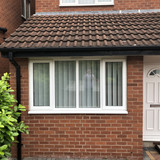
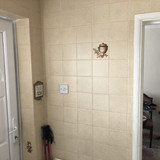
*not a builder*
My mate just did exactly the same to convert part of the garage into a toilet. He's a window fitter anyway but he put a new lintel in and got a pal to brick up to a height and then fitted the window himself. No planning needed round our way for that, quite a few have converted garage into downstairs room as going above the garage was prohibitive in cost.
I live in Scotland and under our regulations that would be deemed Permitted Development and therefore nto require planning permission.
Worth going on your local council website, doing a planning search for your neighbours house. See what, if anything, they submitted to do their conversion.
Remember though planning is different to building warrant. even if you dont need the former, you may need the later.
Assuming there's a lintel above the garage door then it's an easy job to brick up and add a window. The internal door would be more involved (if it's load bearing which may not be the case).
Probably doesn't need planning in England but check online.
Price - no idea! Lots of work going on all over at the moment and obvs depends where you are.
Its permitted development in England as well unless you live in a conservation area or your PD rights have been removed.
We had our garage converted a couple of years ago. Permitted development so no planning permission but building regs visited and signed off on different stages of the conversion.
Thanks, I’m wondering more about building regs (fire, insulation etc) than planning which I think is ok.
The wall is solid block and has a stud wall above it, but I’ve no idea if it’s considered load bearing :-S
The original integral garage should have some kind of fire lining to the ceiling - that could be fire resistant plasterboard but depending on age it could also be asbestos insulation board which is nasty so check before knocking anything about.
Door to house will need to be a fire door so not certain but probably needs building regs approval.
I've seen new building planning where you weren't allowed to convert the garage due to required number of parking spaces. Think that is a pretty recent thing with big 5 bed houses and assuming everyone will have a car so probably not a problem.
1. is it ok re building regs to do just this and not the rest of the work?
Yes you can do what you want – get a private inspector to advise and sign off the works though (less painful than using the council - that's if your local council even still provide this service). I would suggest that you plan ahead and put in any wiring/plumbing/building work etc required for your planned future development though.
2. What would be a very rough ballpark figure? I assume the wall where the internal door would go is load bearing.
We had a price for converting a garage into a room (to comply with regs) which included knocking through/installing a fire door and all the works required (electrical, plumbing, stud walls etc etc etc) and the price was £12k.
The original integral garage should have some kind of fire lining to the ceiling
Are you sure? I assume it depends on the individual circumstances but our attached double garage has nothing like that (house built in 1987) although it isn't 'integral' as such, it is attached to the house but has no internal door and has it's own pitched roof.
you will need planning to brick up the garage and add a window. as its a material change in elevation. you could try it without planning but you might get a crappy letter from teh council at some point due to a neighbour.
partitioning a bit off is allowed. My partents did this for a downstairs WC.
also you could leave the garage doors on and do the conversion behind (as no one will see but this means no window) this is only practical if you want to saty more than 10 years as it will raise its ugly head during a property sale.
any conversion would need insulation and probably dry lining to meet building regs as garages are usually just crappy single skin and lightweight roof.
you will need planning to brick up the garage and add a window. as its a material change in elevation. you could try it without planning but you might get a crappy letter from teh council at some point due to a neighbour.
This is not correct. The works you want to do are permitted development.
Edit: Also, were this type of work to require express pp (which is doesn't) and you didn't apply, the 4 year rule would apply in terms of period within which enforcement could take place, not 10.
watching thread with interest. About to buy a 30's house with an attached garage (so not exactly integral) I'm aiming to brick up the garage door, maybe with a small window and convert an existing side window on the garage into a dooorway (so people dont see me putting bikes in/out of the garage) if anyone has knowledge/advice please do chip in.
I believe that if we were converting it to living space extra regs apply but if it remains as none living space shouldn't be too much paperwork involved
Hmmm. The garage door doesn’t have a lintel as there’s nothing above it apart
From aluminium boarding and then the roof.
Our neighbour (has next but one) is the one pictured so it’s hard to imagine the council would have a big issue with it. Parking isn’t an issue as we all have private drives leading into a shared area.
Re cost - I’m really just wondering about the bricking up and installing internal door at the moment, as we’re not ready to do a full conversion yet.
Thanks all
(I’m also wondering if I got the block work and smashing holes bits done, how much of the rest is DIY-able e.g. dry lining, suspended floor etc ??
(I’m also wondering if I got the block work and smashing holes bits done, how much of the rest is DIY-able e.g. dry lining, suspended floor etc ??
If you are any good at DIY then it's mostly DIY-able - you only need to involve external help to do stuff you aren't able to do yourself. If I ever get around to doing it myself*, I may well do all of it bar the electrical, plumbing and plastering and liaise with building regs. before/during/after to ensure it gets signed off.
*With help from my very handy father in law.
1) you need building regulations - when you come to sell you'll be asked for proof you have it. This needs to be done / checked off as you do the works - not after they are finished.
2) definitely use an approved inspector NOT the local council - as comment above they are far easier to deal with, and much much quicker
3) you should be able to convert the garage under your permitted development rights (PDR) BUT you should apply to your local council for a 'certificate of lawfullness' essentially this is a letter saying yes you can do these works under your PDR - if you don't when you come to sell you'l be asked for this by your solicitor and you'll then be into a min. 2 month delay to get this approved.
if you are in a conservation area, or the original planning permission removed your PDR, has other conditions related to alterations you'll need to submit a householder planning application - min. 8 weeks with the council - and requires a full set of drawings, and other information
4) the planning portal is a very useful source of knowledge
5) if you need a lintel for the works you'll need to prove via a structural engineer that its appropriate in order to get building regulations approval - a simple calculation like this will be several hundred pounds
6) if your near bristol DM ma and I can advise further - I am for my sins an architect
We bought a house that had had a garage converted to a room (previous owner (crazy professor with lots of 'quirks') bricked up the end, put a window in & door to kitchen the other end. We've since stripped it all back to plaster and discovered lots of damp.
Just had a damp inspection done & theres damp in various places as theres no damp course (garages don't need one?) & the level of the ground outside is higher than the level of the room/garage floor.
Currently waiting on an estimate to make it damp proof before we carry on with turning it into a usable room.
1) you need building regulations – when you come to sell you’ll be asked for proof you have it. This needs to be done / checked off as you do the works – not after they are finished.
You don't NEED building regs - you just can't market the property with it described as a room without them. And you can do it after if you have photographic evidence of the work being done - this happened with me as the builder forgot to get them in after the initial inspection of the room before work started but fortunately I had photographic evidence of the work having been done (RSJ installation showing it was properly tied in with the existing structure).
You don’t NEED building regs – you just can’t market the property with it described as a room without them.
Tell the new buyer it's ok. John said so.
The big risk of not getting building regs and trying to retrospective is that standards move on.
I've just had double rsjs fitted as per current regs under a warrent..... Much hassle if you did them to the regs 20 years ago and go to get retrospective with your wooden lintel.
While you don't need building regs , you'd be a fool not to - at least for the door and lintel
You don’t NEED building regs
Just like you don't NEED to comply with speed limits if there are no police or cameras?
Tell the new buyer it’s ok. John said so.
As I said before, you can do what you want. You aren't breaking the law by not getting regs, it just can't be marketed as a living space. I didn't say anything about telling the buyer its okay - I said you just can’t market the property with it described as a room without them.
Just like you don’t NEED to comply with speed limits if there are no police or cameras?
Well, no it's not is it? Speeding is against the law whether or not you get caught. Not getting building regs for a conversion simply means you can't you just can’t market the property with it described as a room – you cannot be punished for not having them (although I assume if you were negligent and cause injury to another you could have a civil case brought against you).
The fact the people are not often prosecuted for failure to comply with Building Regulations doesn't mean it's not an offence:
35 Penalty for contravening building regulations.
If a person contravenes any provision contained in building regulations, other than a provision designated in the regulations as one to which this section does not apply, he is liable on summary conviction to a fine not exceeding level 5 on the standard scale and to a further fine not exceeding £50 for each day on which the default continues after he is convicted.
whilst I agree its best to get building regs involved for avoidance of future issues, I know plenty of people who don't (either because of ignorance or saving time/money upfront)
there are indemnity policies which cost peanuts you can take out on sale
we had one on our place, where work had been undertaken, owner died, and paperwork lost / not completed
^^ Well today I learned something new (albeit vague and reading as quite unenforceable) but I agree that an individual could be open to prosecution.
there are indemnity policies which cost peanuts you can take out on sale
Assuming the buyer wants to take on that risk. Another thing to knock the price down at least.
Knocking a hole in a wall without any paperwork would bother me.
depends if your house is desirably or not I suppose. From memory the indemnity was something like £120 for both lack of regs and lack of planning. This was on a 100 year old house which had a least 2 modifications over the years, only one of which had planning in the 50s, and appears to have been built slightly different to the plans (like a second story!). We also had double glazing which had been fitted in the last 3 years, but no paperwork or fensa (because it was probate).
I would expect most housing stock over a certain age will have something not quite aligned to regs or planning, I don't think it puts off buyers, at least not serious ones. On a newer build I can see it being an issue