UPDATE: CLASSIFIEDS section refreshed, redesigned, searchable: Go take a look
Molgrips - it clearly has
It clearly has as no one is asking for two way cycle ways on suburban streets like your "typical cardiff street" and in the netherlands they do not even try
What they do is have a 20 mph limit with cycle priority and also adjust junctions to be safe for cyclists. so yourt point about not being able to put cyclesways on such streets is a moot point. there is no need, no one is asking for them, the dutch do not use themlike that
Have you now accepted that is not about infranstructure and cycleways in isolation? That your "typical cardiff street "example is really an example of accusing folk of asking for something no one is asking for? Ie effectivly a straw man arguement?
So again, I’m not arguing against cycle infrastructure, I’m arguing against the assumption that what worked in the Netherlands would work here.
I don't think you understand what happened in the Netherlands (or other countries) - they didn't click their fingers and overnight get an amazing physical infrastructure for cycling. They changed their approach to cars v bikes and as a result it became logical that whenever infrastructure was updated, built or repaired bike segregation was preferred.
As for Newport road - its three lanes wide, with wide pavements and large gardens each side. If we can't find a way to design safe cycling into that space we are screwed. I suspect this is the real battle Chris Boardman faces:
That’s a hard sell. People like cars, that’s why we spend so much money on them
Both from an individual perspective (convenience, status symbol, etc) and from a car industry lobby not wanting to lose ££.
Elephant in the room time.
In an EV world all those houses with no off street parking become a problem anyway. And EVs are coming.
We don't fill up the car from a petrol tank at home, the industry needs to improve EV range and then reverse the mantra that home charging is wonderful, because for many on low incomes it's never going to be available or practicable
the industry needs to improve EV range and then reverse the mantra that home charging is wonderful, because for many on low incomes it’s never going to be available or practicable
This is becoming a major problem already - councils are scrambling to install rapid chargers to show how wonderfully green they are often with little thought as to WHERE they are actually sited.
Oh look, some free streetspace, chuck in a few chargers!
The car industry is pushing this hard, often subsidising them and there's no universal standard yet so you end up with trailing cables, half a dozen different adaptors, various different apps and charging systems to run them...
Car companies themselves are a major driver (no pun intended) of the economy because they create credit as people buy / lease vehicles. There's no incentive to cut the use of vehicles at all. Even the Government's Transport Decarbonisation Plan doesn't reference a reduction in vehicle miles, it simply urges industry to do the decarb work and use cleaner vehicles.
Have you now accepted that is not about infranstructure and cycleways in isolation?
My entire point all along was exactly this.
So why the bollox about the "typical cardiff street"? Where your point was you could not have cycleways - in a place where no one is asking for them and the dutch and other countries would not. Why the omission of the 20 mph speed limits with cycles having priority? Why all the nonsense about a UK solution when the solutions are already out there? Why the refusal to consider anything that means less space for cars?
I am not the only person to think you have a fundamental misundertsanding of how the dutch, the belgians, the danes etc do this?
Surely step one for active travel in England would be allowing cycling on all paths like Scotland? This is an easy and cheap step.
This would open up lots more direct routes in the Lakes and Cambridge the two places south of the border I cycle in!
So why the bollox about the “typical cardiff street”? Where your point was you could not have cycleways
No I was just discussing how sometimes segregated cycle paths aren't necessary. Which is the same thing you're saying. I was just contributing to the discussion not specifically arguing with you, because a lot of people seem to think that encouraging cycling simply means cycle paths.
And don't say stuff like 'why the bollocks about..' it's highly passive aggressive and not very nice.
Well in that case MOlgrips you really nbeed to think a little more about what you write and how you say it
directly following on from a personal attack on me
"And yes, many of our roads are too narrow to simply plough a nice wide double cycle path down each side. So we need to do something else. Here’s an example:
@51.4964392,-3.1704965,3a,75y,348.48h,90.16t/data=!3m7!1e1!3m5!1s2H0QGaSYAvLrczkdKbMBWA!2e0!6shttps:%2F%2Fstreetviewpixels-pa.googleapis.com%2Fv1%2Fthumbnail%3Fpanoid%3D2H0QGaSYAvLrczkdKbMBWA%26cb_client%3Dmaps_sv.tactile.gps%26w%3D203%26h%3D100%26yaw%3D3.9876187%26pitch%3D0%26thumbfov%3D100!7i16384!8i8192" rel="nofollow">This is a typical Cardiff street dating from the 1920s. You might be able to put cycle paths down the side if you banned all car parking. Yay, you might think, get rid of those nasty motorists. But when you get down to it cars are quite useful even if you don’t use them all the time,"
So that looks like a direct reply to me as you have in the previous sentence used "you" to refer to me
Now no one at all has said streets like this need a cycle way each side
Then there is this
"There’s really no room to make the carriageway narrower, it’s already gone down to 2 lanes and the bus lane is important so that has to stay."
Which is again completely ignoring what works in other countries and what is possible
your whole post was about 1) why cycleways are impossible in areas no one want them and 2) why cycleways are impossible in areas where they are perfectly possible and badly needed
Your whole post is about stating no improvements are possible because the car driver must not be inconvenienced at all
How about you come up with solutions instead of creating imaginary problems or simply rejecting workable solutions out of hand with no reasoning
I think you might need to wipe the screen now.
Most car users seem to abhor the idea of ‘active travel’.
The whole brouhaha about the perceived lack of range of electric cars was really about the people running out of juice and having to face the indignity of being seen, walking. And the possibility that it might rain.
I think that the govt should be more persuasive.
Plenty of carrots, but the most visible result of the uptake in cycling was loads of young women being squashed under lorries.
The people who build and maintain the roads are an extremely powerful lobby.
Their remit should be widened to include the maintenance of hill paths too.
If their sphere of influence/ cash-nexus, expanded out with the tarmac, then so would investment from other sectors…cafes, shops, outdoor instructors.
Veering off-topic, but I’d like to see a re-appraisal of outdoor paths, with a re-grading into something like the system used at trail centres.
There’s ‘tracks’ up uk mountains that shouldn’t even merit a grade.
Never been near it, but from the vids on YouTube, the ‘track’ up ‘stob a’chearcail’?, in knoydart would be a candidate for a demotion to ‘lethal, only for Ibex’.
Surely step one for active travel in England would be allowing cycling on all paths like Scotland? This is an easy and cheap step.
This would open up lots more direct routes in the Lakes and Cambridge the two places south of the border I cycle in!
Assuming you mean public footpaths...
I'd love it, and it would open up some more mtb adventures. For some who live in certain regions it might reduce the number of times they travel further afield ot ride their bikes for fun.
Generally they are out of urban areas, see some of the above posts for what distance your average person in a euro cycling utopia will ride. It isnt very far.
But as a practical measure to increase commuting and utility cycling, I cant see a huge number of places and users where it changes from "I'll take the car" to "I'll take the bike"
no improvements are possible because the car driver must not be inconvenienced at all
This is what needs to change in road design, it should be "active travel" should not be inconvenienced at all. Someone in a warm dry protected metal box with radio etc can wait a few more minutes without any real inconvenience, the walker or person on a bike getting wet needs to be able to travel without unnecessary inconvenience.
So lets get to what is needed. We saw in an earlier post that average dutch cycle journey is a couple of miles. We also know that ( i can't be bothered to look it up but from memory) that around half of all urban car journeys in the UK are a couple of miles. So distance is no issue to greater increase i cycling
Hills are an issue but with the modern generation of ebikes that obstacle is greatly reduced and Edinburgh which is a hilly city has high ( for the Uk) rates of cycleing. Weather - its not significantly better in the low countries
So thats 3 of the reasons given for "it couldn't work here" are bunkum
Safety is another often quoted reason. This is both a perceived ( falsely) risk and an actual slight risk. This is why we need both legal measures and infrastructure ( which does no necessarily mean segregated cycleways
Legal shizzle:
The first and most critical step for me is "presumed liability" which contrary to popular belief does not mean criminal liability but civil liability and can be reversed with decent evidence so its not pre judgement. Its like driving into the back of the car in front. You are deemed at fault unless you can show otherwise. The UK is one of the very few countries in Europe that does not have this. Again loads of nonsense is spoken about this in the Uk but all you need to do is look to countries which have this to see its not abused. To me its a key step because it de- legitimatises the idea that roads are for cars first and thus bikes need to get out of the way
the other legal thing i would do is put the guidance for cycleways into law. If cycleways are built to the standards set out then we would not get the rubbish we are palmed off with that are often to dangerous or inconvenient to use. all new developement should have as part of planning permission "planning gain" of putting in proper usable cycleways to the legal standards and those cycleways should extend to join up with others ie not just on the new estate but on the new roads joining the estate to towns. End the use of "shared paths" with pedestrians - thats taking space from pedestrians to give to cyclists.
Political:
it has to be accepted that for decent safe cycle provision road space has to be taken from car drivers. It has to be a carrot and stick approach. By making cycling better you make urba car driving worse. Once it becomes easier to cycle than drive the switch over is simple
Built environment
take the lessons from other countries again. Urban roads without the space for segregated cycleways need to go to 20 mph limits and to be easily recognised as such without the stupid road humps and so on. this allows the removal of traffic lights and roundabouts and actually improves traffic flow. well proven and researched. In the UK all they have done is said "this is a 20 mph limit" but not actually taken any of the other steps that make 20 mph limits work such as removing traffic lights, improving sight lines etc. you can also create more car parking in some ares using these principles
Urban roads with room for a segregated cycleway build them.
pay for this by making car drivers actually pay their way. slow ramp up of taxation on cars. that bit of public land you park on for example is worth many thousands of pounds. why do a minority get to monopolise it for free? a fair rental for that space would be in hundred to thousands of pounds a year
the real sticking point is the political will. the solutions are well known, proven and applicable. We need the political will to drive it forward. Unlikely I know
Yup big and daft - that is true but the reason why we don't get decent provision is because in this country any move that slows or is thought might slow cars down is perceived as injust and unacceptable. Our politicians pretend we can increase active travel without reducing space for cars.
Oh I missed this other excuse given for britains useless cycling infrastructure - " our streets are too narrow" complete nonsense as can be seen from the low countries where they manage it in much more densely populated areas with tiny narrow medieval street layouts
I wish him all the best but getting active travel schemes over the line for most local authorities is extremely difficult. Regardless of money. If ATE improve levels of design and knowledge on the schemes then it will have done something.
I know it was discussed above but a lot of infrastructure will need road space re allocation. However if it's reallocating road space from the car the the schemes will be poorly received and therefore politically difficult.
Until the public are literally forced out of their boxes they'll carry on using them.
But until the politicians grow a pair and central government allocate a decent sum to active travel then don't expect mini hollands overnight.
Another canard often given is that cycling is too slow. In an urban environment this is just not so. I can be anywhere whithin the bypass from my house quicker than you can drive especially once you add in the time taken to walk to your car, park it up then walk to your destination. A woman I know was recently persuaded to try cycling to work. Its a trip of around 4 miles. She used to drive. Once she started cycling she found to her surprise it was quicker. She now cycles all year round every day and rarely uses a car
Then there are the health benefits of cycling. Not only the physical but the mental good effects. this can be used as an incentive and also as a reason for encouraging cycling and making it a priority. The potential savings in the cost of ill health are huge
If you start with a blank slate from the position that you make space for people walking, then people cycling, then for moving vehicles and only then, if there is still space left, do you allow for any storage of vehicles there are almost no streets in the UK that don't have space for walking and cycling.
10 miles each way is easily doable on an e-bike so an awful lot of peoples commutes *could* be done by bike and in many cases it might even be quicker.
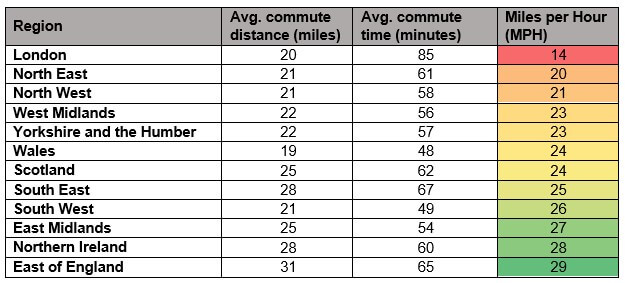
Another canard often given is that cycling is too slow. In an urban environment this is just not so. I can be anywhere within the bypass from my house quicker than you can drive especially once you add in the time taken to walk to your car, park it up then walk to your destination.
There's a side aspect to that in that cars are regarded as "fast" and if a journey takes 40 mins in a car it must be MILES. People are generally very bad at judging distances, especially when driving as it's such an insulating and isolating experience.
So the idea of cycling that journey is regarded as impossible right from the start because bikes are "slow" and a 40-min car trip must be a really long way.
But in an urban environment, a 40-min car trip is probably no more than 8 miles at most. People just don't realise that.
Our small town is in absolute meltdown regarding the greater Manchester clean air zone.
I'm sick of the insults aimed at cyclists on our local FB group regarding the new (proposed) one way system being talked about and the new cycle lanes.
The dislike of people who ride a bike and don't pay car tax, hold the drivers up, get in the drivers way, how the cyclists should pay for all of this has really got to me.
The car drivers have an answer to everything and aren't willing to see any other point of view.
One woman told me that once these cycle lanes were built I would get fed up of using them!
Car drivers want all the 20mph zones and sleeping policemen removed.
As a lone female cyclist I just got some quite horrid insults.
Ultimately what I'm trying to say is the battle is going to take many, many years and only generations down the line will change the way they think. I'll be long dead by then.
Even my own WI joined in with the complaints - unbelievable.
Another canard often given is that cycling is too slow. In an urban environment this is just not so.
Sometimes it is. It takes me 30 mins to ride to the station to get a train early in the morning, about 15 mins by car - and I'm not hanging around on a bike. It'd take my wife the best part of an hour I reckon. If I want to go to the big swimming pool rather than the smaller local ones that are either rubbish or not open when I want, it's nearly a 9 mile ride. Through town that's going to be 45 mins for me, well over an hour for the average person, or 20 mins by car.
SOMETIMES it's quicker by bike, but it's far from always the case.
So thats 3 of the reasons given for “it couldn’t work here” are bunkum
Not bunkum. Things are not black and white, and to be honest your language here is actually harming the thing that we both want to see. People need to feel good about cycling, not feel bad about not cycling. Carrot, not stick, in other words.
To me its a key step because it de- legitimatises the idea that roads are for cars first and thus bikes need to get out of the way
I do want to see this but I suspect most people have no idea what it even means, and many people will just object to it. I can't see it as critical tbh.
The point about infrstrucutre design is the key I think. Change junctions, create side-street routes, add railway/river crossings and cycle contraflow at key points and make it all work nicely and thoughtfully. An example of the stupidity of our planning system is a planned housing development near here that is actually on land that is part of a business park. No issue with this in principle but they've ticked the 'cycle' infrastructure box by saying they're going to put in a cycle path to access the development along the business park access road. Ok, but that road ONLY goes to a motorway junction, so a cycle path along it is absolutely 100% worthless. But the rules say that you only need to provide access to the development, NOT that you have to actually contribute to a sensible network.
Our small town is in absolute meltdown regarding the greater Manchester clean air zone.
There’s a lot of utter bullshit about the CAZ. We’re on the outskirts of Rochdale and there’s a lot of frothing (instigated by a Tory prospective councillor, though Burnham hasn’t handled it well either) about not being able to eg. drive campers - and then one of the camper owners being most vocal announced their vehicle was exempt.
Molgrips - what am I supposed to say to things that are truely wrong? Bunkum is a lot politer than I would like to be
As regards speed of cycling v cars - you are not living in an urban environment are you. Its simply impossible to half the time when you live in 30 mph limits by using a car.
9 miles in 20 mins is simply not possible in urban environments. Thats averaging 27 mph in 20 and 30 mph limits where the average speed of a car is in low teens MPH
There is no point in stating bikes are slower than cars on out of town main routes when its urban cycling I am talking about
this has actually been repeatedly measured in Edinburgh - any route within the city a bike is quicker than a car
Please have a read back thru your posts and see how anti bike they are . All you have done is say nothing can be done to improve anything for bikes other than putting them on back roads on indirect routes. this is despite massive amounts of evidence showing that what you claim is impossible is possible and the solutions are well proven, used europe wide but without any evidence you say none of these are possible in the UK but give no reasons
[quote=poly]
I don’t think you understand what happened in the Netherlands (or other countries) – they didn’t click their fingers and overnight get an amazing physical infrastructure for cycling. They changed their approach to cars v bikes and as a result it became logical that whenever infrastructure was updated, built or repaired bike segregation was preferred.
As for Newport road – its three lanes wide, with wide pavements and large gardens each side. If we can’t find a way to design safe cycling into that space we are screwed. I suspect this is the real battle Chris Boardman faces:
I am sorry if my posts annoy you Molgrips
I just get so frustrated by this idea that well proven solutions will not work in the UK - what is so special about the UK that what works in loads of other countries will not work here?
If on a cyclists forum all these well proven solutions are dismissed out of hand what chance have we got? Its so depressing and frustrating
Yup big and daft – that is true but the reason why we don’t get decent provision is because in this country any move that slows or is thought might slow cars down is perceived as injust and unacceptable. Our politicians pretend we can increase active travel without reducing space for cars.
Posters on this forum who happily admit to "spirited" driving or "making progress" show that it's not just the politicians fault
What gets me on the active travel front is that the school run/ mum and dad's taxi lot don't realise that if their kids could safely get about by bike suddenly all those hours sat outside a school or ferrying kids to this that or the other are theirs to sit back and watch Gogglebox or use productively. One of my neighbours picks up his kids from school which is a 20minute walk at most, the kid is a sixth form student WTF! He probably take longer out of his day than the kid would if they walked.
We don’t fill up the car from a petrol tank at home, the industry needs to improve EV range and then reverse the mantra that home charging is wonderful, because for many on low incomes it’s never going to be available or practicable
Range isn’t an issue now with regard to home charging - well for most drivers anyway. The daily commute, which is what home charging caters for, is amply covered by the range available today.
The reason home charging works is that on a day to day basis slow charging at home when you’re doing something else (perhaps sleeping) takes very little useable time compared to driving to a filling station and hanging around while the car charges. But, but fast charging I hear someone say. Well do the sums and work out what charging at a 500 miles in 5 minutes rate would do to grid infrastructure and to generation infrastructure. It would simply be too expensive for people on low incomes.
Slow charging at home is the cheapest form of charging, and the least time consuming as soon as you have a drive. And I appreciate not everyone does.
Which is why part (only part) of my day job is trying to think of clever ways round that issue.
Bikes, e-bikes, e-cargo bikes etc might well be part of that solution. Because if we can remove the commute from the we problem other solutions start to arise.
If.
It would simply be too expensive for people on low incomes.
Slow charging at home is the cheapest form of charging, and the least time consuming as soon as you have a drive. And I appreciate not everyone does.
The poorest won't be able to access cheap charging at the same time they pay for the grid improvements through their bills to enable ev charging. Very progressive.
Which is why part (only part) of my day job is trying to think of clever ways round that issue.
Which would suggest there isn't one....
IGM could you please tell me how home charging electric cars can work in a city like Edinburgh where many people live in flats and few folk have dedicated parking spaces. My block has around 100 flats. Enough room to park perhaps 25 cars kerbside next to the block and is not untypical for the city
Electric vehicles are not the answer (except for mass transport trains) they are simply not sustainable, the switch from fossil fuel to electric would be deviating for the planet. The answer is not to travel short distances by car, stay local, use a bicycle, walk, bus, train. It doesn't help that public transport is expensive, unreliable, not 24/7 & often not a pleasant experience.
I just get so frustrated by this idea that well proven solutions will not work in the UK – what is so special about the UK
The UK isn't special - the point is that every country is different. Different geography, for sure, but also different attitudes towards government, different government styles, different public attitudes, and different history both distant and recent. The war being a significant factor in Europe for example. All these things mean that the political and social climate is different in each country. Town planning has been done differently for decades in different countries for all sorts of reasons. So I don't think it's particularly valuable to cite what happened in the Netherlands in the 1970s as an aspiration for the UK in 2022.
I think that we need a range of techniques for different cities in the UK. Re the comments you made about cycling being faster than driving - this may hold true in some places but not others. The example I gave with a journey I might want to make on Friday, to the big swimming pool - if you drive you do most of it at 40 or 50mph with a short section of 70mph. This is because of the way Cardiff developed over the years, it has various dual carriageway and relief roads and the like. Consequently these need to be bypassed entirely, I suspect, with cycling alternatives which would be traffic free and much more direct.
Things like junction redesign, with dedicated lights for cyclists would help too, not least to simply raise the profile of cyclists on the roads.
I wonder if cycle paths in other countries need to have constant motorbike barriers to stop neds ragging their MX bikes all over them?
the switch from fossil fuel to electric would be deviating for the planet.
I don't think this is true given the huge increase in renewaable energy generation and the avalanche of battery developments about to happen that will remove environmentally damaging constituents. However EVs still aren't the answer for short trips, obviously.
My neighbour always drives to the supermarket in a BMW 640i. It's 700m away. Of course he uses the car for other things too, and yes it's up a hill and has a nasty roundabout, but just walk ffs. It's even easier than taking the car!
*bangs head on wall*
Re the comments you made about cycling being faster than driving – this may hold true in some places but not others. The example I gave with a journey I might want to make on Friday, to the big swimming pool – if you drive you do most of it at 40 or 50mph with a short section of 70mph.
Why when I am talking about URBAN travel in 20 and 30 mile per hour limits do you try to disprove it with a tale about non urban driving?
Why is the UK so different that things used successfully in other city europe wide not work here? Even in cities untouched by the war?
IGM could you please tell me how home charging electric cars can work in a city like Edinburgh
Round, say Marchmont, it won’t.
Providing sensible infrastructure for active travel options will. And if that helps those tenement dwellers to do without a car, renting one when they need to, then that becomes a general good and cheaper thing.
Active travel alone is not the answer, nor EVs, nor electrifying everything, nor PV, nor wind, nor batteries. Together though…
A single solution is unlikely to work, blended solutions are needed.
PS @big_n_daft while I am loving your work, can I suggest you stop being part of the problem? There will never be an answer that works for everyone. If that’s what you want, give up now, it’s not happening.
What we need are multiple answers so everyone gets an answer that works for them - and probably a bit of this answer and a bit of that.
could you please tell me how home charging electric cars can work in a city like Edinburgh where many people live in flats and few folk have dedicated parking spaces. My block has around 100 flats. Enough room to park perhaps 25 cars kerbside next to the block and is not untypical for the city
If we move away from car ownership then it's relatively easy. 25 cars for 100 flats with good access to local amenities and public transport sounds like more than enough. Easy access to pool cars when you need one. You can even have access to big cars, vans, etc, so it could be better than just having one car.
There will never be an answer that works for everyone. If that’s what you want, give up now, it’s not happening.
This is an ongoing "reason not to do anything" used a lot in climate denial and the very closely related areas of restricting traffic.
It's the idea that you shouldn't do anything until you have an equitable solution, consulted on and agreed by everyone that benefits 100% of people 100% of the time. Since that can never exist, people use it as a reasons to do nothing, often gaslighting their concerns ("oh think of the elderly / the disabled / the children / the baby robins...")
Translation: "how dare you make it more difficult for me to drive Tarquin and Jemima the 500m to the school gates in my SUV"
As discussed above, people are not going to get out of their comfy air-conditioned mobile sofas while driving them is so cheap and easy (relatively speaking, compared to the alternatives). Even stuck in traffic, you've got your own entertainment system, maybe a nice seat massage system - there's not really much incentive to get out of them! EVs may actually make this worse - if you're exempt from Congestion Charge / ULEZ / Clean Air Zone etc and you have the moral high ground of "well I'm not causing any pollution" then continuing to build and maintain roads with driver priority is only going to make traffic worse.
Why when I am talking about URBAN travel in 20 and 30 mile per hour limits do you try to disprove it with a tale about non urban driving?
I would consider it urban driving, it's still within the city after all. It doesn't matter what the classification of the roads is - if I want to get to locations across Cardiff it often takes much longer by bike.
Why is the UK so different that things used successfully in other city europe wide not work here? Even in cities untouched by the war?
Well that is a long essay that I haven't got time to write right now. But suffice to say not EVERY country in Europe has great cycle infrastructure, only some of them.
If we move away from car ownership then it’s relatively easy.
Yes but the hard part is moving away from car ownership. The big issue here is a shift in attitudes, and nothing significant will happen without that. So how do we change attitudes, firstly?
Gloucester Road in Bristol is an interesting example of how attitudes can come first. Very busy main road out of Bristol, up hills. But apparently lots of young people live in the areas serviced by it who either can't afford cars, or don't want to buy them. So there are loads of cyclists using it in spite of the traffic. And the traffic has had to take a bit of a back seat. So how did that happen? Why is it like that?
Yes but the hard part is moving away from car ownership. The big issue here is a shift in attitudes, and nothing significant will happen without that. So how do we change attitudes, firstly?
Totally agree. I think you need to make non ownership better. Cheaper, less maintenance, choose the car/van to suit your journey, less risk, one way journeys. All possible but it's a big leap from what we have now. Cars are treated as an extension of the owner and as status symbols as much as a means of transport.
If we could even promote or represent non-driving that would be a great start. In US TV shows bus-taking is universally portrayed as a characteristic of poor people. In the UK we've had cultural campaigns to change attitudes on all sorts of things - single parenting, LGBTQ+ issues, race and so on over the years. Let's do the same for non-car use.
However most people's experience of PT is poor because it's under-provided. Take that well-liked show 'Car Pool' with whatsisname and wassername in it. That could easily have been set on a regular train journey, but to reflect reality it would have to have been done standing up where people were pissed off and tired. Not as good of a show.
I would consider it urban driving,
I had a quick look at the map. I don't see motorways crossing the centre of cardiff . I see main roads round the edge. I very much doubt anyone else would consider bypasses and motorways skirting the city part of the urban environment. anyway we were discussion those short journeys in the urban 20 and 30 mph limits not 9 miles round the bypass so your anecdote shows nothing.
Well that is a long essay that I haven’t got time to write right now. But suffice to say not EVERY country in Europe has great cycle infrastructure, only some of them.
And once again - who said they did? What I asked was what is so special about the UK that solutions used successfully elsewhere in europe cannot be used in the UK
I do not understand why you are so against well proven solutions that could easily be applied!
It’s the idea that you shouldn’t do anything until you have an equitable solution, consulted on and agreed by everyone that benefits 100% of people 100% of the time. Since that can never exist, people use it as a reasons to do nothing, often gaslighting their concerns (“oh think of the elderly / the disabled / the children / the baby robins…”)
Eloquently put and this is what you are doing molgrips.
and has a nasty roundabout
It would be a lot less nasty if it was redesigned to make active travel nice and prioritised

