I'd have to call you out on that, as having ridden one of my protos with sliding dropouts, I could probably call "differences" to 5mm at the chainstay
Interesting - so bikes with sliding dropouts are making a difference you can notice? Do eccentrics make the same difference?
And, with all due respect, that wasn't a double blind trial - you could have been imagining it 😉
Earlier this year i used el stravos to record my speed on my 150mm, supertackied up FS bike and got to almost 55mph just by freewheeling over the top of the hill.
And that is why you should never trust strava. Last time I got to 50mph on an MTB I was draughting a transit van about 6 inches from its back door... on a road, on a bloody big hill. Downhill world cup racer rarely breach 40mph. Hell even TDF riders seldom beat 60.
Interesting - so bikes with sliding dropouts are making a difference you can notice? Do eccentrics make the same difference?
My fatbike has rockers which go from 440mm down to 423mm actual CS length. I'm with Brant on this one, the difference between 435mm and 425mm is quite noticeable. I wouldn't consider myself particularly observant either.
In saying that though, I went custom because I was fixated on the CS effect when going downhill standing. Brant's fixation seems to be more about the CS length affecting seated climbing though.
One size really doesn't fit all. 🙂 427.5mm is the sweet spot BTW
Hmm, I wonder if the sweet spot is seat angle dependent. For instance, does altering an eccentric BB have the same effect?
Hmm, I wonder if the sweet spot is seat angle dependent. For instance, does altering an eccentric BB have the same effect?
I'll let you know in a few weeks 😉
brant - Member
After I followed Ton up the Jack Bridge climb past mmmbop to the Nudie
Ha ha! No personal reflection on ton - but Brant using him as a biking biomechanical model for bike design is very amusing indeed
And that is why you should never trust strava.
I don't think i do. I only ever used it the once, but i do know one thing, it's feels a lot steeper in real life than depicted by the wavy green line of lies in the diagram shown below. How's that for a bloody big hill? 😀
[img]  [/img]
I reckon if you knew what you were doing you could top a real and bonafide 60 down that.
In saying that though, I went custom because I was fixated on the CS effect when going downhill standing. Brant's fixation seems to be more about the CS length affecting seated climbing though.
read this post with hope of being educated - i reckon understand the climbing contact/front end lift stuff ok especially as rarely stand to climb but don't get the downhill bit as would expect to be standing and can't really see how chainstay length impacts COG very much in this situation? or point me to answer above if its there somewhere
It's not about "pushing on the bars", it's moving your COG forward by supporting more of your weight on your arms.
There is no way you can effectively alter your mass location forward to compensate for a typical short rear centre/long front centre trail/AM bikes. Well, you possibly could but you would be in such a precarious riding position that you would eat shit often. If a bike requires you to move out a neutral position to give consistent front/rear cornering bias it's a dated, flawed, pile of crap.
What's more amazing to me is that people are advocating for bikes that ride just like that. The marketeers have done a great job. Most people have an idea what head angle or BB height they prefer for a certain bike but ask them about rear centre length and they usually say "duh as short as possible" Regardless of size! Personally I want bikes that allow me to drop the post, remain in a really similar neutral position, and predictably two wheel drift around a 30kph loose, flat corner. I'm no Sam Hill so I want all the predictable, stable, help I can get.
To whoever said you can't tell a 20mm rear centre difference? I reckon I could tell as easy as 20mm BB height. It's a massive, massive, difference.
And to the chap who said that DH riders move around the bike etc. No they don't, not these days.
I reckon 430mm at sag point is borderline too short for modern, long wheelbase bikes. Maybe okay for small trail bikes I guess but anything less and you start having to do weird things (whether you realise you are or not) with the suspension and the F/R grip bias starts to suffer.
but don't get the downhill bit as would expect to be standing and can't really see how chainstay length impacts COG very much in this situation?
It's much easier to manual. I ride a rigid bike and it's important to be able to loft the front over stuff easily when bombing downhill. My needs are different to a full sus where I appreciate that you might want a neutral position and let the suspension track the ground.
I just find a short bike you can pop off every rock, drop and unduation in the trail makes me smile more than one which does a great job of flattening it all out. Simple as that really. It's never going to win a world cup DH 🙂
For instance, does altering an eccentric BB have the same effect?
Reading this with interest, I think there's pretty balanced reasons for and against on the varied CS length thing. One thing I have noted is that a slotted/track end SS vs and EBB SS, I notice any change in rear end length (a link's worth) on the slotted end bike more than on the EBB bike in terms of how it hops, jumps small stuff, etc, all the things where short stays are said to be needed. CS may be the same on both as gearing dictates it but the balance is different. In that respect I prefer the EBB.
Agree with those saying that short stays are thought to be more important overall than they are but the experience between different SS bikes says that maybe it's not CS length as much as bar to rear axle, wheelbase, balance combined etc. I only have weight through my feet some of the time, a moment later it's unweighted and the input is from the bars.
Looking at how a bike balances via the F-C vs R-C says proportion may count but it would lead to what would be seen as really long stays on bigger sizes. Looking at the 'ends' as in contact points to axles, feet/BB to rear axle and hands/bar to front axle might say that only the centre stuff needs to grow for fit, the ends are optimised for handling. However you do it across a range of sizes doesn't really change the likelihood of one particular bike being right for you.
I'm not a fan of "super short stays" and generally tend not to artificially lie about stay length by quoting "horizontal effective stay" dimensions on bikes I design.
I don't think "horizontal effective stay" is an artificial lie, I think it's a much more useful measurement for chainstay length then actual stay length. Just like top tube length is silly compared to effective top tube. The greater the BB drop, the shorter the chainstays will feel for an actual chainstay length.
Until you try to hop or manual it. As you pull the front up of a 29er with ~50-60mm drop and goes from that drop to 0 drop the Effective / fake CS length gets a bit longer. A 26 gets shorter as you pull up as the BB's starting from really close to the axle line. Makes little difference that you can feel, just that it's the radius the BB rotates around the axle that is what should be measured I think. That and the reduced stability is probably why a higher BB bike is easier to get off the ground and move about. Having said all that, my very-low BB, longish 445mm stayed Jones hops easier than most bikes, the stay / BB just isn't the main thing that makes that happen easier imo.
Effective maybe useful for looking at front-rear balance but what you can make of that on its own I'm not so sure.
And to the chap who said that DH riders move around the bike etc. No they don't, not these days.
The busses dont go where you live do they?
Aron Gwinn leaning back for no apparent reason, doesnt he know its not nececary?
[img]  [/img]
Arron Gwinn leaning forewards,doesnt he know you you can just sit in the middle and be a passenger on a modern bike!
[img]  ?0[/img]
JCL - MemberThere is no way you can effectively alter your mass location forward to compensate for a typical short rear centre/long front centre trail/AM bikes. Well, you possibly could but you would be in such a precarious riding position that you would eat shit often. If a bike requires you to move out a neutral position to give consistent front/rear cornering bias it's a dated, flawed, pile of crap.
What's more amazing to me is that people are advocating for bikes that ride just like that. The marketeers have done a great job. .
So what are you trying to say, modern bikes require you to sit like a sack of spuds and just hang on? Have the basic principals of how to ride changed? You've become lost in arguing one tiny point and forgotten that any one aspect of a bikes geometry is not the defining factor, it's only one part of it. I suspect no one is talking about hurling your weight around like the passenger in a sidecar race, rather, small shifts. A bike with a longer effective tt might require you to shift forward slightly on a lippy jump, or to apply a bit more pressure on the outside of the bars on a flat corner to maintain grip but the flip side is they require a less dramatic rearward weight shift on descents, compared to a bike with a really short tt.
Try to imagine tackling a big rock garden at high speed down a steep chute on a bike with a 450mm top tube and 900mm chainstays. Does that sound ideal to you?
JCL .And to the chap who said that DH riders move around the bike etc. No they don't, not these days.
Of course they do, that's a laughable statement.
[img]  [/img]
[img]  [/img]
Some more nice pics to add some colour because every thread needs pics.
[img]  [/img]
[img] 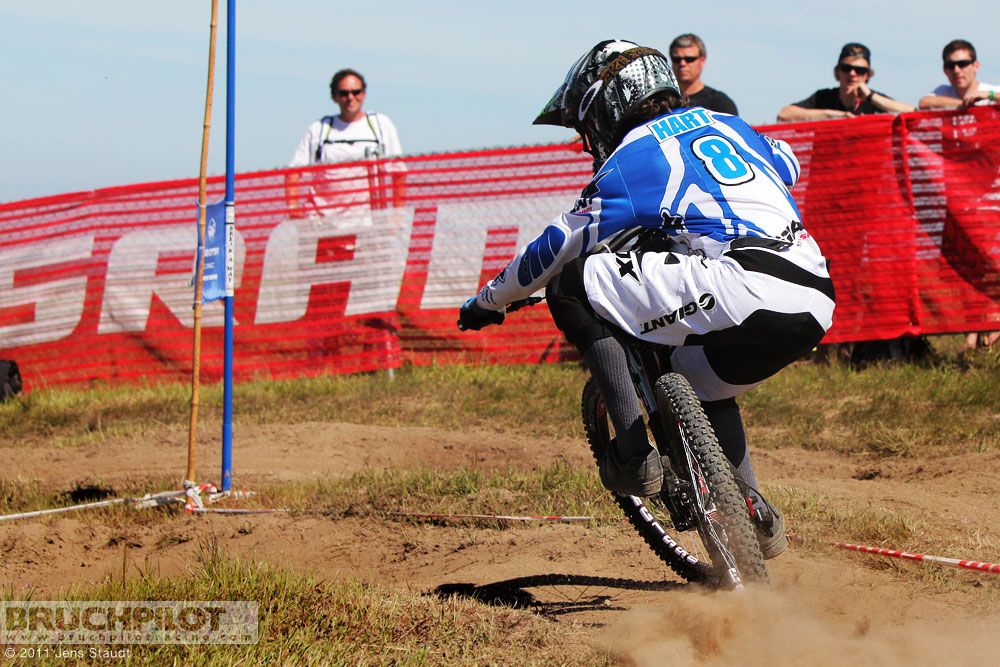 ?0[/img]
[img]  ?0[/img]
[img]  [/img]
[img]  [/img]
[img]  [/img]
I love this thread.
I got a bit fed up yesterday as my new bike rides great, but I worry that people will buy because of colour.
It's great to see raging debate about geometry.
I'm sure I'll mess the colour and graphics up though 🙂
There's a pic of a bike in the Data Book which has (I think) a seat angle that's adjustable on the fly.
I'm vaguely tempted to make such a bike, and make some other bits adjustable too, to experiment with this.
Those of us who are old enough...
[img]  [/img]
[img]  [/img]
The Dawes was interesting. It had 19.5in chainstays. My mate Jenks at school had one. He was so embarrased by it.
I think the new Jones+ has similar dimensions out back, but clearly very different elsewhere and bigger wheels.
Dawes did this to allow them to use straight chainstays into the lugged BB shell.
I love how you can see the chain sagging due to the weight of the length of the span.
One of the first frames I built a long, long time ago was a touring bike - the customer specified as long and as straight stays as possible. I forget what it ended up with, but it needed more than one standard chain!
Stable as a very stable thing, though, and no problems with heel clearance for the panniers 😉
I'm sure I'll mess the colour and graphics up though
I liked my 456, so low key you forgot the 456 stickers and just labled it inbred.
Genuine question, has anyone built a frame with an off center BB? Itd be horrible on 50% of corners, im just curious how horrible and how much better (sorry grammar police) it is the other way?
And could you build something like Kona magic link sideways to replicate it both ways.
A bit like 51mm forks, I've got some 46mm offset forks, which make the bike feel really stable, people who've ridden slacker (i.e. 68deg rather than 70deg) frames with 51mm offset forks (which results in a similarly slack 'feel' on a 29er) say they 'flop' much more when you try and turn tighter than the bike want's to go. To me that sounds like marketing said "we want 26er comparable head angles to sell the 29ers", and the designers comprimised with 51mm forks.
I'm not as familiar with bike steering geo, but for cars offset is just as important as caster. Well actually it's the trail that makes the biggest difference to steering 'feel' and weight, but car engineers have long known that you can have a high caster angle (for stability and camber gain in cornering) but keep the steering reasonably light by increasing the offset in order to keep the trail sensible. Without offset, the trail would be huge with a high caster angle and steering unfeasibly heavy.
So my take on the 51 mm forks is less cynical. I think it's just a simple and logical correction to maintain the same trail with a 29 inch wheel for a given head angle. Otherwise for any given head angle a 29er is going to have more trail and therefore slower heavier steering. Not a marketing led thing at all, but again marketing are bound to emphasise the change as they do - with some justification in this case I think.
Edit: Just to add, there's no particular reason why 46 or 51 is the golden offset to have on every bike, they are simply industry standards that frame designers work around and it makes sense that there is now an equivalent standard for 29ers.
Lol at the DH pics, it was me who mentioned DH riders using bodyweight and body positioning to achieve what they want the bike to do, just couldn't get any pics up myself as I'm away from a computer but I think they illustrate the point beautifully...cheers!
Re all the pro riders hanging off their DH rigs left right and centre. Are you trying to imply that bike geo doesn't really matter or just arguing the point with JCL? I'm certainly no Ratboy but I can tell differences in bike geo quite easily, whether that's head angle, BB height, front/rear centre etc etc. and am sure any other average rider can too.
Most people (me included) might not understand the interaction of all the variables, but when you ride a well sorted bike it just gives you a sense of confidence. You still move around on it, but you don't fear for your life like you might on a really sketchy bike. Ultimately those differences between a good and not so good bike can be relatively small e.g. a degree of head angle, an inch of reach, an inch of BB height etc. But in isolation it's easy to dismiss any individual parameter as being unimportant. I think you have to consider all major parameters as being important, but also how they combine as a whole. That's the hard bit I think and why it takes years of development to get a better overall solution. Perhaps I'm digressing too much from the original question now so I'll shut up!
My brain hurts.
Everyone is different.
Everyone's ride is different (some more up, some more down, some more standing climbing, others more sat climbing etc etc etc etc).
There is no optimum for everyone's application.
There are too many generalisations.
There is never one critical measurement - it is how all the measurements combine.
I ride a fairly extreme example of this - sometimes geared, mostly singlespeed 29ers with stays that are truly around 16" long (not the lying measuring method - and I say "around" because of adjustments for chain wear).
For 3.5 years I've been very happy riding them for anything and everything - from local to Lakes to trail centres to non-lift assisted steep up and down in the Alps and Pyrenees.
My point is that without knowing my height, weight, position, riding style and all the other geometry you just can't make generalisations as to what will and won't work. How many people here are arguing about super short stays that have never ridden them?*
In a small way it is similar to Mr Porter, in that I've taken what I like (from 25 years of MTBing) and built it to the extreme. But unlike him I'm willing to accept that my application is sometimes different to other people and their alternative likes / dislikes / applications are equally valid. Going slightly OT, I do however draw the line at motorbike wheel size analogies as you just can't compare highly powered, heavy, fully suspended motor vehicles with lightweight bikes operating on a few hundred watts of human power.
*Maybe people also need to check cs length on road and cross bikes.
This thread is interesting, to me it highlights mtb as an activity partaken by many mediocre to poorly skilled enthusiasts who would far rather discuss and purchase "tech" than actually put any effort into practicing the basic skills required to improve.
JCL brought up Hill when describing his own lack of skill in 2 wheel drifting. Hill and is indeed king of thus skill in DH racing and has always ridden short stay set ups. Becoming confidently stable while drifting does not require long stays. It requires practice.
BMX is a breath of fresh air in comparison to mtb in I recommend every mtber who'd actually like to improve as a rider try it for a while.
Moshimonster, JCL made a comment along the lines that body positioning, moving fore/aft etc doesn't work or isn't necessary.
On any vehicle where the rider/driver/user makes up a significant percentage of the combined weight then rider position is going to be crucial and changing that position (and therefore the weighting of the vehicle) will have noticeable positive and negative effects on how said bike/motorcycle/skateboard/surfboard etc etc handles.
As the vehicle gets heavier (think car) and the human inside it makes next to no difference to the overall weight our positioning and movements make less of a difference to how the vehicle performs.
That was the gist anyway, however good modern bikes are we all shift about during the ride.
Look at the popularity of dropper posts to see the position most people like to get into when descending....look at that comically bad DH video from 1993 posted the other day where everybody was riding with their saddles sky high and unable to move when it came to the techy section and the number of OTB incidents that ensued, we may not know we do it (or want to admit we do it) but the modern MTBer is all over his/her bike these days and it's generally the guys who ride like a sack of spuds that come unstuck when things get technical.
This thread is interesting, to me it highlights mtb as an activity partaken by many mediocre to poorly skilled enthusiasts who would far rather discuss and purchase "tech" than actually put any effort into practicing the basic skills required to improve.
I don't know why it's impossible to think about the tech aspects and also put effort into practising skills?
mtbel - MemberThis thread is interesting, to me it highlights mtb as an activity partaken by many mediocre to poorly skilled enthusiasts
Which sports are mainly partaken by many elite level professionals ? It strikes me that nearly every sport will have more poorly skilled and mediocre participants than highly skilled.
who would far rather discuss and purchase "tech" than actually put any effort into practicing the basic skills required to improve.
Every time I ride I am practicing skills to improve. As for discussion have you been out in the real world? Have you ever encountered people debating soccer or rugby or boxing or tennis or golf ad nauseum? I have. It's like a plague. Hordes of over opinionated arm chair critics arguing at length over players skills, managers tactics, pitch conditions, refereeing. Obese useless turds debating the relative fitness of elite athletes. Cowardly cack handed commentators debating the fighting prowess of UFC or IBF killers.
Everyone loves debate. Go over to a soccer forum, try not to kill yourself shortly after. MTB is a sport where technology is pretty integral to it, certainly to the racing side of it, so people love to debate that side of things too. Similarly, go on to a motorsports forum and read the views of illiterate teenagers who've just passed their driving test ripping into Lewis Hamilton or explaining what's wrong with the turbos in Redbull's latest F1 car.
Which sports are mainly partaken by many elite level professionals ?
Wingsuit flying?
brant
Wingsuit flying?
Is that a sport? I thought it was just procrastinated suicide.
And one more thing, at least we actually do participate in our sport. (when we're not injured).
I wasn't aware the next level up from "mediocre" jumped straight to "Elite level professional"
How many hours each week do you spend discussing your hobby online and how many minutes do you spend actively practicing it? And how does this give you moral high ground above the obese turds you so detest?
mtbel - MemberI wasn't aware the next level up from "mediocre" jumped straight to "Elite level professional"
The number of low lever recreational participants in any popular sport will be hundreds or thousands the number of professionals. Your point was that most mountain bikers are low level. Are only the high level allowed to debate?
mtbelHow many hours each week do you spend discussing your hobby online and how many minutes do you spend actively practicing it? And how does this give you moral high ground above the obese turds you so detest?
Yes. As above, at least we (most of us) do actually "do" mountainbike. So that gives me a moral high ground over armchair critics who can't kick a ball. At present I spend zero hours on my bike thanks to a separated shoulder. When I'm not injured I spend enough time on the bike to make me better than most. Maybe that doesn't qualify me to comment in your eyes, since I haven't won a world cup, but I certainly have plenty of people asking my advice.
I think you have to consider all major parameters as being important, but also how they combine as a whole.
Bingo 😉
mtbel - for someone who does not like discussing tech your only posts EVER appear to be on articles relating to.....tech..... 🙂
There are also a number of people responding to this thread that make the the tech rather than purchasing it. Exchanging ideas when not riding or making stuff can sometimes be interesting.
Having done this for 25 years and with a wife that has raced mtb at 2 UCI worlds I don't think we ever "practice skils" anymore. We just go biking.
That was the gist anyway, however good modern bikes are we all shift about during the ride.
Of course, but a good bike still feels a lot better to ride than a bad bike. So whatever subtle differences there are in geometry, frame stiffness etc it is still very relevant regardless of how much you move about on the bike and how much you weigh compared to the bike. You certainly don't need to be an elite rider to feel a benefit from a well set up bike. That was all I was trying to say really.
When I was much younger I used to argue that suspension on a mountain bike was a bit pointless as you weigh so much more than the bike and have arms and legs acting as suspension anyway. In hindsight I was very wrong there!
Ironic that you also have a problem with illiteracy when you seem yourself to be suffering some sort of affliction causing you to split sentences and quote each half separately. Seeing as you failed to comprehend my first comment I'll leave you to your own bitterness and delusions.
Get well soon x
Is mountain biking even a sport? I know it can be done competitively, but that doesn't mean what most people do is competitive MTBing.
If you want a bike to get from A to B as fast as possible, you have different needs to someone who just wants to go play in the mud or explore the wilderness, for instance.
Moshimonster, JCL made a comment along the lines that body positioning, moving fore/aft etc doesn't work or isn't necessary.
All my posts were regarding cornering grip. My point is you can't compensate with body position to effectively change front to rear weight distribution, and ultimately front to rear grip with short rear centre/long front centre geometry.
It's a flawed concept.
Great photo's of the DH guys in chutes etc but I'm talking cornering. That second photo of Gwin on the Trek is pretty telling though. I'd say he's pretty much neutral in that turn. Try and find an early pic of him on the Demo looking like that. Funny enough he went from 420 to 440 rear centre to try and get that bike to work.
My point is you can't compensate with body position to effectively change front to rear weight distribution
I reckon that's true, as your feet are always on the pedals. Obviously you can change the fore-aft weight distribution from that neutral point but only by as much as you physically can without your feet actually leaving the pedals. On an XC bike I always feel like I'm hanging right off the back of the bike on descents where I would hardly need to move on my Enduro bike. They are not the same for sure.
JCL - Member
Funny enough he went from 420 to 440 rear centre to try and get that bike to work.
For him. Funny enough, Brosnan and Ropelato left the geometry unchanged, and Brosnan was only a few points behind Gwin. So what does that mean?
Great photo's of the DH guys in chutes etc but I'm talking cornering.
Look again, most of them are cornering.
Brosnan rides a small (possibly medium this year) so a bit less FC/RC differential. Plus he's been on the bike since a junior so he's had a long time to compensate?
Gwin came off a more neutral, balanced bike and was a mess on the Demo. You could see it was weight distribution related, especially in that early Redbull promo video. I honestly knew then that he was going to have a mare on that bike.
If a guy like him can't ride around it how important does that make rear centre length for guys like us?
That said I'm not really arguing this point based on DH bikes, they're very specific use bikes. Which is why I kept saying trail/AM bikes. Bikes that go up and down and should be as balanced, neutral, handling as possible.
JCL
Gwin came off a more neutral, balanced bike and was a mess on the Demo.
He also said he didn't ride any proper dh tracks, any world cup grade tracks to train. Just his local dh trails.
We'll probably never really know, Gwin might not know why he had a mare switching to the demo. If there's any truth in what you're saying though, it's that the cs length can make a massive difference. I personally doubt that's what his issue was, to me it seems like an excuse, but it could prove that cs length is noticeable anyway.
That geometry didn't slow Hill or Brosnan down.
Demo. You could see it was weight distribution related, especially in that early Redbull promo video. I honestly knew then that he was going to have a mare on that bike.
This video? Reeaally? You knew he was going to have a bad season based on this? JCL is the STW forum name for Sam Hill and I claim me free can of Monster.
JCL Which is why I kept saying trail/AM bikes. Bikes that go up and down and should be as balanced, neutral, handling as possible
If you mean handling, well yeah that would be nice. But I doubt that can be got without bias/compromise. I'll happily take a bike that can climb okay, but is a dh weapon, over something thats a great climber but a twitchy descender.
To be fair Hill crashed his brains out on the bike a number of times as has Bronson but yeah it's not the best example as those guys can usually ride around anything.
I could tell from that vid because he looked so different to his riding style on the Trek. Dont forget, 30mm rear centre difference between the Demo and Session. Huge. Look at the 90's huck to rear wheel landing he does. You think he meant to do that? I reckon he was wondering what the hell was going on.
That bike was the worst example of what I'm talking about. It was a nightmare working out rear spring rate. Weight is so rear biased that the rear has to be oversprung to compensate. You end up hanging over the back to make sure you don't get bucked. Run softer rear spring rate and it choppers out massively on flatter corners and the front washes out.
I simply don't believe you can compensate for it with a forward weight shift and even if you can it doesn't feel natural and you'll be on a much finer line of eating shit.
If you mean handling, well yeah that would be nice. But I doubt that can be got without bias/compromise. I'll happily take a bike that can climb okay, but is a dh weapon, over something thats a great climber but a twitchy descender.
I agree 100%. The only compromise is slow speed tight turns but I'm happy to take that trade off as I can be precise at slow speeds and get my lines sorted far easier than at high speed. I'll take that trade off for a bike that is stable/balanced on the grip limit. It's marketing that has led to the perception that bikes with longer than "as short as possible chainstays" are not agile etc. I used to believe it too but it's BS, like every other measurement, there's an optimum.
JCLI agree 100%. The only compromise is slow speed tight turns
Personal preference etc etc but I notice a lot more positives than just slow speed cornering. The things I notice short chain stays contributing to would be easier to lift the front end, easier to manual for those who can, easier to pump terrain, easier for me to jump with and better low and high speed cornering.
I find that bikes with longer stays can sometimes have an unpredictable weight shift mid corner or on corner entry which is unsettling. I've not personally noticed this twitch with shorter cs bikes. Rather, I find if they do get unsettled mid corner it's more manageable.
I also feel that shorter chainstays contribute to a more direct pedal feel and have more snap or response under power. Could be me.
I like a long wheel base up to a point, but i personally think the best compromise is to have a long tt, and short cs, not just a limousine of a thing, because as I see it, the only downside of short chainstays is a loss of climbing traction, especially out of the saddle, which I can easily circumvent by staying in the saddle. Long stays for stability yes, but not for handling, same as vehicle wheelbase in general.
[img] 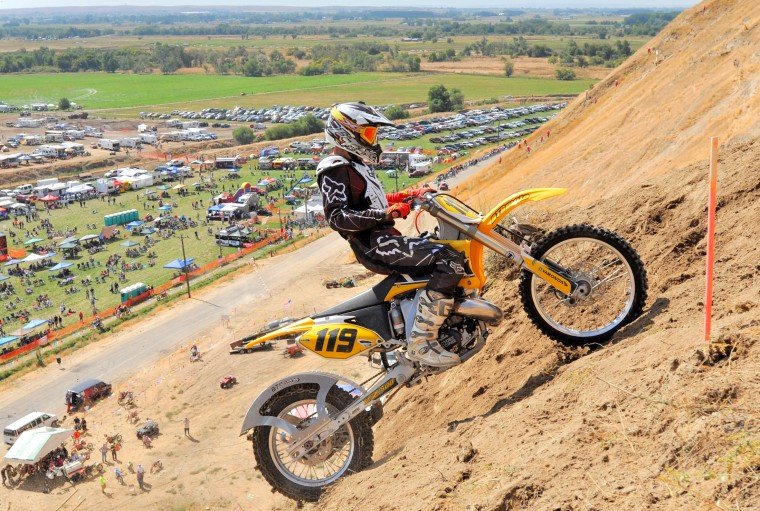 [/img]
[img]  [/img]
Funny you should post a hill climbing mx bike JJ. Gwin's preference for a longer cs may be due to his two-wheeled background, motocross.
Look at the 90's huck to rear wheel landing he does. You think he meant to do that?
When this vid was first released, someone also mentioned that jump (may have been you JCL). I think it's obvious he meant to land back wheel first as just after landing there's another kicker. I don't know about you but i'd not be landing flat just before a lip of another jump - especially at that speed.
Did someone say ultra short chainstays?
[url= https://farm8.staticflickr.com/7497/15791242281_21b2659b7d_z.jp g" target="_blank">https://farm8.staticflickr.com/7497/15791242281_21b2659b7d_z.jp g"/> [/img][/url][url= https://flic.kr/p/q4qfaX ]Claud Butler Ultra-Shortbase Tandem[/url] by [url= https://www.flickr.com/people/10954782@N00/ ]Ben Cooper[/url], on Flickr
😀
You're not wrong Jim, for a stylish skillful rider short stays are simply more fun to ride. JCL sounds like a racer so fun is perhaps lower on his agenda. 😉
Yep those hill climb bikes are obviously forward biased but do you know what a normal dirk bike F/R weigh distribution with rider is? 45/55. What's a short RC modern medium mountain bike? 30/70+.
But those guys who are 40 years ahead of mountain bikes and with 10X the R&D don't know what they're doing right...
Dirt bikes can afford to wheelspin a bit if it gives them better front wheel traction. MTBs not so much. I don't think you can directly compare the two.
Anyhow, 70/30 sounds extreme, 60/40 is more normal for bikes.
Dirt bikes can afford to wheelspin a bit if it gives them better front wheel traction. MTBs not so much. I don't think you can directly compare the two.
No they don't set dirt bikes up like that. Not from everything I've read. They want 100% stable, neutral handling. Go sit on a well set up dirt bike and compress the suspension. They're very even in their response. Half the 420mm RC mountain bikes don't compress the fork 1mm when you jump on the pedals.
For some bikes 30/70 is conservative. Especially a bike like a large size Kona Process or 26" SJ Evo.
Yes, and if bicycles magically propelled themselves along the trails, a 55/45 split would be pretty much perfect. But they don't, the rear wheel is driven by a motor system that tends to fall off if the rear wheel loses traction for more than a fraction of a second.
So perfect weight distribution is sacrificed for increased rear wheel traction. A 2WD bike could well get closer to 55/45, I don't know if the companies who have built 2WD bikes like Christini et al have considered that.
Interesting debate this. Be interesting to see if Specialized choose to shorten the chainstays on the next evolution of the Stumpy 29 as a lot of people have predicted following the success of the Enduro 29.
The Enduro sure feels nimble for a big hitting 29er and it's actually easier to get the front wheel off the ground than my old short wheelbase 26" bike. It does feel like I'm sat well back on the bike, but very much "in" rather than "on" the bike. I like it so far, but haven't had chance to push it hard up or downhill yet.
Yes, and if bicycles magically propelled themselves along the trails, a 55/45 split would be pretty much perfect. But they don't, the rear wheel is driven by a motor system that tends to fall off if the rear wheel loses traction for more than a fraction of a second.
Give me a rear wheel that looses traction before a front wheel all day long.
What I recommend some people try is a unicycling while holding a bar/stem/fork/wheel out in front. Zero length chainstays. Totally wicked fast in the corners dude.
JCL brought up Hill when describing his own lack of skill in 2 wheel drifting. Hill and is indeed king of thus skill in DH racing and has always ridden short stay set ups. Becoming confidently stable while drifting does not require long stays. It requires practice.
Odd that he used Sam as a referance at all, Sam was credited with having adifferent riding style on the flat pedals, leaning right forewards in the corners to weight the front wheel and allow the bike to drift!