UPDATE: Reviews section refreshed, redesigned, searchable: Go take a look
Currently, I think the absolute divide is chainrings – double for road and single for gravel.
And then they'll ask about ratios as their 1X is too gappy for road use and not enough range for off-road and bikepacking...
1x for MTB but 2x for drop bars imo, literally goes with the terrain. 1x sells but in use, for me, it fails. But there is another thread for all this so I apologise (you started it).
I think I'm right in saying that you designed the Genesis Croix De Fer then moved over to Evans and created the Arkose?
This pretty much puts you at the start of what we now call gravel
If this is true to what extent did you feel you were making bikes that people wanted verses using marketing to wip up demand for bikes that know one really wanted
Tong firmly in cheek here but interested in your perspective
I've got a 105 2x10 specced road bike with 23mm tyres and an 1x11 HT mtb.
I'm tempted by a gravel bike just for comfort, I seem to spend too much time concentrating on avoiding potholes and cracks on the road bike.
This pretty much puts you at the start of what we now call gravel
Dunno, when was the Kaffenback released? or for that matter the Pompetamine? were On One/PX ahead of the curve?
Those were what late 2000s? Disc braked, drop barred bikes (admittedly with a bit less tyre clearance) certainly no CX bikes, intended for mixed on/off-road riding...
hold on did we actually invent the Gravel bike in the UK, before the Yanks went and re-badged it and sold it back to us?
Salsa released the 'Vaya' in ~2010ish(?) had they just borrowed the idea from the Brits?
You could argue that touring bikes started it all off
"Rough Stuff Fellowship" trips using tourers on silly roads/tracks/terrain
yeah quite possibly, i started rough stuffing in the early/mid 80s. I recall one event up on the north yorks moors was on some sort of anniversary, 30th or 40th consecutive running or something.
Dunno, when was the Kaffenback released? or for that matter the Pompetamine? were On One/PX ahead of the curve?
Those were what late 2000s? Disc braked, drop barred bikes (admittedly with a bit less tyre clearance) certainly no CX bikes, intended for mixed on/off-road riding…hold on did we actually invent the Gravel bike in the UK, before the Yanks went and re-badged it and sold it back to us?
Salsa released the ‘Vaya’ in ~2010ish(?) had they just borrowed the idea from the Brits?
I bought my Kona Sutra in 2005. Gravel bikes hadn't been invented but there was a thing called MonsterCross which is basically what we see today.
Not a niche I follow in detail, but I'm not aware of other frames capable of 2.35" tyres besides the Salsa Cutthroat that has been around for several years. Pushing the typical clearance has slowly increased to approx 700*43, but one or two offer a bit more like the Free Ranger's 700*50...
The frameset of which is in their March Madness sale for £400 with some other frame deals, might be a good time to buy and build up a big tyre 2x drivetrain.
(admittedly with a bit less tyre clearance)
Or with plenty of tyre clearance. Singular springs to mind.
I have a Freeranger and on 650b wheels I can get a 2.4" Michelin in. It looks very very wrong but it's fun. Until you need to do any distance on the road.
You could argue that touring bikes started it all off“Rough Stuff Fellowship” trips using tourers on silly roads/tracks/terrain
Could potentially argue it the other way round as well, roadies doing CX over winter using what were (at the time) a crossover between touring bikes and road bikes. I'd say though that "gravel" as marketed today, has roots in CX, touring and 80's/90's MTB. Put those three disciplines into a Venn Diagram and "gravel" will be somewhere in the middle.

Holy Kona Batman!
How much seat post?
I’m not sure the two will ever meet in the middle, I think if they did it’d be back to a pure CX race machine, fine for an hour round a muddy field but lacking everywhere else.
As my only bike is a CX bike I would agree that they do sort of meet on the middle and the difference between road and CX are small and CX and gravel are small.
I don't however agree that it is only good for an hour round a muddy field and I can ride it on road (where it feels pretty much like the road frame that it replaced) or off road where it feels pretty much like a gravel bike.
To me the only really noticeable difference is the tyre choice. I initially had 28c tubeless road tyres on the CX bike as just swapped everything over and it just felt so similar to the road bike as the fit was the same. Put on off bigger road tyres and it feels like a different bike, to me not in a good way.
That is why I settle for something in the middle with a 33c CX tubeless tyre. Still pretty light, still rolls well and still feels more like slightly heavier road tyre than lighter off road tyre.
Holy Kona Batman!
How much seat post?
Stock picture, not mine - but I do have a 90's Kona with almost as much seatpost
About the difference between a gravel bike and a CX, I don't think geometry comes into it much. It's all about the tyres, and to a lesser extent gears and brakes.
In the past whenever I took my race cyclocross on hilly terrain and fireroads I never enjoyed it - gearing too high, brakes and tyres not confidence inspiring on descents. Now my latest CX is a proper race bike (MVDP's Canyon Inflite) but with hydraulic discs and 40mm tubeless tyres fitted, it's a hoot on 'gravel' routes away from traffic. It's more fun if you remember its limitations and don't attempt trails more suited to the MTB. Horses for courses literally.
Incidentally, most people I see on gravel bikes seem to be roadies who are maybe uninterested, unaware of, or intimidated by technical trails MTB's are suitable for.
My gravel bike is also a CX frame with 40mm tyres shoehorned into it.
I've joked about it in the past, but I wonder if it is something about the geometry which makes it so bloody difficult to 'take it easy' on the bike. It just wants to smash* everywhere!
The new 853 build will be an interesting experiment, bit longer, lower BB, space for bigger tyres. Will feel like a limousine in comparison!
*relative term, as in on the drops and pushing hard. Would look like a bimble to anyone reasonably fit 🙄
Not a niche I follow in detail, but I’m not aware of other frames capable of 2.35″ tyres besides the Salsa Cutthroat that has been around for several years. Pushing the typical clearance has slowly increased to approx 700*43, but one or two offer a bit more like the Free Ranger’s 700*50…
There are loads. Things like the Fargo have been going out for years.
https://bikepacking.com/index/drop-bar-mountain-bikes-29er/
a bike for just arsing about on.
Arsing about has a wide range of definitions...
Arsing about, drop bars and straight toptubes don’t mix in my version of arsing about. That Evil Gravel bike is the only one that doesn’t look like a road bike to me.
@ampthill Bikes people wanted vs using marketing to whip up demand (ha) - neither tbh, more a case of liking the format personally and having the creative freedom at Genesis to do it and see if there was interest. I wanted a different sort of road / all-road bike and Shimano road disc calipers appeared. Madison had a spring dealer show where I had a sample to show. It was pitched as not for CX racing, less than half of the people who saw it thought it was useful for something and more than half thought it was daft because it wasn't much good as a road or CX bike.
I didn't ride gravel on it, was all lanes and muddy byways at first, a road/CX mix. We did say something about drop bars not always meaning tarmac in the catalogue but gravel wasn't mentioned, it was all chalk tracks and dirt. 'UK Gravel' eh.
hold on did we actually invent the Gravel bike in the UK, before the Yanks went and re-badged it and sold it back to us?
The French did it all in the 60s, Jobst Brandt was gravel riding on road bikes way back, Brent Steelman, Hahn Rossman and others were making what we'd all see as gravel bikes before any UK brand I know of. It was all quite niche over there until maybe 2012-2015 ish though. I think GT were the first big US brand to make something they called a 'gravel bike' in 2014 or 2015.
I’d say though that “gravel” as marketed today, has roots in CX, touring and 80’s/90’s MTB.
My impression is it started with touring/CX (as it happens I have a Croix de fer as a sort of compromise between wanting something for some road miles/commuting but also a bit of easy offroad) but has moved to something closer to the old MTBs in terms of tire size and thinking about suspension but retaining the drop bars.
I’d say though that “gravel” as marketed today, has roots in CX, touring and 80’s/90’s MTB.
Hang on. There's multiple things going on here.
In the US, they made gravel bikes as road bikes with slightly bigger tyres because they have lots of what they call 'graded' roads which are like fire roads, but wider and serve as actual public roads. Those came from road bikes, no question.
They then were sold over here, but we wanted to ride them on bridleways and mountain tracks and the like, for which their still relatively skinny tyres weren't quite enough. So now we have gravel bikes with fatter tyres still - 47c or so - and that niche doesn't have a formal name. People say monstercross or adventure bike or still just gravel. But then people are taking them down singletrack which you might've done on a cross bike or an old MTB, but it's definitely not what the original US bikes were designed for.
So er, yeah. Now we can buy bikes from an almost continuous spectrum of different styles and applications, and the niche categories are being eroded. Now we have XC MTBs that are longer travel and slacker angled, and even longer travel/slacker is now downcountry, and now there is a continuum between CX, gravel, monsterwhatever. We can now buy a bike tailored to our needs.
If we get too bogged down in the details though we might be in the rather strange position of 'needing' to change bikes if we move to a different part of the country!
Bikes people wanted vs using marketing to whip up demand (ha) – neither tbh, more a case of liking the format personally and having the creative freedom at Genesis to do it and see if there was interest.
Were you responsible for the original Day One? Skinny steel, orange paint, singlespeed, rim brakes, lovely. I pimped mine up a bit then promptly sold as I needed the money during my student days, definitely the bike I regret selling the most.
My first gravel bike also, Markus Stitz and I did some slightly weird and wonderful loops over Rannoch Moor and through Glen Coe etc.
I don't understand this discussion at all. Surely the logical outcome of gravel bike development is to tarmac all the gravel, and use a decent road bike, no?
I'd agree that 'UK Gravel' has roots in CX and day touring/exploring, or at least it did for me. Road miles to link up some tracks in an 80/20 sort of ride.
When I rode the white road sections of the Ridgeway on a CdF or Day One drop I didn't see it as 'gravel' as such, just a mild off-road route that could be ridden in a similar way to the rough little lanes that I equally enjoy and was finding my road bike struggled with. The 'Shitty Surface Roads bike' doesn't appeal to a marketing dept though.
US Gravel seems to have been that open county road use, 32-42mm tyres were fine and it's an old thing over there. DK200 was the focal point for the race scene that grew out of it and maybe those races are why there's a lot of skinny tyre gravel bikes on the market.
The odd aspect in all this to me is using a light, relatively road-biased ride position bike to ride a lot of off-road inc singletrack and rougher tracks. Fun as it is for a while, a few hours or so or the general period while that kind of riding has novelty value, the bike is either compromised in its handling because it's got road riding in the design or it's erring towards an MTB. If toward MTB the drop bars (95% of drops that aren't super-wide and flared to the point of equalling MTB bars) are a most often style or feature preference rather than a genuine benefit.
It's all about tyres and the ride position which the bars are a big part of.
But all that compromise stuff is subjective based on my/our own riding preferences and range, so it's wide open.
No, it’s to mess up all surfaces to the point that only a HT or FS makes sense. Bonus being no cars either!
@13thfloormonk Yes, Genesis bikes from start up to the Fortitude, was a one-man-band in that period. There were periods when I spent more time on the Day One drop bar than anything else, loved SS CX. Still have one built up as a town bike.
This was my winter bike back in 2010. Not sure what trendy name you’d give it today.
Mount vision with 29 wheels and cyclo cross tyres.
It was brilliant.

@zippykona if we're going down the Wacky Racers route here's my hill climb bike that I adapted for a local lockdown hill climb challenge:
66' head angle and 40c Nano's! Got me around 28.55 miles with 7168' of ascent in low gear heaven.
Mount vision with 29 wheels and cyclo cross tyres.
I like that. Makes sense in a similar way to how a Moulton combines wheel spec with suspension, just for a different use.
It's marketing.
It will need more than marketing for old full sus MTBs with 700c wheels and CX tyres to take off.
t will need more than marketing for old full sus MTBs with 700c wheels and CX tyres to take off.
Yeah, this isn't the logical conclusion to the gravel trend
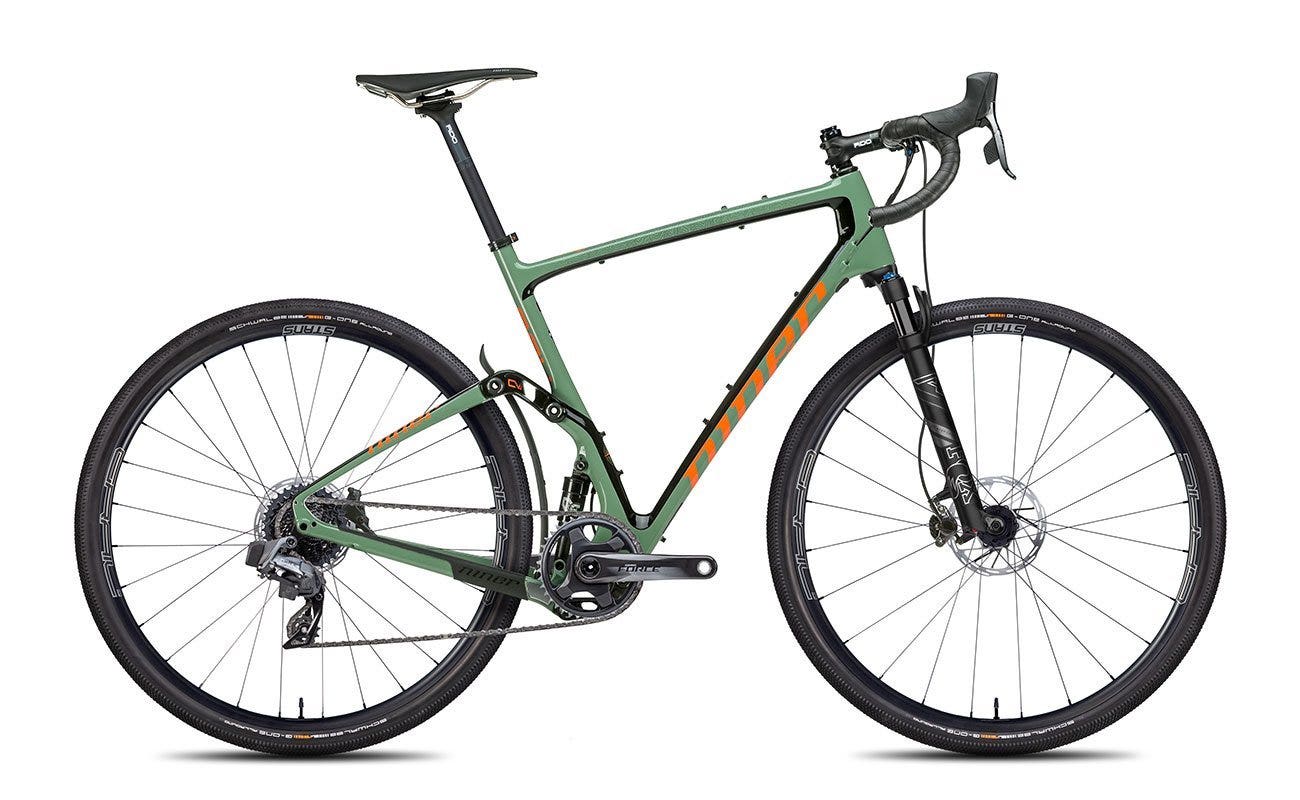
It will need more than marketing for old full sus MTBs with 700c wheels and CX tyres to take off.
Yup, I find a bump jump does the trick nicely.
Yeah, this isn’t the logical conclusion to the gravel trend
I don't know about others, but one of the things I like about my gravel bike compared to the full sus I used to have is its simplicity. This is not that.

