UPDATE: Reviews section refreshed, redesigned, searchable: Go take a look
Ampthill:
BP - blood passport
Even Froome was moaning about lack of testing I my point therefore not enough testing is being carried out.
Re Cookson point it doesn't exactly fill me with confidence that thing will/have changed. No will you see, shit in your own backyard so to speak.
My point about past dopers but now riding: That was then, this now. Why they're all clean now surely I not where is your new evidence for now? Not popped so innocent until proven guilty must apply to them.as well. Its called double standards.
I read about certain pro cyclists, declaring they have asthma so as to get to use inhalers. I'd of suggested that if you're asthmatic, then pro road racing possibly isn't for you. IANAD.
IANAD either but I do get exercise induced asthma. OK, I'll grant you I wasn't a pro roadie but I was competing at an elite level in another sport and asthma wasn't something that stopped that - so long as I could use an inhaler if my lungs were closing up - I didn't use it preventatively though but IME the advantage from the inhaler was in preventing a reduction in my performance rather than actually improving it if not suffering.
Of course, there's a documented advantage to using inhalers if not asthmatic which is where my points about the TUE system being abused come in.
Just a point on an earlier comment
Armstrong didn't get popped on his comeback.
He did. That's a big part of the reason that he got done - If he hadn't been arrogant enough to make his return, he'd almost certainly never have been caught - the bio passport showed up doping. LA is still adamant that he didn't dope on his return but most reckon that's to avoid statue of limitations issues.
There is some self-regulation going on in the peloton, a couple of years ago there were quite a few fingers being pointed at a particular rider on the Giro. I think the rider won a stage so was automatically tested, got caught and subsequently banned.
You could say that if significant numbers of riders are on 'X' then it is in no-one's interest to speak out.
Was it Alan Baxter the freestyle skier who was caught using a banned substance at a recent winter Olympics? His claim was that he'd picked up his usual brand of inhaler stateside but that while the UK version was legit, the American/Canadian one had a steroid constituent.
Nemesis.
Thanks for sharing your experience, useful to know that.
[i]Of course, there's a documented advantage to using inhalers if not asthmatic which is where my points about the TUE system being abused come in. [/i]
Couldn't agree more and was the point I was also trying to make.
🙂
Just a point on an earlier commentArmstrong didn't get popped on his comeback.
He did. That's a big part of the reason that he got done - If he hadn't been arrogant enough to make his return, he'd almost certainly never have been caught - the bio passport showed up doping.
No it wasn't. He was banned because enough people spoke out against him and gave enough evidence. You are correct in that this wouldn't have happened if he hadn't returned but it had little to do with his BP on his return.
Well I don't suppose it really matters but I'd say that the passport gave them the case beyond just testimony from others - eg 'hard' evidence.
I thought that the stone, which precipitated the avalanche was the retrospective testing of a sample, from 1999.
The testing had been carried out on samples that had been anonymised. However, it was, I believe, a French journalist who managed to obtain a UCI document recording the anonymised samples with the names of the riders.
The sample that tested positive belonged to LA and then it all started to unravel.
IIRC the retro testing was being carried out to assess the sensitivity of a new/different test. Not to retrospectively "catch" anyone.
Well I don't suppose it really matters but I'd say that the passport gave them the case beyond just testimony from others - eg 'hard' evidence.
Yeah, but the fact was (and still stands) the BP [b]failed[/b] to flag Armstrong. Despite the fact that USADA used his comeback doping as a way into the past to overcome the SOL issues.
So my point was it's (the BP) not actually much cop is it?
The case against Armstrong is very well documented, on the net and via plenty of books, and of course the actual judgement itself is available. There's no need to make stuff up about it. But, I've just been googling 'Armstrong biological passport' and it seems that his was dodgy in 2009/10 (quelle surprise!) but that the UCI did nothing about it and didn't release the findings.
You would have though Froome and co would have learn't from the cheating Texan who was"on another planet".
If I was a world class athlete, and on the juice, I would make sure my performances were [u]only just[/u] better than my rivals.
For example, If I had already put a couple of minutes into a top climber, I would have finished on his wheel, looking knackered, rather then storming past him.
Regardless of what you believe about today's riders, the obvious solution is to store blood/urine samples for testing in years to come, when the new testing techniques have caught up with doping methods used at the present time. Each team should have to fund this process as part of their participation in the World Tour. Titles should then be removed as necessary based upon positive results, with no appeals based upon flimsy technicalities.
[i] So my point was it's (the BP) not actually much cop is it?[/i]
I thought the biological passport was significant in the JTL case?
If you concentrate a doping argument on Armstrong then you miss the point.
I think it's a mistake to ask the question "is cycling now clean?". People have cheated ever since organised sport was invented, and they will continue to cheat in the future. Tackling doping is an ongoing battle and you will never win that battle outright.
What you can do, however, is ensure that you are fighting that battle as effectively as possible, with independent, rigorous and transparent enforcement. Cycling has conspicuoulsy failed to do that, ever since dope testing was introduced, so you've had a very murky situation where the riders, the team organisation, the authorities, the press and even the fans are all complicit to some degree.
Personally, I think there is probably still plenty of doping going on. Lots of people who were up to their necks in it in recent decades are still involved in the sport, riders are still being caught, and people have recently demonstrated how you can fly under the radar of the Bio Passport if you are clever. We may be seeing the start of a new era in serious anti-doping enforcement (I certainly hope so) but I still retain a healthy scepticism about pro-cycling.
Kcr.
Good post.
Of course, there's a documented advantage to using inhalers if not asthmatic which is where my points about the TUE system being abused come in.
The Asthma card gets brought up a lot, and I understand both the medical application for suffers to be able to [i]maintain unhindered performance[/i] (other half is on two differnet inhalers daily), and also the benefits it can give to non-suffers to [i]improve normal performance[/i], and the questions that brings up about TUE abuse, so I have a question, as I'm not sure where to get the answers.
- Do we have stats for number of Asthmatics using inhalers (type?) in the tour?
- Is that number appreciably different by % to the % of Asthma suffers in general population?
> if it is NO higher then I think we have to put that one to bed not an issue, especially considering a TUE requires review and agrement, I have to believe that if the number of suffers in the tour is in line with normal population, ADN the TUE requests are reviewed then they must be genuine.
> if it IS higher then we have an interesting question to answer...
is there some reason that more Asthmatics gravitate towards the top of end of a sport? why? what mechanism is in play here? on the face of it it would seem an odd thing, if there was a higher than average % of people with respiratory problems ending up in pro sport, and then ending up right at the top of the field in that sport, <yoda>very odd it would be, explanations we must find...</yoda>
OR
is the TUE system being abused? in which case is the review board being duped, or is the review board in on it? how do you combat that?
And if the TUE system is being abused for Asthma then that throws into question the TUE review process in general, for all meds and casts doubt on anyone involved in the review and the medical advice.
so, are we making a fuss over nothing with Asthma or is it actually an indicator or something awry in the process/system?
Well you need to bear in mind that "asthma" covers more than one thing
EIA is likely to be higher in incidence in active people than couch potatos
Lots of information about asthma in elite athletes
https://www.google.co.uk/#safe=on&q=incidence%20of%20asthma%20in%20elite%20athletes
thanks for the link Nemesis, anyone know where we could get info on who in the tour has a TUE for medication?
Not sure - I always figured that while the athletes obviously need to share that with the governing body, it'd otherwise be covered by doctor confidentiality type thing - a rider isn't going to want the world to know what he's on X for a dodgy rash 😆
I read an interesting article recently about the asthma TUE issue. The bottom line was the suggestion some sports doctors were taking a fuzzy approach to defining the condition and prescribing treatment for people who would not normally be defined as asthmatic, but whose lungs perhaps simply didn't work quite as well when they were competing. So they were potentially medicalising someone who simply had a less effective physiology.
Amedias.
I think its a flawed approach to try to draw a conclusion on incidence rates in the peleton, comparing word class pro cycles to the general population.
Just by shear nature of the sport, you need to be special, to begin with.
For TUE this page is interesting: http://www.uci.ch/clean-sport/therapeutic-use-exemptions/
There were 24 TUE's given out by the UCI in total in 2014 compared to 239 in 2009. Almost like in 2009 (and before) they were used to cover up positives or something
I don't disagree Solo, and I'm not drawing conclusions, I'm asking questions, the answers to which may lead me to formulate a hypothesis, but I'm certainly not yet drawing conclusions, which is why I specified that if it is higher incidence in the pro peleton, I'd be curious as to why.
You would naturally assume that anyone suffering form a respiratory condition like Asthma might find it harder to rise to that level in the sport due to the impact it has, I know it can be controlled and treated to a degree, remember I live with a sufferer, I see the impact it has on her and the steps she has to take to manage it during normal life and exercise.
There would have to be some mechanism at play to explain it, and what isn't obvious (to me at least) is why a respiratory condition would be so prevalent in athletes competing at that level, unless as suggested it's actually an increase in EIA as a [i]result[/i] of being at that level in the sport, rather than sufferers who have risen to that level [i]despite [/i]it.
Either way, I'm curious (as always!)
I live with a sufferer, I see the impact it has on her and the steps she has to take to manage it during normal life and exercise.
Not all asthma is the same. EIA is very different to the type of asthma it sounds like you're seeing.
EIA if managed (via TUE...) shouldn't (usually) restrict an athlete.
Amedias.
Ok, apologies if I've missed anything.
🙂
cheers Atlaz
for ref:
Year - TUEs approved
2009 - 239
2010 - 97
2011 - 56
2012 - 47
2013 - 30
2014 - 24
Definitely interesting...and quite a sharp contrast, maybe TUE abuse isn't as rife as some people indicate.
Was something requiring a TUE in 2009 allowed without a TUE from 2010 onwards?
Definitely interesting...and quite a sharp contrast, maybe TUE abuse isn't as rife as some people indicate.
are you suggesting that people are flinging round random stuff with no evidence?
There were 24 TUE's given out by the UCI in total in 2014 compared to 239 in 2009. Almost like in 2009 (and before) they were used to cover up positives or something
This implies that
1. TUEs are harder to get due to new rules/change in regime
2. TUEs are no longer necessary - some new drug/doping method has taken over
3. The peloton have miraculously recovered from all of their ailments
4. Cycling is cleaner, so the no-one needs the advantage from the TUEs anymore
5. Some drugs have been legalised to save on paperwork etc
Personally I'd suspect mainly 1. and a little bit of 2, possibly 5 though I haven't seen any evidence for it. 3 is highly unlikely, and clean or not, people will always cheat to get ahead, so I don't think 4 would apply.
are you suggesting that people are flinging round random stuff with no evidence?
I don't have enough evidence to suggest that 😉
I was more thinking along the lines of joeydeacon list above, there will be reasons, I don't yet know what they are.
I read on road.cc that G climbed Plateau de Beille quicker than Armstrong, stage winner, in 2002 and 04. I checked his times and apparently Armstrong climbed it in 45 minutes plus some seconds. A rewind of my recorded coverage shows G (and the group he's with) climbing it in, yes, 45 minutes, plus some seconds. Depends on where you measure start of the climb, of course.
Views and comments?
Tried an Asthma puffer on some alpine climbs recently, it was like having 10% more lung capacity for 10/15 minutes after each intake.
Evidence? Placebo? 😉
Views and comments?
Better training and equipment, of course.
Was Lance flat out when he set his time?
Were conditions the same?
Was it measured at the same point?
But logically that's hard to believe and that's the problem. On a human level I struggle to see Sky as cheats but there are many practical difficulties with that position.
You suggesting the typhoon made them faster today? 😆Were conditions the same?
Lance would have claimed it - tail wind (there's a joke there somewhere for those in the know...)
Personal insight, take it or leave it.
is t there also less need now to take Lance type substances when the same is now achieved by weight managment, training at altitude and oxygen tents?
Because those are all new things which nobody had thought of 15 years ago?
Tried an Asthma puffer on some alpine climbs recently, it was like having 10% more lung capacity for 10/15 minutes after each intake.
In which case you probably have Asthma ! As I understand it, the inhalers don't benefit those who don't suffer. Also EIA is common among endurance ahletes because endurance training strains the lungs.
Have you ever done a peak-flow test? I was recently told I had EIA and so did some comparison with my friends. Unmedicated I score 450, with an inhaler I can get up to 550. Amongst my cycling buddies, the shortarses were at 650 and 700, whilst the guy who is a just slightly shorter and older than me was at 800.
Note the inhaler doesn't increase your lung capacity, but the flow of air into your lungs. Asthma makes it harder (and more exhausting) to take a deep breath.
Interesting. I used to do annual peak flow tests because I occasionally did soldering in work. Was never that awful, but not that great either and sometimes took several attempts to "pass". Fairly sure I don't have asthma in a normal sense, but have had breathing difficulties when exercising occasionally. How would I go about getting diagnosed with EIA if I do indeed have that?
http://thorax.bmj.com/content/56/9/675.full
This, and other studies, suggest there is no significant performance enhancing effect to inhaled bronchiodilators, but go on to say there was a perceptible lessening of breathlessness at the beginning of exercise, which would tally with what wilburt experienced. I'm not sure how that marries with the overall conclusion, in this era of marginal gains.
My PF is currently about 525, and was down to 350-400 a month or so ago. It's been a crap year! 800 PF - that's just unfair.
You don't even need a TUE for the most common inhalers. This is from the UCI website:
Beta-2 agonists for asthma (Salmeterol /Salbutamol/Formoterol)
You do not need to submit any TUE if you take inhaled Salmeterol, Salbutamol (up to a daily dose of 1600 ?g) and/or Formoterol (up to a daily dose of 54 ?g).
Terbutaline or other beta-2 agonist
If you take Terbutaline or any other beta-2 agonist for the treatment of asthma, you must submit a TUE for asthma and a full medical file to confirm the diagnosis of asthma and/or its clinical variants. The medical file should include:
A detailed medical history and clinical review;
Lung function test with spirometry;
Bronchodilator response;
Bronchial provocation tests.
To assist your doctor in completing the correct tests, and providing the correct medical information, we suggest that he or she consults the WADA Guidelines on Asthma click here.
If the TUE for Asthma is completed correctly with valid test results, the UCI TUE Committee may grant an approval for up to 4 years.
[img] 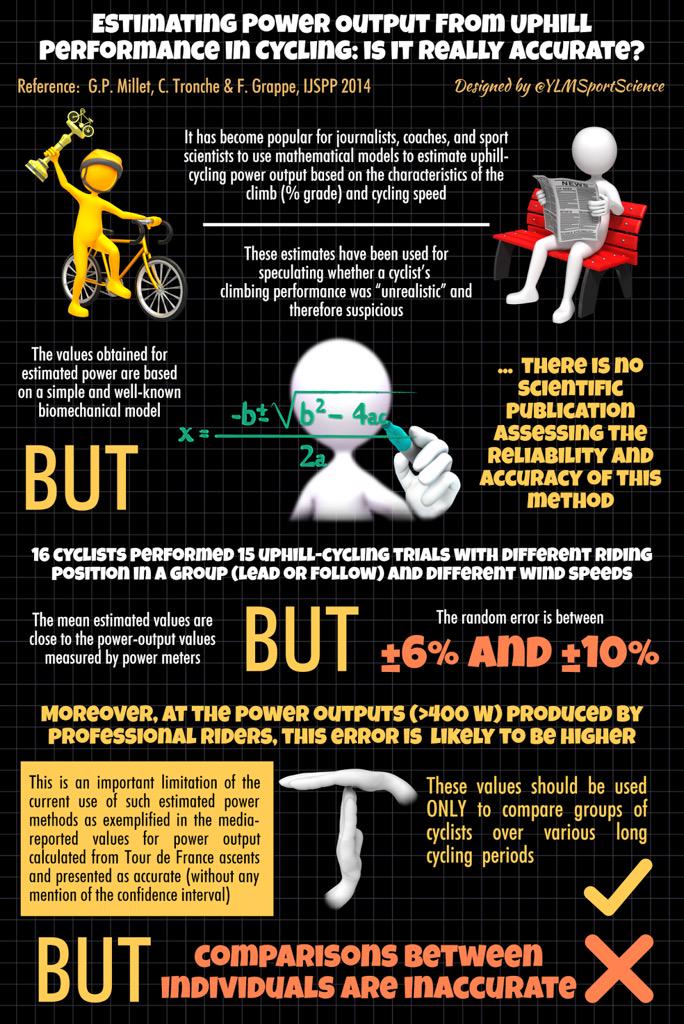 [/img]
I am not a clinician, but are you saying that someone with a chronic diagnosis of asthma doesn't need to submit a TUE?

