Following on from [url= http://singletrackworld.com/wp-content/uploads/2017/02/can-a-full-face-helmet-make-you-careless/ ]this[/url]on the front page I'm interested to see what the general consensus is?
I'll be honest and say I've only just got a FF lid so all of my crashes have been In a normal trail lid including one where I broke my Montaro due to a lack of skill moment.
My reasoning for a FF is due to the type of trails I want to try so BPW, up lift stuff, and it seems reasonable to have the additional protection if Im going to try harder trails, Id try these regardless of the type of lid Im wearing, to the same extent I don't feel invulnerable with a lid on.
But I always wear one even a two min up and down the road to check the gears I'll pop a lid on automatically.
It just makes me feel better about what is going to happen...
Just had the conversation about which lids to pack for holiday
Proper FF
Met Parachute
Bell Super
All 3 are going in as there is some proper DH in there. The [s]risk[/s] consequences are higher but the drawbacks to riding with one is reduced
It makes you a little braver IME, i don't believe it makes me careless, but i'd certainly consider certain sections/obstables when wearing one that i would not consider in an XC lid.
Id try these regardless of the type of lid Im wearing, to the same extent I don't feel invulnerable with a lid on
but that doesn't mean you wont hit them harder/faster due to the extra perceived protection
No.
I think, like wearing knee and elbow pads) it actually makes you commit a bit more and that's often exactly what's needed on technical terrain.
It's not about being careless of the consequences of a mistake it's being more confident of getting through the consequences with all your teeth.
I ride exactly the same TBH.
It's more about mitigating the effects of the inevitable crashes when riding in certain places (eg. uplifted riding, DH-y trails).
It's pretty interesting, this stuff. It's easy to see how it would for some folks and also easy to see how it could be below the level of awareness.
I'm reasonably sure it doesn't make me ride differently- I think just because I never think "It's OK if I crash here because I've got the big helmet on". When I'm totally suited up in my pressure suit and that, which isn't often these days, I do feel a bit braver but not when it's just the helmet- too aware of all the other sticky out bits.
(I definitely do ride more cautiously with no kneepads. And for a long time the same was true of elbows though I think I'm used to riding without now. I think just because of the obviousness and frequency of knee bumps)
This probably needs a caveat, I'm happy riding stuff in open face that a lot of people think is fullface territory- hate fullface for enduro racing, and out in the alps last time I think I was the only person not a guide that was in open face. Likewise uplifts, didn't stress about riding fort william in an open face. I'm relying on skill, sense, a good bike and a healthy dose of cowardice to keep my face on
but that doesn't mean you wont hit them harder/faster due to the extra perceived protection
Nah it's because you can't hear yourself screaming or see the stuff either side that normally distracts you
When I'm totally suited up in my pressure suit and that, which isn't often these days, I do feel a bit braver but not when it's just the helmet- too aware of all the other sticky out bits.
Cheers northwind - I was just heading off to find the good old pressure suit....
Its risk compensation a well known psychological phenomenon in all areas of life. Its accepted generally that this happens. Apart from in the world of cycling where people deny it.
http://www.aviva.co.uk/car-insurance/motor-advice/safe-driving/article/what-risk-compensation/
Its not a concious effect - its subconscious.
I think, like Northwind, a healthy dose of cowardice helps me more than my FF probably does. I still wear one at places like antur or BPW though.
It makes you a little braver IME, i don't believe it makes me careless, but i'd certainly consider certain sections/obstables when wearing one that i would not consider in an XC lid.
This! I'm still pretty spineless though 😆
Compensation, mitigation and acceptance tj. I know a lot of the things that can happen and what helps if they do, along with the psychological tricks - climbing days used to be placing any bit of gear to make it look like it wasn't a death solo.
With a bike a lot of it through experience (same with climbing) is being able to asses risk through understanding.
Indeed mike - but there is a lot of this subconcious as well.
For me I stopped wearing my Full Face. I found its slight restrictiveness intruded too much and didn't allow full concentration.
I went back to wearing my open face helmet and carried on as normal.
I tried it in the Alps and at techy DH tracks. Of course, if I have to wear it I will, but out of choice I stick to my normal lid.
I didn't find it made me feel safer or more confident. Im happy pushing my self in a normal lid.
only if you don't talk to your sub conscious.
lets put it this way - would you climb as hard a route solo as you would top roped?
Its risk compensation a well known psychological phenomenon in all areas of life. Its accepted generally that this happens. Apart from in the world of cycling where people deny it.
Have you considered that it could be overridden by other factors such as muscle-memory, awareness of one's own skill limits and forgetting you're wearing a different kind of helmet?
FWIW I think I used to take more risks in a FF, and would only ride some places with one - but that's not the same as being careless.
would you climb as hard a route solo as you would top roped?
No, well maybe, not sure you see I have some fairly nasty flasbacks to one day where I didn't tie in properly. The internal monologue where you evaluate your legs are done for if you slip is interesting....
The top rope is a completely different sensation or experience to a Full Face, I remember Neil Gresham doing a similar article where he was bouldering above a bed of nails. Anyway TJ are you sure you want to leap into another one of these 😉
i wore my FF the other day mainly as i hadnt used it in ages. it was a right faff
i`d wear it in an uplift centre but for normally dicking about in teh woods locally i dont normally. mainly as its a pain to put on/take off regularly. i dont feel underprotected in a normal lid locally.
i used to like wearing the FF when we had loads of skinnies and shore to ride as front wheel disappearing was a real prospect and teh outcome could be bad for your teeth. on the ground/jumping its less likely so i feel less need.
FWIW I think I used to take more risks in a FF, and would only ride some places with one
Thats risk compensation in action. Cha****ng above
Mike no - because for reasons I don't understand this widely known and understood phenomenon people seem to think does not apply to cycling - when it clearly does in all walks of life including cycling. Its the science V "common sense" debate and drives me scatty. the science is clear - risk compensation applys in all areas of life.
I consciously ignore my subconscious because in my head I'm smarter than I really am.
(Also...teej-you're doing it again)
Its alright chaps - I have a full face and a pressure suit on so I am safe from the banhammer! 😉
The helmet I'm wearing makes no difference whatsoever, I'll chicken out of something long before my choice of head protection comes into play.
Body armour on the other hand makes me feel invincible so i do stupid stuff well above my skill level when I wear it! Haven't worn any more than knee/shin protection for a long time now as I don't want to spanner myself 🙂
Got a brand new ff helmet a few years ago. Within an hour of wearing it doing a few small jumps I managed to wash out my front wheel and face/wrist plant into the ground.
It probably saved me from smashing out my teeth and a broken nose. Unfortunately I broke my wrist.
I was sessioning a small section of turns and a few jumps over and over getting faster. Whether it gave me false confidence I'm not sure..
Not so much careless but for me a FF + goggles reduces the sensation of speed so I tend to go a bit faster
Thats risk compensation in action. Cha****ng above
To clarify, I meant I used to consciously take more risks.
It may be risk compensation, but it's not "being careless" - which is what the OP was asking.
Mike no - because for reasons I don't understand this widely known and understood phenomenon people seem to think does not apply to cycling - when it clearly does in all walks of life including cycling. Its the science V "common sense" debate and drives me scatty. the science is clear - risk compensation applys in all areas of life.
But you are pushing that onto what other people actually fear, for me a FF is a mitigation, same as wearing pads it's not compensating it's mitigating. I'm aware of the risks many of them are the same regardless of helmet or not.
In my experience what happens is that a crash/injury makes me go slower. I then use additional protection (full face, elbow pads, knee pads...) to give me the confidence to get back to where I was before the crash.
I only bought a full facer for MTB because it was mandatory for one of the bike parks I played in a couple of summers back.
For me, Care less maybe, but never careless - but then I've pretty cowardly.
I tend to over think everything, I do a quick mental risk v reward calculation when I'm riding anything new, reducing the change of smashing my face up is part of that.
It used to be more phycological - I had a DH mode and a Trail mode DH meant, Fullface, Dainese suit of armour, DH gloves with knuckle covers, try to climb over my DH bike with all that one, wobble off down the trail and hopefully it'll all shrink around me (mentally) before the first jump. If I rode the same trail in my XC kit and on my trail bike I'd been terrified at any speed.
Now the only difference is the helmet, if I'm riding 'gravity' stuff I wear it, it makes me feel safer so I enjoy it more - it makes me safer which is nice. I'd never be what you call careless though.
Never really wore a FF before I went to Whistler, mainly due to not liking the reduction in peripheral vision/sound and it took me a few runs to get used to it out there.
After the 1st morning it felt normal and did give me more confidence to tackle stuff. Wouldn't say I was careless, just felt safer in the knowledge that my bonce was protected better.
Last few trips to BPW (before Whistler) I'd tried it on the 1st run, didn't like it, then went back to the open helmet.
tjagain - MemberThats risk compensation in action. Cha****ng above
Lots of posts in this thread showing people's awareness of it, and the article talks about it- and you in the other corner saying EVERYONE DENIES IT IN CYCLING!!1!, despite drawing attention to someone acknowledging it.
After the 1st morning it felt normal and did give me more confidence to tackle stuff. Wouldn't say I was careless, just felt safer in the knowledge that my bonce was protected better.
See was that the helmet or the riding? Really well built trail does that for me.
After 3 days out in Roto I was hitting stuff much bigger, faster and better regardless of the helmet, just because I had been riding it more often, the day you hit the backside of something decent is when the confidence lifts
It makes me more confident, but I wouldn't say more careless, if anything I find myself more focussed on my riding and less on the peripheries.
See was that the helmet or the riding?
Probably a good measure of both. Helmet helped with confidence initially though
woodster - Member
It makes me more confident, but I wouldn't say more careless, if anything I find myself more focussed on my riding and less on the peripheries.
I would concur with this. I'll wear it if I know I'm pushing myself, but then again I'd probably push myself the same if FF helmets didn't exist. As with other protection, what I wear will depend on how inconvenient it is, mostly. So if I'm riding up and down, I'd not bother with the FF, even if I'd wear it on the same trails with uplift.
Its risk compensation a well known psychological phenomenon in all areas of life. Its accepted generally that this happens. Apart from in the world of cycling where people deny it.http://www.aviva.co.uk/car-insurance/motor-advice/safe-driving/article/what-risk-compensation/
[img] 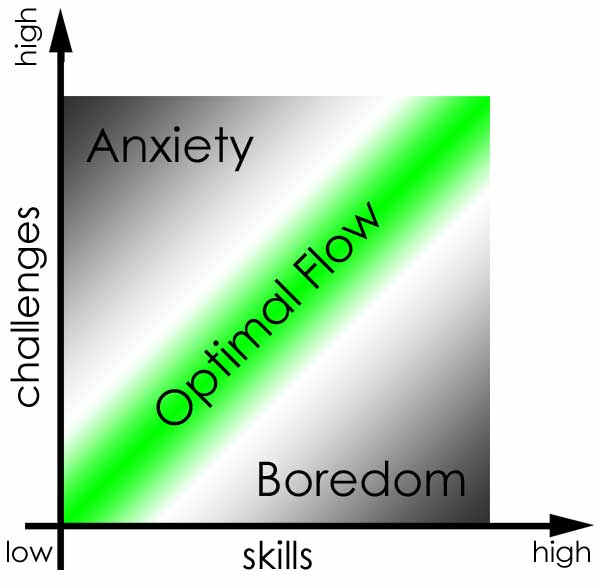 [/img]
Wearing appropriate protection reduces anxiety on trails that are challenging for your skill level and helps you get into a state of flow, thus riding with lower risk.
If you're riding trails that aren't challenging and you're wearing lots of protection, then you could be pulled into a state of boredom and non-concentration, slightly increasing the risk. But who wear a full-face on trails like that?
I do think when taking head injury into account the data is skewed when the comparison between the pros riding flat out in events ( racing or rampage/ crankworks) or training by definition going faster bigger will increase the changes of a fall and therefore injury.
I tend to use my full face on uplift days but rarely anywhere else.
The bit that caught my attention was about hitting your head more often in a full face. There was some research done many years ago by a group who were looking at motorcycle helmets. They found in wind tunnels that once you are going faster than about 20mph then you are more likely to hit your head because of the extra weight and force from the air pushing on your head because your neck isnt strong enough to hold it out of the way so you hit your shoulders instead.
I would say yes it does. They already did studies on this with American Football and found that players would hit harder and make more risky tackles with a helmet than without one.
And for that reason were actually contemplating removing helmets entirely! 😯
I know it's not exactly the same, but in general the more enclosed in padding and full face helmets you are, the safer you feel. (and therefore more risks you take)
A friend of mine of mine is fairly new to mountain bikes and noticed that when using the chin guard on his R2 that it helped him look ahead. That can only be a good thing.
It probably does add to ones (over)confidence though.
That aviva article is shit. Amrrican football players suffer higher head injury rates than rugby players as the rules allow all sorts of tackles that are illegal in rugby and the game itself encourages these types of tackles.
If tisk compensation had the significant public health effect that tj has in the past implied, car fatalities would have gone up as everyone would be driving like Colin [s]McRae[/s] McCrash.
They found in wind tunnels that once you are going faster than about 20mph then you are more likely to hit your head because of the extra weight and force from the air pushing on your head because your neck isnt strong enough to hold it out of the way so you hit your shoulders instead.
How did the study factor in the greater speed of impact so less time to react?
Tom - check your facts - after seatbelts were made compulsory, pedestrians deaths went up because of risk compensation. Also cars who have ABS are driven faster in the rain with less of a gap to the car infront. NO more car drivers were killed but more cyclists and pedestrians
Its a theory with detractors but generally accepted as the hypothesis fits the facts.
Because you don't understand the theory as your posts shows does not mean it is wrong.
They found in wind tunnels that once you are going faster than about 20mph then you are more likely to hit your head because of the extra weight and force from the air pushing on your head because your neck isnt strong enough to hold it out of the way so you hit your shoulders instead.How did the study factor in the greater speed of impact so less time to react?
It didnt. It was looking at the mechanics of the extra weight on your head and how the body was able to manage that extra weight when it turned into the forces involved in a crash
Fair point, would be an interesting point to consider. Given most MTB crashes will be below 35mph was there a steady ramp up or a sudden jump at 20mph?
Tom - check your facts - after seatbelts were made compulsory, pedestrians deaths went up because of risk compensation. Also cars who have ABS are driven faster in the rain with less of a gap to the car infront. NO more car drivers were killed but more cyclists and pedestrians
But total deaths have still gone down? If not - from a purely utilitarian "don't give a **** about anything but the stats" public health perspective - safer cars are good.
The trick now, is to make them intelligent enough to take the human error out completely so as to improve pedestrian safety.
If safety and situational awareness were impeded by improved technology, pilots wouldn't be flying with bitching betties, radar warning receivers, ejection seats, flares, chaff, parachutes, life jackets etc etc - and we'd still be treating pilots like they were WW1 Camel pilots.
Most of my offs are through things that could catch me out at any speed, mostly me not expecting an object to be where it is. The only time that I catch my speed judgement being subtley impaired is if I wear a windproof jacket, my full face does nothing to make me feel more detached from the reality of hitting a tree at 20mph. I'm not subconciously thinking, "[i]oh yeah that tree looks so much less painful because I have a cm more EPS and a chinbar between me and a major TBI[/i]" - neither do I not ride certain tracks because I'm wearing a half lid - if a nice tasty black run or DH track is there and all I have is a half lid on, I'll ride it.
What the full face does though, is give me a little more protection from all those crashes that I've had where the front has been swept from underneath me when I've been least expecting it - by an out of place root - and these more often than not seem to occur when I'm bumbling along at maybe 50/60 percent focus/situational awareness - not really giving a **** - with a half lid on.
Ride without any helmet on a regular basis - heightens the sense, lovely sense of freedom, a more zen-like experience; imporved risk consciousness. Highly recommended.