UPDATE: Reviews section refreshed, redesigned, searchable: Go take a look
more people cycle and you get a critical mass where it's deemed normal and thus safer.
How do you get a critical mass? I don't believe that making people believe that cycling is dangerous and you must always wear a helmet will encourage people to cycle?
And that's the root of the issue. Cycling is deemed as safe in those counties because for the most part cycle lanes are separated from cars, more people cycle and you get a critical mass where it's deemed normal and thus safer.
My experience of Denmark is that there are also lots of people cycling on-road. Segregated paths are only part of the story.
Think this is one of these situations where peoples personal experience (in their own minds) will always trump any analytical, evidence based approach.
I woke up in a ditch with a broken collarbone and a sore head last year. I am quite content being too stubborn to let evidence trump my experiences. Or have I misunderstood?
[img] 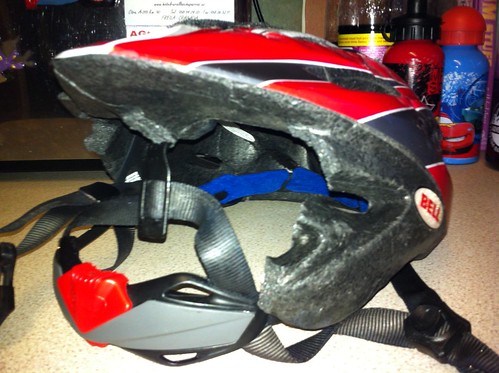 [/img]
[img] 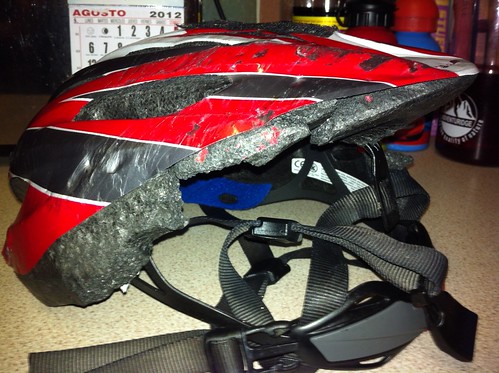 [/img]
I was simply musing on the makeup of stats with regard to the point you brought up about pedestrians being about the same as cyclists. I made no claim to knowing any facts about the figures at all.
Fair do's. We'll dispense with it because it's pointless speculation.
So, is it enough to take off my helmet to be safer? Or do I need to weave about all over the road too? In the interests of safety, of course.
*sigh*
stilltortoise - MemberOr have I misunderstood?
hugely.
we're debating whether helmets should be required by law, there's lots of good arguments in the 'no' camp.
all of the arguments in the 'yes' camp seem to miss that point that you are ALREADY allowed to wear a helmet if you want to.
or have i missed the point?
So, is it enough to take off my helmet to be safer? Or do I need to weave about all over the road too? In the interests of safety, of course.
Apparently the best approach is to be helmetless, wobble and wear a long blonde wig and high heels. 😆
There is good evidence that riding primary also makes drivers pass more closely.
Yep. That's an issue too.
But [i]personally[/i] (anecdotally) it is outweighed by the fact they actually see you and have to make a conscious effort to pass. And that in some situations you can prevent them from passing at all till it is safe (e.g. pinch points).
stupid double post.
I woke up in a ditch with a broken collarbone and a sore head last year. I am quite content being too stubborn to let evidence trump my experiences. Or have I misunderstood?
Yes you have.
You're conflating what may be beneficial at a personal level (which depends on many variable factors) with what is beneficial to society overall.
You also seem to be suggesting that those who are anti-compulsion do not believe that there are any benefits to helmet wearing. That suggestion is false.
Cycling is deemed as safe in those counties because for the most part cycle lanes are separated from cars
Hmm, but I have read German studies that drew strong conclusions that the cyclepaths were actually more dangerous than the roads. Having cycled around Munich, it's easy to see why. The cyclepaths are right up against the walls of properties alongside the roads, so anyone trying to get a car out of an entrance has no visibility of cyclists.
I can't find the stuff I read, but:
http://www.cyclecraft.co.uk/digest/research.html
http://en.wikipedia.org/wiki/Segregated_cycle_facilities
From the wiki link, this seems to back up the problems I had with recessed cycle paths. You really do have to look around far more than when you are on the road, because you are unsighted.
Research presented at a conference at Lund University in 1990 found that "crash risk" for cycle users crossing the intersection on a set-back path are up to 11.9 times higher than when cycling on the roadway in a bike lane
Granted, but would you agree the critical mass is the key, no? People are conditioned to believe that cycling poses no higher risk because so many people ride, including those in the cars and therefore there's little animosity towards, and a greater awareness of cyclists as we seem to have in this country.My experience of Denmark is that there are also lots of people cycling on-road. Segregated paths are only part of the story.
I'd love for there to be a cycling element in the driving test but can't see it ever happening!
Cheers,
Jamie
Or have I misunderstood?
hugely
Since my rhetorical question resulted in an answer, explain how so? Someone up there ^ was having a dig about people's experiences trumping evidence. I was merely demonstrating how that is perfectly understandable.
Apparently the best approach is to be helmetless, wobble and wear a long blonde wig and high heels
A colleague (that I don't work that closely with) has a kiddy bike seat on the back. He's had it on there for the entire 10 years I've been working on this site. Maybe he and his wife have been busy for all those years, but I'm convinced the kids must be old enough to ride a bike by now and it's there just as a commuting safety feature.
I can't find the stuff I read
Can't find mine either, but I have read a nice rebuttal that tears apart the "11.9 times higher". IIRC the statistics don't add up and they didn't consider injury severity. On the segregated paths cyclist-on-cyclist was the biggest issue, but on road it was cyclist-on-car/truck which naturally ends badly for the cyclist.
I'll try to find mine.
Granted, but would you agree the critical mass is the key, no?
Absolutely. And that is best achieved (amongst other things) by making cycling seem normal, not by making it seem risky.
ahwiles - Memberor have i missed the point?
stilltortoise - MemberSince my rhetorical question resulted in an answer, explain how so? Someone up there ^ was having a dig about people's experiences trumping evidence. I was merely demonstrating how that is perfectly understandable.
it seems i have, apologies...
I personally felt at far greater risk on the comprehensive cyclepath network, because I never knew when a car was going to suddenly stick its bonnet out from a wall. But then again, I was aiming to make progress at 20mph or more, which is another factor that doesn't seem to be mentioned in the stats.
I'm convinced the kids must be old enough to ride a bike by now and it's there just as a commuting safety feature
Even better if it has a dummy child in it 🙂
I don't use such cycle paths round here, bar one little stretch on the way to nursery which is much wider than most (about the width of two footpaths) and cars can advance enough without blocking the whole route.The cyclepaths are right up against the walls of properties alongside the roads, so anyone trying to get a car out of an entrance has no visibility of cyclists.
Cheers,
Jamie
stilltortoise, that you broke your collarbone suggests and the marks on your helmet actually suggest your shoulder took the impact not your head.
Your helmet may have helped a bit but i suspect if you crashed again with no helmet the only difference would be you would have cuts and grazes on your head.
Few years back i crashed, ended up in A&E having a brillo pad clean to my face, no marks at all on helmet i was wearing at the time???
The biggest problem cycling faces is that cyclists are seen as different - that's why drivers don't give cyclists room, that's why judges and juries let off killer drivers, that's why cars get billion-pound investments while cycling has to fight for the scraps.
And what makes cyclists be seen as different? The funny clothes and the plastic hats, for one.
Every time I see a normal person, in normal clothes, riding a bicycle it makes me feel a lot happier.
In fact, to my shame, I almost took out a cyclist when nosing out of an entrance in my car in Farnborough a few years back. Under trees, I was looking down the road crossing the pavement, as normal. However turns out that pavement is actually a shared use path, and the first I saw of the cyclist was when she was grumbling and complaining after stopping. I can only assume that she was up against the hedge and her neutral coloured clothes were not standing out - I have no idea though, as I didn't see a thing.
Compulsory helmets? What is the objective? To prevent minor head injuries? What peer reviewed data do we currently have showing how many cyclist's head injuries would be prevented by helmet wearing? Will users of quads and open tops cars have to wear helmets too? How about pedestrians? Mobility scooter users?
But it is more risky on roads than dedicated cycle paths, increase the number of those and I'd have thought it would become much more normal and the compulsion to wear a helmet would diminish.And that is best achieved (amongst other things) by making cycling seem normal, not by making it seem risky.
Cheers,
Jamie
Some good rebuttal of that figure here molgrips:
A Danish study on the safety of cycle tracks is commonly cited by those who oppose the construction of dedicated cycle infrastructure here in the UK, "Road Safety and the perceived risk of cycle facilities in Copenhagen." [b]This paper is often quoted with the eye-catching figure of cycle tracks resulting in a 24% increase in crashes involving cyclists at intersections[/b] where cycle tracks have been implemented. The study makes a few qualifying assertions, firstly in the introduction;"Many studies of bicycle tracks have been undertaken in Northern Europe. A meta analysis of studies shows a reduction of 4 percent in crashes, and the crash reduction is almost the same for pedestrians, bicyclists and motorists respectively."
...
However, reading the methodology used to generate that 24% figure reveals that previously cyclist injuries at junctions had been measured as 353. After the installation of cycle tracks, the number of cyclist injuries at intersections was measured as 285, a reduction of 19% in absolute figures. However, the 24% increase figure is calculated from a predicted number of crashes figure for the after period, based on the changes to the traffic volume and mode composition, which predicted that at unmodified intersections with the same increase in cyclists, decrease in motorists and subject to pre-existing crash trends seen at the intersections which had been modified with cycle tracks, there should be 230 cyclist crashes. This is the figure which is used to generate the eye-catching 24% increase in crashes figure.
Taking intersections and straight sections together gives a figure of a 10% increase in crashes involving cyclists overall versus the predicted figures on un-altered junctions for the same traffic mode/volume composition (broadly speaking, a 10% reduction in motor traffic and a 20% increase in cycle traffic), a composition which is realistically only achievable where segregation is applied. [b]The actual before and after numbers show a decrease in the absolute numbers of cyclist crashes of 29%.[/b] It is important to consider the effects of any pre-existing downward trend in crashes which could be contributing to this number, but also important to consider that this effect is seen contemporaneously with an increase in cyclists’ mileage of 20% on these facilities.
- http://www.cycling-embassy.org.uk/wiki/cycle-paths-are-unsafe
The biggest problem cycling faces is that cyclists are seen as different - that's why drivers don't give cyclists room, that's why judges and juries let off killer drivers, that's why cars get billion-pound investments while cycling has to fight for the scraps.
That and I see cyclists cowering in the gutter, putting themselves into stupid positions on the road and getting themselves into trouble, this is not blaming the victim but saying if your going to play with cars you need to be aware, you need to look after yourself. The primary person responsible for your safety is YOU. Cars might be at fault but thats not normally a consolation.
that you broke your collarbone and the marks on your helmet actually suggest your shoulder took the impact [s]not[/s] as well as your head.
FTFY
Absolutely no amount of evidence or arguing would make me happy about reliving my crash without a helmet. Call me stubborn and unreasonable but I seriously question whether I would have even woken from that ditch were it not for my helmet.
Few years back i crashed, ended up in A&E having a brillo pad clean to my face, no marks at all on helmet i was wearing at the time???
All that tells me is that you - much like me and many of us on here - have fallen off your bike and banged your face rather than your head. I banged my knee the other day but it has no relevance to wearing helmets.
Even better if it has a dummy child in it
What has the child's intelligence got to do with it? 🙂
But then again, I was aiming to make progress at 20mph or more
Possibly another UK thing?
My experience of Holland and Germany (4 and 10 years respectively), is that the riding is in normal clothes, no need for shower after arriving at school, work, or the shops. Impression I get from UK commuting is that it's a race or sport as well. In town, possibly faster than the traffic, and out of town, trying to keep up with traffic.
As for pinch points. In holland the bikes would have a clear path straight thru. Pedestrians have to make a concious desicion to cross the bike path and the road separately. UK pinch points are just f***ed up and wrong (probably due to the excess of cars needing to be parked in the street).
And what makes cyclists be seen as different? The funny clothes and the plastic hats, for one.
Car culture, we've been sold a dream for the last fifty years that cars and personal mobility will give us ultimate freedom. That dream is being recognised as a nightmare by all the folk in traffic jams day-in day-out. They need someone to blame, a suitable "out group" that won't bite back. Cue the funny looking people who don't have to wait in the same queues as the "normals" and get to enjoy cheap, reliable, healthy transport for free (compared to cars anyway).
It's an age old issue with human group behaviour, same as racism, sexism, ageism, but on a slightly smaller scale and a slightly shorter timescale.
Possibly another UK thing?
I dunno, I did see lycraed up roadies in Germany, MOST of them were on the cyclepaths out in the countryside, but the few properly quick people I saw were on the roads, despite the cyclepaths by the roadside.
Absolutely no amount of evidence or arguing would make me happy about reliving my crash without a helmet. Call me stubborn and unreasonable but I seriously question whether I would have even woken from that ditch were in not for my helmet.
Thankfully, you get to choose whether or not to wear a helmet, so you can choose to wear one.
Out of interest, what were you doing prior to ending up on the ditch?
where road planners put them, primary position is also a scary place to be remember; even for fit, experienced, confident cyclistsThat and I see cyclists cowering in the gutter,
sometime their own doing for sure, but sometimes those pesky road planners again.putting themselves into stupid positions on the road and getting themselves into trouble
I think when car [i]drivers[/i] are at fault adequately punishing them might be an incentive for others not to do the same - or indeed the same driver to kill another cyclist. That would be [i]some[/i] consolation.Cars might be at fault but thats not normally a consolation.
Car culture, we've been sold a dream for the last fifty years that cars and personal mobility will give us ultimate freedom.
That too.
And sometimes cyclists are our own worst enemies - the head down, the glasses, often the facemask makes serious cyclists look, well, serious. Not friendly.
Plus there's a bit of driver envy because blokes know their GFs are ogling the fit men in lycra.
Cyclists should be like pedestrians, but on bicycles.
That is indeed another issue that molgrips touched upon. The vast majority of commuters I see (myself included) are lycra clad and giving it some, I see it as better than spending time in a gym and use it was a workout. Drivers in town are used to elderly women pootling along and are often surprised when you approach a junction at over 5 mph!Every time I see a normal person, in normal clothes, riding a bicycle it makes me feel a lot happier.
Cheers,
Jamie
That is indeed another issue that molgrips touched upon. The vast majority of commuters I see (myself included) are lycra clad and giving it some, I see it as better than spending time in a gym and use it was a workout. Drivers in town are used to elderly women pootling along and are often surprised when you approach a junction at over 5 mph!
The vast majority are fast, but drivers are used to seeing old dears riding slowly?
what were you doing prior to ending up on the ditch?
Not sure if you know the area around Leek, but there's a road that drops off the moors called Easings Lane. Whichever way you ride it, it involves a downhill into a bend that rises uphill immediately. Unfortunately the bend is a bit of a catchment area for gravel that's washed down the road. I knew all this so was actually riding quite steadily, braking well before the corner. When I hit the corner - and the gravel - I had a double blow out and couldn't recover control and was swiftly slapped onto the asphalt.
Forensic analysis of the tyres post-crash uncovered small pieces of glass embedded in tyres and tubes. Maybe a better bike-handler than me would have saved it, but I put it down to bad luck. Sadly, nearly a year on, I'm still a very nervous descender.
For clarity my commute goes through the town centre abound with old dears with the majority on a tarmacked bridleway where the lycra clad SCRers are to be found.The vast majority are fast, but drivers are used to seeing old dears riding slowly?
Cheers,
Jamie
Then go the gym after work for a spin session? 😆Cyclists should be like pedestrians, but on bicycles.
Cheers,
Jamie
Forensic analysis of the tyres
CSI Bikeshop would be a brilliant show...
Sadly, nearly a year on, I'm still a very nervous descender.
Ouch.
My worst crash was after a loose canti brake went trough the tyre sidewall on a road descent stopping the front wheel immediately. I still get occasional flashbacks and it was 20-odd years ago :/
Sounds bad Mike.
I love riding my road bike, I really do, but I just have a constant sense of "what if" these days. There are a lot of hills where I live; falling off on one of them at 40+ mph doesn't bear thinking about...but I do!
The vast majority of commuters I see (myself included) are lycra clad and giving it some
I'd say it's about 50/50 lycra+shades+helmet vs casual+no helmet on my commute.
I think being traffic-free makes a BIG difference to the demographic of people using the path and the manner in which they use it.
The good evidence, Dr Ian Walker, that you keep talking about making drivers far less aggressive around non helmeted cyclist. It was an 8.5cm/3.5" difference that isn't a great difference. I don't argue with his findings but the interpretation seems over to over emphasised. If 8.5cm makes you feel safe then you're deluded. It would have been much better to have had a control within his research as it would shown 2 sets of data for a rider with a helmet and another without on the same roads and time. This may have got better results than 15% of them not being by chance.
Some of the findings such as time of day analysis showing that drivers passed closer during rush hours can't be argued with. A recent trip to London showed drivers and cyclist as bad as each other fighting for any space, weaving between any vehicle to gain a few inches at their risk to their own safety and others. Later in the day it much more civilised. The only cycling accident I saw whilst there involved no cars just another cyclist as they tangled bars whilst chatting before crashing into the kerb. Since they both got up and continued to ride I assume only their pride was injured.
Some argued on here that riders with helmets take more risk but again Dr Ian Walker has stated that they are more risk averse, so which is it?
Some interesting facts and figures on cycle crash come from [url= http://www.rospa.com/roadsafety/adviceandinformation/cycling/facts-figures.aspx ]ROSPA[/url] which amazingly doesn't say that the car is always at fault and head injuries don't happen regardless of the comments on this forum.
An interesting article taking on board both sides of the argument was in [url= http://www.telegraph.co.uk/active/recreational-cycling/10259636/Should-cycle-helmets-be-made-compulsory.html ]The Telegraph[/url].
I'll not comment any further on here other than to say it's your head, your choice. Do what you feel is best and hope whichever way you decide that you never find yourself in a situation that you are proved right or wrong
But it is more risky on roads than dedicated cycle paths, increase the number of those and I'd have thought it would become much more normal and the compulsion to wear a helmet would diminish.
AFAIK, cycling on the road isn't any more risky than walking on the pavement.
Denmark and Holland had very high levels of cycling well before they invested in comprehensive segregated paths.
The good evidence, Dr Ian Walker, that you keep talking about making drivers far less aggressive around non helmeted cyclist. It was an 8.5cm/3.5" difference that isn't a great difference. ... If 8.5cm makes you feel safe then you're deluded.
8.5cm [i]can[/i] be pretty significant when cars are already pretty close to clipping your bars.
But that research isn't really about the empirical change (IMHO). It's about clearly demonstrating the change in attitude. Providing measurable evidence of risk compensation.
If they pass more closely then what other things do they do?
e.g. Do they tailgate more? Do they pull in earlier? Are they less likely to give way? Less patient? More aggressive? etc
It would have been much better to have had a control within his research as it would shown 2 sets of data for a rider with a helmet and another without on the same roads and time.
No it wouldn't. Then the rider themselves could have been an influencing factor. (riding style, gender, height, weight, build, skin colour, etc)
Instead he did the riding himself, with and without a helmet, on the same roads at the same times of day.

