OK, a weekend in Kintail walking the Five Sisters in freshly fallen snow has got me seriously hooked on a bit of winter hillwalking.
This time round I had the luxury of being led by a fully qualified leader, however over the christmas holidays I fancy a couple of days walking through the glens of Lochaber by myself and had a couple of questions.
Would three season camping equipment (thermarest, synthetic bag, double skin north face tent) be:
A)Completely inadequate
B)OK if I go to sleep fully clothed in warm clothing and don't mind being a 'bit' cold.
C)Fine, because I'm staying in the Glens.
If I'm blazing my own trail through snow with camping gear on my back, whats a reasonable distance to aim for in a day, 10km?
Any other advice? (I've got poles, crampons etc. Planning to Walk from Spean Bridge to Kingshouse probably).
Cheers
First of all, bear in mind that Scottish winter nights are very, very long. Take a good book to read in your tent.
Would three season camping equipment (thermarest, synthetic bag, double skin north face tent) be:
(B) so long as the tent will handle rough weather. This is less of an issue if you're somewhere sheltered down low, but on the other hand... many years ago some friends of mine [1] were camping in a sheltered spot near Loch Avon in the 'Gorms when a blizzard blew up overnight, caused a snowdrift to build up which gradually squeezed them out of their tents like a toothpaste tube and buried most of their gear. Moral: when winter camping in the mountains, [b]always[/b] be organised, packed and ready to get moving.
If I'm blazing my own trail through snow with camping gear on my back, whats a reasonable distance to aim for in a day,
Very, very dependent on (a) your fitness and (b) the actual conditions underfoot. Well consolidated snow is fine. Two feet of powder, or anything with a breakable crust on top... not so much, and with camping gear on your back you'll lose the will to live remarkably quickly...
[1] One of whom occasionally posts on here, actually.
I wouldn't even consider camping out. Is the tent a 4 season one ie will snow build up on it? I have a very good tent but its 3 season - in falling snow the snow settles on it and would collapse it. I have camped in may and september to wake with ice on teh tent / frozen boots etc. It not nice. Midwinter - forget it.
Walk between hotel B&Bs - you need to carry less so teh walking will be easier and you will get a good nights sleep
10 - 15 km a day with full packs seems about right.
Thanks guys, food for thought.
I think I'd carry the tent as a back-up, to re-assure the folks if nothing else. I had hoped to make one of the bothies in the area (Staoineag preferrably) but haven't looked at distances yet, and wasn't sure about crossing the Abhain Rath in winter!
You didn't mention an ice axe - essential if you're doing anything other than flat routes. Also make sure your navigation skills are good, it's very dis-orienting if the conditions approach a white out. Three season bag with clothes would only really work if the bag is large enough not to crush the insulation. Also worth carrying goggles if snow/wind is expected.
30 or so people a year die on teh scottish mountains. Be careful
Ditto the points above, especially the long nights issue!
I wouldn't carry a tent as back-up, without the intention of using it, too heavy. Plan to stay indoors (B&B/bothy) and take a bivvy bag as back-up/supplement to your sleeping bag if staying in a bothy.
Your tent will be fine unless the weather is awful (and it can be very, very, very bad) in which case you'll need a back-up plan and that might mean getting up in the dark and hoofing it to the nearest building (sleep with your kit all but packed - ready to get up and go within 15 minutes of things getting horrible). Even a four season tent pitched in the wrong place at the wrong time can be an awful place to be in Scotland in winter.
That said, if the weather is kind, even if cold, the scenery and your sense of self sufficiency will be priceless.
FWIW - I'd plan to bothy, forget the tent, and make up the weight with a good book, plenty of goodies and lots of warm clothes. I'd also take a friend. If you've got dry clothes are well fed and happy a couple of cold nights are more likely to be instructive than especially dangerous.
I don't have an ice axe, am not planning anything other than along the bottom of glens (at the moment anyway). Have got poles though and found them very useful on the Five Sisters, both as probes and as extra 4 wheel drive. The sleeping bag is pretty roomy, I wouldn't be crushing any insulation. I've been meaning to buy a silk liner anyway, which adds another 5deg I read?
I like the 'packed and ready to go' advice, I could do with applying that to my usual camping trips, instead of the usual 2 hour faff every morning... 😀
Navigation is so/so. I can take bearings from the map, and have had a bit of practice. Again, I wouldn't be putting myself in a situation when I had to navigate around cliffs etc, strictly low level as a first time.
Think I'll plan around bothying and/or returning to civilisation at night, I'm willing to forego any serious epicness this winter!
use bothies or bunkhouses as it will keep your kit down.
Winter kit:
waterproof top and bottoms
base layers
Mid layers
Hat
inner gloves
outer mits (waterproof)
head torch + spare batteries
crampons
ice axe
map, compass
Boots
Gators
spare socks
hot food
Water
emergency food
survival blanket or portable "bothy"
camera
glacier glasses (side wind ans snow glare)
This is a minimum, now add a tent, cooker, eating iorns, sleeping bag, mat it all gets a bit giddy.
Stay in Newtonmore or Kingusie and knock off some of the easier hills, get experience and don't rush at it.
Scotland in winter can be an animal
i've used a light mtneering tent in winter in snowdonia when there's snow down and since scotland's potentially a hell of a lot colder, i'd go for a good 4 seasons down bag and be sure to have a thin dry layer to put on before you get into the bag.
15hrs or more of darkness, on your own, with an undequate bag (after getting in with wet layers on) is no fun, trust me ) but you learn quick!
scotland in the winter is probably not the place for experimenting with kit though.
Stay in Newtonmore or Kingusie and knock off some of the easier hills, get experience and don't rush at it.
Not really planning on hills at the moment, thinking more cross country through some glens (train-to-train sort of thing). That was a daunting list until I realised I have all of that stuff minus the axe and the glasses.
Definitely seeing the sense in ditching the tent though, which is fine as I'd hoped to make it to a bothy anyway.
Not really an winter camping expert but I've done a fair few winter hills. May not work for you but here's some tips for when you start heading up the hills:
look at the weather & avalanche forecasts and pick and choose the best days
- this is probably the best advice I received when I started and has ensured that most days out have been ace
get a big warm synthetic belay jacket to chuck on for stops
take a flask full of warm liquid refreshment and loads of food
take a bothy bag - these are great things
take lots of batteries for your electronic stuff
take lots of gloves cos you will lose some
Pile and Pertex gear is cheap and works very well
Buffs are good for plugging gaps where the wind gets in
Scotland is winter is great and adds a new dimension to walking, Every Feb I have a week in Highlands and it is fabulous to be out there, (but it is actually best regarded as mountaineering when in the hills); but also can be very serious....do not under estimate the cold, the effect snow can have on navigation and speed (and beware white outs too!). Think very hard about river crossings, they could be frozen or impassable due to high water levels. Routes which are easy in summer can become very serious under winter conditions. Night temps can be very low indeed so even a bothy could be a challenge (-15c last winter for many nights in central highlands). Get an ice axe too, (having one literally has saved my life).
Start with easier routes and keep distances low and achievable, 10 miles in winter is a big walk. Think maybe about a winter skills course, expensive maybe, to learn how to use crampons / ice axe / check snow , avalanche issues etc / winter navigation. If you live somewhere hilly already do some of your summer routes in winter conditions and youll be amazed at difference (eg my local 2000ft hills behind me, an easy summer ramble, last winter at times I couldnt get around due to thigh deep soft snow making progress very very difficult).
But above all enjoy and take extra care!! 🙂
It might seem overkill but if I was doing any highish passes I would not go without crampons, crampon compatible boots and an ice axe. Did Bidian nam Bian in Glencoe last January coming off via the Lost Valley. The last km of the path had huge tracts of sheet ice right across the path where burns had frozen, with a 30m drop onto rocks on one side. Would have been a huge risk without crampons - and that was only at about 350m.
Agree with other above - forget camping. Cold, long miserable nights potentially, and huge extra weight to heave through the snow.
However, if the forecast is nowhere near cold enough for snow or ice disregard the above
+1 above about low level paths...often can be the iciest stretch of a route, water seepage freezing can make some really difficult conditions
Here's a good 2/3 dayer with short walks between good bothies.
Day 1. Spean Bridge to Lairig Leacach bothy.
Day 2. Lairig Leacach to Chairan bothy via Craigeuneach Lodge/Loch Treig (bridge across the Abhainn Rath)
Day 3. Chiaran Bothy to Kingshouse via Blackwater Dam and Devil's Staircase.
Leave the tent behind. If the weather is in any way threatening, you'll be making things harder by carrying extra weight and then having an inadequate shelter to sleep in. I've had a tent collapsed (irreparably) by snow before and if it happens on day one you're resorting to bothies anyway. Secondly, get a proper warm down sleeping bag and store it in a waterproof drybag. This, combined with a decent thermarest and a hat will mean you have a decent night's sleep. There is nothing worse on a multi-day trip than not sleeping because you're cold or wet.
Get a good pair of boots too. I use a pair of Scarpa Freney XT boots which are GTX lined and very light yet stiff enough for winter climbing. Don't use socks and/or boots that you're not used to, so go for some shorter walks first to make sure they are comfortable.
Get a decent rucksack to put it all in - is it comfy to carry with 20 kilos of kit in it for 5 hours at a time, or does it cause sore spots on your hips and shoulders?
Kit-wise, pretty much as above though I'd consider ditching the axe if I wasn't traversing any steep slopes and certainly if the snow was soft, though it can change overnight so best to be on the safe side.
Oh - you'll need about 3 kilos of coal per night ;o)
And whisky.
Taking this all on board guys, thanks.
Stuartie, re: your route suggestion - great minds etc. 😀
look at the weather and avalanche forecasts and pick and choose the best days
This is worth repeating. The trick with getting good winter days out in Scotland is not to plan too far in advance - be ready to be flexible about where/when you go if at all possible.
Stable, clear, settled conditions are rare, iffy weather is normal, the key skill is recognising when iffy-but-okay weather is about to deteriorate into really nasty conditions.
As a general rule of thumb, check the Atlantic weather charts to see which way the weather systems and wind are coming from, then go to the opposite side of Scotland.
Also, you do sound like you've got your head screwed on, so don't let us put you off too badly 🙂
Having dragged my bike through 4 miles of 2 foot snow yesterday I'd sack it off and do something fun instead. Even if you are well dressed it's not any fun- stick to bikes.
stick to bikes
Not sure how that qualifies as "instead"
You probably know this already but use [url= http://www.mwis.org.uk/ ]MWIS[/url] for the forecast as it is very specific to hillwalkers and regions. There is a mobile specific version as well
Some' good advise, i second MWIS as invaluable for winter walking.
I would caution against the "dont carry a tent use bothies" idea. You'll be very surprised how many people plan to use the bothies midwinter. I've arrived at the Hutchie hut to find it rammed and had to pitch up with several other tents outside.
Ok you say you're sticking to the Glens but I'd recommend a Winter skills course concentrating on Avalanche assesment, use of crampons and ice axe arresting techniques and brushing up on navigation/micro navigation for use in potential white out conditions.
Check the MWIS forecast, any avalanche risks and let someone know your route. With it being cold and wet you will burn more calories, take plenty of food and make the effort of preparing a flask of some hot drink each morning.
Even in summer it's possible in these areas away from Ben Nevis to walk for a day seeing no-one. So, be prepared to be totally self reliant and confident in your own abilities. There's nothing worse than questioning your own map reading or decision making once the clag is down or there's a whiteout.
SpokesCycles - MemberHaving dragged my bike through 4 miles of 2 foot snow yesterday I'd sack it off and do something fun instead. Even if you are well dressed it's not any fun- stick to bikes.
Its great fun when its good.
[url= http://farm3.static.flickr.com/2745/4387351081_9ceee251fe_b.jp g" target="_blank">
[url= http://www.flickr.com/photos/25846484@N04/4387351081/ ]IMG_0066[/url] by [url= http://www.flickr.com/people/25846484@N04/ ]TandemJeremy[/url], on Flickr
Its always tricky advising people without being patronising when you're no expert yourself. Kit selection/use is always a very personal thing, but I prefer the option of sleeping in a tent/hole to bothies if I don't know them beforehand. Having an axe as well as crampons is always advisable, though axes and crampons aren't always used on the same terrain as one another, and in reality there will be times that they will not get used at all and you'll wish you'd left them behind. Unfortunately only experience lets you know when you make a mistake with that kind of thing. On your first trips out you should try and find some safe spots (e.g. not above cliffs) to get used to using different techniques for both in any case (AKA having a piss about in the snow).
My main advice is to learn to 'read' the conditions as best you can. Follow the forecasts/reports (MWIS, SAIS- including their blogs) as a matter of course, if you're familiar with the areas you're in use experience to judge how future and past conditions will affect your plans, and be realistic about changing them. In full winter conditions you can save a lot of time and energy by being attentive to localised changes. Learn to tell a lot from the snow by looking at the surface, both at your feet and all around you. Being attentive to how the snow is behaving will help you cross ground effectively, and - more importantly- safely. On this, a good avalanche book will help you. Most are designed for climbers or ski touring, but that doesn't matter too much. You can often find them in charity shops for a couple of quid. Although you might never get avalanched, learning about the snow will help you make decisions that will help you enjoy being out. [And for those that think avalanche risk in the UK is minimal, one was triggered on the Cas headwall (Cairn Gorm) this week, and the west coast rail line (not exactly a mountain railway) was shut quite a bit last winter (IIRC)]
Other than that, most of the things that are useful to be able to do in summer remain, but become significantly more important when it all goes tits up. Most people are lucky enough to learn from that though, so don't let it put you off. Oh, and if you want to go up/down/across more of more interesting stuff get into ski touring.
one was triggered on the Cas headwall (Cairn Gorm) this week, and the west coast rail line (not exactly a mountain railway) was shut quite a bit last winter
That's some avalanche!
😉
I'm just back from the Cairngorms and asked some similar questions [url= http://www.singletrackworld.com/forum/topic/winter-walking-in-the-cairngorms-what-do-i-need ]here[/url].
Got some great advice - definitely worth a read through. Although my intentions were different (one day out and back up summits) a lot of the pointers would probably be useful to you too.
Having done a few of the smaller summits in the last week and a half, I can +1 on the point made above about snow crusts. One or two steps on top of the crust, then the next you plunge into thigh deep snow. It's absolutely knackering and slows progress to a hot, bothered crawl.
'tis lovely when the sun's out though!
[IMG]  [/IMG]
take an axe. Poles are no substitute. Watch the weather . people have died near the railway. Go for it.
Wish I was coming.
Get a duvet jacket, it will make up for a crappy bag.
I was going to chip in my tuppenceworth but there's plenty good advice already been given.
Don't rule out camping, it can be great, but it does get dark very early, so you could be in your tent a long, long time.
Don't get too ambitious with your first walk as if the weather turns bad it can get really bad. And it can turn in an instant. If you're in any doubt, turn back.
Equally, don't let all the warnings of doom and impending death put you off. Some of the best day's walking I've ever had have been in the Highlands in winter.
Camping up the hills in winter is ace, as is bivvying out. Some of my best ever outdoor experiences have involved camping out it winter. A good sleeping bag makes one hell of a difference though. I have one of these:
http://uk.thenorthface.com/tnf-uk-en/equipment/sleeping-bags/inferno.html
I have never been cold in it funnily enough.
How nice it can be in winter, but hard, hard going
I just wrote a massive list of stuff and STW ****ed it up.
13fm - pop into the shop at some point and I can related it in person 🙂
There is a good winter hill walking course at Firbush if you wanted to take a class - think it's about this time in the year on a weekend. I was pretty impressed - good instructors. They take you through all the basic equipment which is helpful - but it's the navigation that I found really eye opening. Learning to judge distance, pacing and effort in thick conditions is a real skill. They put a good emphasis on decision making and judgment rather than, say, equipment.
One of the guys there has been involved with avalanche forecasting in Scotland and gives a superb presentation on it - amazing to see how a snow slip that looks like fk all would completely bury you.
Don't forget to watch "Dog Soldiers" before you go. 🙂
Ian,
Email me if you fancy a day in the hills in the next few weeks. Fantastic time of year for it.
[url= http://farm2.static.flickr.com/1359/5154811742_2cca0dba84.jp g" target="_blank">
[url= http://www.flickr.com/photos/stuartie_c/5154811742/ ]Geal Charn[/url] by [url= http://www.flickr.com/people/stuartie_c/ ]stuartie_c[/url], on Flickr
Cheers,
SC
Take a view of conditions in 5 weeks time
In the last few days look at SAIS reports and get weather forecasts for the days you will be out. Then make a decision. There is a good book by Martin Moran called Scottish Winter Mountains, I advise buying this book and reading it, especially the bits on interpreting SAIS reports/forecasts. You are talking about staying at low levels, so I don't think you will have any problems, but you are best waiting till near the time to see what, if any, snow builds up. You need to decide between caying heavy kit and sleeping out or travelling fast and light, do one or the other, not both. Ask the same question on here in 5-6 weeks time, be prepared to ditch the idea. That's my advice.
just a tiny detail, if you go the axe route make sure you know how to use it.
low level passes though in Highlands can equate to moderate Lakeland Hills! Lairig Ghru in `gorms for example is at 2900ft and a serious winter crossing.
elliptic thats me
Lost all of our gear bar clothes and one ice axe due to being Buried in snow at Loch Avon
I'd say you need a decent sleeping bag (or a second one and sleep in 2). Maybe try and use bothy's although that creates a risk if you don't get to them
Oh and check the forcast
Phew! A lot to take in there guys, thanks again.
Ice axe is on its way, I was chatting to my dad about the Five Sisters and he is insisting on getting me an axe for Christmas. Sorted!
Will have a look for a couple of books, would like a better understanding of the weather anyway.
Had hoped to avoid taking courses, I prefer to learn by doing, and if it means gaining lots of experience doing short/easy walks then I would have preferred that. However, it sounds like there's quite a lot of things I could get wrong or wouldn't get a chance to learn until it was too late, so will definitely research a couple of courses.
Stuartie, I'd love to get another hill or two in before Christmas, you happy leading a beginner with (almost) all the gear but only a basic idea? 8)
Slightly OT, but one of the best tips I got was to make sure that your mobile is switched off when you are climbing, because if you get in the doo doo and do need to use it, you want full bars...
Not that you should rely on your phone of course.
This is also a good xmas read [url= http://www.amazon.co.uk/Cairngorm-John-Allen/dp/1905207573/ref=sr_1_1?ie=UTF8&qid=1289896716&sr=8-1-catcorr ]book[/url] Maybe to read in the bothy?
Off to crainlarich range this weekend for the first of this winter season, anyone know what the snow conditions are like up there?
Cheers
Dave
i'd make sure that you have some dry stuff that won't get wet even if you have access other stuff. usually i have a small dry bag at the bottom of my rucksack with some thermals in and maybe a down vest.
dry bags are your friend as is a touch of ocd with packing up. if you are methodical it will help if things turn spiky. if i can return after a trip with everything tidy in my bag i am happy with myself. however usually if i'm on the last night everything just gets stuffed to deal with later which is not good if you get delayed another night.
i usually take some gaffer tape too.
Had hoped to avoid taking courses, I prefer to learn by doing
Hope this doesn't come across as patronising, and apologies in advance if it does, but I'm not aware of a course on winter walking that doesn't involve 'learning by doing'. The difference between [i]having an experience[/i] and [i]learning from experience[/i] is quite significant though. One of my old tutors used to say "practice doesn't make perfect, it just makes permanent" - his point being that unless you have some way of processing an experience and correcting your practices and assumptions, practicing bad habits simply reinforces them.
A good course will give you a fast track way of being made aware of the basic techniques for protecting yourself with an axe and crampons - an experienced friend could do the same.
If you're going to go down the bothy route, you still need to carry enough kit to be able to survive the night if you don't make it to your destination, and back up critical stuff like your map and compass - I tend to use Memory Map printouts with a proper map in my pack in case I need it. If you want to get a sense of what you [i]might[/i] find yourself dealing with, have a read of [u]Cairngorm John[/u] which recounts several incidents where experienced people have found themselves in situations which rapidly spiralled out of their control.
None of this is intended to put you off - I love being in the hills in winter, and I'd absolutely encourage anyone else to get out there and have some fun too. But I'm under no illusions that there are occasions when relatively benign situations can transform into a real arse-clencher with frightening rapidity and that is not the time to be trying out something you read in a book for the first time. Even running through techniques at home is better than nothing - I quite often brush up on my rope work by setting up belays in the back garden and 'abseiling' down the stairs, especially if I haven't been out for a while.
Again - apologies if this comes across as patronising in any way. Have fun - be safe 🙂
No, not patronising, perhaps I mis-typed though, I meant learning from accruing experience gradually, as opposed to just paying for a weekend's course.
HOWEVER I now realise that's impractical and yes, probably dangerous.
Good excuse to buy that Cairngorm's John book, thanks for the recommendations dh and DJ
1:50k maps are better in snow as the extra detail a 1:25k provides is usually under snow/not visible due to white out. Navigation using map and compass and being able to use crampons and ice-axe are crucial skills. A good instructor will give you all the tools you need to get out and about safely. I can recommend the MCoS avalanche course that usually runs December/January time and is cheap and effective.
For winter skills, if you are a student, you may be able to apply for a place on one of these subsidised courses:
http://www.thebmc.co.uk/News.aspx?id=3896
I notice the deadline has passed for this year but I did one over 15 years ago (so there likely to run next year). Really good value with top class instruction as I remember.
Basic axe arrest can be taught easily if you know someone experienced - same with basic assessment of snow conditions. Its also good fun pissing about in the snow.
I taught myself to arrest using an axe with a couple of tips from people and books and then then going out and playing in the snow.
If what you are wanted to do is in the valleys then you don't need all the axe and crampons skills - and I climbed many munros in winter before I got crampons anyway. I certainly would have an axe for arresting a fall to go on any steep slopes tho.
Its my favorite outdoor thing winter mountaineering. Nothing else comes close.
Sooo much good advice i have thought about bothering posting but...
I felt the same about courses but did do one and I'd probably not be exagerating to say its saved my bacon more than once. After the course i followed the advice on here (for climbing but same applies) by having fairly conservative goals, making mistakes, getting out of them, doing things better, doing longer days and so it goes on. Walked and climbed in cairngorms for three years before venturing onto more committing days on the Ben and hills of the northwest.
Not saying you should be quite so conservative but i guess you get the idea.
I'd also echo what others have said, the hills of Scotland in winter have been good to me giving me my most memorable outdoor days (and nights) Ive ever had. Some utter epics (27hr days, avalanches, crumbling snow, bone hard useless ice...) some awesome perfect days avalanches (creag megaidh last year on near perfect continous ice, walking across the Cairngorm plateau to the light of a full moon... this list is endless).
Get out and enjoy it and be safe doing it.
It is worth remembering that the days are short and the distances often long (longer than you might think). In all probability you will be doing part of the route in the dark. Plan to do the dark bit in morning and get through any difficult ground/tricky navigation bits before it gets dark in the afternoon. Wandering around the Leanachan forest trying to find a parth back to the Gondola car park, to give a harmless example example, in the pitch black is not a good end to the day even with a headtorch.
I ain't reading all that 🙂
Some stuff I was thinking of...
Don't assume that keeping to the glens is an easy option. Consider your worst peat hag nightmare and picture it covered in 3 feet of soft powder so you don't know what's solid and what isn't. Walking along a wins-blasted hillside is often a better option.
Also - the glens can get colder due to temperature inversion.
Don't assume you'll find water easily (even in Scotland). It can be covered by snow or frozen hard.
10km per day doesn't sound like very much - I'd be aiming for at least 16km. of course, you can get bogged down in snowdrifts, but you can also be speeding along on some nice nevé.
I always fancied trying snowshoes but never got around to it. Dunno if they can be rented.
If you are camping, make sure the tent is VERY steep sided so that snow doesn't lie. Wet snow can stick to almost any surface and can build up quickly. A good 4-pole geodesic is the best option but too heavy for solo use. I like my Macpac Microlight as it can be pitched to avoid the worst of the wind and has the nice steep sides.
A tent which needs few pegging points is best as you might struggle if the snow is deep. Consider taking some snow stakes - even just a couple. use your axe and ski/walking pole as additional pegs and use two pegs at 90 degrees for additional stability.
A lightweight snow shovel can help build a sheltering wall and to prepare a flatter surface for pitching on. I have an alloy one which you slide onto the end of an ice axe as a handle. Let me know if you want to borrow it.
A silk liner will add a little extra comfort. I also have a polypropylene one which is a good deal warmer (but also heavier). Again, let me know if you want to borrow.
Keep an eye on your dew point. If it's too close to your body (i.e. you have too much insulation close to you), frost can form [i]inside[/i] your sleeping bag. Best to be just a little bit cold so that it forms on the tent instead.
Take a couple of good carrier bags and put your boots into them - and then inside your sleeping bag. This will stop them freezing overnight.
You will eat - and drink - loads. Take a bigger pot than usual and enough food. The long nights will likely see you having a few brews too. Think about how much extra gas you will need to cook all that.
I actually prefer liquid fuel during the winter, having had a few bad experiences with gas at low temperatures. If this is a first for you, practice lighting the stove at home first. With proper "Coleman" fuel and some priming jelly, it should all go pretty smoothly but there is still a greater risk of flame-out than with gas, so take care if cooking in the tent.
Set your alarm for midnight/1 am, get out and have a look around. If you are lucky, you'll have a fantastic clear sky and beautiful bright snow all around you. It's an experience you will never forget. I know some folk plan such trips for a full-moon just to enhance the experience. If the weather is pants, it serves as a good check on the conditions and you can check for drifting snow etc.
The Abhainn Rath can be a bugger of a crossing. I'd be taking a good pair of thick socks just to ford it - making sure that nothing else gets wet.
Is a course worthwhile? Absolutely! Get onto the Glenmore Lodge website asap 🙂
Good words from Druidh - especially on the gas stoves. I would not rely on a gas stove in cold conditions again - trangia for me for the cold in future
Aswell as weather forecasts making or breaking your decisions. One of the key things that might cause you problems is low cloud over snow covered terrain causing a whiteout. Like someone says above, it renders the terrain indistiguishable. Personally, I'm not convinced about 1:50k maps making navigation any easier in these conditions. Micro navigating is not easy whatever map you have, it's probably best to stick with the map size[?] you're used to. You should be aware that batteries don't work very well in the cold, so you need to be in a position to not rely on GPS. You can improve your ability to navigate in a whiteout by doing some featureless routes in the dark. Like TJ says, if you're staying low, then snowcraft skills are less important, being confident to navigate in snow and poor vis, more so. Remember that you have much less light hours in winter and getting caught in difficult navigating conditions could slow your progress dramatically.
Saying this, don't let the negitive stuff put you off, just make sensible decisions based on weather reports and the conditions expected. To me, what you are considering (solo, multi day, in winter) is a little bit more dangerous than going out with a bunch of mates on a single days high ridge walk. It may be completely irrational tho.
See if you can get hold of a copy of 'Scotland's Winter Mountains' by Martin Moran. Seminal book IMO.
My friends and I have done the 'learning by doing' thing and so far we're all here. Being sensible and aware of the potential dangers are as important as doing courses I'd say.
Ice axe is absolutely essential, before crampons but preferably with crampons. Make sure you know how to use them.
Don't take so much stuff that you get knackered. Remember that generally going down will make a huge difference to conditions - we once 'rescued' a couple who were digging in for the night on Ben Nevis plateau because they were 'lost'. You could clearly see the lights of Ft Bill and heading down just a couple of hundred metres made it much warmer and bearable.
I've camped in less than -10 and it's fine with a decent bag but not in a storm. Join the MBA and find the fantastic bothies dotted about the place.
Enjoy yourself! I'm almost jealous of you in the position of starting this journey of exploration!
What Druidh said except
[i]practice lighting the stove at home first[/i]
No, practise in the garden first, not indoors (though in fairness he may have meant that).
Really enjoying this thread, it brings back great memories. Escaping an epic snowstorm on Kintail, benighting on Cairngorm, bluebird days in Torridon and Lochaber.
Someone start a new thread so I can hear about everyone's epics. [I'm not going to because I'm STW's #1 thread killer!]
😀 at kennyp
Oh I have a copy of the Martin Moran book too if you want to borrow it Ian.
Edit: There BL - I've kept the thread alive!
See if you can get hold of a copy of 'Scotland's Winter Mountains' by Martin Moran. Seminal book IMO.
I've already recommended that book, altho I've never read the massive chapter on interpreting weather maps. The instructional bit about interpreting SAIS reports was worth the purchase tho. I'd spent 5-7 years not knowing that almost every word is considered. As inexperienced youfs 20 years ago, We used to just look at the Avalanche grading and not bother much with the detailed text, so we often lost out on good days out.
Hate to agree with TJ, but practice using your axe. Knowing how to use it is very different to actually being able to. Even if you are sticking to valleys etc, you can still end up contouring snow covered slopes, where a slip is very easy to have. In summer if you lose your footing, you will just end up on the floor. In winter you can end up on the valley floor. Salopettes (the walkers version on waterproof bib-longs...) are very good if your doing a lot of winter stuff....when you do take a slide, you will find that soft snow can get under your clothes very easily - doing a 100M slode down a snow slope with protruding rocks onto bare skin hurts and is rather cold...even if you have practised your axe arrests you can travel a fair distance by the time you have turned yourself round the right way and brought yourself to a stop.
Definitely read up on avalanche risks and check the forecasts daily if possible - walking in the valley bottom is potentially worse than the avalanche slopes themselves. You have no way of assessing the stability of the slope above you, and the only way it is going is down...
Crampons can be very useful, but much of the time are not necessary. I've some in the loft which have been carried over >100 Monroes between Nov-Feb, and never been used in anger. They don't help unless the snow is really consolidated - you will just end up tripping over them most of the time, but
Winter valley camping can be good in the worst of winter, just be prepared for the conditions. I would not use anything below a four-season bag in the valleys. Always used to do Glencoe in February for the Clachaig Beer Festival....Slept well, regardless of the cold!
Not read the thread thoroughly so this may have been covered, but even if you are out for day walks in winter, take a good headlamp, and spare batteries. In the middle of winter you will normally be out before sunrise and coming back after sunset, which can be...erm...interesting...
...and most of all, enjoy it! I used to spend most of the winter in the hills for the three years I lived in Dundee...until a dodgy knee and move down south stopped me playing that game.
Glenmore Lodge do a useful avalanche awareness test, I think this is a link to the start of it....[url= http://glenmorelodge.org.uk/avalanche.asp ]avalanche awareness test[/url]
I think there is a good point made above, all our advise is worse case senario, I've been out in a few scottish 'mid winters' with no snow or little snow all winter, remember 1998?.
If not mentioned already... let someone know your route and when you plan to be back - arrange a check in at date/time. If you don't show up, that person can be safe in assuming you're in difficulty and should call the emergency services.
It could save your life.
Cant emphasis enough need for ice axe, and practice so that getting into proper arrest position becomes second nature from any aspect of fall (eg how to get from head first on your back onto front with feet first). If you take a fall youll be glad of this practice as believe me if / when a fall occurs it can be very very fast so an almost instinctive ice axe arrest is good!
Re whiteouts, IMO if you can get back out of the situation, dont try to continue. I have been moving up onto ridges in past and encountered whiteouts and it is unbelievably disorientating, you cant tell ground from sky / up from down. In most cases Ive turned back, in one case I didnt and walked off the edge of the corrie headwall, which wasn`t a very good experience 🙁
"Crampons can be very useful"
I mainly found mine useful for iced-over paths and frozen grass. They also make descending semi-hard snow-slopes much easier. But you have to concentrate on walking like a cowbow.
...
[img]  [/img]
Its fun but can catch you out as well
[url= http://farm2.static.flickr.com/1378/5179738956_d5c9d09c5c.jp g" target="_blank">
[url= http://www.flickr.com/photos/55935603@N05/5179738956/ ]Lochnagar summit JB[/url] by [url= http://www.flickr.com/people/55935603@N05/ ]jamesld8[/url], on Flickr
Well, for want of time, money and appropriate skills, I may plan an even less ambitious route for over christmas, maybe follow the WHW from Kinlochleven to Glen Etive and then follow the lochside to Bonawe. That should give me my fill of scenery, bothies and be some good miles.
Will be taking everything above on board though for future exploits!
Try these forums for information relating to British hillwalking.
Try also some of the Canadian and American outdoors forums as it gets very cold over there in winters so they have a lot of helpful advice on camping, including using wood stoves in your tents and using dogs to pull your kit - its very interesting stuff. Also USA and Canadian Amazon sites do some excellent winter camping and hiking books that you just dont see here. In this country 'Cotswold Outdoors' chain usually has a very good book section on outdoor activities.
Outdoors Magic sometimes seems to have informal meet ups. Maybe if you posted on there as a beginner making a request, someone would let you tag along for a couple of 'learner' trips at no cost.
http://www.outdoorsmagic.com/forum/forum.asp?sp=&v=8
http://www.livefortheoutdoors.com/Community-Landing/Forum-Landing/
http://forum.tgomagazine.co.uk/forum/
Its also worth learning about hyperthermia symptoms and treatment.
I think you mean HYPO thermia??
13FM, having read some of the above posts, there is lots of good advise. I'm not going to add any more on here to add to the confusion but if you fancy a chat over a pint one night Let me know. Been having fun in the winter, at home and abroad, for about 10 years now. Also happy to give you a skills day in the snow if you fancy it! The Tiso 1 day winter skills courses are good, hands on (in the hills) and cheap. I went on one years ago and it was very worthwhile.
Speak soon.
Sorry B.A.nana I missed that I was in such a hurry to post 🙁
One Christmas there was a group of us away and three of us had got that book for Christmas and could not be roused from it!
Since people are posting pictures then why not:
[img] 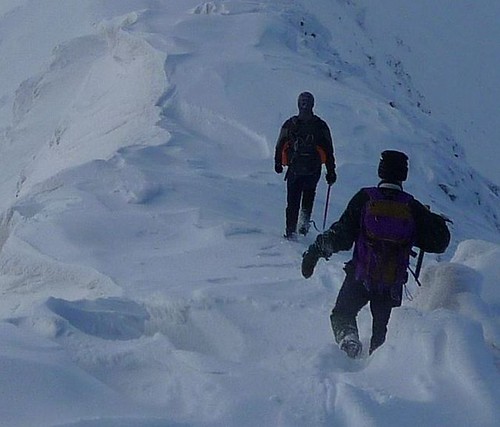 [/img]
http://www.flickr.com/photos/30189432@N00/4341874274/in/photostream/
Don't be put off from your original plan, just see what the weather forecast is near the time and what snow conditions have built up in the lower valleys over the preceding weeks, if any. As Roky Erickson song, "don't fall down" :-).
good snow paul
B.A.nana, I'll keep the options open, one thing I will be doing is getting some of the books above and learning about the weather, in the hope that I can make a more informed decision at the last minute.
and of course I'll be careful, because otherwise 'you're gonna miss me' etc 😀
I can see why you were hooked after a traverse of the Five Sisters of Kintail. These pictures were taken about this time last year. Great mountains for a day out.
[img] 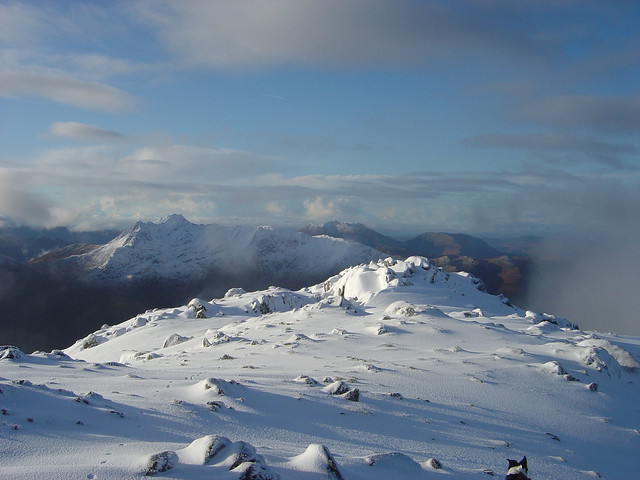 [/img]
[img] 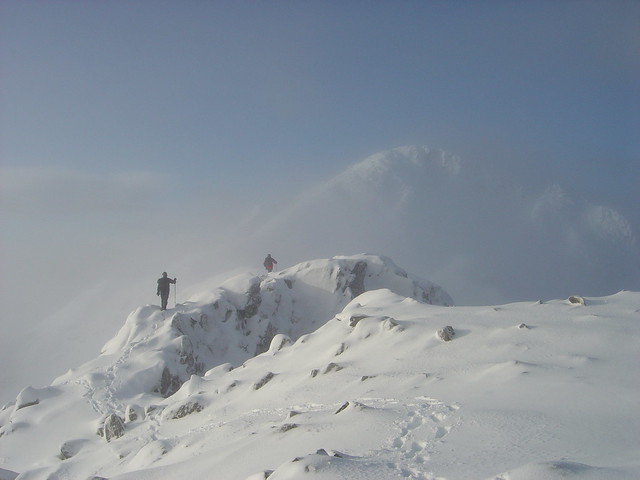 [/img]
[img] 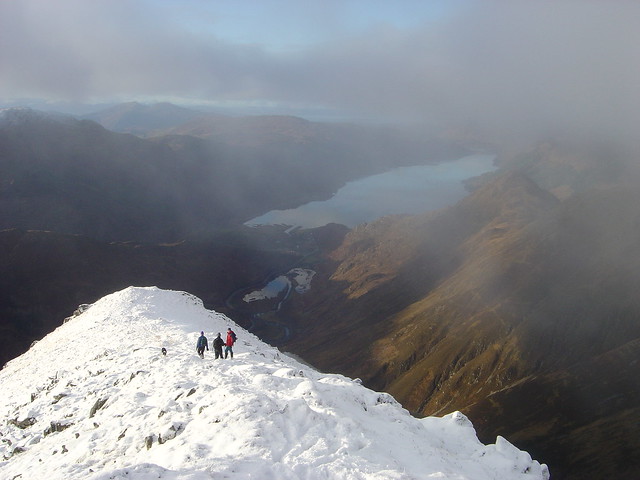 [/img]
You guys got views! We got some glimpses of Ben Fhada but that was about it, still glorious though.
[img]  [/img]
Looks like this is turning into a photo thread!
Esat ridge of Bidean nam Bian, above Glencoe:-
[img]  [/img]
GOOD!
here`s another tow, both taken in Feb in Scotland, but different years, and how different teh degree of snow cover is. Sgurr Thuilm 2005, deep wind crusted fresh snow, Ben Lawers hardly any snow around but big temp inversion , walking above the clouds on frozen ground.
[url= http://farm2.static.flickr.com/1423/5179139639_b184fbe9ac.jp g" target="_blank">
[url= http://www.flickr.com/photos/55935603@N05/5179139639/ ]JB sgurr thuilm feb 2005[/url] by [url= http://www.flickr.com/people/55935603@N05/ ]jamesld8[/url], on Flickr
[url= http://farm5.static.flickr.com/4132/5191178921_0ce7e7b801.jp g" target="_blank">
[url= http://www.flickr.com/photos/55935603@N05/5191178921/ ]ben lawers range feb 2008[/url] by [url= http://www.flickr.com/people/55935603@N05/ ]jamesld8[/url], on Flickr
Looking over to Creag Meagaidh - March 2009
[url= http://farm4.static.flickr.com/3400/3328635897_9f25d1c878_z.jp g" target="_blank">
[url= http://www.flickr.com/photos/druidh2000/3328635897/ ]DSC00251[/url] by [url= http://www.flickr.com/people/druidh2000/ ]druidh_dubh[/url], on Flickr
Miscellaneous summit - more times than I can remember...
[url= http://farm5.static.flickr.com/4033/4305108792_65005d36b4_z.jp g" target="_blank">