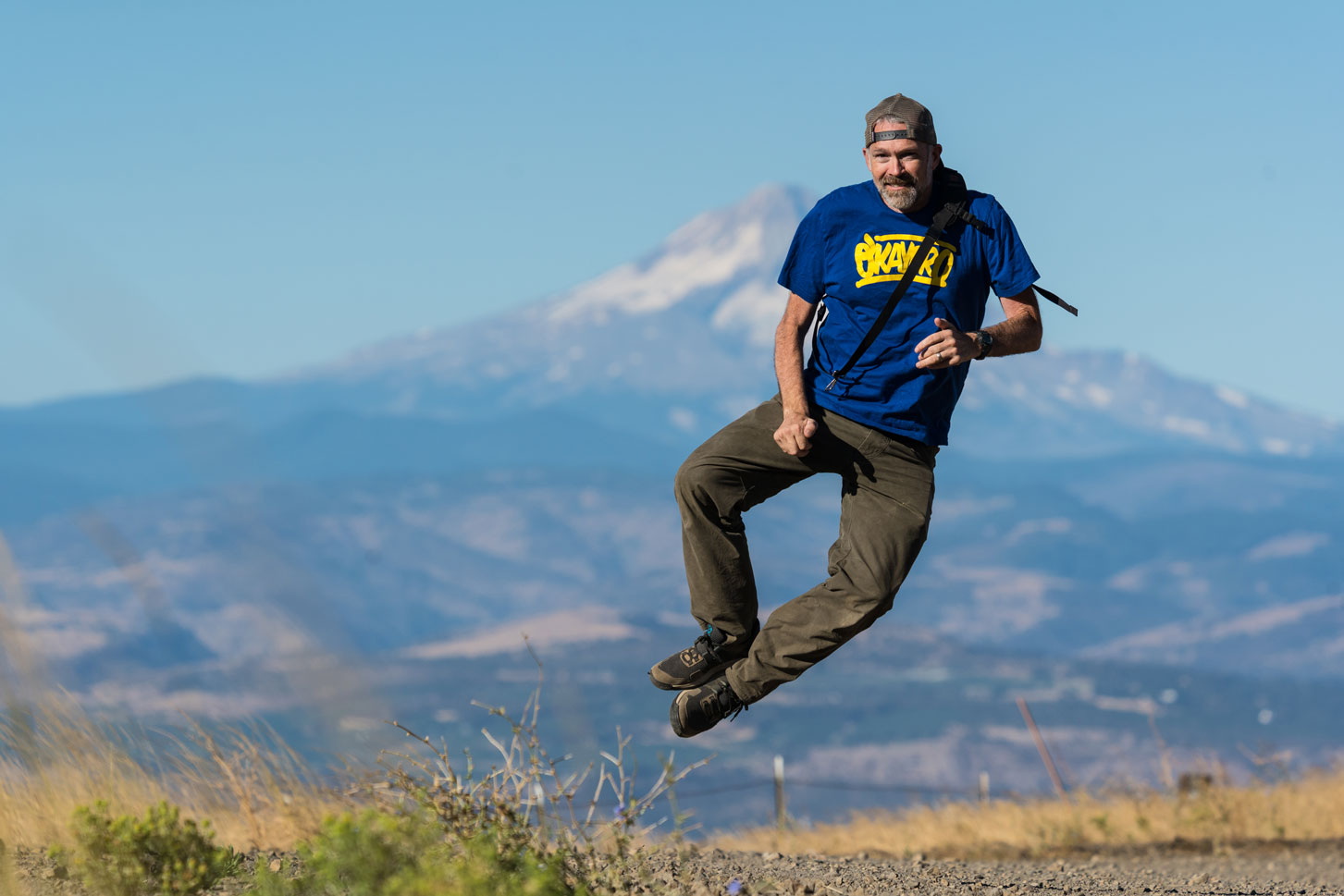
An interview with mountain biking photographer and ALS sufferer, Colin Meagher, therefore, also one of his last.
Words Chipps and Colin | Photos Colin Meagher and as credited.
Hey, this feature looks even better when viewed via Pocketmags; you get the full graphic designed layout on your device FOR FREE! It’s not quite as beautiful as the paper magazine but it’s better than a basic webpage.

Chipps: OK, Colin, let’s start this off with some regular old questions. How did you get your start as a pro photographer? And then into the world cup race stuff?
Colin: I became fascinated with photography in my mid-teens. But my inclination in university was to pursue advertising. I took a few photography and basic art classes for learning the rudiments of composition, but advertising was my major. I interned with an agency, and they gave me the shit job (as they thought it) of vetting photographers’ portfolios. I quickly realised that the world of outdoor adventure photography was wide open, and that my passions for everything from snowboarding to rock climbing to cycling gave me a leg up: I both understood the movements of these sports and had the ability to get to the locations. So I started pursuing my education from the school of hard knocks.
This was very squarely in the film days. I couldn’t afford quality film on my own dime, so I moonlighted as a waiter or bartender. My break came in the form of a photo that Patagonia purchased for an ad. That image got a lot of play. This was in 1996. I left the service industry and focused on working professionally.
I was pushing ahead on my own, but was kind of all over the map. When September 11 happened, I was over-extended financially and suddenly no one was hiring generalists like myself. To get a handle on my debt, I went back to waiting tables. To keep a foot in the door, I started doing event photography because it was a set date and I could easily get off work to go shoot at events. And I started specialising, primarily in mountain biking. A few races in and I was kinda hooked.
What sort of gear were you using back then? (Were you late film/early digital? Film and reluctant digital?) And what positives and negatives (no pun intended) did that equipment/set-up bring?
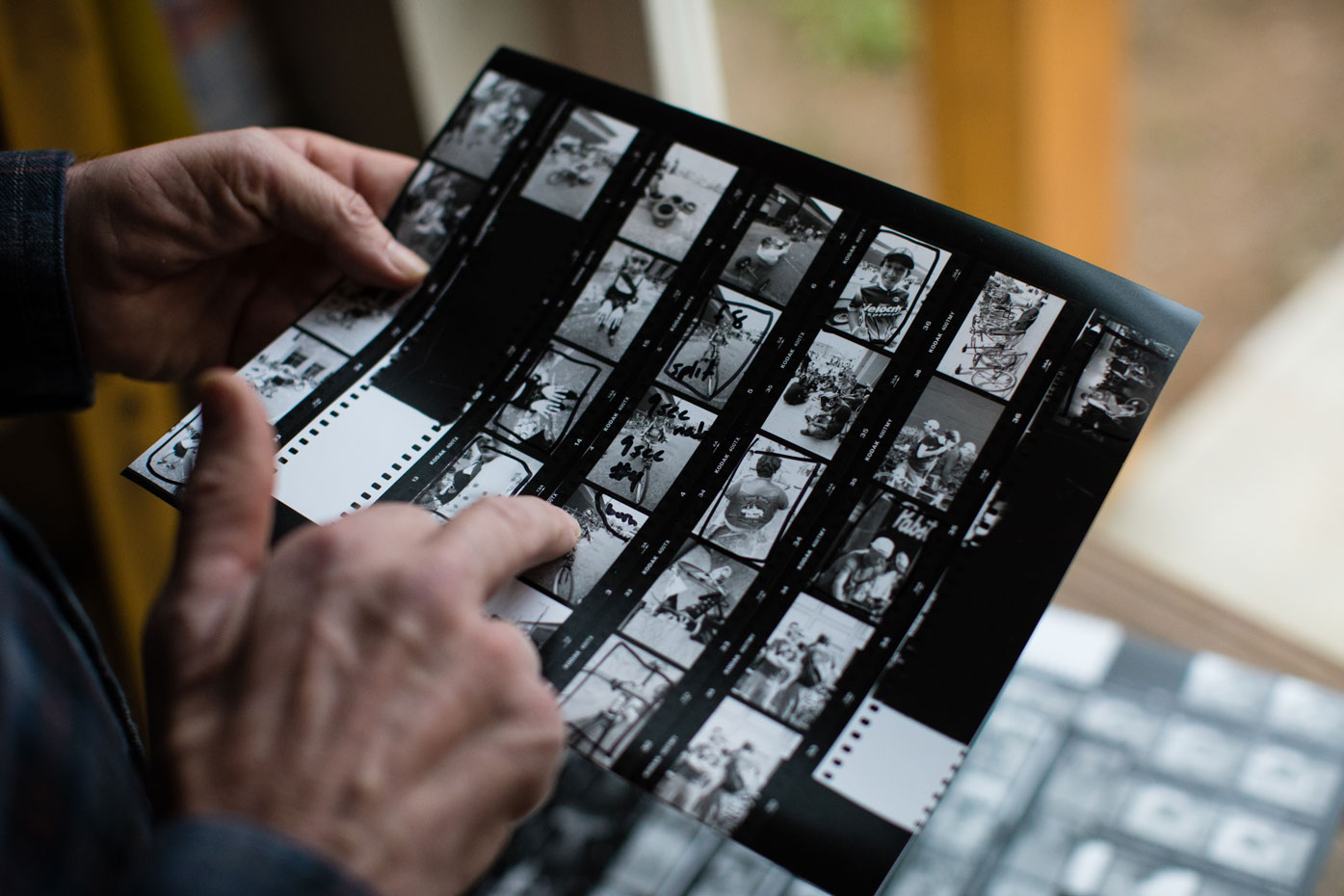
I started full film. Transparent imagery at that. What most readers won’t know is that there is literally nowhere to hide with transparency film. If your exposure is off by even a little, you’re likely throwing the entire roll out. And you can’t hide a compositional error by cropping – it’s the complete image. At a cost of roughly $15–20 per roll, that adds up quickly. Digital, on the other hand, has gob tons of margin for error, exposure-wise. You can easily crop in post-production, and while a good [memory] card back in the early days was expensive – say $150–200, you could shoot the equivalent of ten rolls of film on one, and keep reusing it a hundred times or more. That was a game changer.
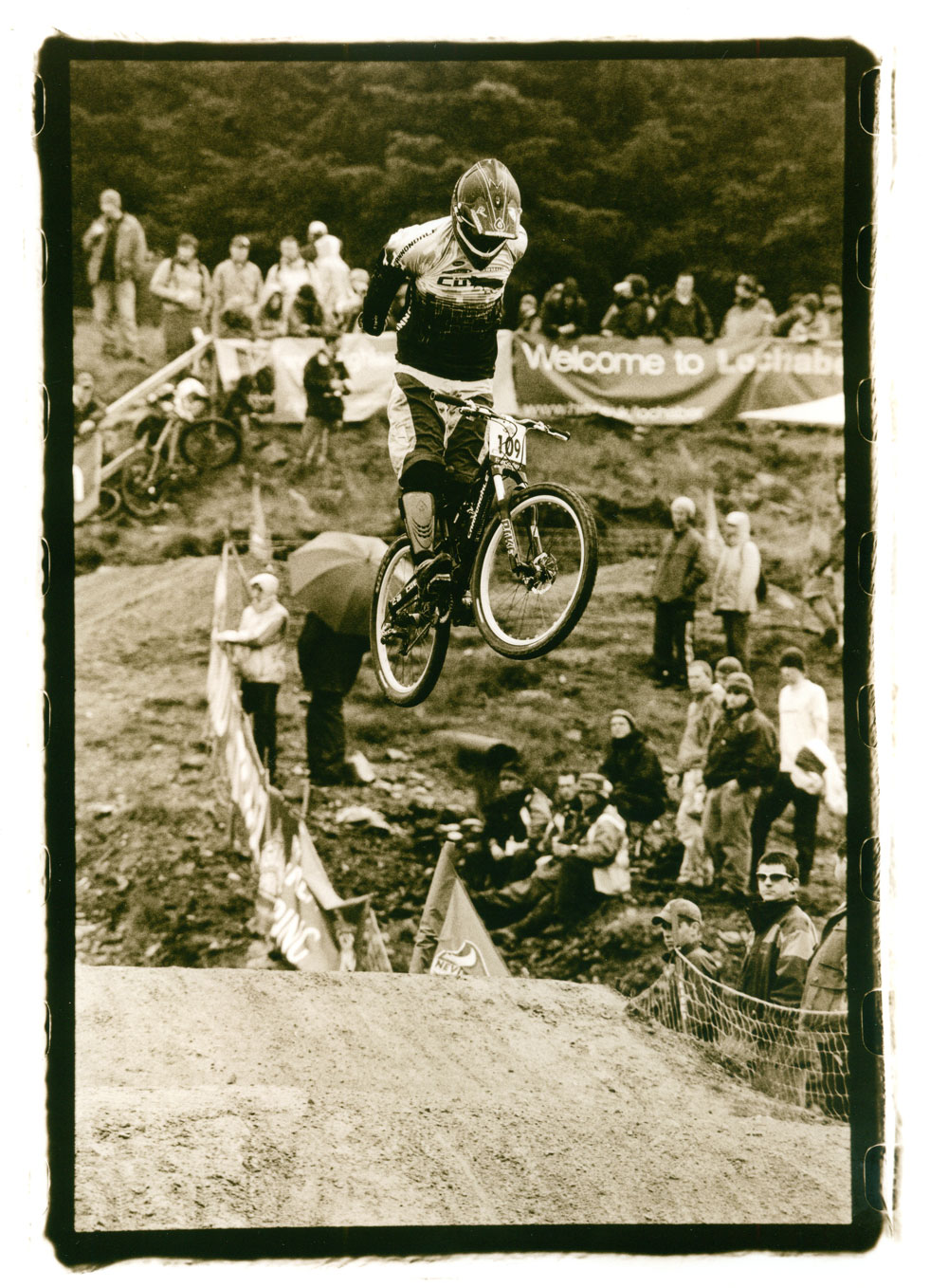
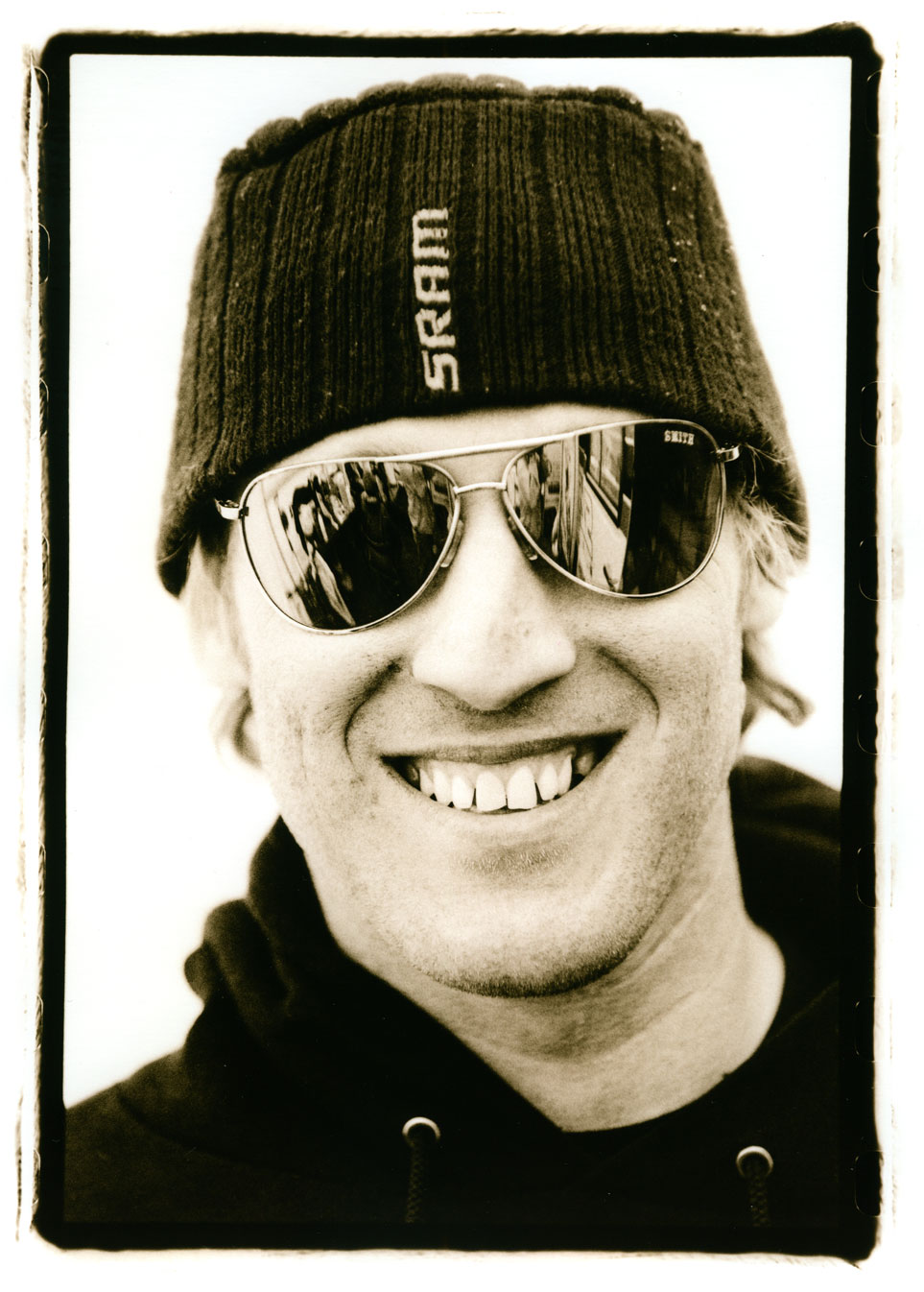
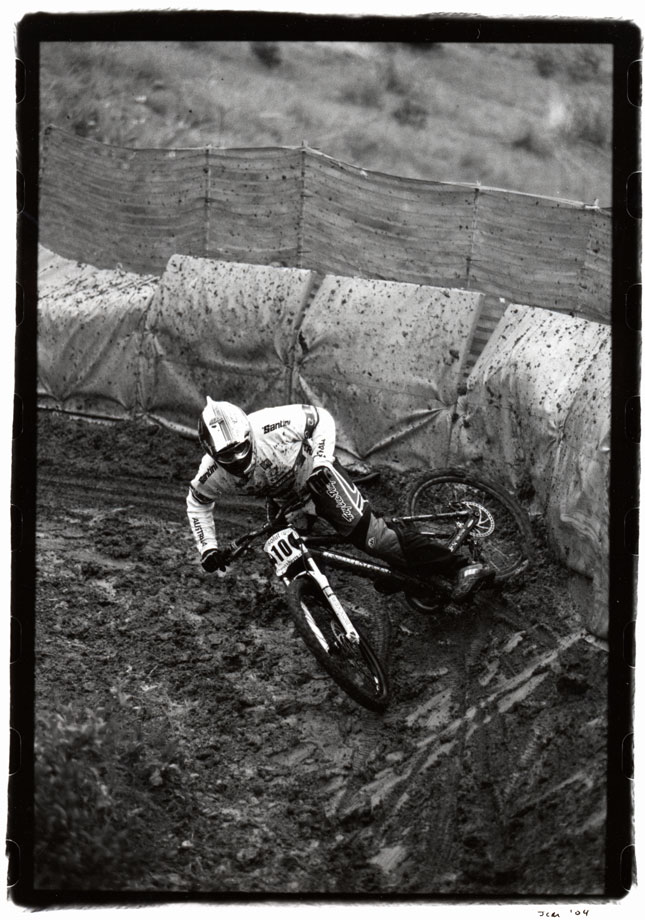
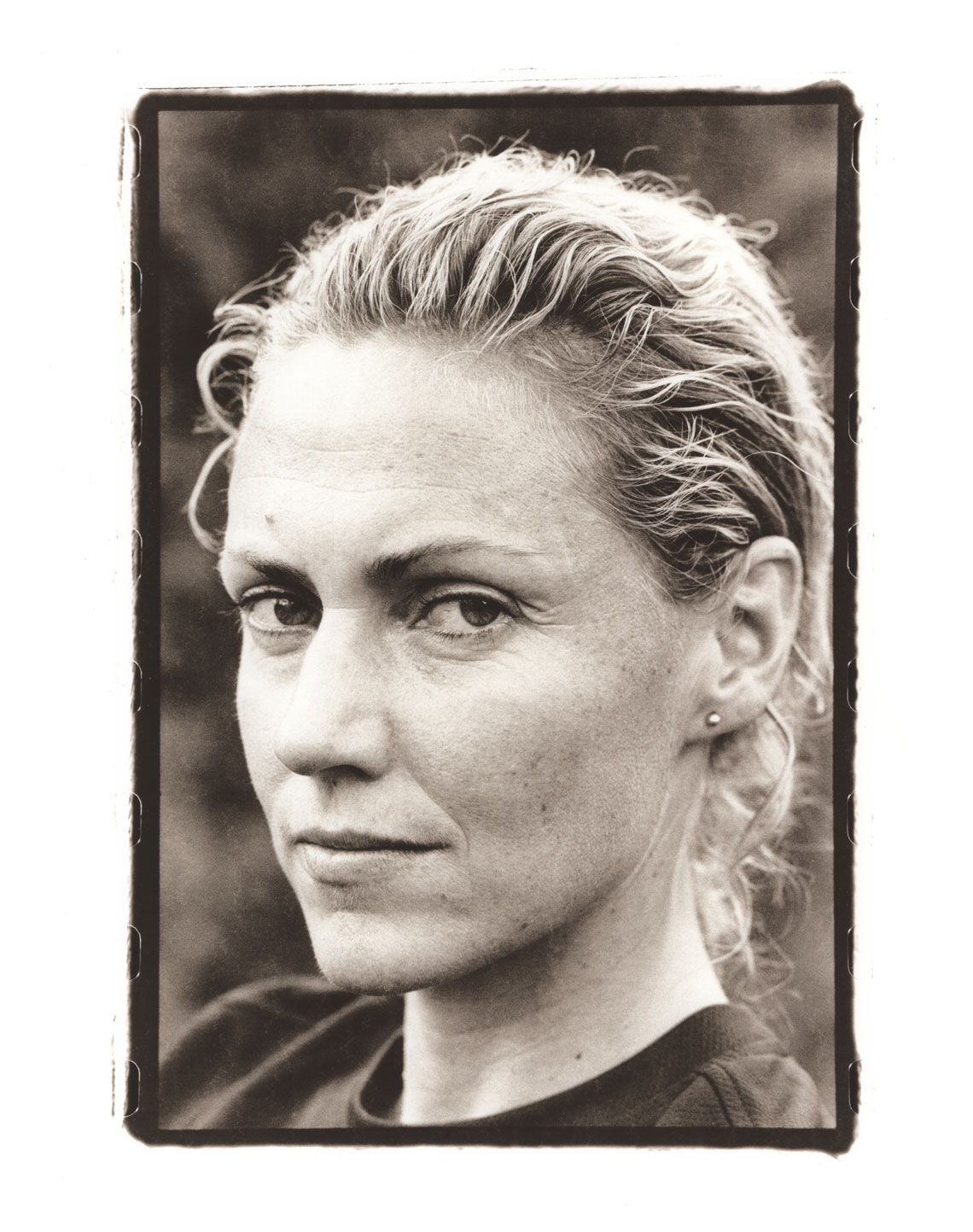
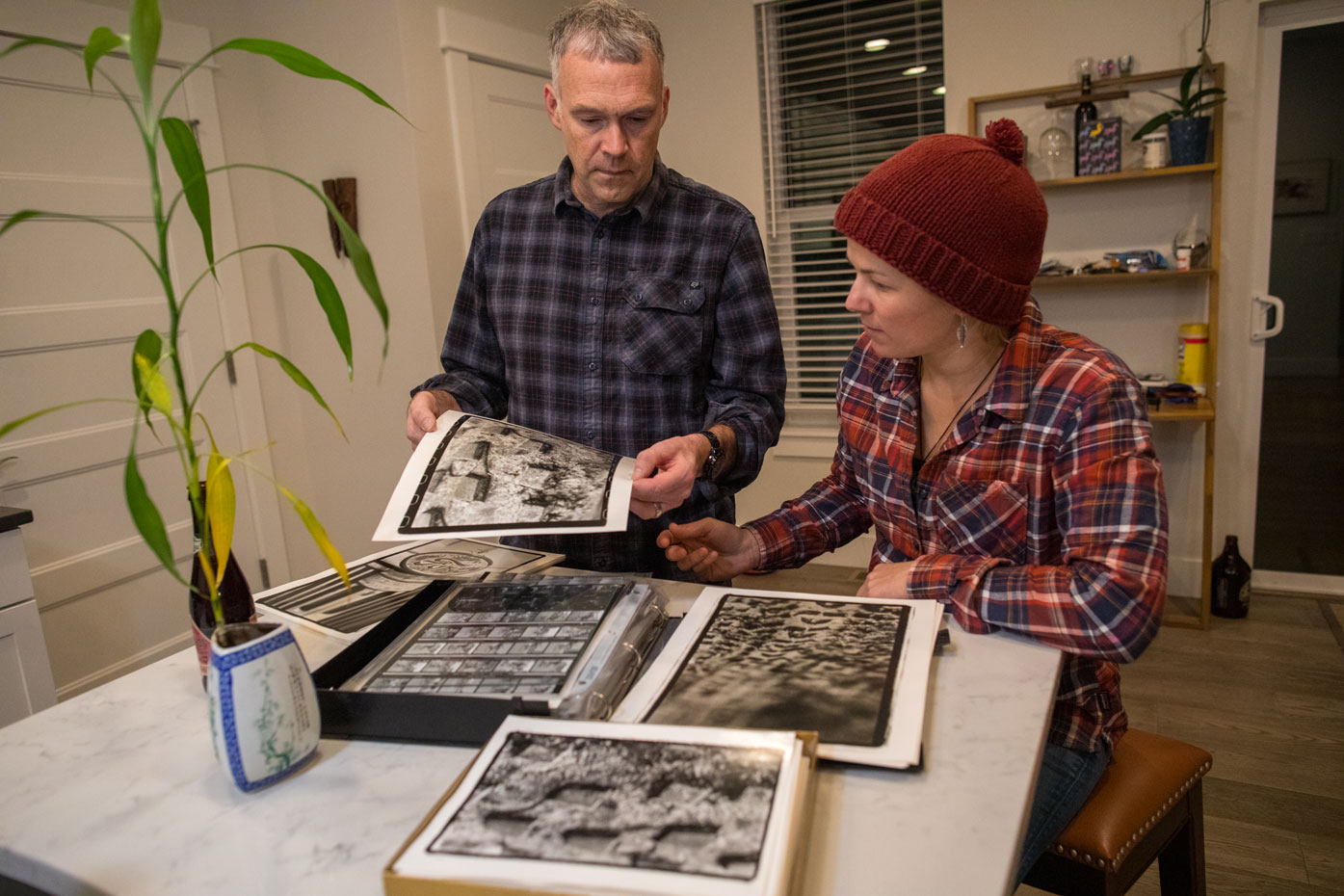
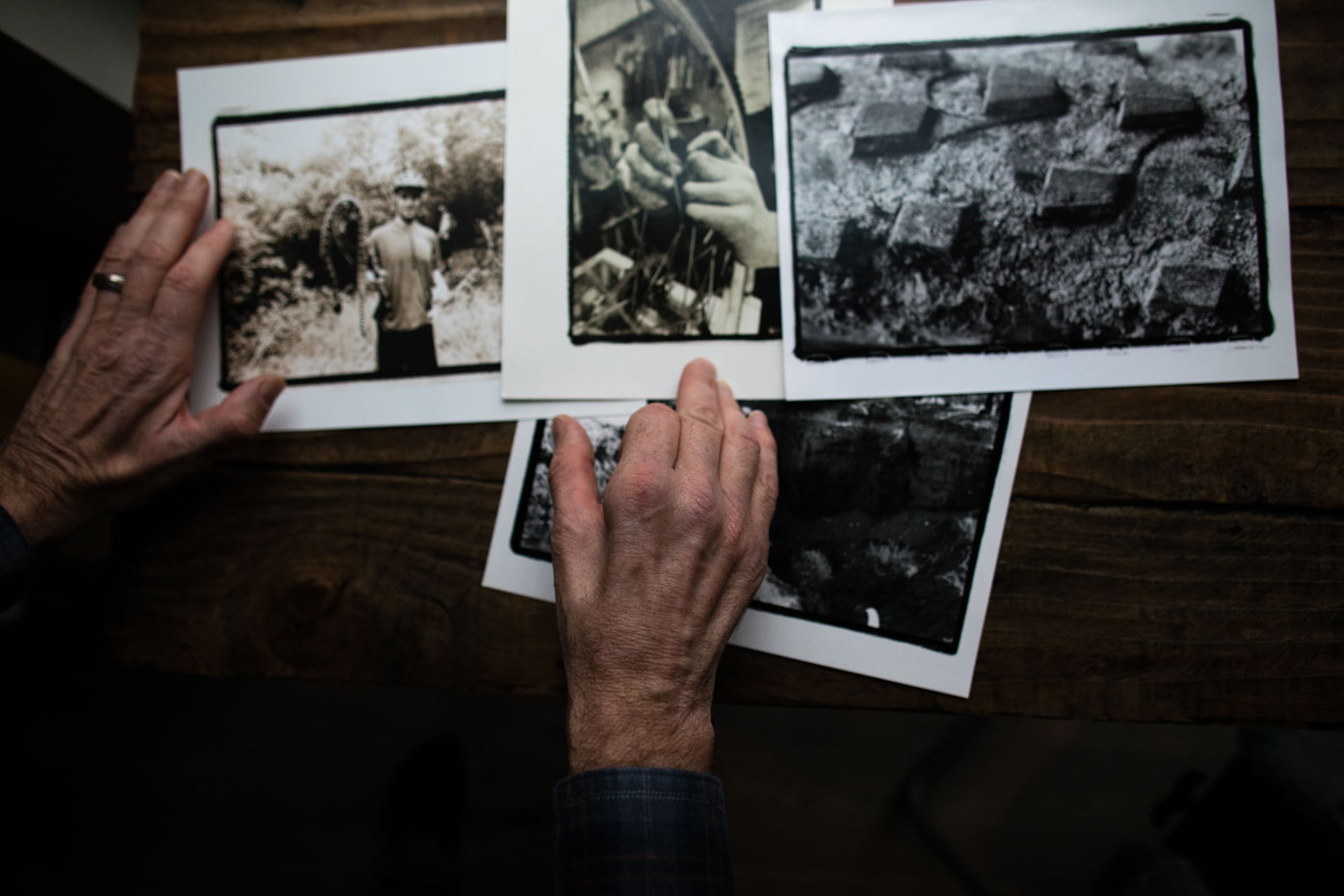
I adopted digital in 2005. I still kept a film camera, though, loaded exclusively with black and white film for portraits and personal projects. But going digital allowed me to be much more versatile – I could bring lights to a shoot and quickly create a mini studio trackside that sometimes offered an image that blurred the lines between commercial and editorial.
From a race coverage perspective, as the World Cup DH race format changed and digital technology continued to improve, lights became increasingly obsolete: you simply didn’t have time to screw around setting up lights. And the camera sensors continued to improve, obviating the need for fill-flash.
Was there a ‘golden period’ for photographers on the race scene? Like, before affordable prosumer cameras meant that anyone could be a photographer?
I’d say 2007–2012 was that golden era. To get the shots, you really needed to understand how light worked, and if Mother Nature wasn’t helping, out came the lights. Now, the digital cameras are so much better, and good glass is so much cheaper, that anyone with a passion and willing to accept honest feedback can quickly make a splash. And by accepting feedback, I mean people willing to hear how poor an image that they think is great really is, and why, and then applying that feedback to get better.
How has the job of World Cup photographers changed over the last, what, 25 years or more?
Oh, it’s still the same! It’s all about storytelling. But it’s gotten much faster-paced. People in the film days didn’t expect images for a couple weeks following a race. Now, if you have the winning shot for your client, you’d better be Bluetoothing that to your phone, doing a hasty edit and texting that out before the podium or you’re going to get an earful! And no more lights: too time-consuming. It’s now very much ‘run and gun’.
Most readers will have got this far with no idea of how to pronounce ‘Meagher’, your surname. Go on then, how are people supposed to pronounce it?
My last name is pronounced ‘Mar’. It’s Irish, though, so ‘Ma-her’ is phonetically more correct, or so I’m told.
And how old are you these days? You’ve always been reasonably ageless to me…
I’m 58, as of last September 13th.
And here’s where we derail the regular bike industry interview format. Around 2018, Colin was diagnosed with amyotrophic lateral sclerosis (ALS), also known as Charcot’s disease in France or Lou Gehrig’s disease in the United States. You may also know it as motor neuron disease. Remember the ice bucket challenge? That was all about ALS.
How did you learn of your diagnosis of ALS, and what was your initial reaction?
What was the response of your family, friends and colleagues/clients? And for the majority of us unfamiliar with the disease, how does/has it affected you physically?
OK, bear with me, this is complicated.
They really don’t know what causes ALS or MND (motor neuron disease). The current theory is that an unlucky combination of genes and environmental factors causes ALS. This is likely true. However, there is a somewhat controversial theory that, in some cases, a ‘trigger event’ starts the clock ticking.
I’m a big believer in the trigger event theory because, as near as I can tell, I experienced one. I had a big off the bike in February 2015 that I walked away from with nothing more than severe bruising on my right arm. But a week later, I started getting muscle twitching, first on my injured arm, then all over my body. I went in for testing, and that came back as inconclusive – my neurologist said it was likely just benign muscle vacillation from an impinged nerve from the crash. So, we forgot about it.
Two and a half years later and we realised something was off that couldn’t be explained by age or my sporadic gym workouts: I was experiencing some inexplicable muscle weakness. Prior to that bike crash, I was very physically strong – at any time, I could readily do ten pull-ups. But now I was having difficulty doing even seven. My general practitioner had my blood tested and I was showing low testosterone levels and low magnesium – both of which could help explain the muscle twitching and weakness, but that didn’t feel right, so back to my neurologist. She listened to what I was experiencing, correlated that with my muscle-twitching, which is a classic symptom of ALS, and referred me to a specialist in Portland, OR. I live in Hood River, a town of about 10,000, so limited somewhat. But still not bad, so the referral was a little unsettling.
Once there, after three months of testing, I got a diagnosis. ALS is a diagnosis by process of elimination. In my case: 31 blood tests, 2 MRI tests, a CAT scan, and a spinal tap.
The response from me was denial. From [my partner] Nikki? Unconditional love and support mixed with slow-motion crisis mode. From family and friends? Horror and compassion. From colleagues and clients? Unwavering support.
The mechanism that ALS kills with is simple: it destroys one’s motor neurons. These are the part of your nervous system that activates the muscles to move. Every individual muscle fibre has a motor neuron. As those individual muscle fibres go silent, the body thinks that they are no longer needed, so your body consumes the offline muscles, causing you to basically waste away.
This only happens to voluntary muscle groups – ones you can control. Your heart and so on are unaffected. ALS may initially attack one’s limbs or one’s throat. So, one experiences weakness. And you can’t add more muscle to an impacted muscle group, so it just gets progressively worse. And once started, it will just start attacking progressively more muscle groups. Once it reaches the diaphragm, your ability to breathe easily and fully starts to decrease until you basically become oxygen-starved and die of respiratory failure. At that point, you can survive by being placed on a ventilator, which effectively necessitates 24/7 care and makes one bed-bound.
I can remember you phoning me up to tell me about your diagnosis and to basically tell me that you probably had 18 months left to live. That was what, six or seven years ago now? (You’re nothing if not stubborn…) How has life been since then? What have you done with that ‘bonus’ being-still-alive time?
I won the lottery!
No, seriously! Statistically, ALS typically kills in 2–5 years. I’m going on eight, and I can still walk. This is unusual. Not unheard of, but unusual. So, with my bonus time, I married the love of my life – who knew full well that I was unlikely to live long. I got to experience parenthood by becoming the stepfather for her two kids from her previous marriage, and finally got to experience becoming a parent in my own right with the birth of our son, Madoc, on my 55th birthday. That’s correct, he was born on my birthday. How cool was that?!
On top of that, we did the usual: travel, adventure, and good experiences with family and friends whenever possible.
Few of us have any idea of how long we have left on earth. You’ve been ‘blessed’ – and I use that term carefully – with a rough idea of the length of your innings. How does that affect your view of daily life, and life going forward, both with and without you?
That’s a tough one. Initially, I deliberately avoided doing much research into what would be happening to me. It wasn’t so much wilful ignorance but more a desire to live in the moment. Unfortunately, this put an unfair burden on Nikki to plan out our next steps. I realised I was being pretty selfish at some point, and I’ve been working to be more supportive and participate more meaningfully in our life with our remaining time together.
Going forward, I’m trying to be more accepting of the inevitability of my life ending. There are definitely some fears and insecurities I’m having about that, and I’m continuing to try and work through those. This means that I definitely have some bad days, but I’m trying to live my remaining time with more laughter than tears and with a focus on connecting with the important people in my life as much as I can while I can.
I’m also doing what I can to lay some groundwork for my family to have something meaningful for after I’m gone. And I’m working hard on a few things that will hopefully make their transition from having me in their lives to being gone easier: letters, some gifts… meaningful gestures.
I know that many readers are reading this with the primary thought of ‘Poor guy – but thank heavens it’s him and not me’ – Is there anything you’d say to them (and me)?
I absolutely don’t blame anyone for thinking that! But I think that’s a pretty narrow perspective. Not narrow-minded, but limiting. Pull back a little bit: yes, this is a horrific disease that I’m suffering from, but it’s not just me. The love of my life is literally helpless to do anything other than be a comforting presence in the face of my decay, compounded by knowing that I’m still mentally acute; that I’m trapped in that husk. This purgatory of sorts also applies to our kids, my siblings, my extended family, and my friends. And to every family that is suffering through a loved one dying of ALS.
Everyone knows multiple people who’ve had cancer. And cancer sucks, no argument there! But it can be fought. Miracles do happen! But ALS? ALS statistically strikes a little less than two people out of every 50,000. And it’s almost as well-known as cancer. Why? Not because of how many it kills, but because the effects of it within a community are so devastating. I’ve had good friends – incredibly strong people – who absolutely lose their shit over my degradation because they know that there’s not a damn thing they can do. With cancer, there’s typically a ray of hope. There’s literally no hope with ALS, leaving only despair for me and everyone else with ALS support groups.
Looking back on your career, do you have a favourite (race) photo from your time on the circuit? And favourite photo in general? Are there any moments that you were glad to have seen happen?
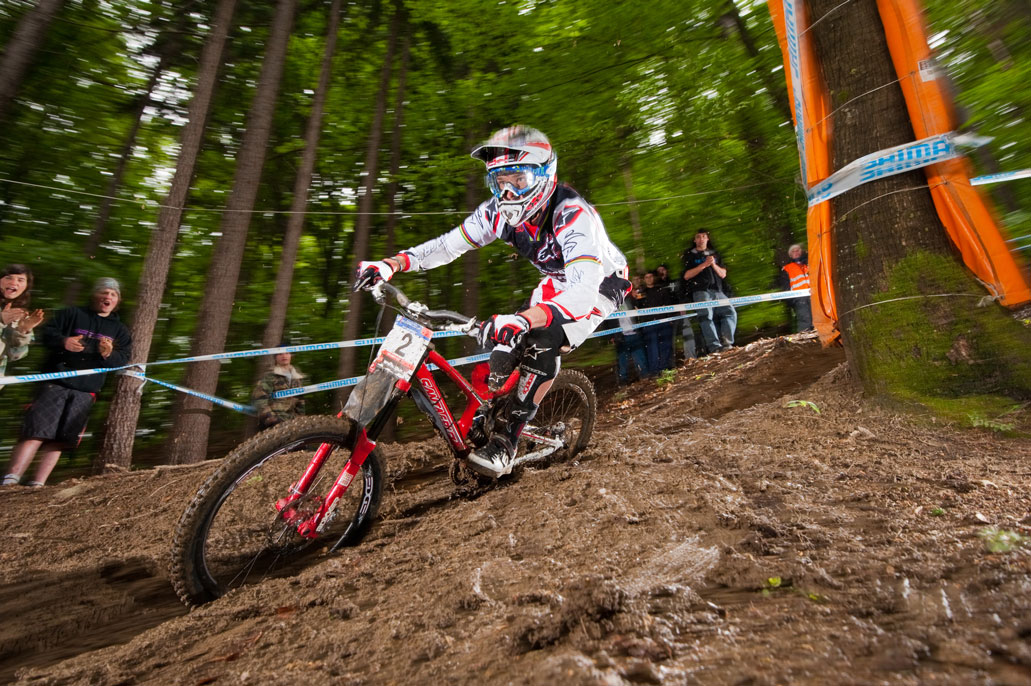
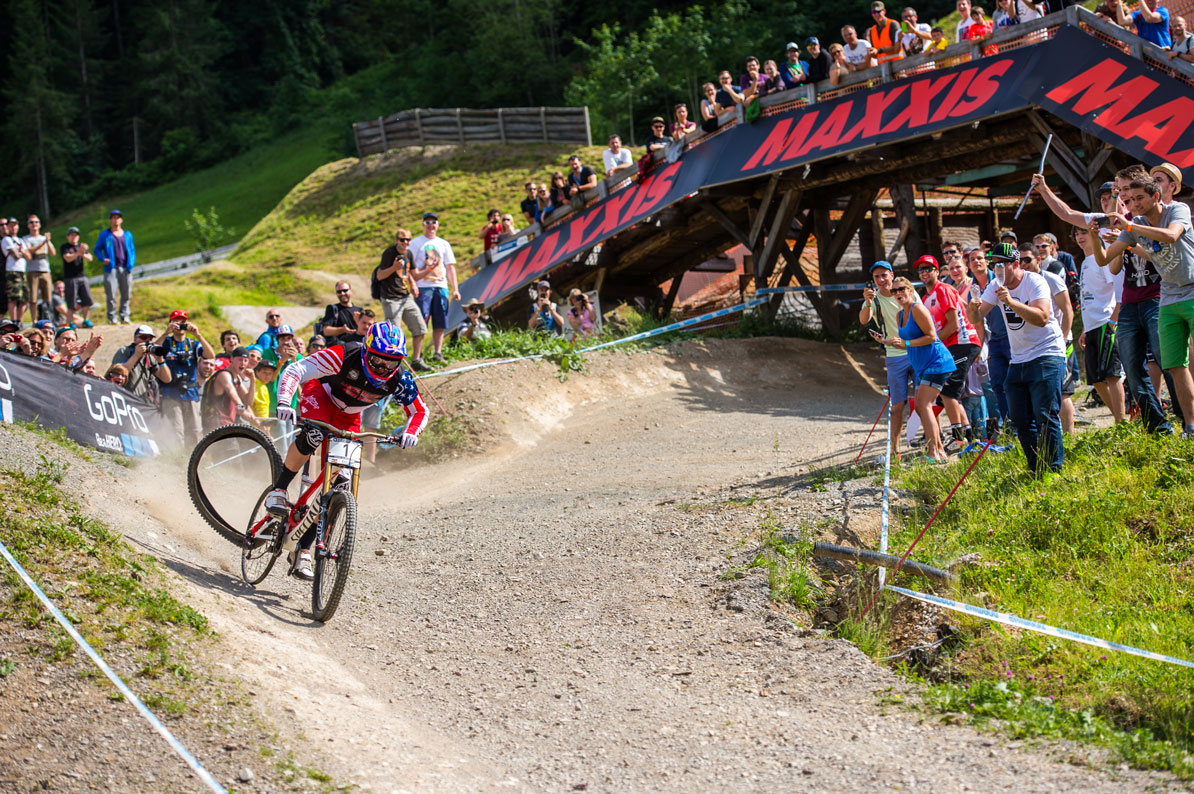
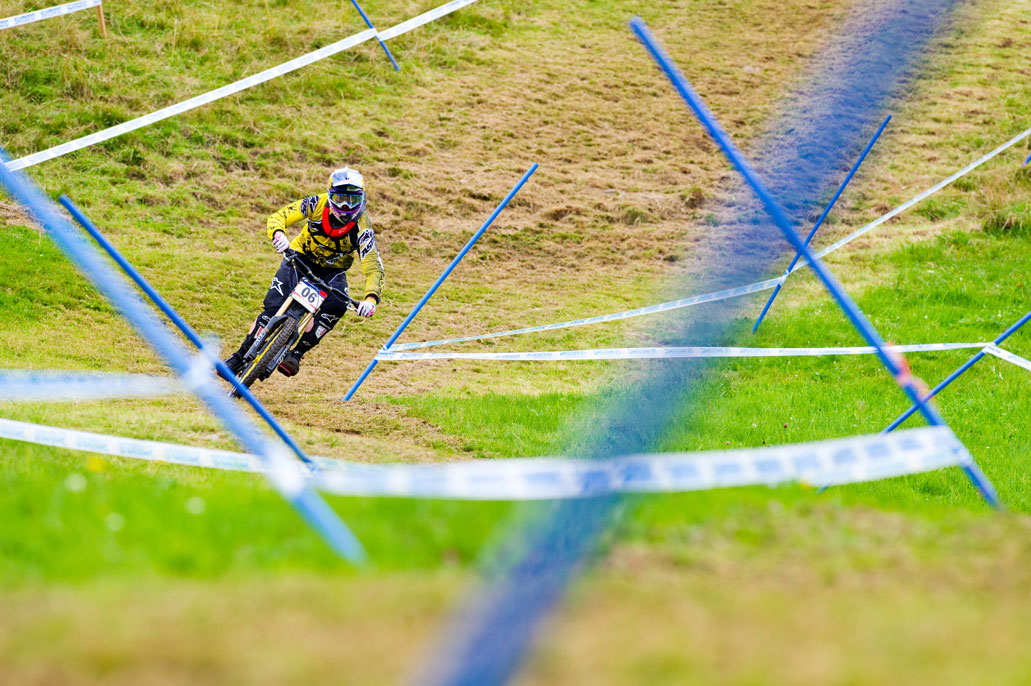
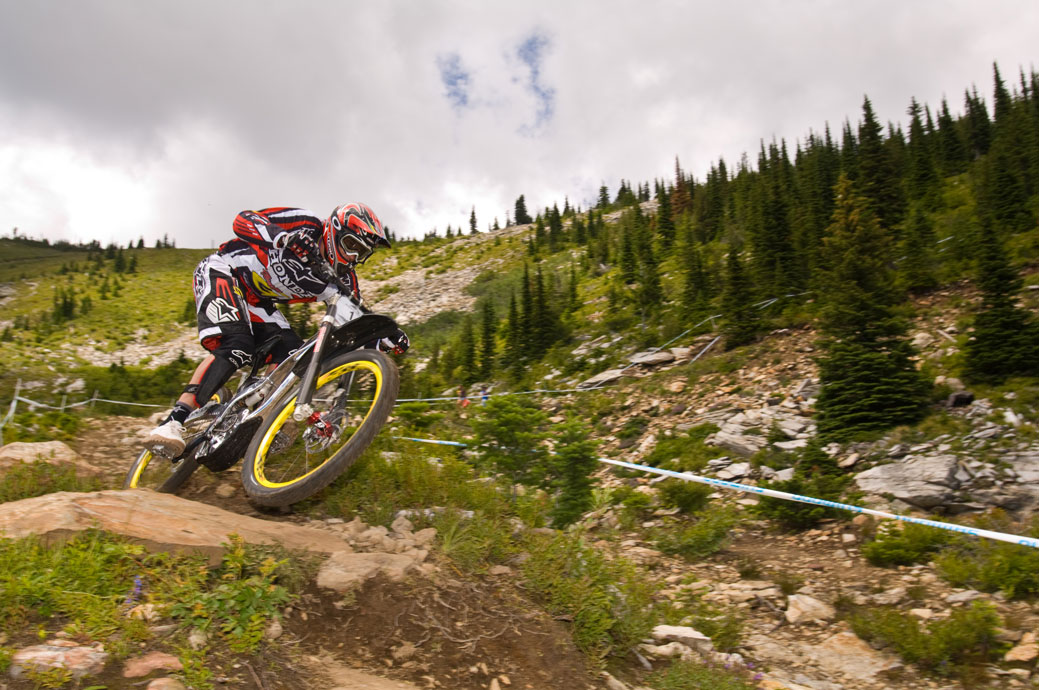
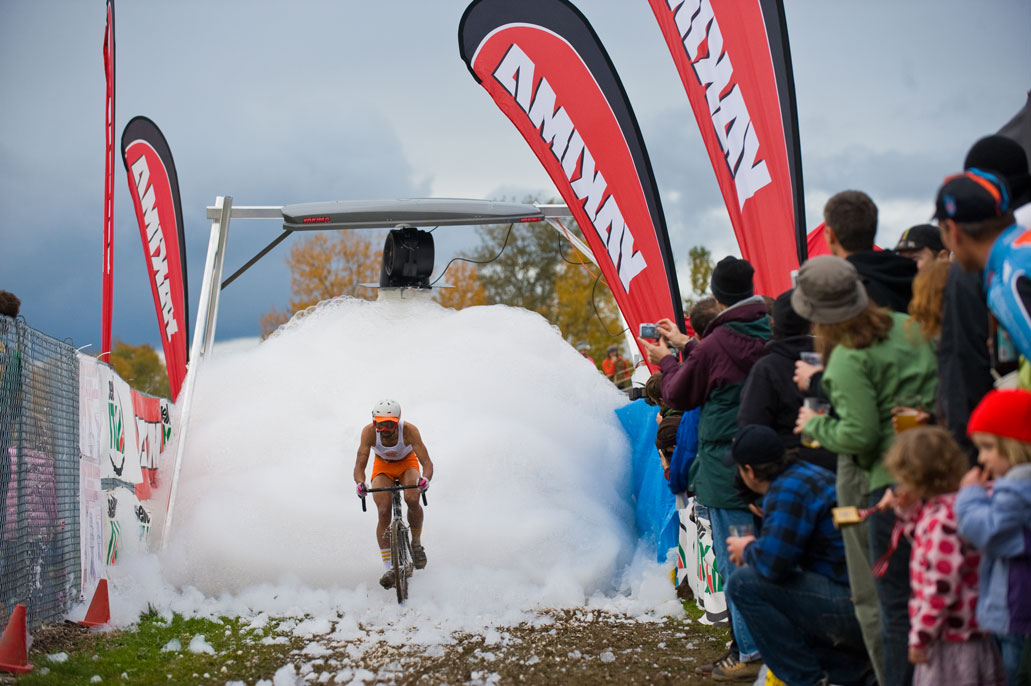
CFavourite race photo. I’m torn between two: I found an angle in La Bresse of Brook Macdonald on a flat grass turn that I framed up between course poles; his body angle precisely matched that framing. The other was a shot of Greg Minnaar in Maribor. I had to physically lie down in the mud next to the track to get the shot, and I was using lights, so it wasn’t a ‘spray and pray’ photo, but a precise execution of lighting and clicking the shutter at just the right moment.
Favourite photo? My final Bike Magazine cover shot of my wife. Every time I see it, I remember every single moment of the adventure we had that went into making it.
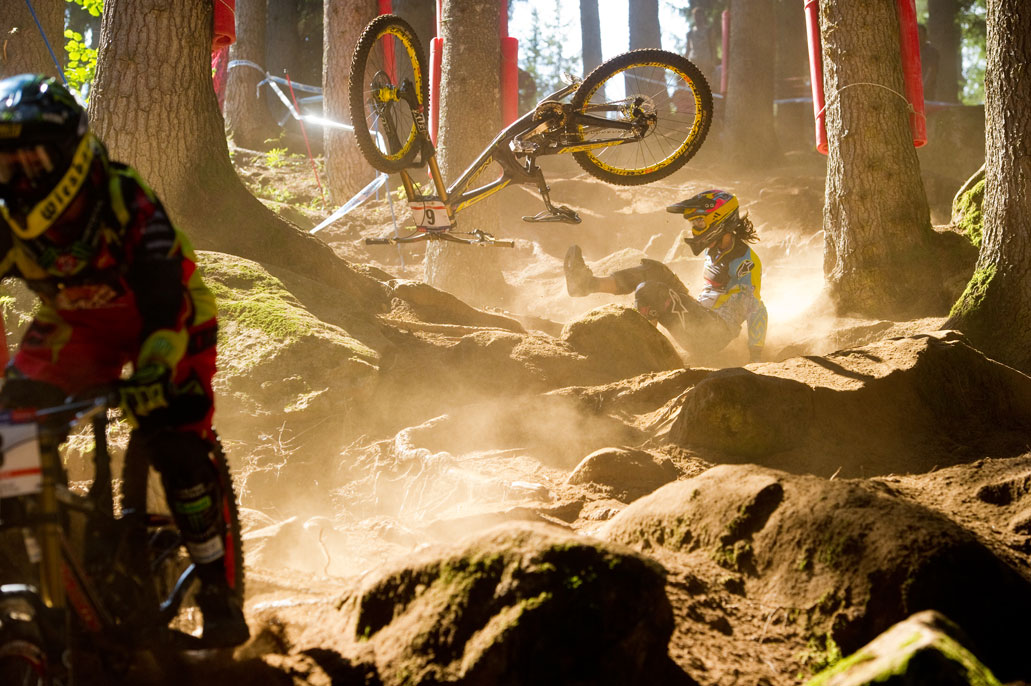
A moment I was glad I witnessed? Sam Hill’s crash during his legendary Champery run. Somewhere out there is a video clip of that actual moment. I saw it once. I’m the yellow streak in the background of that clip. It was the video guy, me, and Sam. I have no photos of it because it was too dark to not use lights and simultaneously nuking rain so hard that my lights had shorted out. Sam probably only lost five seconds in that crash – he was back on track incredibly quickly. To take third despite that? Mind-blowing.
Got any major regrets? Best moments?
Regrets? No. There are things that I would definitely do differently if I had the chance, but everything I’ve done has shaped me into who I am today, so no real regrets.
Best moments? Literally too many to list. But the top two? Marrying my wife and the birth of my son.
How would you like the cycling world to remember you? And how would you like it to treat you while you’re still very much in the room? (No one wants to read an obituary of themselves while they’re alive, eh?)
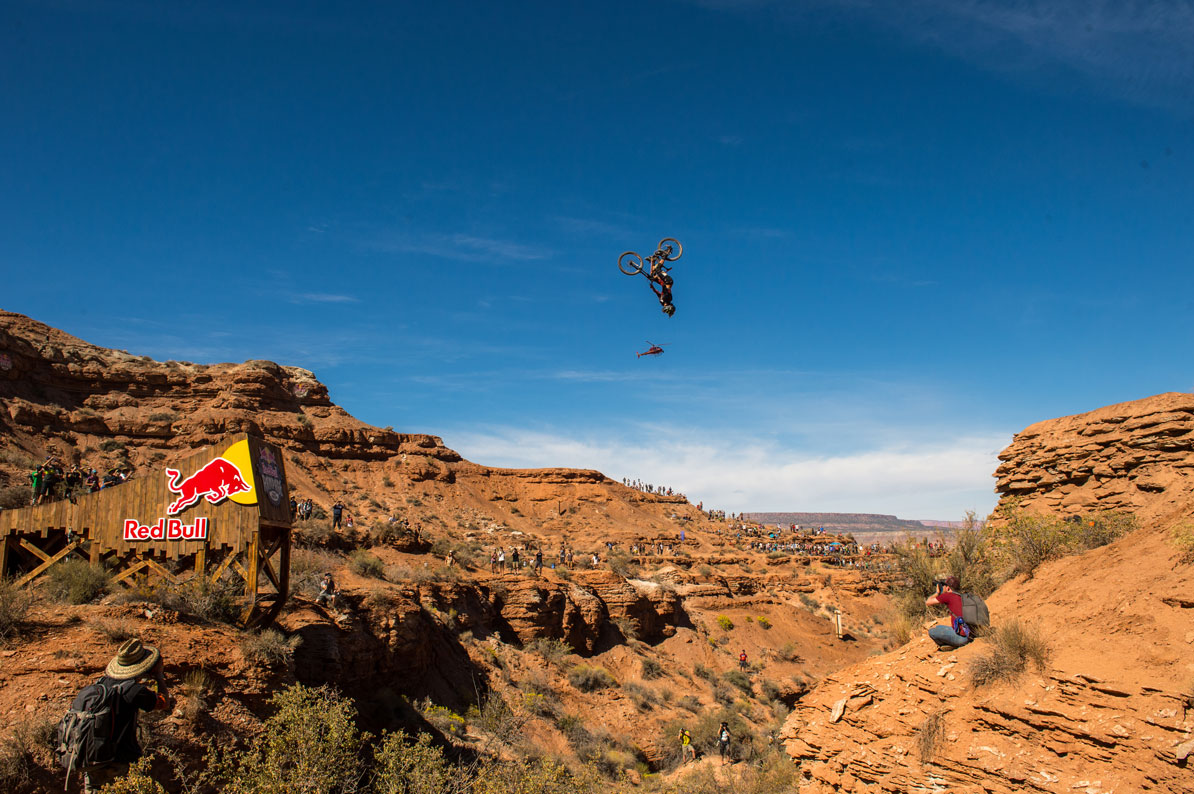
For the first… to be honest, Chipps, I was just a guy who just really liked bikes and really liked cameras. Somehow, I managed to marry the two and carve out a living pursuing those passions. A huge number of the wonderful people in my life are there because I stubbornly chose to chase photography and bikes. Something I’m incredibly grateful for.
For the second… if I meant something to anyone reading this interview, and you want to reconnect, then don’t be a stranger. Reach out. I’ll respond as best as I can, while I can.