Does mountain biking have an image problem? Is the barrage of shred-gnar imagery putting off newcomers and infuriating land managers? Benji sat down with some bike industry peers to talk it over.
Words Benji | Photos as credited.
Hey, this feature looks even better when viewed via Pocketmags; you get the full graphic designed layout on your device FOR FREE! It’s not quite as beautiful as the paper magazine but it’s better than a basic webpage.
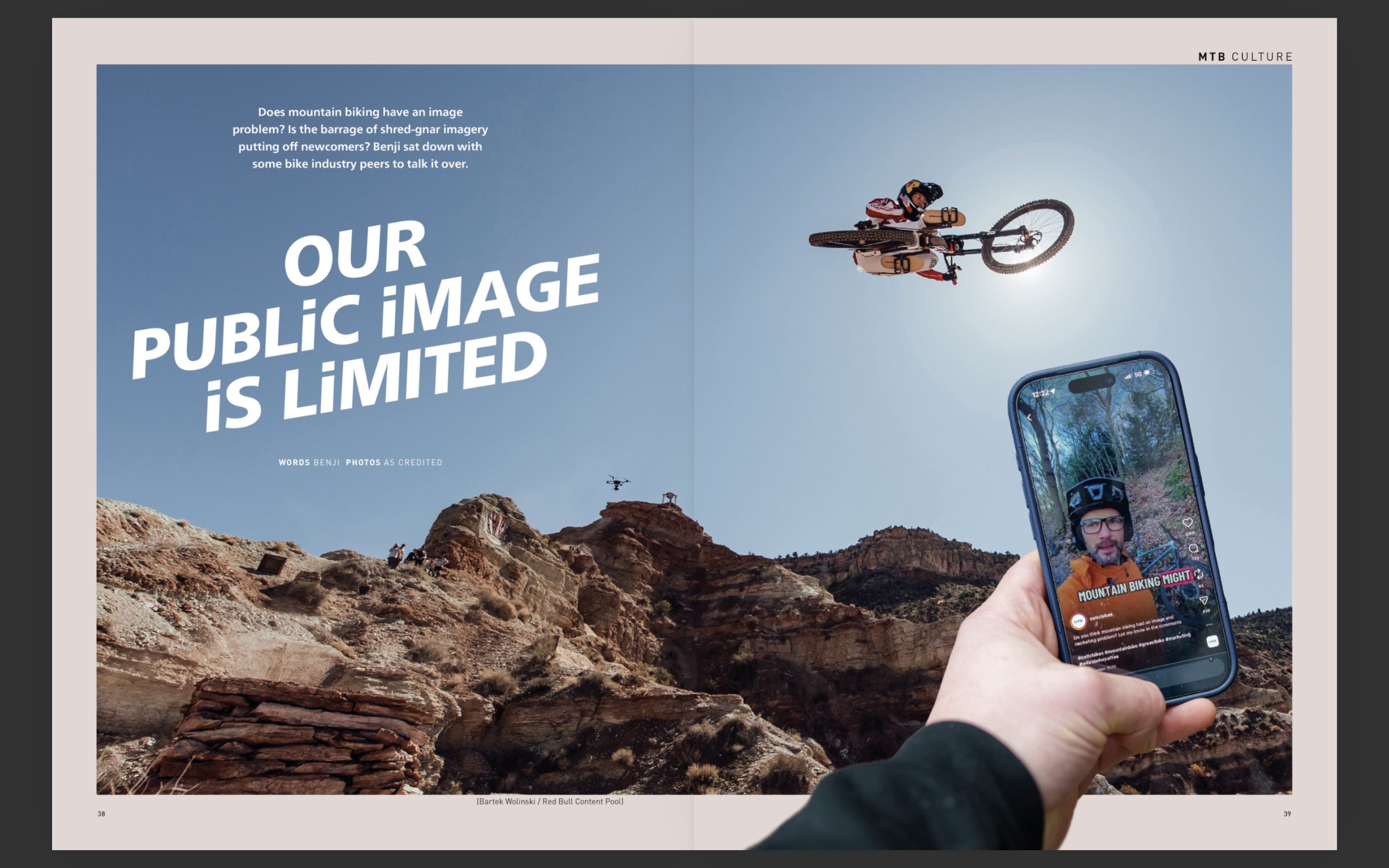
If someone said the words ‘mountain biking’ to you? What would you picture in your head? Whatever answer you gave, it doesn’t matter. We’re not talking about what you – or indeed us – think about ‘mountain biking’. The issue we’re going to address in this feature is the public’s perception of ‘mountain biking’.
We don’t currently have the resources to ask every member of the public what they think when they hear the words ‘mountain biking’. But we have Google. Specifically, Google Image Search.
I’ve just typed ‘mountain biking’ into Google Image Search (in Incognito mode, for what it’s worth). The results offer some quick search filters just below the search field: wallpaper, downhill, Red Bull, forest, trail, jump, clipart, enduro, photography, and logos.
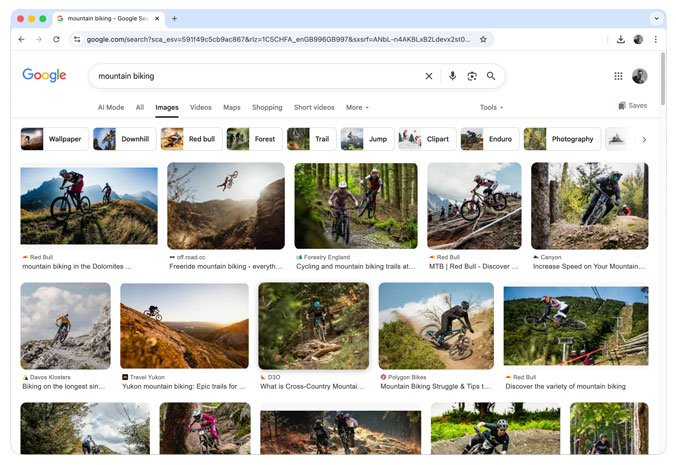
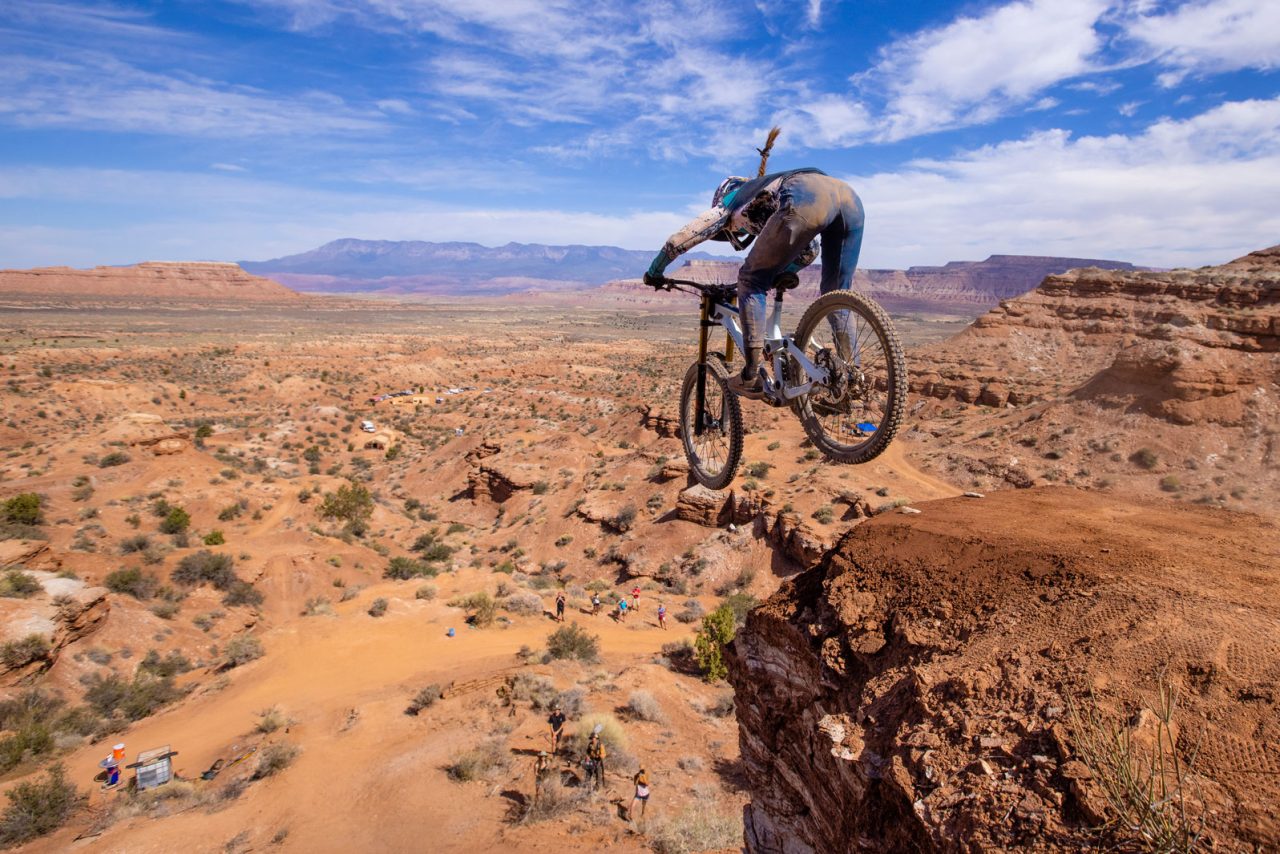
What about the image results themselves then? Of the first dozen images, two are riders doing big jumps, five are riders in bike parks, five feature riders wearing full-face helmets, and absolutely all of the pics are riders descending. Four (of the dozen riders) are on triple-clamp forks. None of them are riding hardtails.
I’m not going to mention that all of the riders are white men because, while that is not irrelevant, it is not the issue we are talking about in this particular magazine feature. (Yes, partly because this feature has been put together pretty much exclusively by white men.) You cannot be what you cannot see, and all that.
But this feature is not about human beings and riders. It’s about an activity. The activity of mountain biking. This is more a case of ‘you cannot do what you cannot see’.
Who’s talking here?
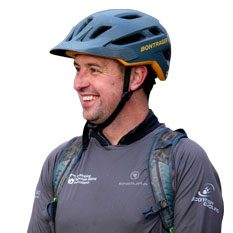
Dave Evans – As UK trails project manager at Developing Mountain Biking in Scotland (DMBinS), Dave heads a three-year project to improve sustainability, security and suitability of the UK’s trail network by improving collaboration between the mountain bike world and land managers.
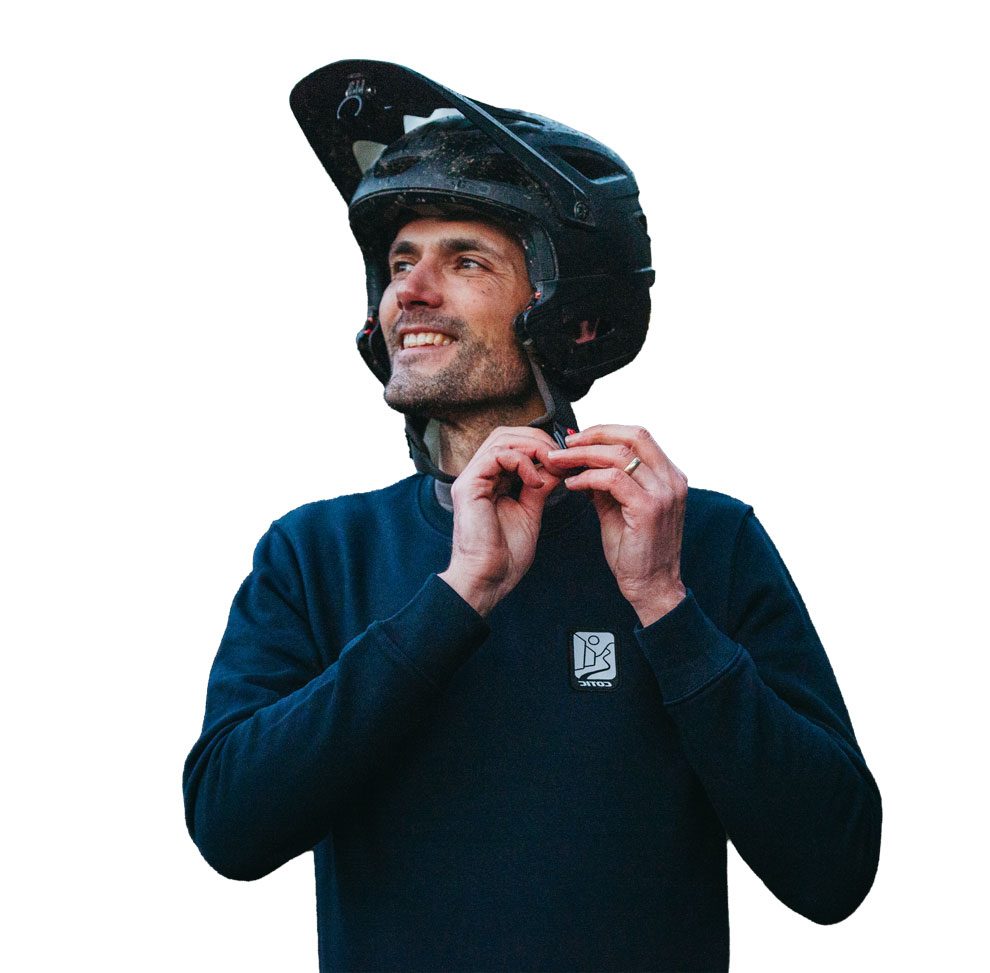
Cy Turner – The founder of Cotic Bikes. The UK-based bike brand started by him in 2003. Cotic makes steel bikes for the off-road genres of cycling. Everything from gravel to ebike.
What do people think of us?
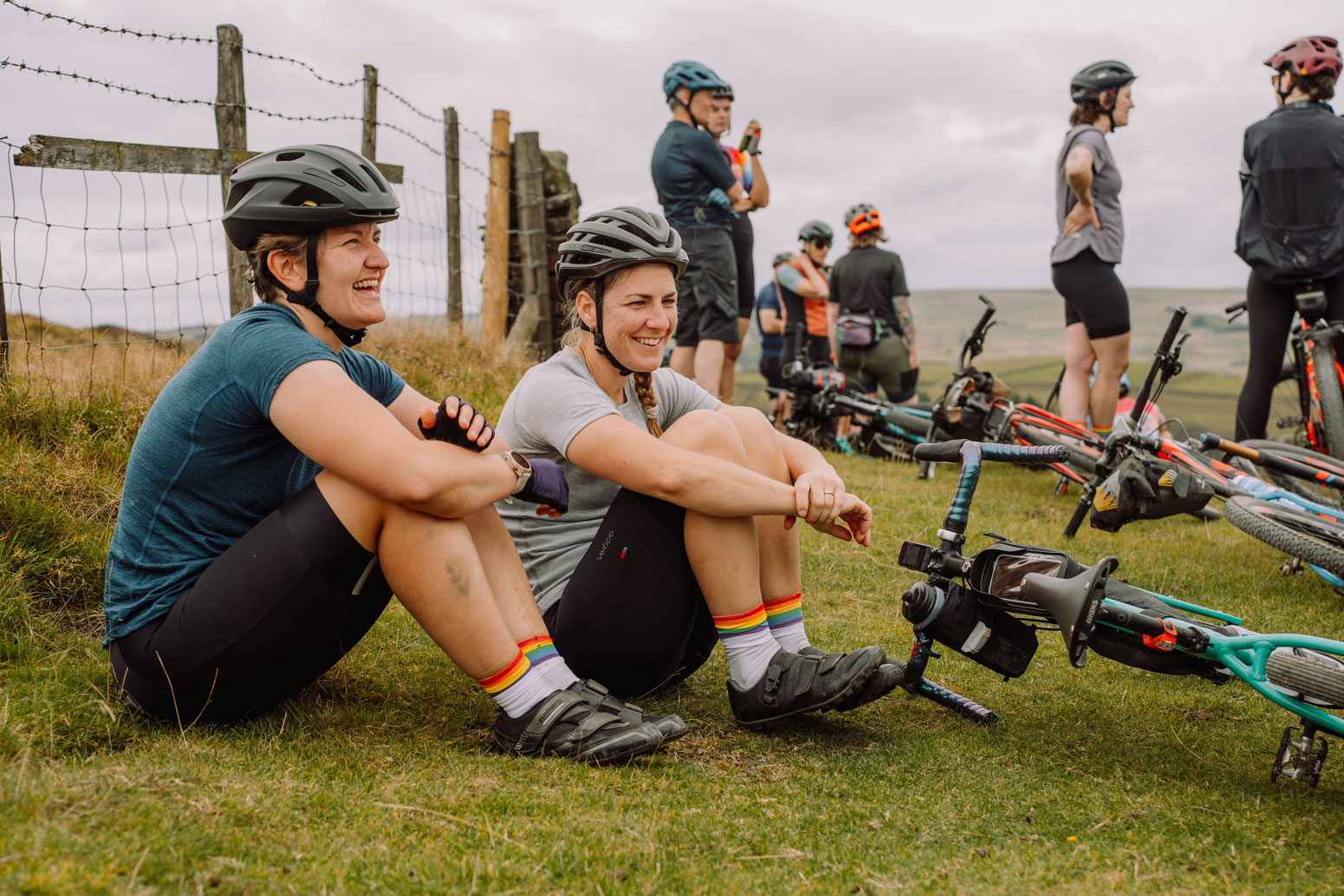
The imagery of the activity of mountain biking puts off way more people than it draws in. To outside eyes, mountain biking is dangerous, expensive, complicated, and you’re not allowed to smile.
This feature, at least in part, was inspired by a post on social media from Cy Turner of Cotic Bikes. And the subsequent conversation in the comments between me and David Evans (the UK Trails Project Manager at Developing Mountain Biking in Scotland, AKA DMBinS).
As middle-aged duffers who’ve been mountain biking since the 1990s, once we’d fulfilled our ‘old man shouts at cloud’ obligations in the comments section, we thought it behoves us to Actually Do Something About It. ‘It’ being mountain biking’s ‘incorrect’ public image.
Gravel has held up a mirror to mountain biking
Cy: “Unlike a lot of smaller brands, Cotic actually covers quite a lot of niches. We’re like a small big brand. So we do see a lot. That’s sort of why I got into this ‘public image’ conversation recently. Because even though we started out as a mountain biking brand – most of the staff here would identify as mountain bikers – we are now, in terms of sales volumes, effectively a gravel bike company that also sells mountain bikes.
Subscribers! Share your referral code and earn credit for every new subscriber.
“It’s been interesting to watch how people who are into gravel bikes, particularly on the models where they cross over into what we do. You get this crossover of people. It’s been very interesting experiencing that. Over the last few months, I’ve become more and more aware of people’s attitudes towards ‘mountain biking’ and how people relate to it negatively.
“I put something on Instagram and TikTok last year, which kind of kicked off all this chat. It was a bit of a viral moment. Over 700 comments and 130,000 views. It really, really hit a nerve.”
Who do you think it hit a nerve with?
Cy: “Basically, I’d said I think mountain biking has an image and marketing problem. I had just been for basically a nice cross-country mountain bike ride on a modern, sort of cross-country, down-country kind of full suspension mountain bike. I’d gone for a spin to look at the view and have a cup of coffee. But there were a couple of sections of trail on that ride – probably 20% of the ride – where it would have either been unridable or extremely unenjoyable on a gravel bike.
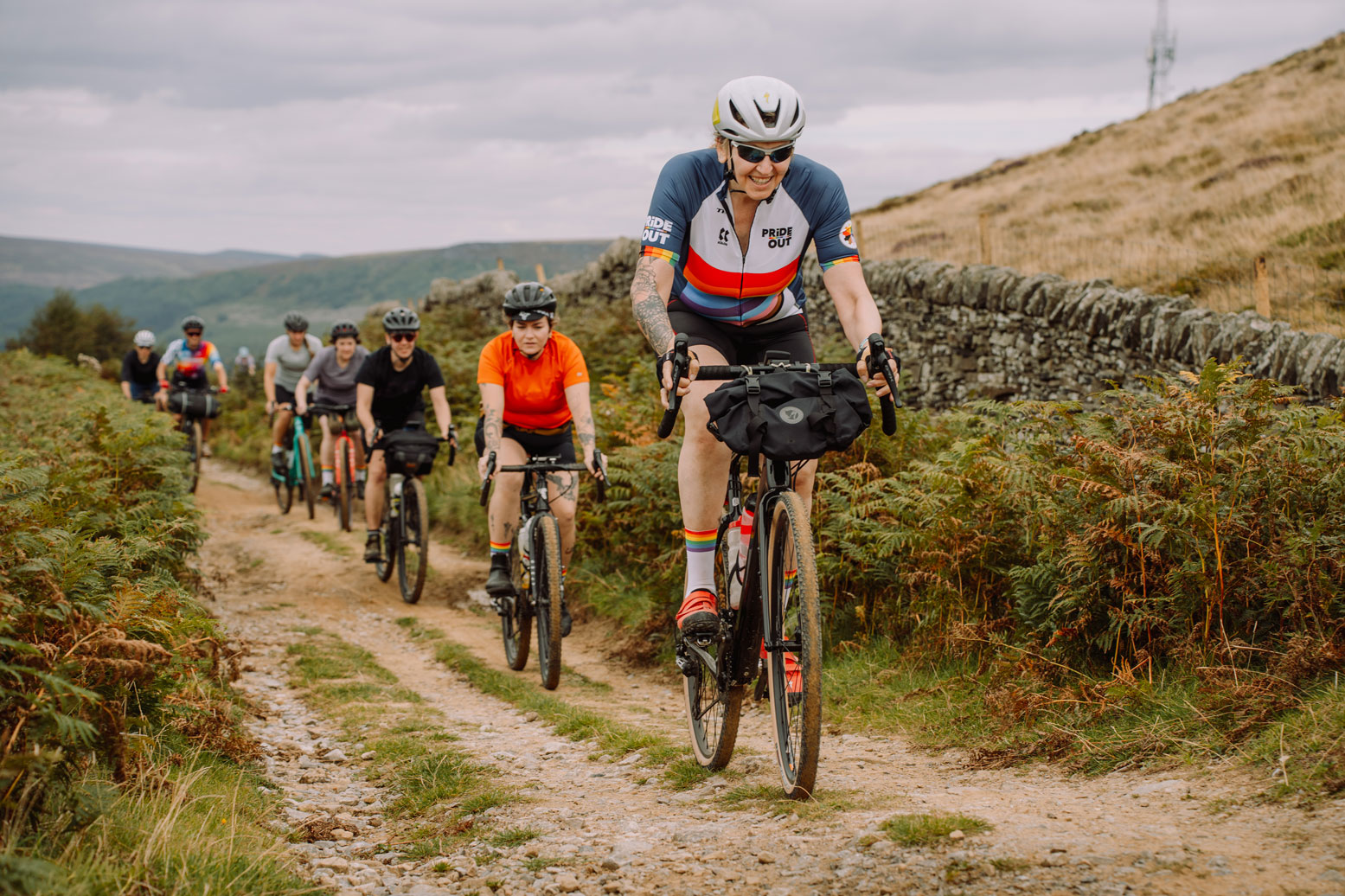
“Gravel riding as a genre is very good at selling. ‘Just go for a ride.’ It’s about the only bit of cycling which gives you permission to just go for a ride and look at the view. Everything else is about watts or tech or ‘progressing the sport’ or getting better or going faster or more aero. And gravel is mostly just about going for a ride. And actually, when we all started – for us people who’ve been doing it a long time – that’s what mountain biking was when we first started. It was getting out into the countryside. It was going for a ride. It was getting to places we couldn’t or wouldn’t get to otherwise.
“I think there are a lot of cyclists out there who feel left behind by mountain biking. They got left behind by the ‘bro-ification’ of mountain biking. They still pedal around in the hills on mountain bikes, call themselves mountain bikers, but the sport doesn’t speak to them in any way, shape or form. Or there are others who left the sport, got disillusioned, and then gravel just came along and scooped them up.
“And the interesting thing about the people who’ve been scooped up by gravel is that they come in here [to Cotic HQ] and we’ve got mountain bikes and gravel bikes – they come to demo bikes – and they almost don’t want to ride the mountain bike. Mountain biking doesn’t speak to them as something they want to be associated with. Which is the thing that I’ve noticed, and that’s the thing that I think is interesting.”
Do you think there is an insecurity kind of thing, or people think they’re not skilled or brave enough…?
Cy: “I think there’s an element of ‘I’m not good enough to be a mountain biker’. There’s also an element of ‘mountain biking is dangerous’. The irony is that with modern mountain bikes, with proper geometry, mountain biking’s never been safer.
“That’s actually the dirty little secret that the bike industry’s sort of swept under the carpet – because it’s not very glamorous – is that modern mountain bikes are so good because they’re safe. They’re actually really easy to ride on technical terrain compared to how they used to be.
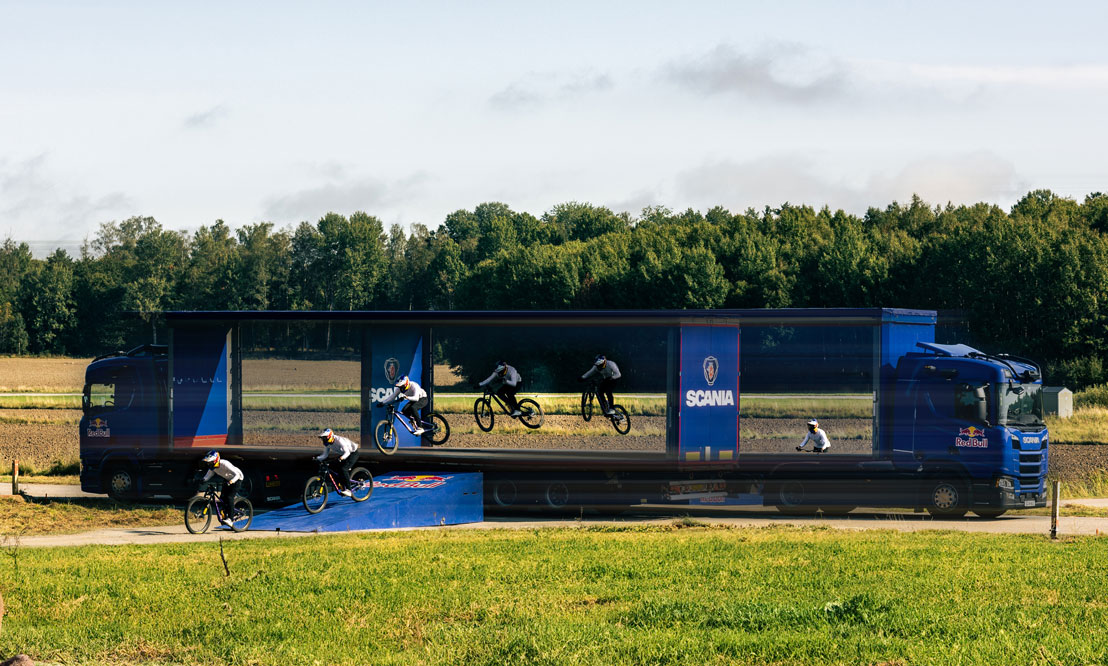
“Cross-country is considered to be racing. Trail riding is considered to be something more progressive. And there’s this, just this, bit in the middle, which is actually just going for a ride. Which is what a huge number of people do. And it would be really, really accessible and enjoyable for so many people, but people just see Friday Fails videos and they see Red Bull helmets and backflips on social media and they think that’s mountain biking.”
Why do people go for gravel bikes over mountain bikes?
“I don’t think it’s particularly about price. Price doesn’t put anyone off any more than it ever has done; mountain biking was way more expensive when I started than it is now.
“I think I mean [that] gravel bikes are appealing for two reasons. One, they look better. They fit the modern aesthetic, or whatever you want to call it. And two, they don’t look like you need a PhD to set them up and ride.
“When people think ‘mountain bike’, they think ‘full suspension’. They look at full suspension and go ‘f**k that’. It’s like the old comedy sketch, walking into a hi-fi shop, isn’t it? You don’t know where to begin and you feel self-conscious and lack confidence about researching them any further.
“I really think that the public is principally put off mountain biking because it looks complicated. Mountain biking can – and should – be very straightforward.”
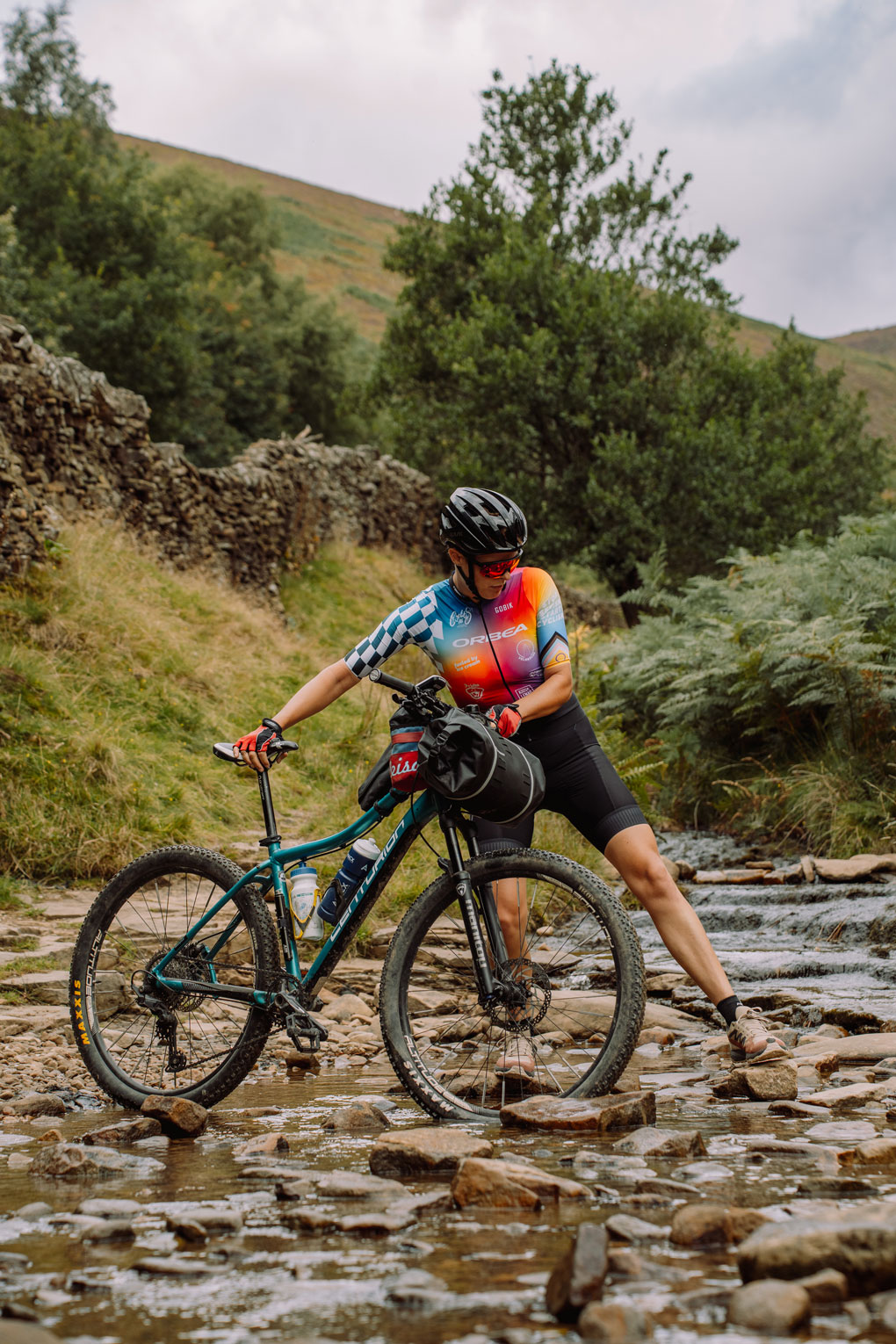
Dave: “Exploring, the going out with your mates and having a laugh. Doing sport without realising you’re doing sport.
“When we ask people why they mountain bike, ‘progression’, ‘skill’, etc., are on people’s lists. ‘Fear’ and ‘getting scared’ come very, very low on the reasons why people ride. ‘Challenge’ is middling. ‘Connection to nature’ comes out very high. We’re talking about a dataset of about 2,000 people from across the UK. It’s quite a robust study.
“What we’re [DMBinS] trying to do is to use that connection, use that wanting to be part of the environment – and also part of a community – to see how we can make clubs, associations, whatever is needed, so that mountain bikers can form around where they’re riding.
“In the UK, there’s more of a servitude to the brand than there is a local place identity and I think that’s missing the point. By building a ‘place association’ and building those partnerships between the land manager, the cycling governing body or the facilitatory body, we can get clubs, get riders working on trails, having an input into the management of the trails and being heard, coming together, I think this will unleash a new way of looking at mountain biking.”
Mountain biking’s strength is also its weakness
Mountain biking is incredibly varied. Mountain biking is endlessly interesting, evolving, inspiring and amusing. The trick is how to get this across to people without making it look… complicated.
Cy: “A problem for mountain biking really is that road cycling is actually a relatively narrow activity in terms of product as well as activity. Gravel is too – we have two models that cover the entire genre pretty comprehensively. We also have seven mountain bike models – which don’t cover the entire genre of mountain biking!
“The thing about mountain biking as well is it’s… big. It’s really big as a thing. It’s not one thing or even two things. It’s eight things. It’s 15 things. And I think that’s an issue as well in terms of explaining to people what mountain biking is.
“And I think people don’t believe that the stuff in the middle is as good as it is anymore. There’s a constituency of experienced mountain bikers who sort of ghettoized themselves. Because even if you’ve still got a big enduro bike, if you just stick some light fast tyres on that, you could just go for a massive cross-country pedal and it’d be enjoyable.”
Dave: “Have we come back to what tyres to save mountain biking? Oh, Christ.
“Sure, mountain biking can be incredibly complicated. Both in terms of actually riding very difficult terrain, as well as in terms of mechanical nous and spannering skills. And that can be a great thing, should you want to go down that route.
“But at its core, mountain biking is not very complicated at all. It’s cycling off-road with knobbly tyres and flat handlebars. You don’t need to make it complicated (or dangerous, or expensive) to get everything you’ll ever need out of mountain biking as an amazingly life-enhancing experience.”
What are we going to do about this problem?
From our position as Singletrack World Magazine, we’re going to make a concerted effort to do more features about the aforementioned middle ground of mountain biking. The silent mucky majority.
And do you know what? It’s not going to be easy. Capturing ‘normal’ mountain biking in a photograph is difficult. And a magazine lives or dies by its photography. Hey, this is one of the reasons why the media is so skewed the way it is; it’s much simpler to successfully capture the extreme ends of the mountain bike spectrum on camera. So that’s what we get.
So how is it that gravel imagery is everywhere, if it’s 99% just the same riding and terrain that we do on our mountain bikes every Sunday? Answer: because it’s perceived as something ‘new’. Hard to market something that isn’t new. It’s easier if it’s new (even if it’s not actually genuinely new).
If I look back through recent issues of Singletrack Magazine that have gravel features in them, I honestly can’t see any reason why those self-same features couldn’t have been done on mountain bikes. Why does the bike industry – us included – want to push the idea that for doing pleasant off-road cycling, you need to be on a gravel bike?
Oh yeah, because money.
It’s difficult to come up with yet another way of going on about the same thing all the time. But you know what? We, as a media, haven’t gone on about normal mountain biking. Not for about two decades. So, although normal mountain biking as an activity is not new, seeing it represented in cycling media would be new to the general public.
So is every feature in Singletrack Magazine from now on going to be full of smiling riders on affordable hardtails cruising about the place, soaking up the sights and stopping at cafés and generally having a lovely time?
Er, maybe. That sounds quite nice to be honest. But no, not really. What we will be doing is showcasing as much of the full spectrum of ‘mountain biking’ as we can. And just like we may well be turning down a few full-face helmet triple-clamping GRRRavity feature submissions, we’ll also be pondering the many, many gravel feature submissions and asking ‘Why isn’t this just done on a mountain bike?’
Mountain biking is so much more than the general public thinks it is. We need to show ’em.
As for the bike brands?
Cy: “What am I going to do about it? I’m going to keep the conversation going about this crossover between gravel and mountain bike, and try to understand what is putting people off getting on a modern mountain bike.
“We’re only one small brand. I will also take notice of what other people are saying in the industry because there are a lot of very mountain-bike-shaped-looking bicycles out there being marketed as ‘flat bar adventure bikes’! But if that [name] means people get over themselves – or over their prejudices – and actually get on a bicycle that’s better for them and gets them enjoying the bike more, then that is what they have to be called now!
“I want to make cross-country acceptable again. Cross-country is just something you do, not a race discipline. Because that’s what I do. I ride across countryside. I ride up hills and down hills, but the mountain bike underneath me gives me many more options to do it compared to a gravel bike.”
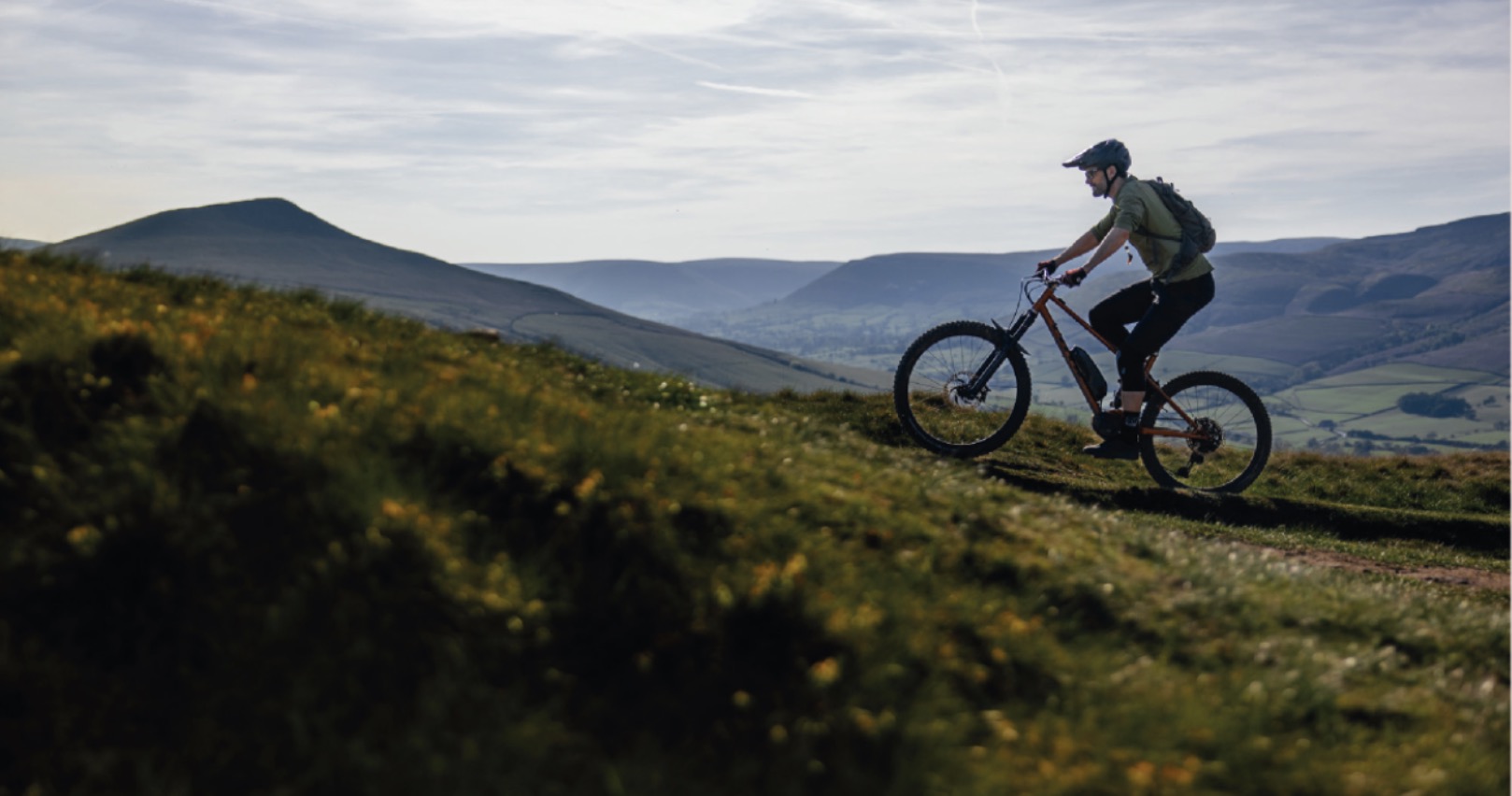
Things you don’t have to be when mountain biking:
- Brave
- Rich
- Fit
- Good at riding bikes
- Know where you’re going
- Good at mechanical stuff
- Cool
- Male
- White
- Middle-aged
But it’s fine if you are any – or indeed all – of these too. We’re a broad church. Just get out there and preach!

A good read, and thought-provoking. I guess the question that comes to mind first after reading it is, who are we talking about here? Who is it who we think has the problem with the image of mountain biking?
I’m lucky to have a number of trail centres locally; I was at one over the weekend with a pump track and beginner trails and there were a ton of kids there, accompanied by their parents (often the dad but some mothers too). They were having a great time, mostly on hardtails, some BMXes and the occasional jump bike; a lot of boys but some girls too. The aspirational pictures of MTBing is what gets them excited about it – that they can do the cool pump tracks and the berms and the gnarly trails and jumps. In terms of bikes all the kids locally think they want a FS; but really the biggest thing they want is just to go out and ride trails. And road or road-adjacent (which gravel can look like) is seen as a bit weird and boring – why would you ride on endless roads in lycra all day?!
On another trail centre locally the red and black trails trend more to the middle aged men demographic, some couples and families; and that’s about 70% eMTBs, the occasional tasty looking Yeti, some old-looking hardtails (including mine).
I’m not really sure what my point is; except that the younger generation DGAF what made up label we assign to different types of riding. And gravel does anyway feel like a navel-gazing, “inside baseball" definition – long-established riders arguing over whether it’s just old mountain bikes with drop bars, or a way into MTBing for roadies. Adults genuinely new to trail riding don’t know enough to be bothered; kids don’t care. So to some extent we have to be careful with this kind of discussion to appreciate that we’re probably talking more to/ about people like ourselves, than genuinely new riders, or teens/ kids.
It’s one of the things that really pisses me off about Bikeradar’s otherwise good content, their endless obsession with “oh this is an up-country bike", “this is only for down-country", “why endurance bikes should look more like gravel bikes (but are really so different from gravel)". It doesn’t (expletive) matter – what matters is just focusing on what makes it so fun, and helping people get out there and ride!
I think Fitness has always been the gatekeeper for MTB, not money, and I think folks who’ve discovered gravel have found a niche becasue of that.
MTB fitness takes dedication week in week out riding and pushing yourself, otherwise the steep techie descent at the top of that super steep and long climb is out of reach, and certainly doing it more than once is out of the question. You can, however do a 65km-ish gravel ride on canals and disused railways at Z2 trundling along at 20km pretty much all day even if you’re just an averagly fit rider.
I think MTBer’s entering their 4th or 5th decade are realising that without a couple of rides a week, that fitness that used to come easily when you’re in your 20s and 30s just goes away and doesn’t come back, and if you can’t do the midweek ride with the keen boys anymore because of family commitments or you’re just knackered after work, then the weekend 30km/1000m climb/descend ride is out of reach.
Enter the gravel bike.
The imagery that is used in mtb primarily come from marketing one way or another, whether that be advertising or the influencers type route. I assume those choosing the imagery used do so becuase they believe that’s what works and sells product.
Whether the STW demographic is the primary target audience of this imagery is open to debate, again, I assume advertisers and editors pick images and article to used that maximise sales and the impact they want to have.
Do we have a problem with mountain bikes? It’s rare to see kids riding anything other than a mountain bike. I was in Halfords and Decathlon today and they had more mountain bikes than anything else. So presumably someone is buying them.
Maybe people just dont go and flog round trail centres and do something else. Maybe middle aged man has a gravel bike to look trendy and try and recapture some “cool"
Maybe there’s less interest in spending thousands of pounds on a bike just to have it made more difficult to maintain by continual changes in parts specifictions.
I am much less willing to part with cash for new bikes than I used to be.