Orbea Rallon RS is – hurray – an actually interesting mountain bike. And Benji’s had a play on one.
- Brand: Orbea
- Product: Rallon M RS-LTD
- Price: £12,499
- From: Orbea
- Tested by: Benji for 1 day

WTF is it?
- The electric Rallon
- Carbon only
- 180mm fork
- 167mm rear travel
- TD HPR40 motor w/ 40Nm torque and 200w peak power
- 290Wh battery (optional 160Wh range extender)
- 29er or MX mullet
- Claimed weights from 17.5kg
- Prices start from £9,499
When I was first asked if I wanted to have a go on the new ‘Orbea Rallon RS’, I didn’t think it would be an ebike. I thought it would just be a regular Rallon but with the RS system integration stuff (where the suspension and dropper and various sensors all talk to each other etc).
It turns out I was wrong. But also right. The Orbea Rallon RS isn’t an ebike. Okay, technically it is. There’s a motor and battery in it. But it absolutely doesn’t ride like one. And I don’t think it’s supposed to.
With the TQ HPR40 motor (more commonly found on road e-bikes) offering a mere 40Nm of torque and peak power of 200 watts*, the Rallon RS is significantly less powerful that even ‘SL’ ebikes. Compared to full power eebs kicking out over 100Nm and 750 watts, this bike is clearly not intended as a rival to anything currently out there.
(*the motor output will only ever match, at best, whatever wattage your own legs are putting in; the TQ HPR40 is actually ‘de-tuned’ by Orbea)
To simplify the USP of the Orbea Rallon RS to a single sentence: it’s like an acoustic/unassisted XC bike on climbs and an acoustic/unassisted SuperEnduro bike on descents. In Orbeaspeak, it’s an Oiz on the way up and a Rallon on the way down. At no point does it feel like riding an ebike (such as an Orbea Rise or Wild).
Now, you’ll either go “eh?” or “cool!” at this description. That certainly seems to be the case with the few folks I’ve ‘leaked’ this bike’s details to.
Orbea claims to have worked out just how many more watts it takes to ascend on a typical acoustic/unassisted Orbea Rallon compared to a typical acoustic/unassisted Orbea Oiz (factoring in weight difference, tyres etc). And Orbea’s figure is around 60 watts. In other words, to keep up with an Oiz on a climb, a rider on a Rallon needs to be putting in 60 watts more.
Crudely put, with the proprietary tune of the TQ HPR60 motor, the Rallon RS kinda aims to be supplying around 60 more watts of assistance than what your legs are putting out at any given time. I say ‘kinda’ because it depends on what assist level you’re in and what tweaks you may have done to the software via Orbea’s app. But hopefully you get the idea.
Range claims: Orbea say the bike’s 290 watt-hour battery should be sufficient for 2-3hrs/1,200-1,800m ascent rides. With the 160 watt-hour range extender this increases to 3-4.5hrs/1,800-2,700m ascent.
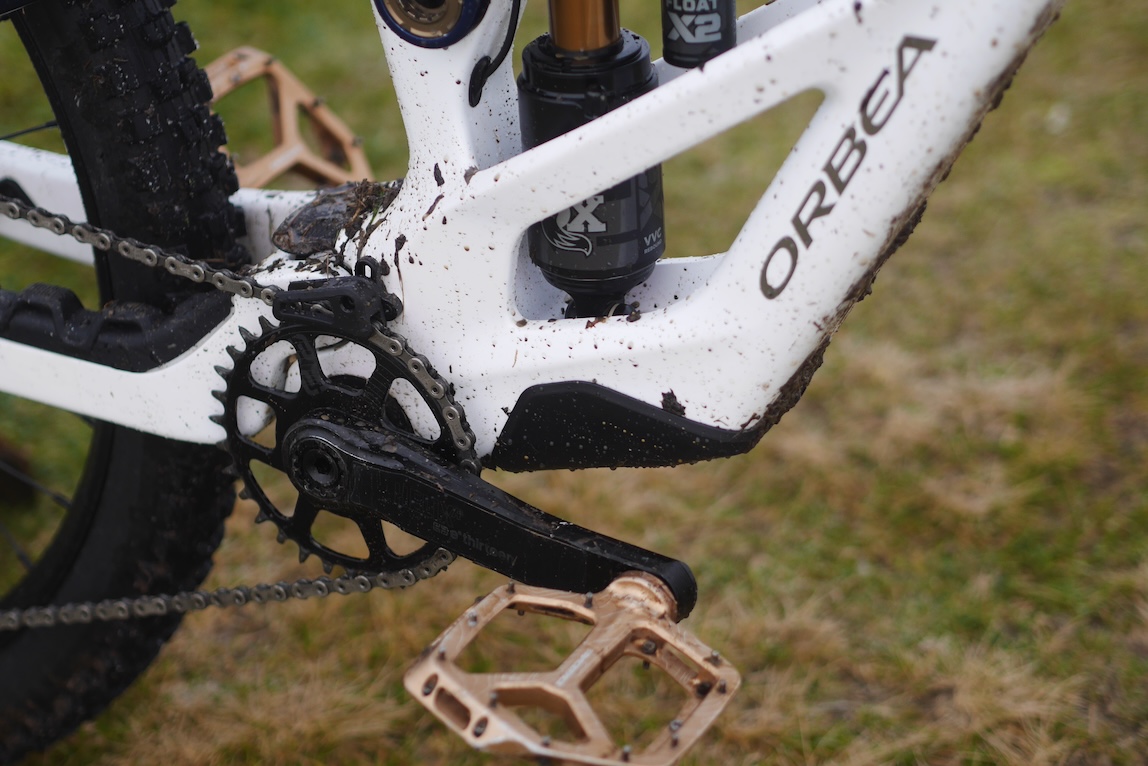
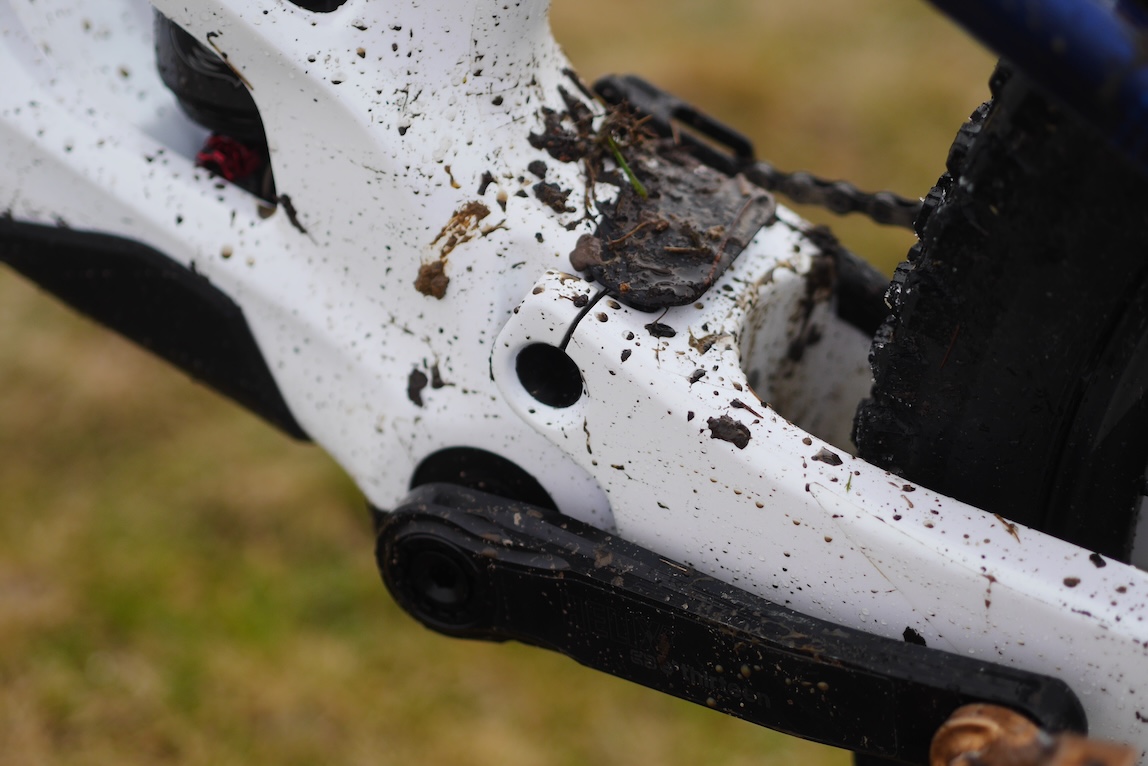
Weightwise, the bike you see in these photos hovers around the 17.5kg mark. Orbea state that the Rallon RS is only 1.1kg heavier than the acoustic/unassisted Rallon. This is partly achieved by the Rallon RS not having certain aspects found on the Rallon (gravity link, cabling, remotes etc). Still, this ain’t a heavy eeb.
Orbea Rallon RS geometry
Unsurprisingly, it mirrors the regular Rallon.
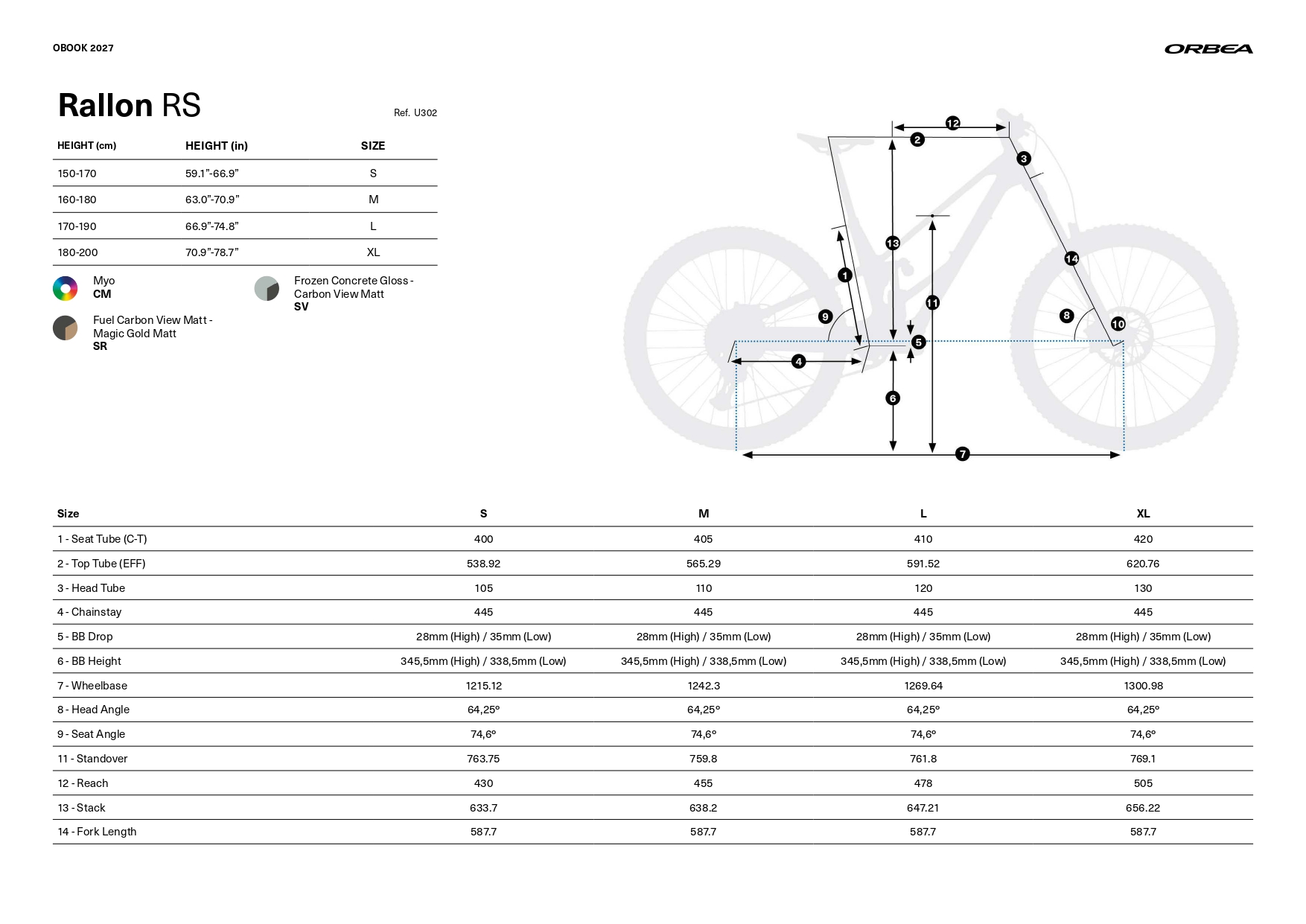
Orbea usually know what they’re doing with geometry, and the Rallon RS is no exception. If anything, the Rallon RS is a bit better (for taller riders at least) than the Rallon due to the slightly longer chainstays.

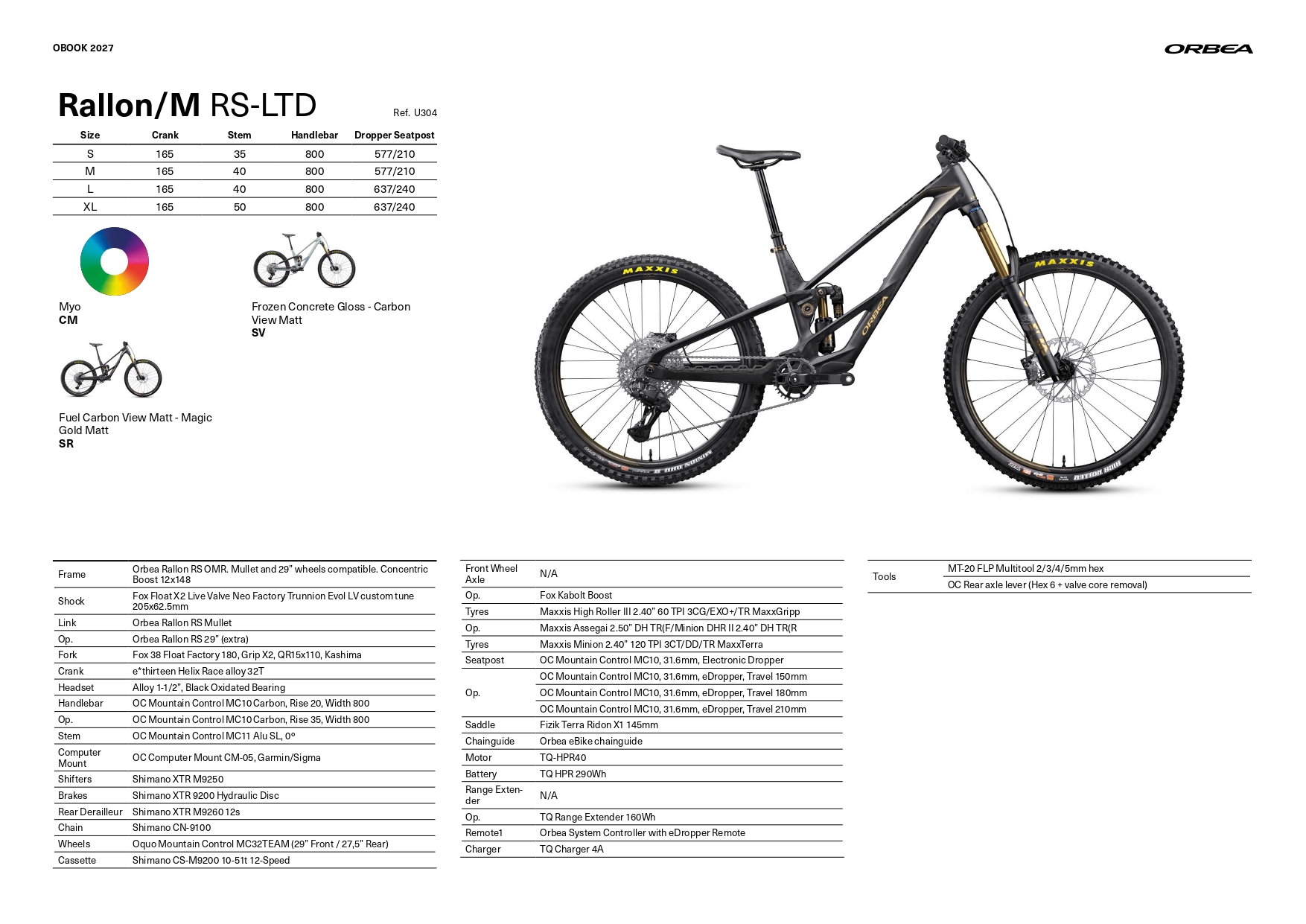
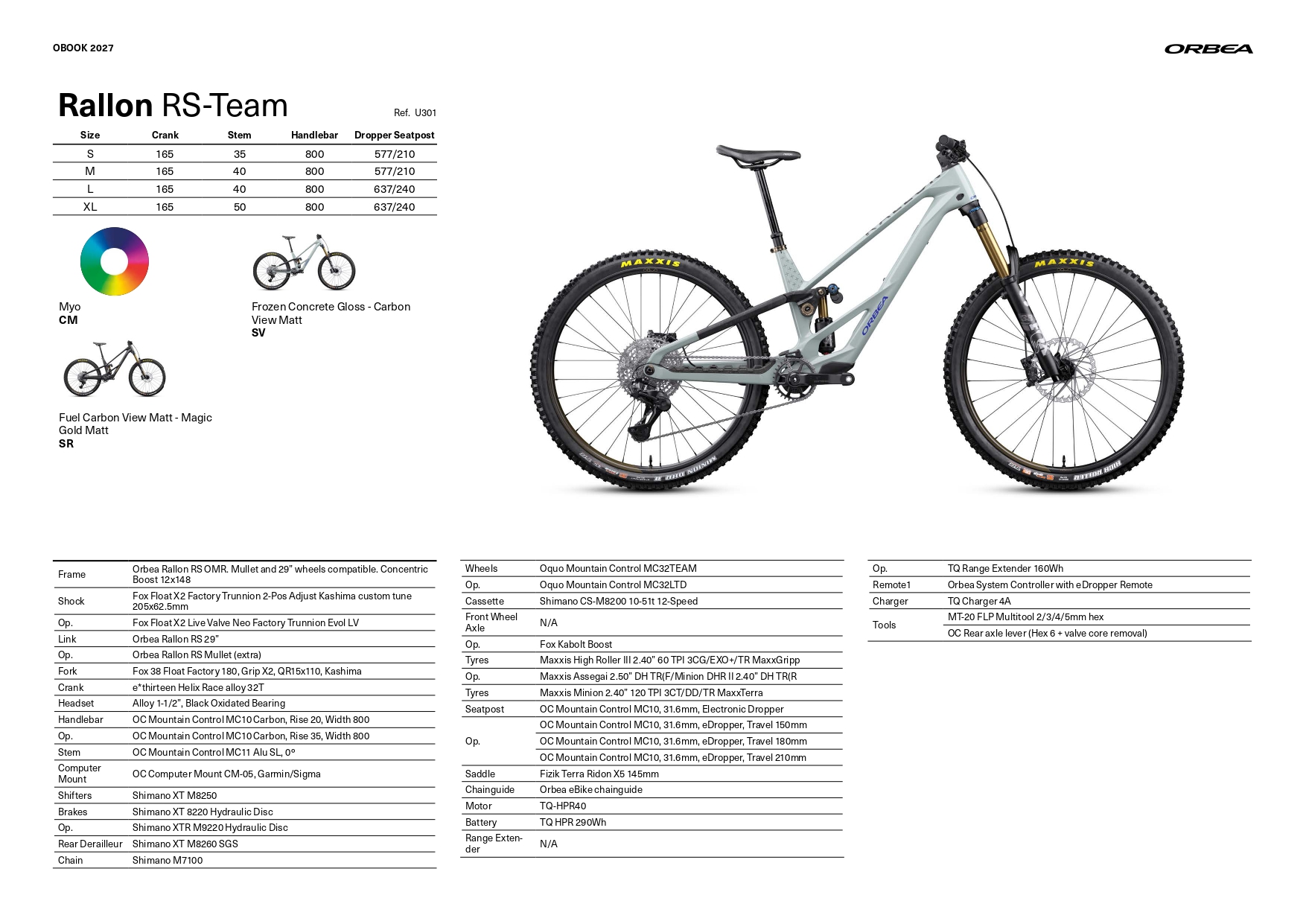
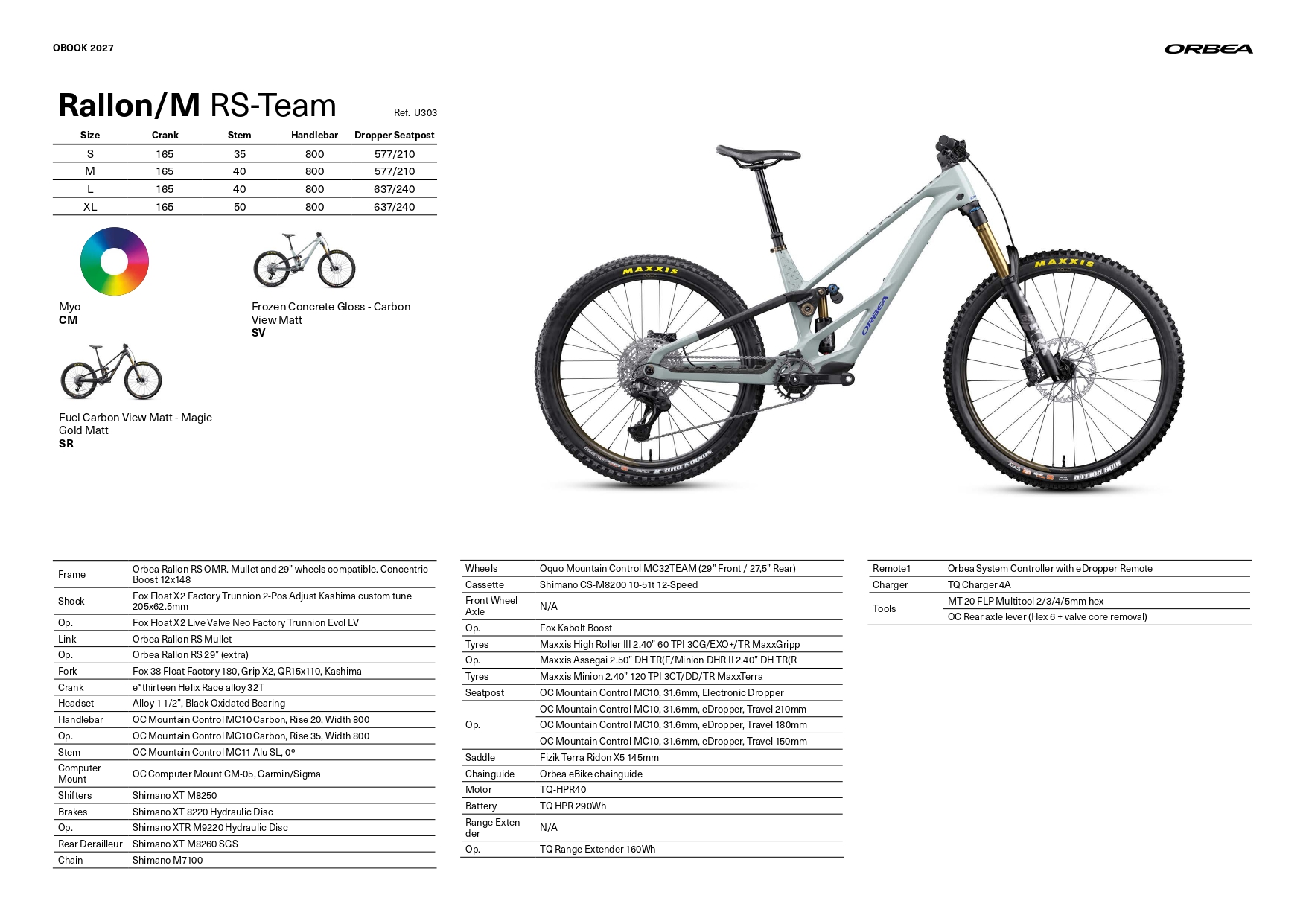
There won’t be very many Orbea Rallon RS bikes made. And they’ll just be sold via ‘select’ dealers. And there’s only two models in the range: the £12,999 RS-LTD and the £9,999 RS-Team. Actually, make that four, with the mullet builds: the £12,499 M RS-LTD (tested) and the £9,499 M RS-Team.
What does RS mean?
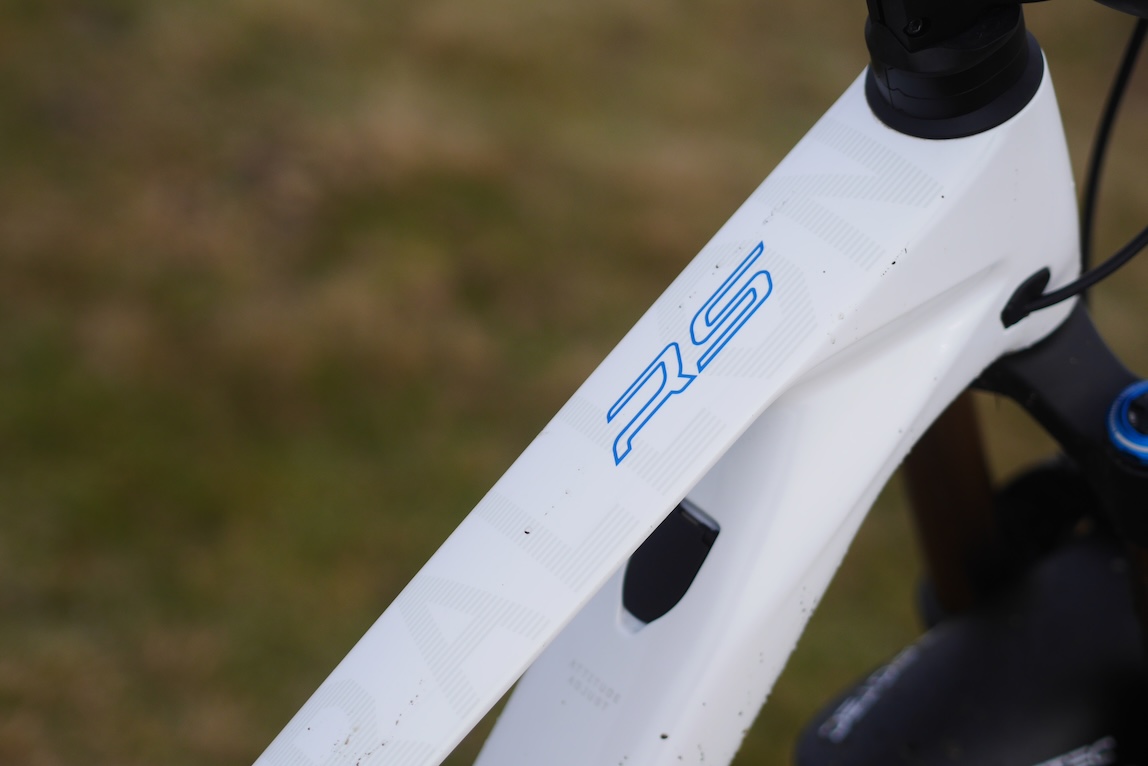
‘Rider Synergy’ apparently. Which is not massively helpful, sorry. ‘RS’ basically means that various parts of the bike talk to each other and adjust their settings accordingly.
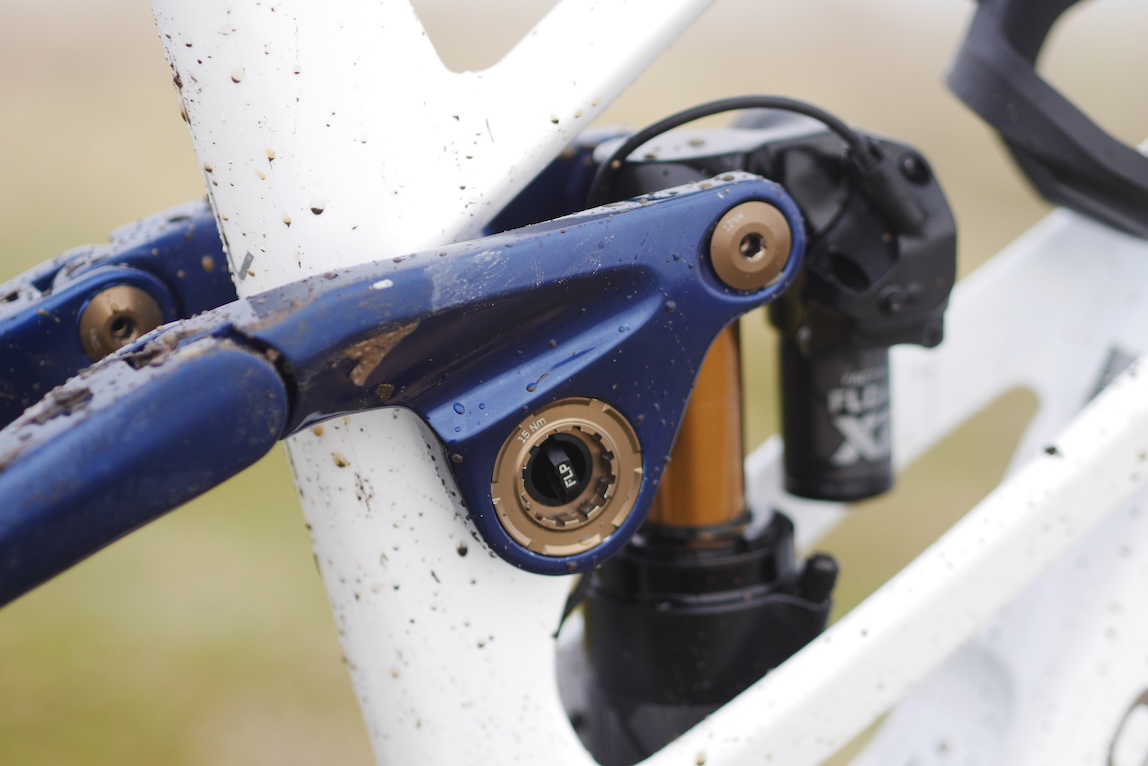
Orbea RS is a system connecting the remote, motor, shifting, Orbea MC10-RS dropper post, Fox eNEO Live Valve suspension and central battery (everything is powered from this one battery).
So, the suspension is informed by the motor data. The suspension is also informed by dropper position (when the dropper is lowered, the shock stays fully open). The motor is informed by terrain and rider position; it recognises when the bike is pointed downhill and/or with the dropper lowered and adjusts its assistance.
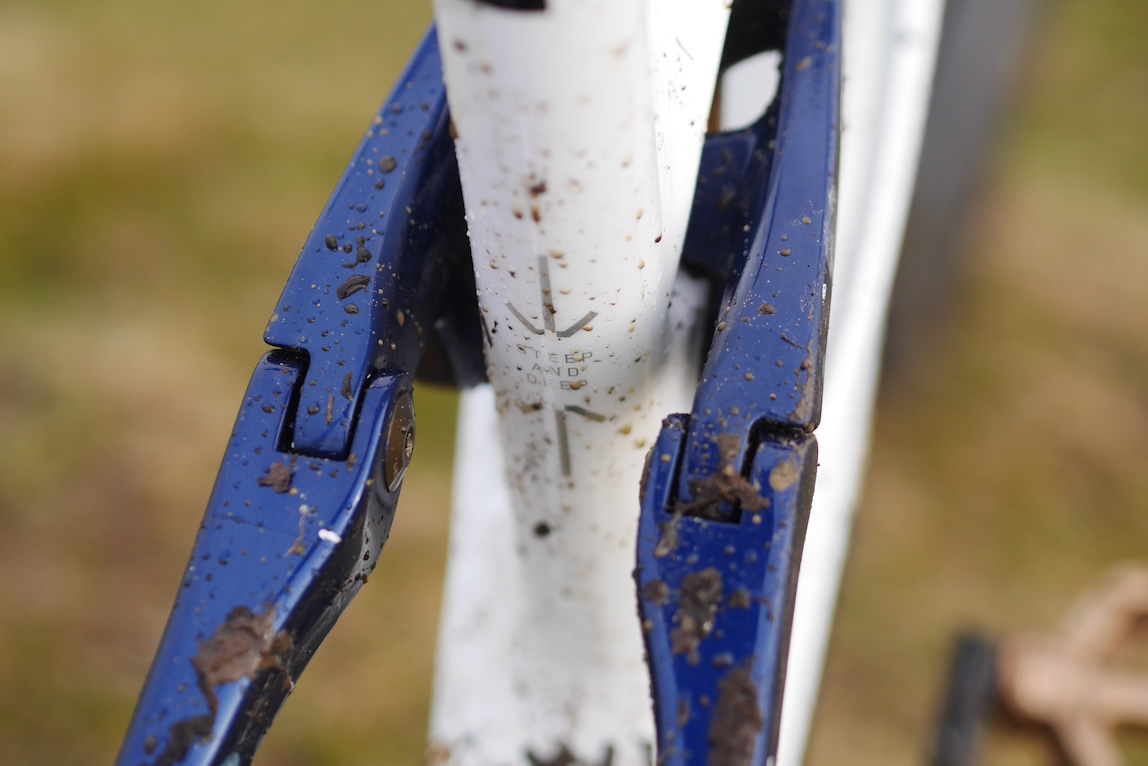
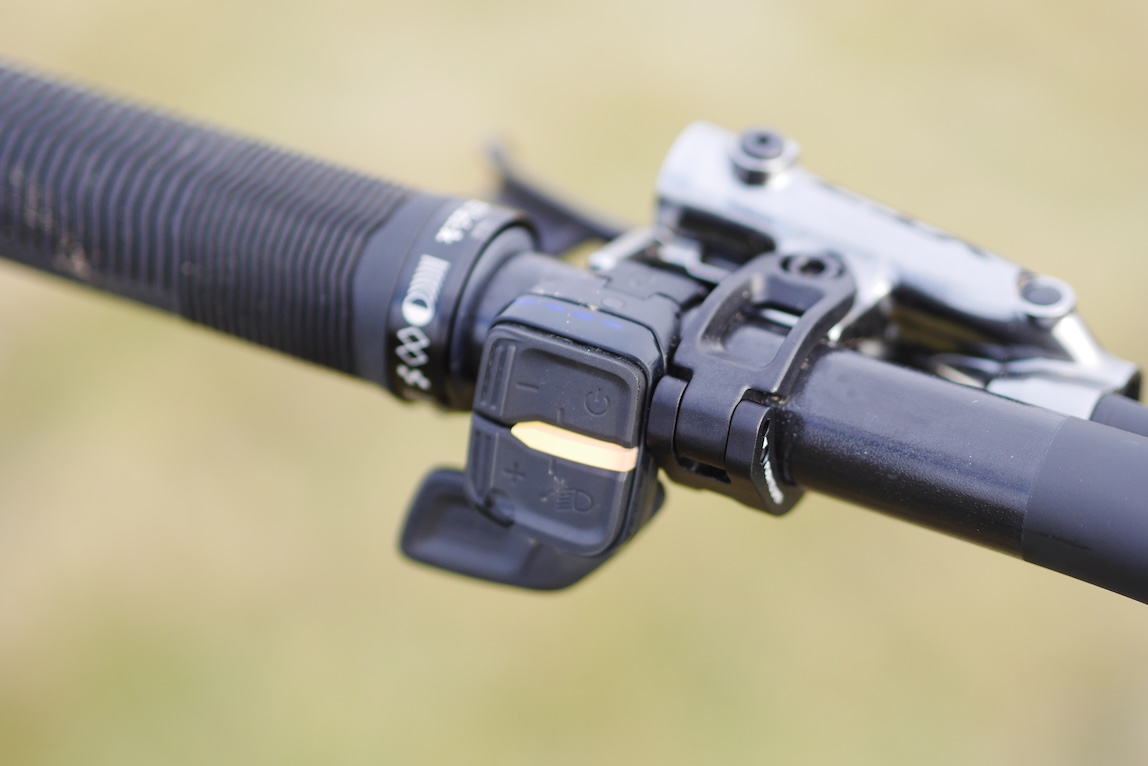
Despite all of this techno wizardry, there’s just one remote on the handlebar, adjacent to the lefthand grip. Okay, so it’s a pretty techo remote. And it can do a whole lot of things that I didn’t delve into during my time on the bike (I wanted to review the bike, not the remote). Suffice to say, the remote can just be used for the basics too (power assist level and dropper actuation) without any issue.
How does it ride?
I’ll repeat what I said above: it’s like an acoustic/unassisted XC bike on climbs and an acoustic/unassisted SuperEnduro bike on descents.
To be honest, it’s not a bike that I’d go for (it is incredibly expensive, and I like my ebikes to ride like ebikes) but there’s no denying that it pretty much nails its remit. It genuinely does ride like an XC bike on climbs ie. still requires a lot of effort but not as much as a hefty-tyred squidgy enduro-sled. And it rides like an extremely capable enduro bike on the descents. (The main thing I came away with after a day on the Rallon RS was a huge desire to have a go on the normal Rallon – here’s hoping we can get one in soon!)
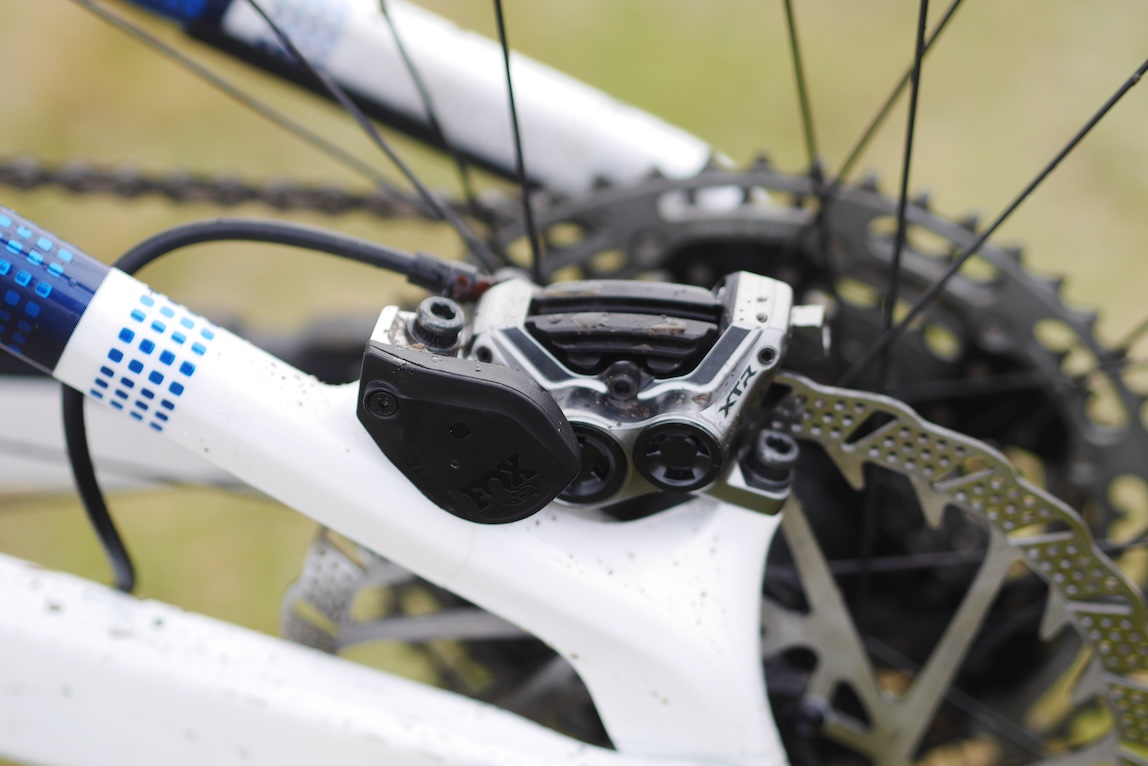
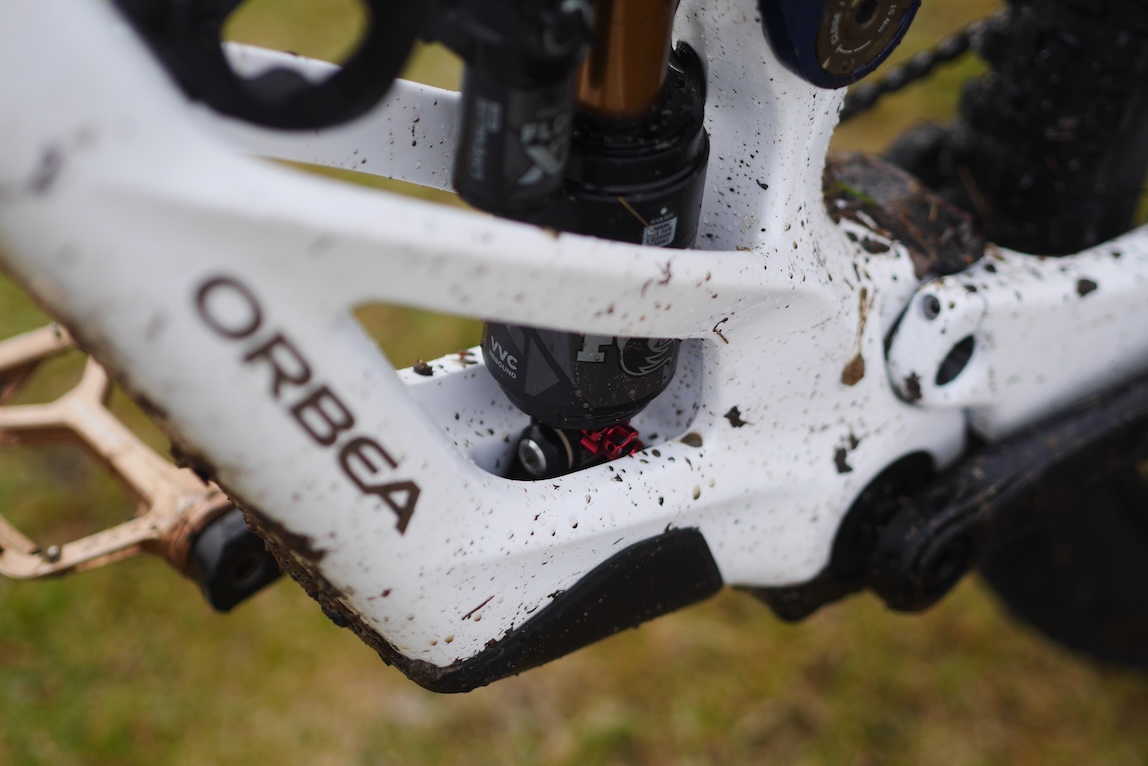
I’ll even go as far to say that the Fox eNEO Live Valve suspension is a good idea on the Rallon RS. The irony of all this aforementioned ‘techno wizardry’ is that is actually makes the bike much more set-and-forget. I got on board the Rallon RS and just… rode it.
The suspension benefits hugely from the Live Valve stuff ‘knowing’ what you’re doing. It sits nice and usefully high in its rear travel on climbs which helps with overall efficiency, comfort and avoiding pedal strikes in ruts etc. And when you do tip it downward – which you absolutely will be doing with glee – the bike is exceptional in its composure, support, traction and line-holding.
It very much is like the all-mountain unicorn that’s been marketed since the turn of the century. XC climber. Enduro/DH descender. It’s just a shame that it costs an unbelievable amount of money, and the beautiful unicorn experience only lasts 3 hours before it turns into a pumpkin (if you know what I mean).
Overall
At the end of the day, the Rallon RS is less of a commercial prospect and more of a statement of intent from Orbea. This is a vision of (a version of) the future. Orbea itself explains: “Rallon RS is not the result of trends or market pressure … This model allows the company more freedom to explore long-term ideas.”
The Venn diagram overlap of ‘people who are interested in owning this bike’ and ‘people who can afford this bike’ is no doubt very small. But probably big enough for Orbea to deal with. As I say, the designers have succeeded in what they set out to do, and the Rallon RS is a great handling mountain bike. And hurray for interesting ideas still happening in the bike industry.

Now that, is the sort of ebike I can get behind! Would love to try one
That’s about the best looking ebb I’ve ever seen, mostly because it doesn’t look much like an ebb.
How utterly, indescribably awful. Just because you can, doesn’t mean you should….
( In the context of MTB obvs)
I’d love to try one of those. Just enough umph so you can stick with decent tyres, flat pedals and good suspension without it being an sluggish wallow-fest.
WTF (to quote Benji), it costs how much!!
It is a lovely looking bike, most Orbea’s are, but c’mon ….
Also at some point you will come alongside a full fat (albeit maybe ugly) eeb and think “I wish I had that power and range".
Totally agree with @thegeneralist comment.
It is an actual innovation
if it means you get a bike that climbs like an xc race bike but descends like the 170mm downhill tyres beast it is – that’s the dream of many people isn’t it?
Obligatory “how much!”
I really like that, very clever thinking. I particularly like linking the dropper position to the suspension damping – it’s like having a climb switch that you never forget to turn off!
Nice idea to run all the electric gizmos off the one battery just a surprise they appear to have gone for a rear mech battery rather than a proper sized ebike battery 😀
Should be a dismissible offence
Yeah, nice. That’s probably the evoke I kidded myself I wanted back when I first wanted one. Now, I think it’d be an awesome second ebike for solo rides. But obvs not for that money. Or with that rear mech 😆
I don’t get who this bike is for?
170mm travel but no power.
Do you use 170mm of suspension going uphill?.
Someone without the fitness to pedal a chunky 170mm bike to the top of hills?
I’m struggling to see the appeal of this one, despite my preference for lighter eMTBs than full fats. My 170/150, 60Nm/450W/430Wh eMTB is 3.1kg heavier than my Geometron G1, both with a similarly chunky build. eMTB is light enough that it doesn’t behave much differently on descents, but on the climbs it’s hugely quicker than my naturally-powered G1 hence I can do more distance/descents. Whereas this Orbea appears to only have the power to offset the heavier bike, not to make the climb hugely quicker or ride further. Might appeal to others but not for me.
This one does seem pretty niche, I can’t see it being popular, but I guess more choice is good for everyone.
I heard rumours of this bike a while ago and hoped it would have the tq hpr60 motor, then it could have been my next bike, but not with the hpr50.
The price is a bit steep too.
Exactly the bike Mark Alker suggested to that ALL mountain bikes would be in the future..!
I think that was over 10 years ago to be honest….
I sort of struggle to see the point. It’s the worst of both worlds IMO. I mean how many people rely on just having 1 bike? Many of us have atleast two and use them for different things. I’ve got a full fat eeb (coming on friday) and a chunky enduro rig, depending on the type of ride I want will depend which one I use. And I plan to build up a hardtail later this year too for other use cases when I just want to bridlebash or do moors rides and get the fitness in.Plus, the price tag for that orbea is insane. Heavier than a normal enduro bike, not as much power as even an SL ebike, still have to plug it in, charge it, worry about batteries and motors etc. If you’ve got 10k spare to spend on a bike, why not buy something like a full fat alloy whyte kado S for 4k and something like a transition patrol for 4k and then you’ve still got 2k left over to either buy a mid level hard tail or spend on upgrades for the other 2 bikes
Saw the price, read no further……I do caveat that with only owning a steel rigid single speed🤓
Okay I got board and read the review, however I’m now more confused by bike jurno lingo.
Can someone please explain the difference between acoustic and unassisted, same thing – no?
Just needs to lose the rear mech for me to consider buying an electric/assisted bike.
It’s interesting, but so so niche. If you ride in a group, and most people do, then it doesn’t really work if you mix eeb and non-eeb and this is closer to the latter than the former.
Price aside, I could absolutely see the point of a bike like this. At 58, I hopefully won’t ‘need’ an ebike for another 10 years or more, as for me, going for a long ride and doing all the climbing under my own steam is what I want from a bike, and the riding I do.
I do have to acknowledge, however, that riding my 160mm FS with decent tyres uphill is increasingly hard work and tiring; it’s not stopping me doing it or spoiling my enjoyment, and I’m not looking to replace uphill effort with a turbo boost up all the hills. But, to have a tiny bit of assistance, that makes a burly AM/Enduro bike ‘feel’ like a racy XC bike on the way up, but still have all that capability downhill, is an intoxicating prospect!
Take out all the ‘talking to each other’ electrical gubbins (suspension/dropper etc), fit mechanical gears, and drop the price to £5-6k, and I’d absolutely be scrabbling around the back of the sofa to find the money!
Kind of baffled as to why you’d put the TQ40 in this and not the TQ 60. You can always decide to use less power than you have, you can never yous emore
This is exactly the kind of e bike I’d buy if I wanted one. Already ride a 170mm bike and my usual rides are 1500m ish of climbing in the day, like to stretch to a 2k day every so often and this bike would let me do that more. Never had any interest in the heavy e bikes, too much of a hindrance on descents
Yeah seems an odd choice, it’s not like it’s that light with the hpr40 motor and 290 battery, it weighs 18kg.
If it had the hpr60 motor and 360wh battery it would only be a kilo heavier, so 19kg which is pretty light for a long travel ebike.
I would guess that giving all the power available means people (crucially, reviewers and customers on demo rides) will churn through the battery in 20 minutes and call it crap.
Limiting the power to matching the riders input and with a hard cap of 200W (if I read it right) forces you to use it “properly" rather than treating it like a 30kg full power brap machine.
You can already see people in the web who see the 290Wh, compare it to their 800Wh monster that they blast around in turbo pedalling at 30rpm and state definitively that this bike will only climb 600 feet before being dead based on scaling the relative battery capacities.
Phsycologically, 300Wh sounds like it is so much bigger than 290Wh so they missed a trick there.
Trouble is, a lot of full power bikes ride downhill as well as most enduro bikes. You can turn them down to as little assistance as you want, but then you have all the power (and range) when you want it for as little as a couple of kilos and more a lot less ££ than the Orbea.
“a lot of full power bikes ride downhill as well as most enduro bikes" – this entirely depends on terrain and conditions. Full fat eebs are not-ideal in properly steep and slippery conditions IME.