Markus Stitz has to throw all of his gear, experience and resolve at surviving a sub-zero, 700km tour of Norway in January.
Hey, this feature looks even better when viewed via Pocketmags; you get the full graphic designed layout on your device FOR FREE! It’s not quite as beautiful as the paper magazine.
Words & Photos Markus Stitz

Sitting at a bus stop next to the road, I make use of my handwarmers for the first time on this trip. Among the multiple pairs of gloves, hats and socks, they are my last resort before bailing. I am on my way from Hageseter near the Dovre National Park to a small hut south of Alvdal. You have possibly never heard of any of those places in Southern Norway. Although one thing you can imagine about being here in the middle of January, around 350km north of Oslo, it is cold.
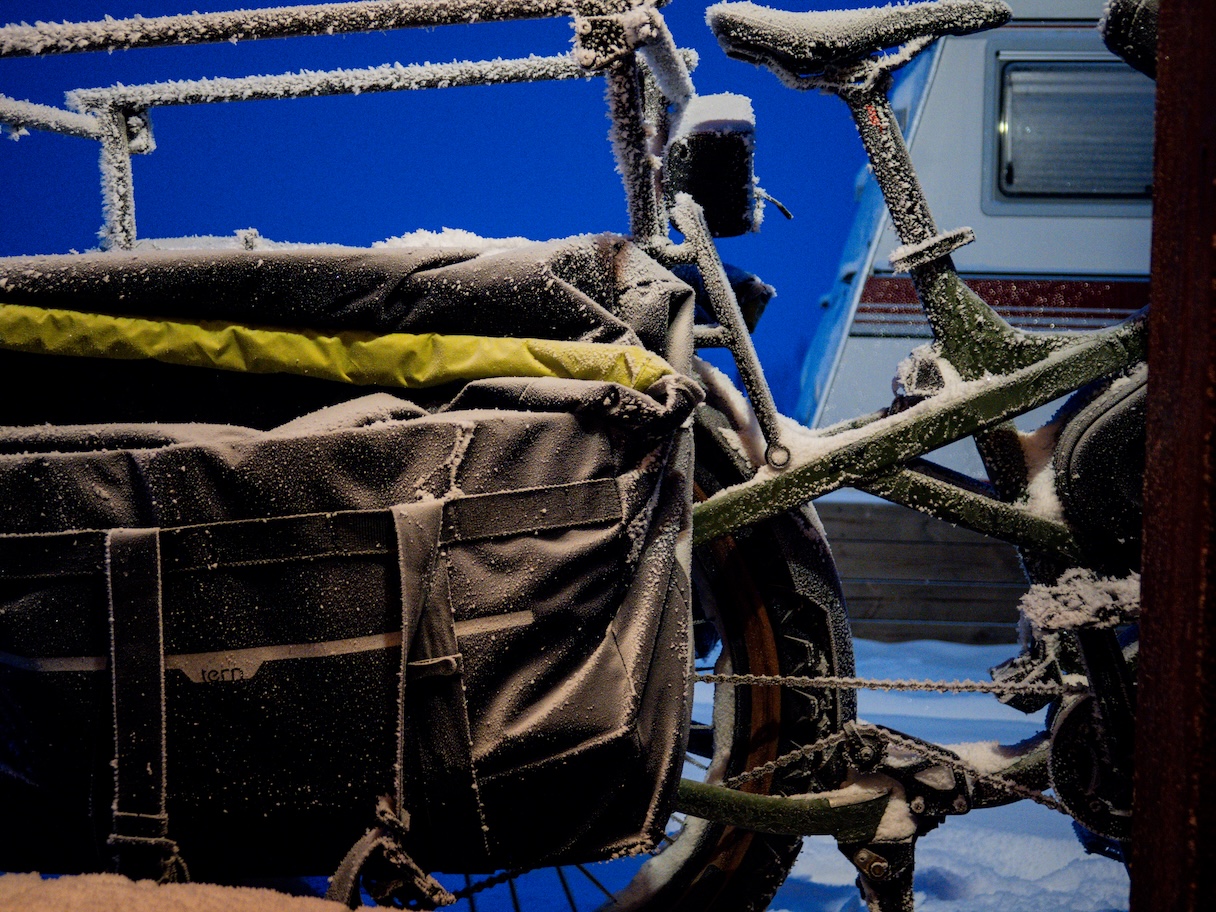
I can’t tell you exactly how cold the air is when I pull my handwarmers out of my panniers and attach them to the inside of my lobster gloves, but the last thermometer reading I did in the morning was -16C. Cold air sinks into valleys, and for most of my day I have been descending. So, currently, I’m experiencing something around -20 with no warmth in sight for a while.

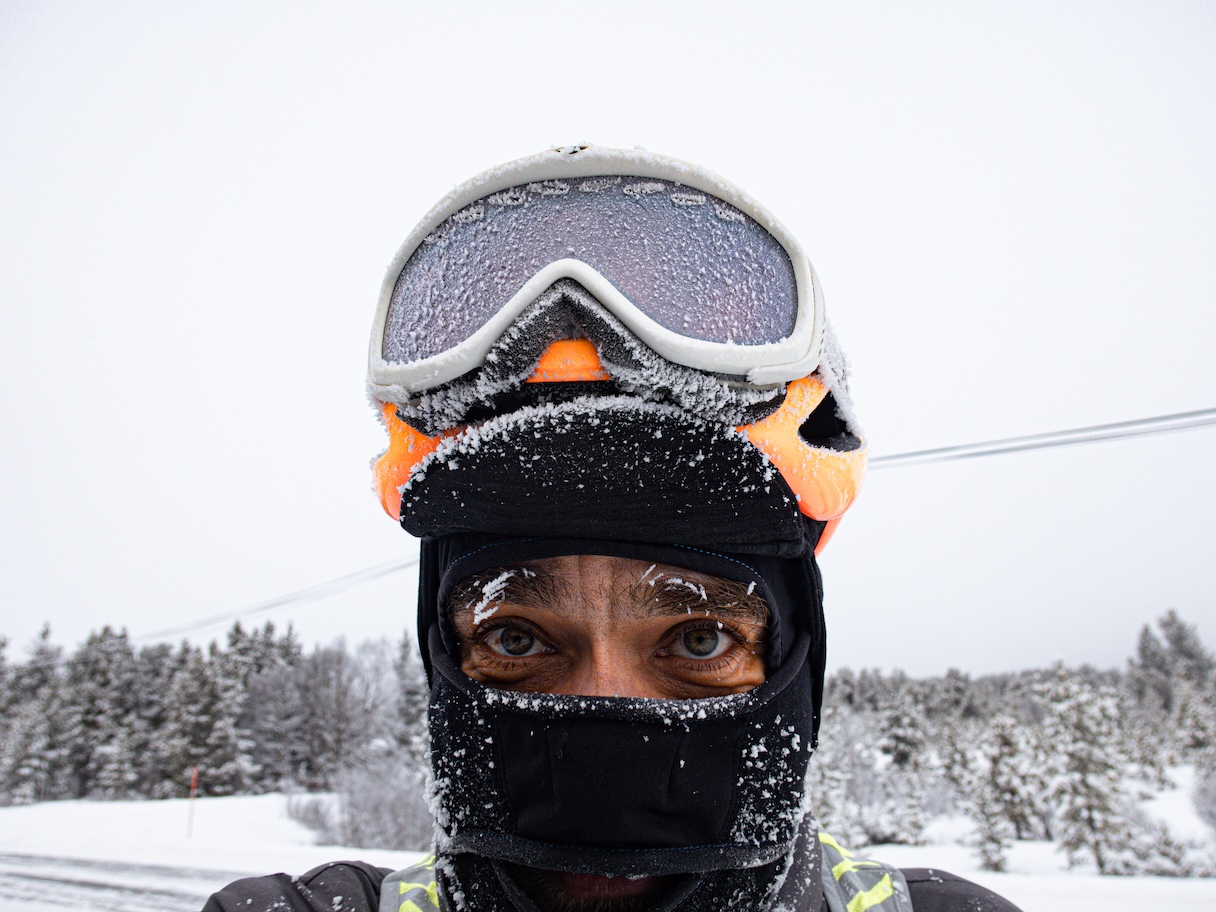
I hold on tight to my thermal flask while I take a selfie with my tripod. The coffee is lukewarm but tastes like the best coffee in the world. My eyebrows are covered in ice, and so is the rest of my face. My eyes are, as normal, protected by ski goggles; my face is covered by a merino balaclava. My ears and upper head are additionally protected by a thick merino hat. And while I love my lightweight bike helmet in any other conditions, right now, a more insulated ski or snowboard helmet might be the more appropriate choice.
I have taken two sets of handwarmers with me – the last resort when three layers of gloves don’t seem to work. They are easily available in any Norwegian outdoor shop. To activate them, I click a small silver bit inside them and a chemical reaction makes them hot – they last for a few hours after that. I’ve kept them for emergencies, but this is the moment to use the first pair. One side is sticky, so I can fix them on the palm side of my gloves and ride on. As soon as I get back on the bike, I can feel the warmth in my hands and my motivation returns.

Extreme weather calls for extreme gear
One thing I’ve figured out on this trip so far is that it’s not the two batteries on my ebike, a Tern Orox S12, that drain fastest in the cold – it’s my personal energy levels that drain much faster. My bike is equipped with two 800Wh Bosch batteries and can easily cope with the distance of the longest day of the trip – about 130km. I can’t tell you exactly how much charge is left on any day, but I never get close to capacity. And I carry two chargers so I can recharge them without getting up in the middle of the night to swap. My personal energy levels, though, are depleted each day I arrive at my stop. I go to sleep around 8pm, much earlier than normal, and my body needs the additional recovery time.
Once I stop in the late afternoon or evening, I have a set routine. I detach the batteries from the bike before I move any luggage, as they’ll take a good hour or longer to warm up to room temperature and charge. After the batteries, I move my drybags inside, take my camera out of the top tube bag and then relax. When I can, I treat myself to a can of beer for the evening, which is properly chilled if purchased an hour before arrival.

While I carry full camping equipment with me as well, I end up staying inside for the whole trip. I have a sleeping bag with a comfort rating to minus 30, a winter mattress, plus my tent and cooking gear to have a backup for emergencies, but I end up not using them at all. On a normal bike with limited space for luggage, you would probably be right to question this approach, but I am on a fat ecargo bike with 140L of carrying capacity in my panniers. There is enough room for all these things, and weight isn’t a big consideration either. Carrying a backup for almost every piece of clothing and camera equipment I take with me is a sensible approach in these extreme weather conditions.
The best item on the whole trip? My Norwegian wool jumper. Every piece of performance bike clothing I’ve owned over the years is not nearly as comfortable and useful as this jumper.

The Rocky training plan
While my other winter trips on the bike have sometimes been spontaneous, for this trip, I have not left much to chance. With carrying capacity and motor assistance comes a hefty weight penalty – the Orox with luggage, extra battery, and studded tyres weighs in around 55kg. While the bike handles well, such weight comes with challenges.
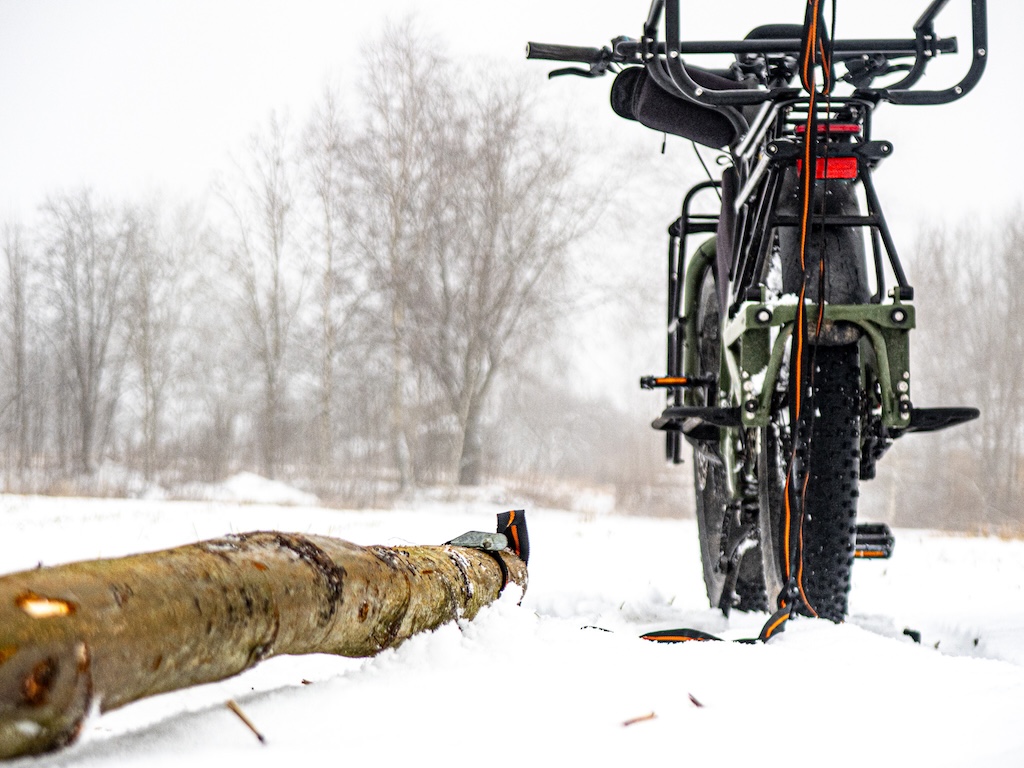
For the last four weeks, I have practised several scenarios, combining testing with useful tasks when possible. My partner Louise lives on a former farm just outside of Vestby, south of Oslo, and the neighbouring farmer allows us to pull logs with the cargo bike over the field to our house. I can chainsaw them into bits at the house and make firewood out of them. Hauling logs and loading up the bike with smaller branches and other scrap wood gives me good riding practice, so I understand how such a heavy bike handles in snow and ice.

Riding a few days in extreme cold below -15C in the weeks leading up to the trip has given me the confidence that I can handle those temperatures cycling. I have special winter boots from 45NRTH, multiple options for socks and gloves and pogies, which go over the handlebars and keep the worst of the cold and wind chill off. While there are battery-heated underwear and gloves available as well, none of those would be suitable for being more than eight hours on the bike each day. At best, I would get two to three hours out of one charge.
The only modification on the bike for winter riding is studded tyres. Fitting the tyres myself is not an easy undertaking with tubeless-ready tyres that measure 27.5 by 4 inches and weigh twice as much as normal. But, if needed, I know how to get them off to change a tube.

Plan ahead and enjoy the ride
Cycling in winter is enjoyable, but leaving things to chance is not a good approach for me personally. Being physically and mentally prepared is a good method to counter those conditions that do not leave any margin for error. Being in a country like Norway helps. Norwegians are a nation of people who love the outdoors, and almost everyone knows how to cope with heavy snow and ice. Most of my trip is on roads, so studded tyres are a must. Not by law, but for my personal confidence.
To say cycling in winter is always enjoyable would be a lie. But for me personally, the rewards for taking on the challenge are much greater than in any other season. Especially if winter means multiple inches of snow and frozen rivers and lakes, which is what I experienced most of the time on this nine-day trip. With the help of a drone, this wonderland looks even more stunning. The only downside is mild frostbite on day five, as the joysticks on the drone controller require me to fly with bare hands.

Investing in winter
While specialised winter riding equipment comes with a hefty price tag, it lasts much longer than the riding gear I use in summer. My boots retail at around £300, the tyres are £200 each, pogies and gloves add up to £200, and the list goes on. Not to speak about the bike I ride, which retails close to £9,000 when equipped with panniers, racks and extra battery. Buying any of this for one trip would be madness, but using the investment to make this trip not a one-off, but a continued experience over the years to come, sounded much better to me. And I have the luxury of having a base in Norway in winter. Buying all the gear for the few days of snow that remain in Scotland would make me think longer about it.
The cost of booking huts, Airbnbs and hostels in Norway in winter is much lower than expected. Food and alcohol are more expensive compared to Scotland, but places to stay are much better value for money. A simple bed in a hostel is around £15. There is no point in booking a private room as I have a dormitory to myself.
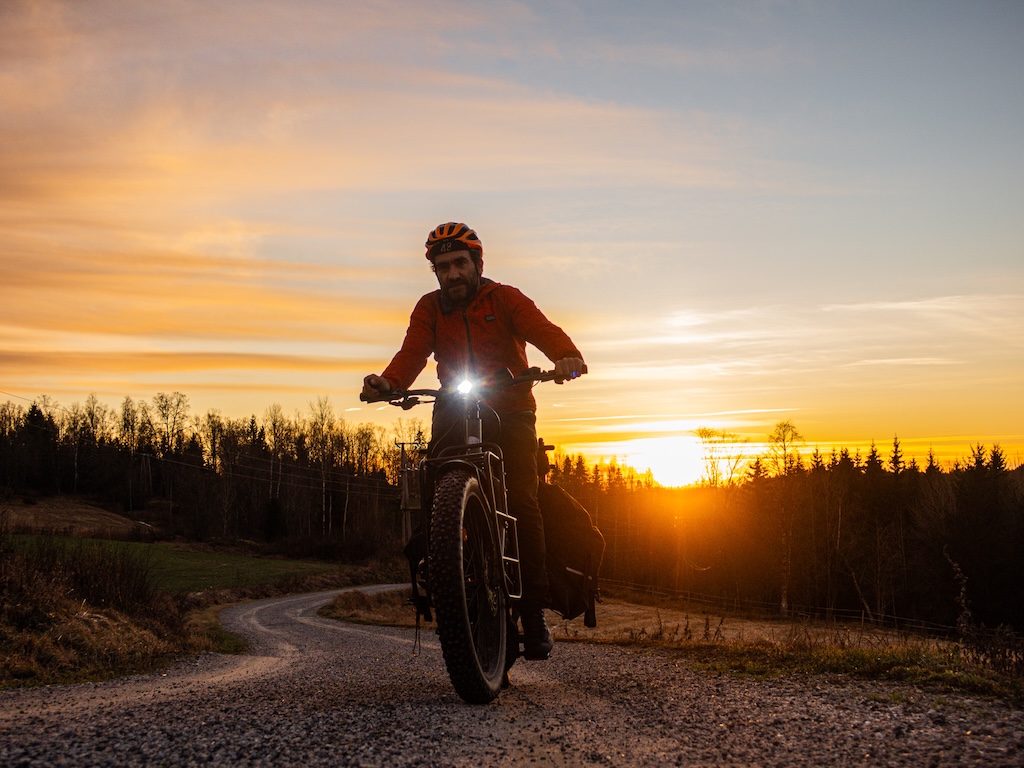
And places are open, even in the middle of January. This is the time after Christmas and New Year and before the Norwegian skiing season, which starts with the school holidays in mid-February when the days become a bit longer. Even campsites are open mid-winter. When I arrive at Hageseter in the dark, I mentally prepare myself for having to pitch my tent, but the owner grabs a key and guides me to the one hut that is always heated. Hostels are only closed for a few days of the year, and while there is less choice of Airbnbs than in peak summer, I always find nice places to stay without too much hassle.
Frozen but flexy
Each day, I build flexibility into my plan. In the morning, I check the weather forecast and research places to stay and plan my routes accordingly. I also look for stops along the way to sit out unexpected changes in weather and base my time of departure on the distance I must cover and the weather conditions. Around midday, I have a much better idea of how much distance I can cover that day and book my accommodation accordingly. Airbnb owners don’t heat their properties constantly, but this gives my hosts enough time to fire the stove up for my arrival. Norwegians are very hospitable people and want to make sure I have a comfortable home after I tell them I’ll arrive by bike.


However, at times, even more flexibility is needed. When I climb up to 900m to the start of Grimsdalsvegen, I find out that the rest of my planned route is impassible. Most mountain passes in Norway are closed from November to June. Snowfall had been much lower than normal for the winter, but even with low snow levels, the route was out of bounds. While my studded tyres grip very well on ice, cycling up a blank sheet of ice with a heavy bike at a steep angle is mission impossible.
My initial inspiration for the journey, which takes me over nine days and around 700km from Eidsvoll to Gjøvik, Ringebu, Dovre, Hageseter, Alvdal and Budor and back to the start, is the most famous Norwegian painting of a winter night in Rondane, which depicts snow-capped mountains on a blue winter night, as seen from Sohlbergplassen. But despite two attempts, I never made it to my destination. On day three, when I first plan to cycle past the place, a blizzard crosses my plans and makes the road impassable. A high wind warning and drifting snow scuppered my second attempt.

But the trip holds many more amazing memories for me, and that’s the beauty of winter cycling. In snow and ice, everything looks beautiful… a winter cycling experience is, in its purest way, much less about the destination than it is about the journey itself.

