Forum menu
So I thought I'd start this thread as there is a lot of forum interest in biomass.
I'm off the gas grid and heat the house with coal so am changing to biomass. Green deal assessment done - all cavity walls are insulated and I now have 30cm loft insulation. We already have solar thermal on the roof.
We have had three quotes for systems. These will be housed in a shed in the garden with super-insulated pipe to the house. All three have specified the same size boiler - 15KW. All three boilers are Austrian - Okofen, Biotech and Hapero. I have found a fair bit of information about the first two but very little about the third. I think the Biotech quote is out the window as the company has only been installing for a year or so and were really more interested in trying to sell me an air source heat pump so that leave Biotech - the guy has installed 50 systems in the last 7 years in the area and seems highly competent. He is convinced we need an 800L buffer tank with the system and says that although they can be installed without, the addition of one makes it more efficient. The Hapero guy has installed lots of pellet boilers but this would be his first Hapero. He says no buffer tank is needed. Both systems would be weather compensated.
I've had a long email chat with Stoner and remain a little unsure of which quote to go for. A bit more interrogation of the two quotes to follow.
Does anyone have any insight into the brands or the use of a buffer? There seems to be a lot of contradictory evidence online about the latter.
I'll keep the thread updated as we progress with pics etc!
Can't help with the boilers but the guy is right about a buffer vessel helping make things work well.
We don't allow our boilers to be installed without one - doing so invalidates the warranty.
The boilers will have a minimum modulation point and you will have issues when your heat load is hovering at around that point unless you have a buffer vessel.
Most biomass boilers want you to use a buffer but there are some that don't. You do need to find someone that understands how to design the rest of the system to work without one though.
800 litre sounds big for that size system, therefore more expensive.
I'm no expert but have installed a few both with and without buffers the ones without have worked fine.
The boiler +/- buffer would be in the shed then in the house would be an unvented 300 litre hot water tank which would also have the coils from the thermal solar as well as the coil from boiler/buffer. I wonder if the Hapero guy is considering the hot water tank to be enough for a buffer in itself?
No it wouldn't be, total different thing.
You really need to zone your heating and remove controls from rads etc to ensure minimum load is covered by each zone. It is a bit more complicated but if you are starting your system from scratch then it is do-able. However you sound like you are adding boiler to existing system so a buffer is probably required, but I would question the size.
Buffer vessel is critical for the operation of biomass. The load fluctuates and once you have a biomass lit what are you going to do with heat from the unburnt/remainder of the pellets in the boiler itself when the load drops off?
A buffer allows the load to be kept fairly constant and keep your boiler firing efficiently, turn down is not great for biomass (even worse for wood chip but that's irrelevant here).
The problems that I'm aware of with installed pellet boilers I'd be leaning towards someone who has as much experience as possible.
Just my 2p worth.
Buffers are critical for MOST systems, but you can make them work perfectly acceptably without.
I know of a system that is working faultlessly without a buffer. Minimum run times are being comfortably exceeded by the 35kW boiler, no overheating issues either.
The load fluctuates and once you have a biomass lit what are you going to do with heat from the unburnt/remainder of the pellets in the boiler itself when the load drops off?
There are lots of pellet boilers out there now that dont use buffers - they have sufficient modulation of control and water in the boiler to deal with energy over run. Log burners on the other hand are uncontrolled burns and so do need a buffer.
My neighbour's Okofen has no buffer and copes fine, yes it cycles, but newer boilers are much better at handling cycling. The pellet component of mine does not like cycling much, but then I have a big buffer so that it might only fire twice or three times a day in the middle of winter. My neighbour's might fire 10-20 times a day.
We are modifying the existing system. We plan to keep the rads. These will be on one circuit and all have TRVs. The towel rads will be a separate circuit.
Bear - other than pushing up the price,would an 800 litre tank actually cause problems? I will ask the system heating engineer how he got to 800.
No problem using a big buffer, there are more readily available than smaller ones. If you are keeping rads with TRV then buffer us needed.
Stoner - I wouldn't want one that cycles that much.
neither would I. Mine runs best at full chat for 700Litres of snuggly hot water.
I think that's me decided then. I'll keep this thread updated with build pics etc
PS - re sheds and power poles on my thread from the other day, the electricity board came round and have said that they want a 1 meter distance between a shed and the 240 V pole. It'd have been a very different matter if it was an 11000 V pole.
Ok, how does turn down effect efficiency?
Does pellet suffer from volatiles issues like wood chip?
Not really much experience in the domestic market (although I now have an ESCo agreement to buy heat produced by what might even be an Okofen. Which has a buffer by the way).
OP: apologies for the digression/hijack.
Quick update - I called the Hapero guy who I was not planning to go with and he made a strong case to support his system design and has agreed in writing to install a buffer tank for free should the system require one. He says it will be obvious looking at the boiler computer whether it has been short cycling and would then install a buffer. He seems a genuinely decent guy who is keen for the job and I have to confess I am sorely tempted. At his price I could put a 2KW solar PV system on the shed roof to supplement our solar thermal system too and to keep the boiler fired if we had a power cut (during the day only I accept!).
Difficult decision time especially as despite lots of research I am not at the end of the day a heating engineer.
Thread resurrection - finally getting things on the move with the pellet boiler.
It's been a hell of a thing so far and a lot to learn. So far I have had to learn about boiler types and brands. Quite a lot of the on line info is continental so heavy use of google translate and a big thankyou to Stoner too.
I've also learned about vented and unvented systems and subsequently about water pressure and flow rates and THEN about accumulator tanks and pipe diameters....
so.
I had a hole in the ground:
[img] 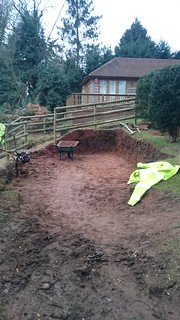 [/img]
and this week put a slab there:
[img] 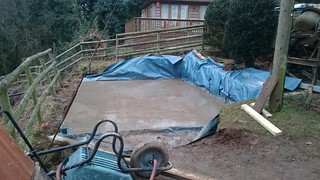 [/img]
Blockwork this weekend - pics to follow. Thank god my neighbour is a retired builder 'cos I am learning hard and fast!
Just read your update two posts ago...
If your PV system is grid connected, then you aren't going to get anything out of it if there's a power cut. They need the grid to work.
You'd be cheaper and more reliable if you get a lot of power cuts to fit a generator and manual switch over to power the boiler/pump/zone valves.
Separate building for your 'energy centre' is a great move though!
And just to agree with bear about the buffer - it CAN work without a buffer if you get someone who isn't just connecting pipes to an existing system with no engineering the system to suit biomass - would be interested in seeing any schematics the installer has provided.
m off the gas grid and heat the house with coal so am changing to biomass.
out of interest, what coal system did you have before switching?
I am learning hard and fast!
'tis the best way.
Good luck, keep the photos coming.
Hi Guys.
So we currently have a 21KW multifuel boiler stove which predominantly runs on homefire ovals and some wood. It came with the house and has a couple of issues:
1. there is no back protection to stop cold water coming into the boiler.
2. the central heating circuit is injector t'd off the hot water circuit and short cycles a fair bit until the whole system is up to a good heat.
3. Out house is cut into a bank with the driveway at the top and the main living area / boiler at the bottom if the bank. So far this year I've carried over 2 tonnes of coal down the bank and the resultant ash back up the bank. I'm not sure I can face doing that for the next 20+ years!
I've discovered the bit about the PV's going off in a power cut now. They really don't happen much around here so I am going to see how we do without a backup generator but have space to install one if needed. We are installing a controller that will automatically feed any electricity we generate and which we are not using into the immersion element in the hot water tank. That will augment the solar thermal we already have on our roof in the summer so I can just turn the pellet boiler off.
The boiler is a Hapero 15KW unit. The manufacturers and installers are convinced we will not need a buffer and have written a statement that should the system short cycle they will supply and install a buffer for free. The plan is to rip out the existing hot water thank and its vented associated gubbins and replace with a larger unvented hot water tank, new plumbing to link into the rads and uniting the current heat sink radiators into the main rad circuit. This is also requiring a cold water accumulator as although we have good static pressure and pressure/flow with 1 tap open, it falls with 3 taps to 6l/sec flow and pressure of 0.5 bar.
Think that's it for the mo. Blockwork pics to come when I can and shed framing starting Tuesday (I hope)
We had pretty much the same setup, except our boiler stove was in no way capable of reaching its rated output, and we rarely got out of the short-cycling phase. It was ok, sort of, when we had dry wood, I guess, but a massive faff - far too much manual tending/loading/emptying required.
Didn't have the space or cash for a pellet unit, so we went with a TRG coal unit, which does at least have the magic of automatic controls.
nice.
re-connecting the PV to the immersion - good idea - recommend them when the meter doesn't go backwards.
I had a couple of comments about the Unvented DHW cylinder typed out but realised that it would sound like I'm looking for your installer to cock up, which I'm not - they do sound like they've done this before.
a cracking set up - If i wasn't living in a bungalow with mains gas, i'd be adding a pellet boiler to the current solar PV/Thermal already installed.
I'd be really interested in the final project costings and your EPC numbers when you are done.
Morning! The brickwork is done and its time to get framing:
[img] 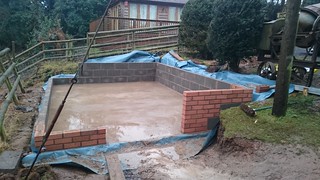 [/img]
hope to have this lot out of the carport soon..
[img] 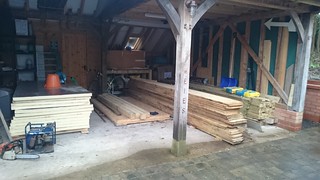 [/img]
Smudger - I'd be keen to hear any comments/advice re unvented systems. The installers have done loads of these but more knowledge is never a bad thing and I'd rather ask them questions before irreversible/difficult to undo stuff happens!!!!
The project is expensive but thats in part because I want to do it right and so it fits in with the rest of the house (ie the outbuilding is oak clad) and the RHI is offsetting much of the cost.
recommend them when the meter doesn't go backwards.
Anybody with PV and a meter that runs backwards is running a risk.
The leccy supplier will eventually find out and they can then send you a back dated bill for the power they reckon you've 'stolen' - their calculation will be heavily in their favour.
sharkbait - yup you are spot on - which is why i kept a copy of my email asking them specifically about the meter going backwards, sent to them on the day i had the PV installed asking them if I needed to take any further action 😉
Infidel - the points i was going to mention are about the lack of buffer and what they had calculated to use as the heat sink. i then noted you had plans to link the heat sink radiators to the system so I assume the design for the heat dump from the boiler would use those.
I've seen one where the heating engineer planned to use the cylinder as his heat sink as he did on 'all his solid fuel systems', and the plumber installed an unvented cylinder. They decided that it would be ok to miss out the MZV on the DHW flow pipe to ensure the heatsink was always available. Once they'd been made aware of the practical safety aspects and the legal ramifications of doing that, they went back and installed a heat sink radiator.
heating engineer planned to use the cylinder as his heat sink as he did on 'all his solid fuel systems'
Misuse of word engineer there, I would say.
fair point - think 'bloke who had installed solid fuel fireplaces since the 1890's and thought he knew better than hetas/building control' and you'll be on the right lines!
Got the bulk of the framing done today. I've never done it before so it took some time. My neighbour popped round this evening and helped me do the support struts to square it up and stabilise prior to the rafters etc.
I've looked at so many 'I built this' threads here (Stoner and McMoonter come to mind) and never thought I'd be able to do similar!
[img] 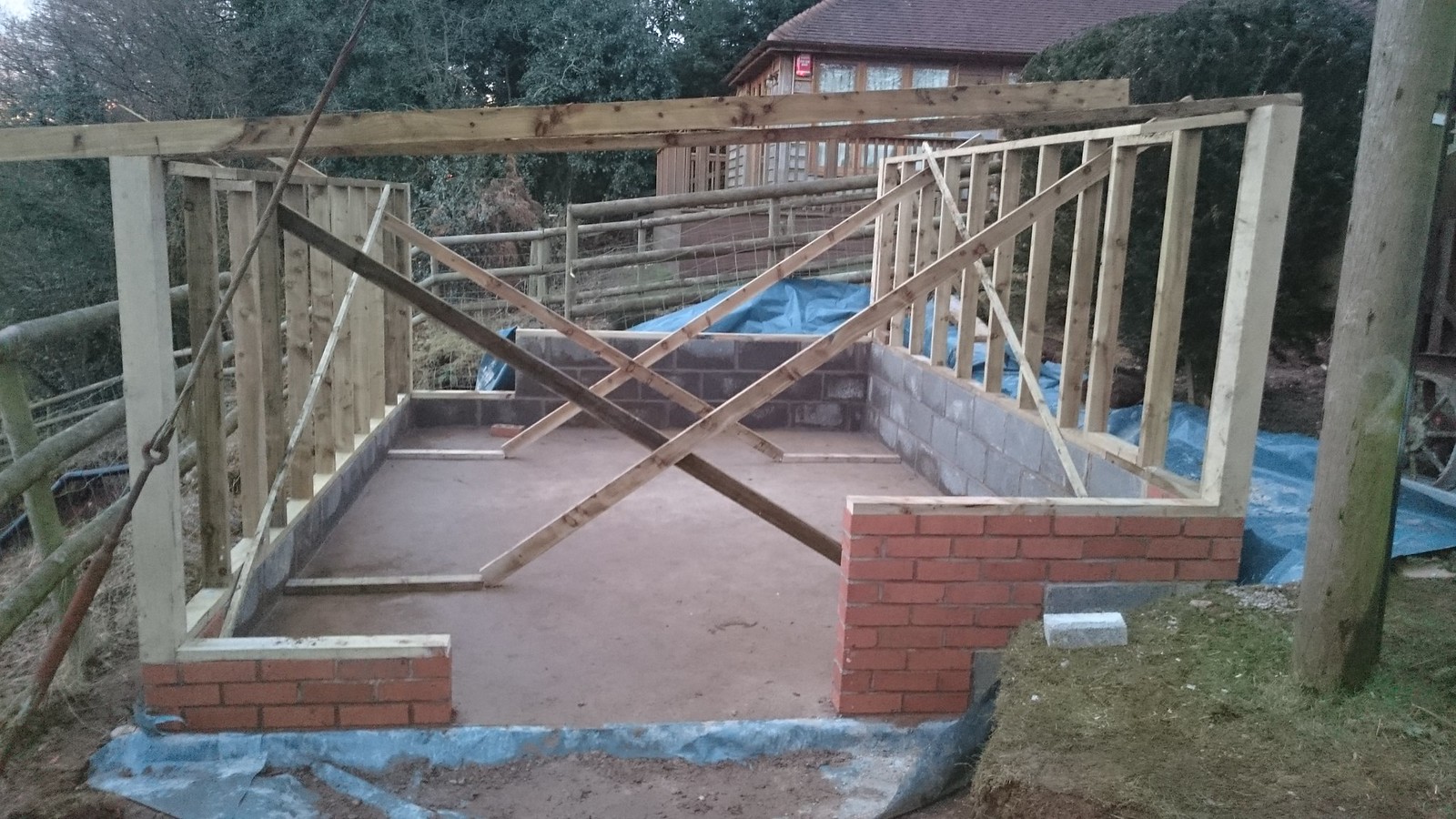 [/img]
Raftering going up. 22.5 degrees dead south facing for the PV roof. I'd have liked to go a bit steeper but I didn't want the north roof any steeper and wanted to limit the building height.
[img] 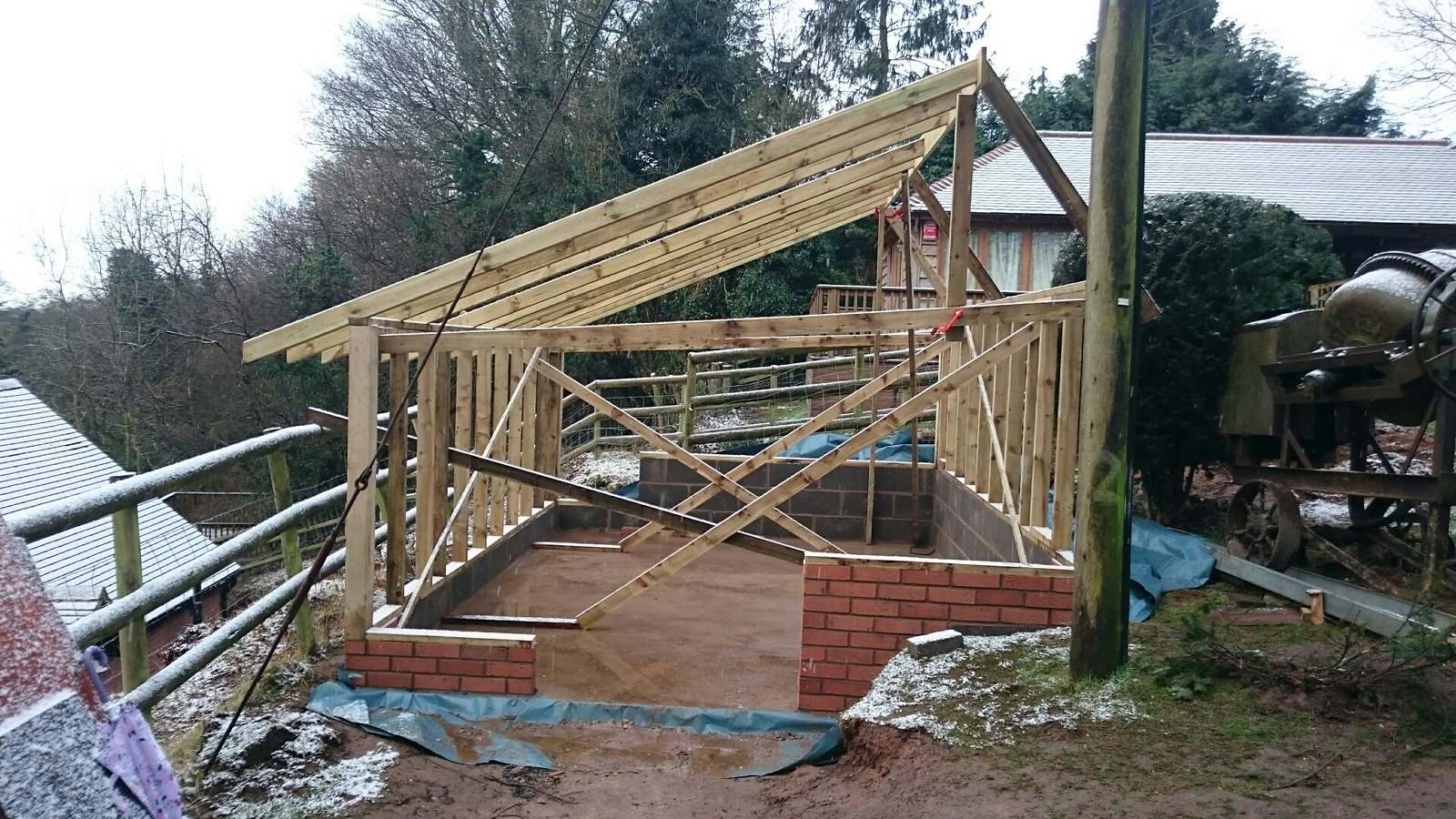 [/img]
The freakonomics guys pointed out PV panels would earn more pointed west for supplying at peak times rather than during the day.
Is stuff like that taken into consideration or does total duration earn more?
Cbike - with the uk tariffs - as near South as possible for max production is best.
Infidel - 22.5 vs 35 degrees - you'll hardly notice the difference. When we've modelled production in the past, anything above 15 degrees didn't really affect production enough to worry about.
Looking good!
*clicks the [s]Share[/s] Like button*
Cbike - with the uk tariffs - as near South as possible for max production is best.
It could be argued though that to get the best out of PV you want to use as much of the generated power as possible. Although down overall very slightly on S facing panels, an E & W orientation can give more power when you need it. For example, E facing panels supply power early in the morning when people are getting up, while W facing panels can supply more power in the evenings - again when it's needed most.
S facing panels generate peak power at lunchtime when domestic power requirement is generally lower than morning/evenings.
Its been a busy week with work and I've been away so it's been a bit slow. Raftering is done, roof joists in and framing is complete with what I now know to be called noggins!!!
[img] 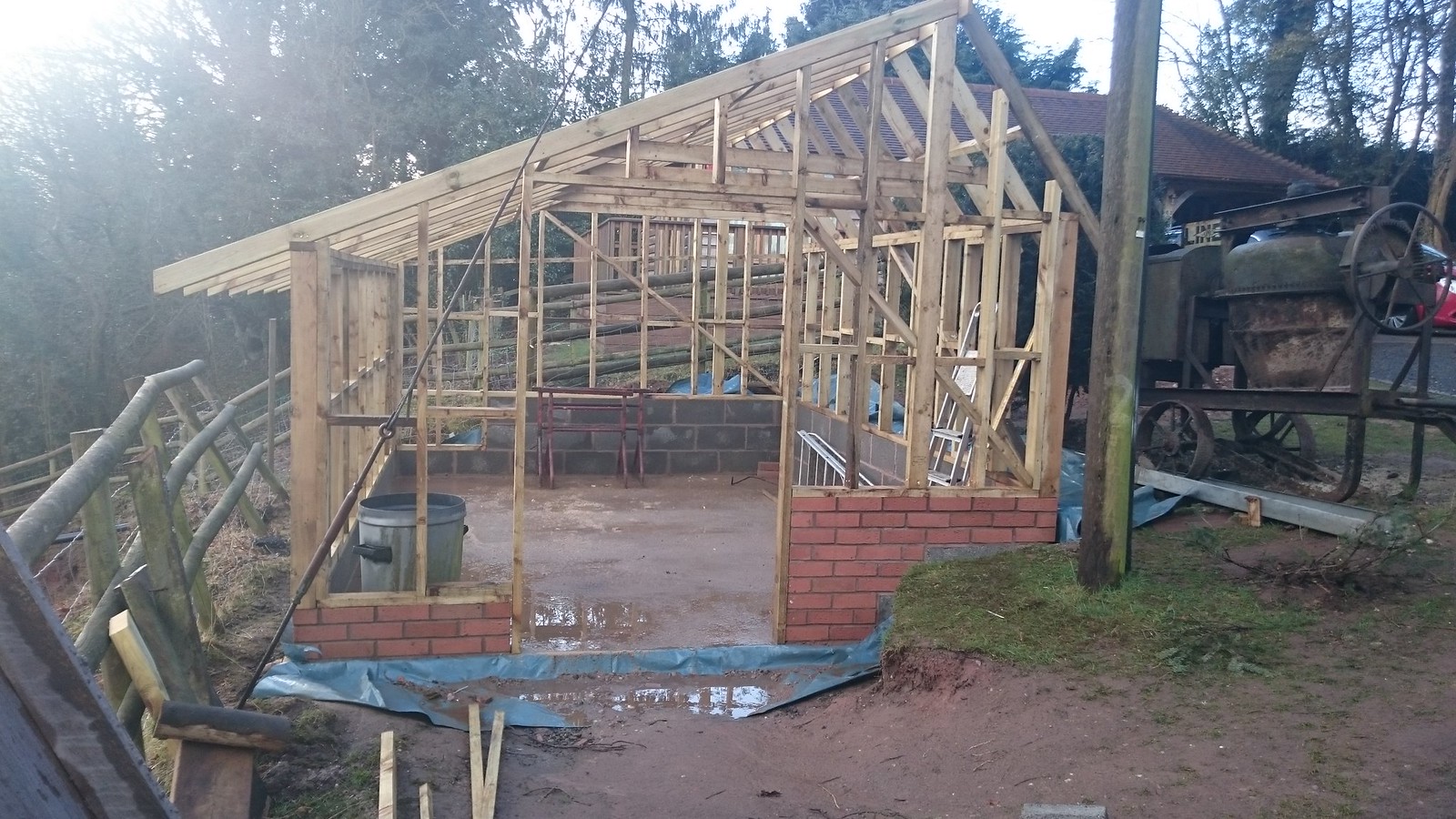 [/img]
great work, we all love build threads like this so keep the pictures coming
Big update time.
So I've called in the cavalry as there is lots here that I cannot do.
The shed roof has been started and the walls membraned. The roof is sheet boarded on the big south roof and lathed only on the north:
[img] 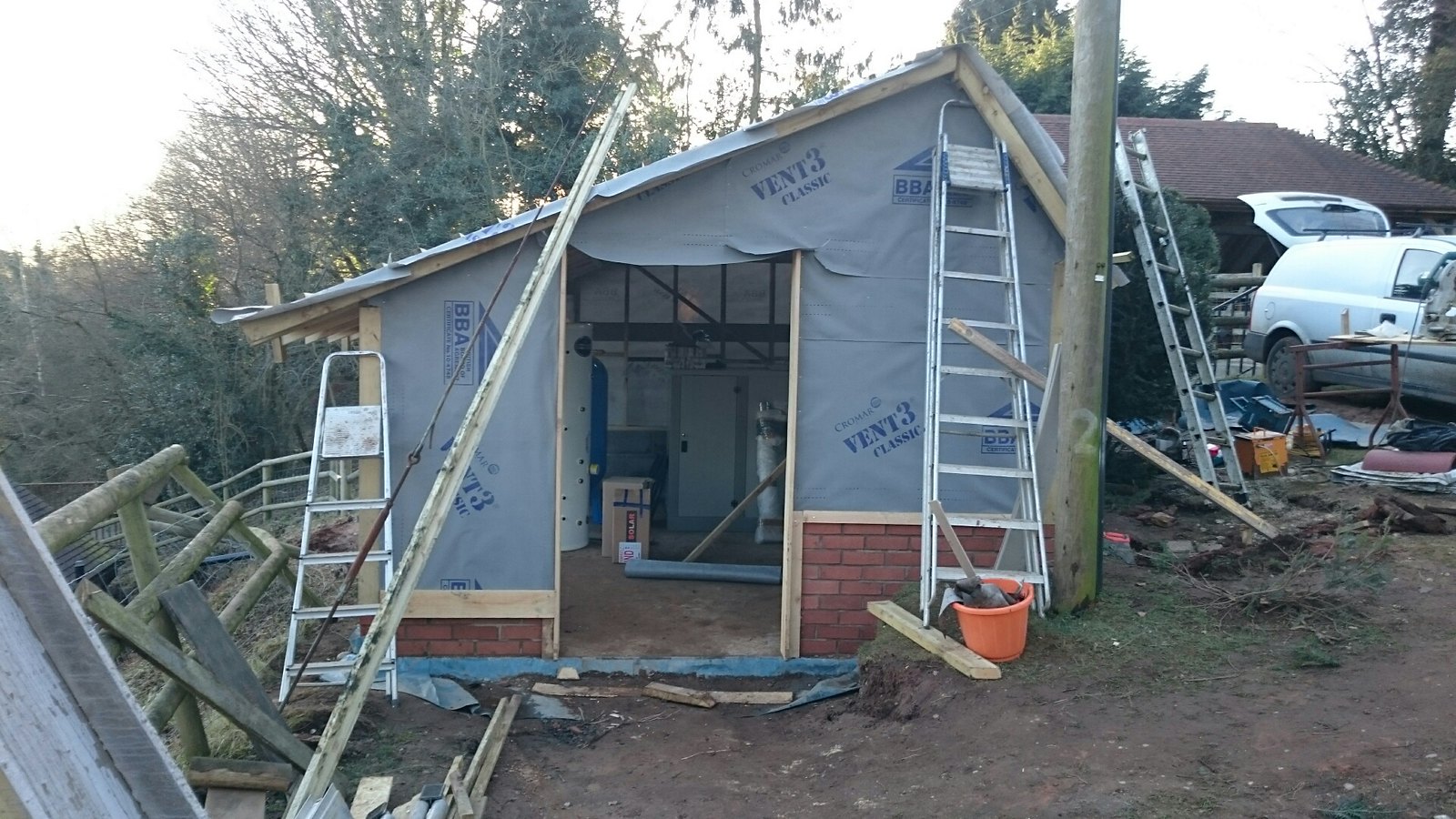 [/img]
The walls are now being cladded:
[img] 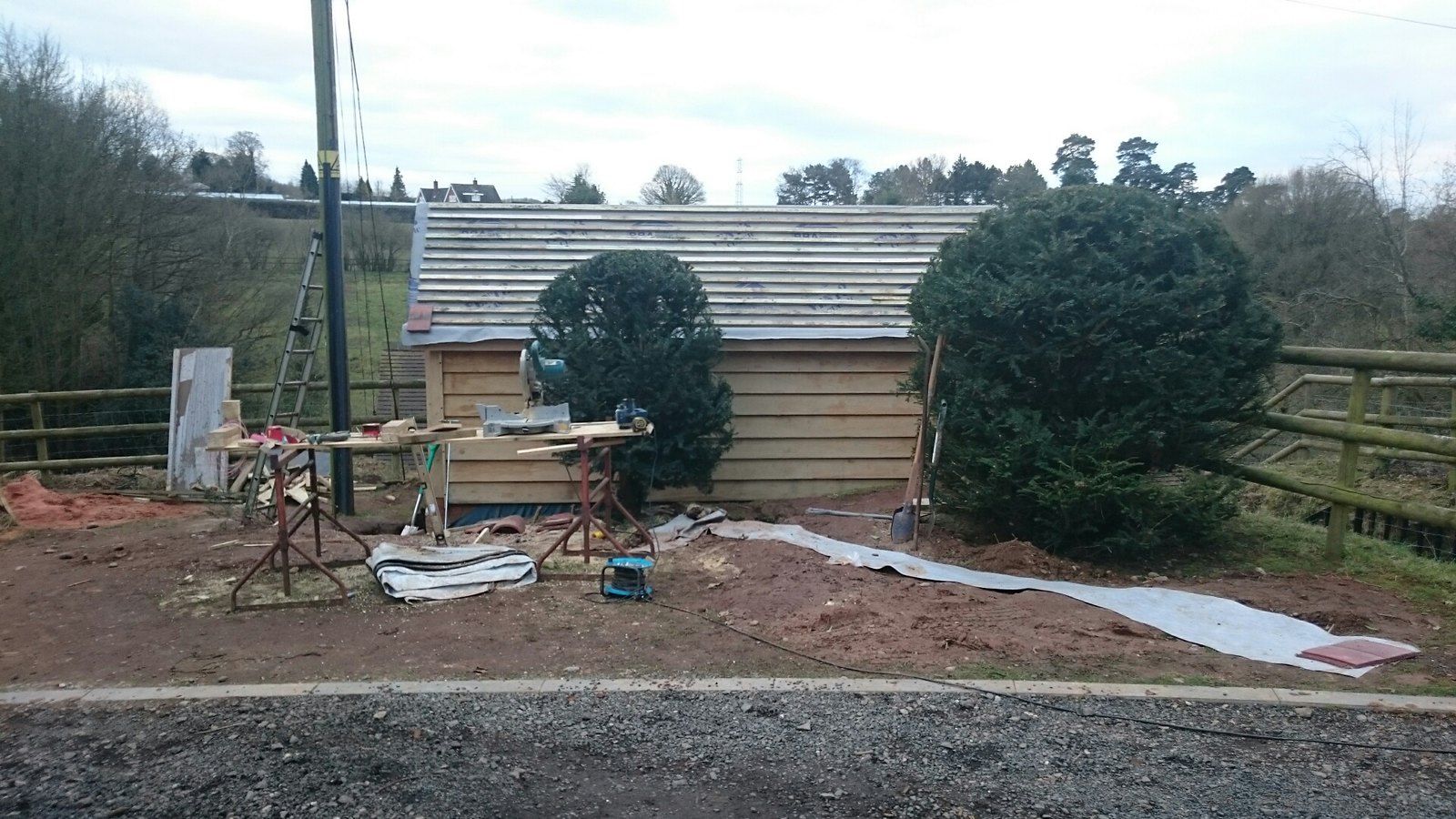 [/img]
[img] 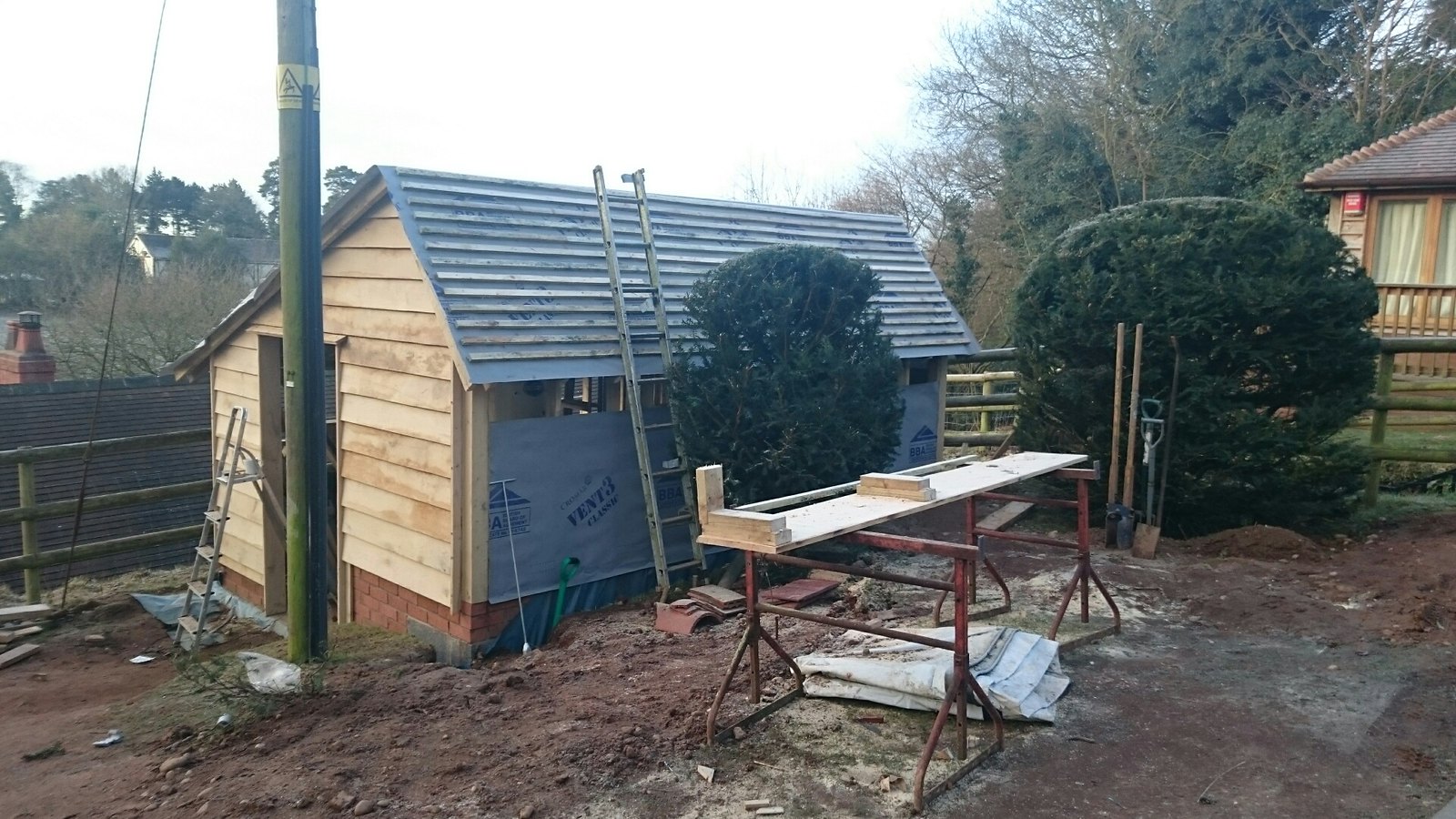 [/img]
Cladding to be finished and roof to do... on the outside..
Inside:
boiler is the big grey box, the blue thing is the cold water accumulator and there's a new hot water cylinder too (twin coil)):
[img] 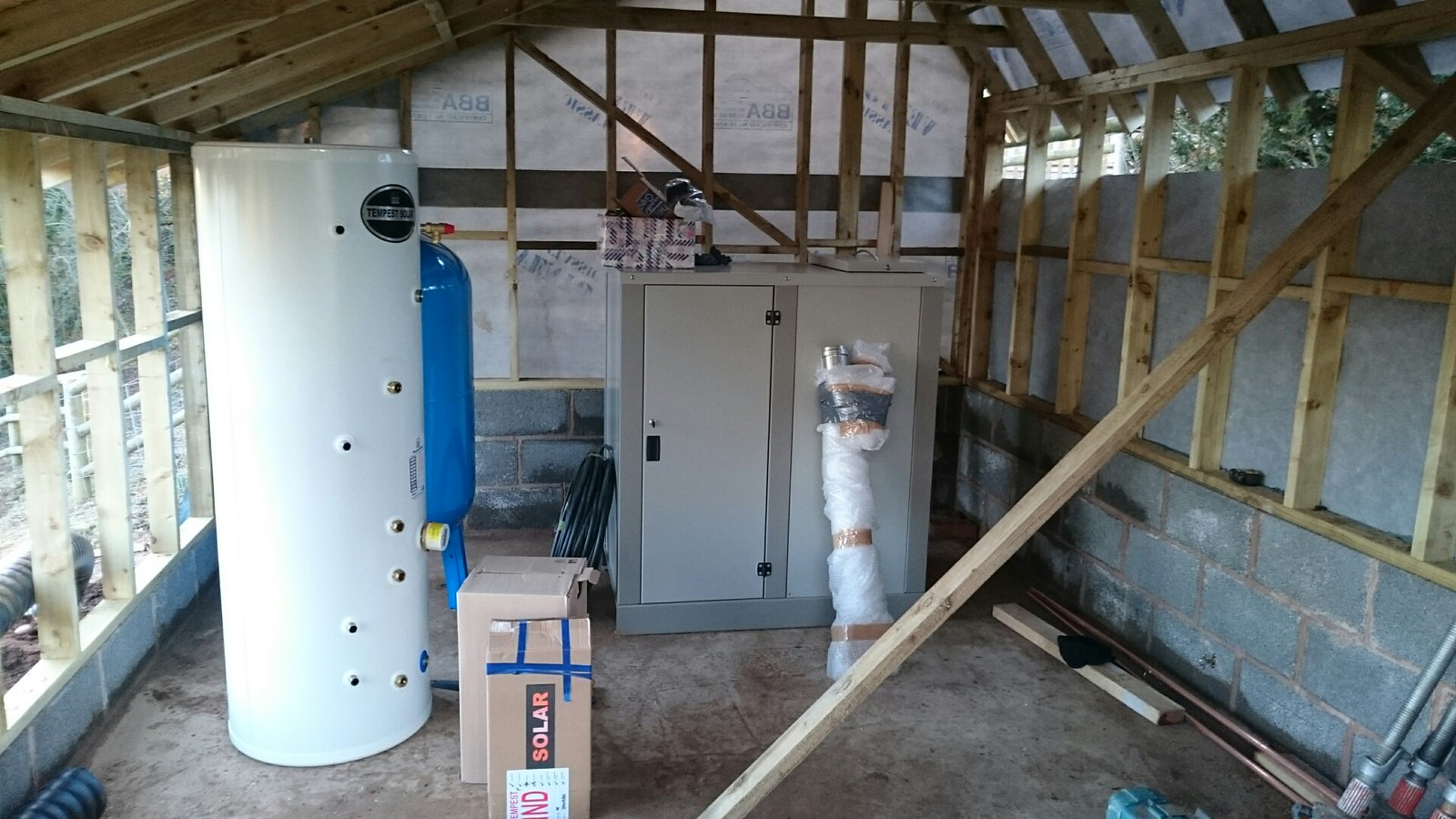 [/img]
boiler being plumbed in and the cold water cylinder is plumbed in now:
[img] 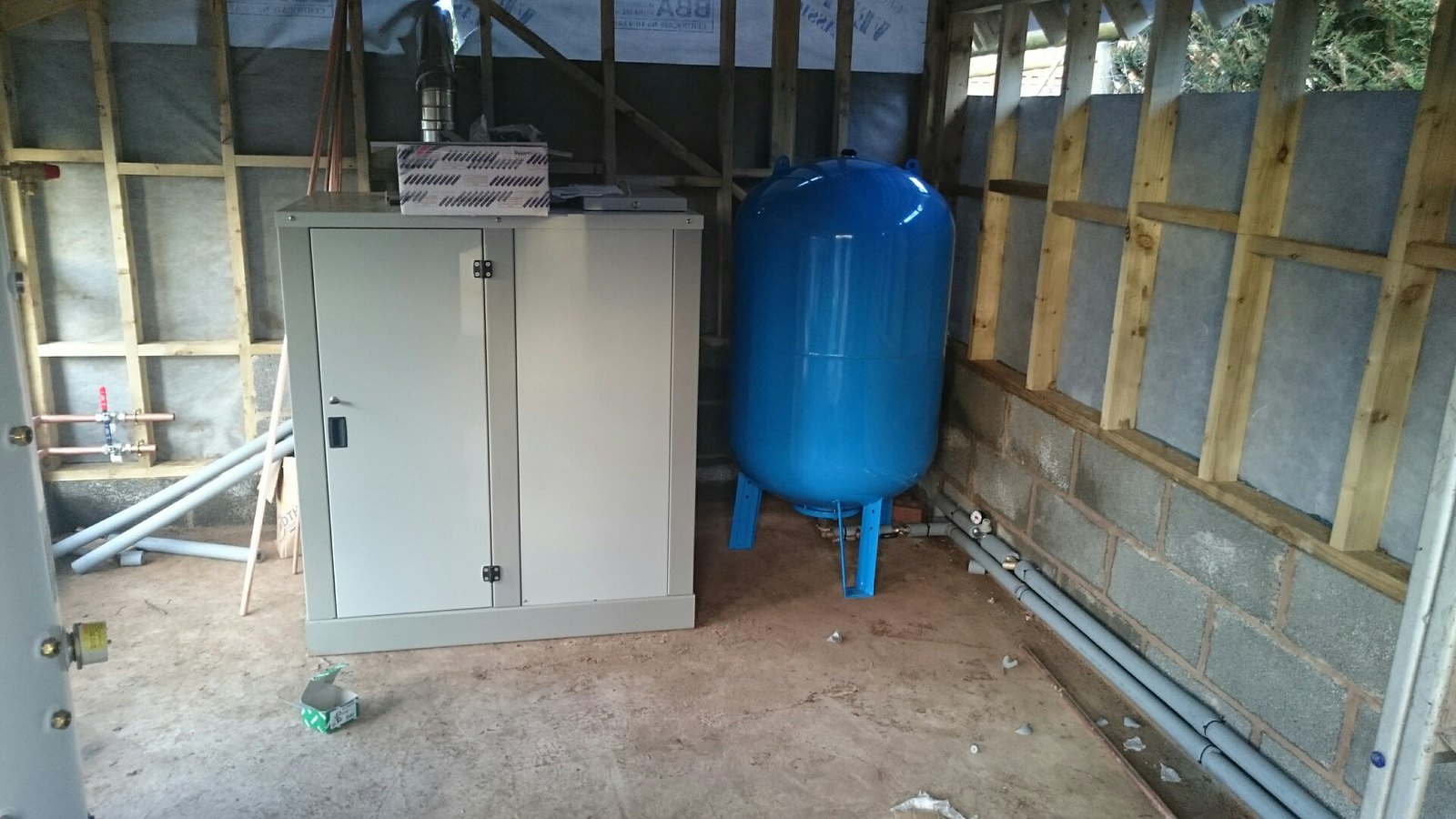 [/img]
The hot circuit connects to the house across a big gap - the hot in on the right as you look at it, the cold on the left:
[img] 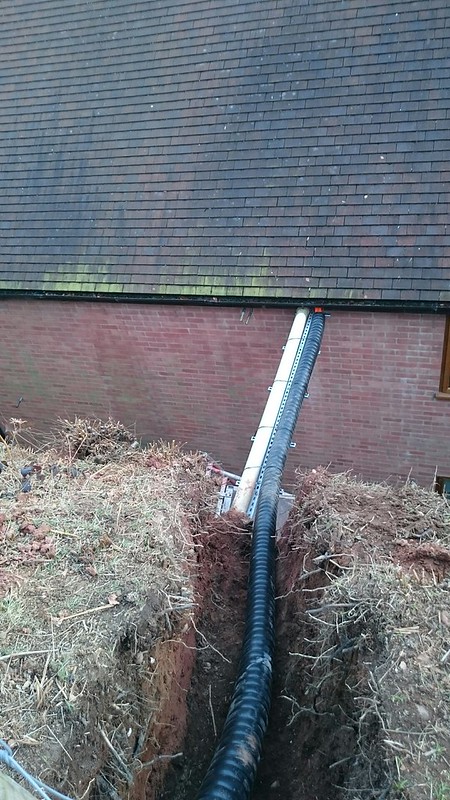 [/img]
and finally, today, the hot water cylinder is in, although only basically plumbed tonight:
[img] 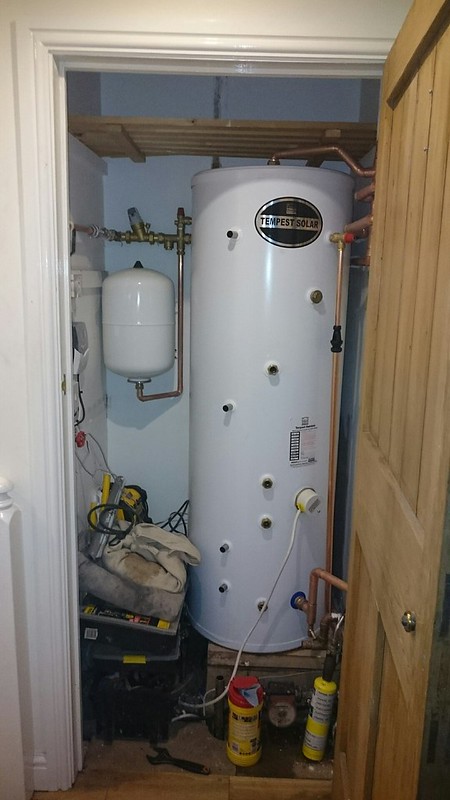 [/img]
good work!
Im actually v jealous. It's a lot of fun. Takes me back:
[img] https://lh4.googleusercontent.com/-_vvna01dwEo/TgjoO8-ofuI/AAAAAAAAAB4/vHykkJCH0D8/s400/p1000551.jp g" target="_blank"> https://lh4.googleusercontent.com/-_vvna01dwEo/TgjoO8-ofuI/AAAAAAAAAB4/vHykkJCH0D8/s400/p1000551.jp g"/> [/img]
Double or triple lag all those pipes, please. 🙂
Worked at a house haveing a pellet system installed, a few questions, does the boiler need to be insulated or heated when switched off when not in use in winter,to prevent freezing, do all external pipes need to be protected by wooden insulated boxing,to stop theft or damage, some nice copper pipes exposed, is blown deliveries cheaper than sack deliveries of pellets, cheapest time to buy pellets.
Edukator - yessir! Stoner - you have been a bit of an inspiration for this and I used a few of your threads to work out how to get started with the shed too!!
Its exciting but a bit daunting as there is so much to learn to make sure its done right. We've gone from a vented to an unvented hot water system today and the house is a bit cold tonight as the multifuel burner is currently disconnected. The living room open fire is roaring and our daughters have plug in oil radiators tonight!
Very impressive. Love it.
Very late but just to say we have a Windhager which was a straight swap for an oil combi. No buffer but an unvented hot water system already in place. Been in three years now and it's great.
Looking forward to the rest of this now!
Visually there has been little progress today. The shed is now the 'Energy Building' as we have decided it looks a bit grand for just 'shed'. It has rear cladding and the far end is almost done. A bit of thinking went into the sleeve for the vent duct but I think it looks good:
[img]  [/img]
The cold water accumulator needed tweaking; it was set up as a large expansion vessel for a mega heating system. Essentially these things are a large pressure vessel with a diaphragm in them and a pressured air bag. You can adjust the airbag pressure and for a heating system expansion tank it needs to be the same as the heating system pressure (in the region of 3 bar I have discovered). As a cold water accumulator to mitigate low cold water flow rates it needs to be about 1 - 1.5 bar. It was 3 bar last night which meant BOOM fast water from the tap which widdled away to low pressure fast. With reduction to 1.5 Bar we have sustained good water flow.
The rest of the days work was reconnecting the solar thermal system and draining it and changing rads on the heating circuit.
It feels so close but I think there is a least another weeks work yet to go.
All looking good the only thing I ask is why haven't you gone for a better quality lagging in the plant you.
Oh and another question why insulated pipe did you go for? Rehau, uponor or another make?
Not sure on the brand of the insulated pipe. It looks like this:
[img]  [/img]
Where you see it crossing the strut with the water pipe and its insulated cover, this whole section is going to be boxed with a small roof and the box lagged all round the pipes too.
The only insulated pipes in the energy building (!) you can see are a cold water loop to/from the accumulator.
looks like rehau. I was talking about the climaflex in the energy building (Plant room). Would look v.nice with some Kooltherm 8)
looks like Rehau pipe to me. Prefer Uponor myself
I've got a pallet of celotex to insulate the shed. Should be pretty toasty I think.
So things are coming along. Due to commission the system on Tuesday.
We have replaced all the radiators in the house and flushed the system several times with cleaner.
The pipework is done ready to disconnect the fuel stove and switch to the Hapero.
The accumulator has been tweaked and we have good water pressure/flow.
The energy house is almost complete:
[img] 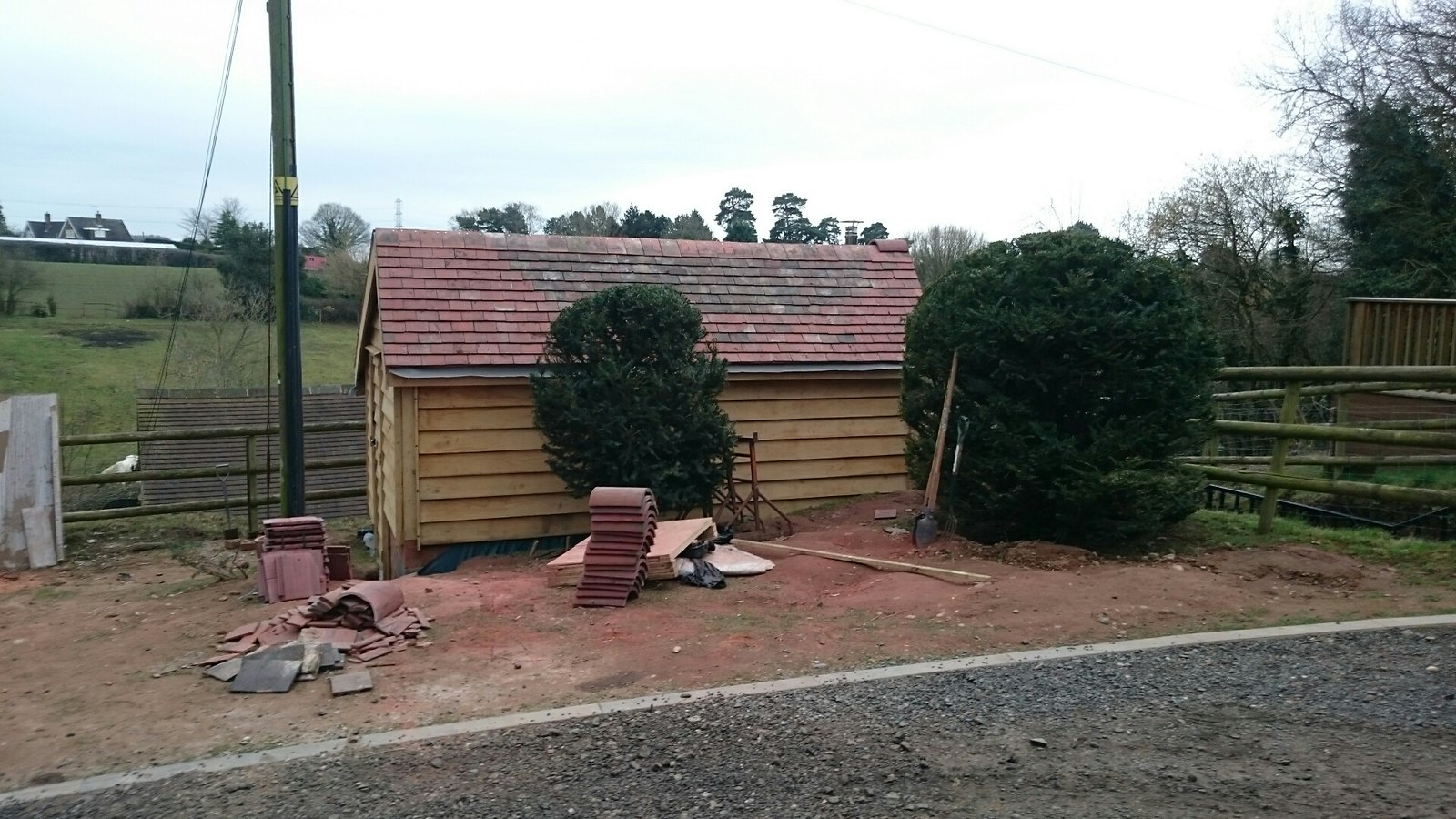 [/img]
[img]  [/img]
[img] 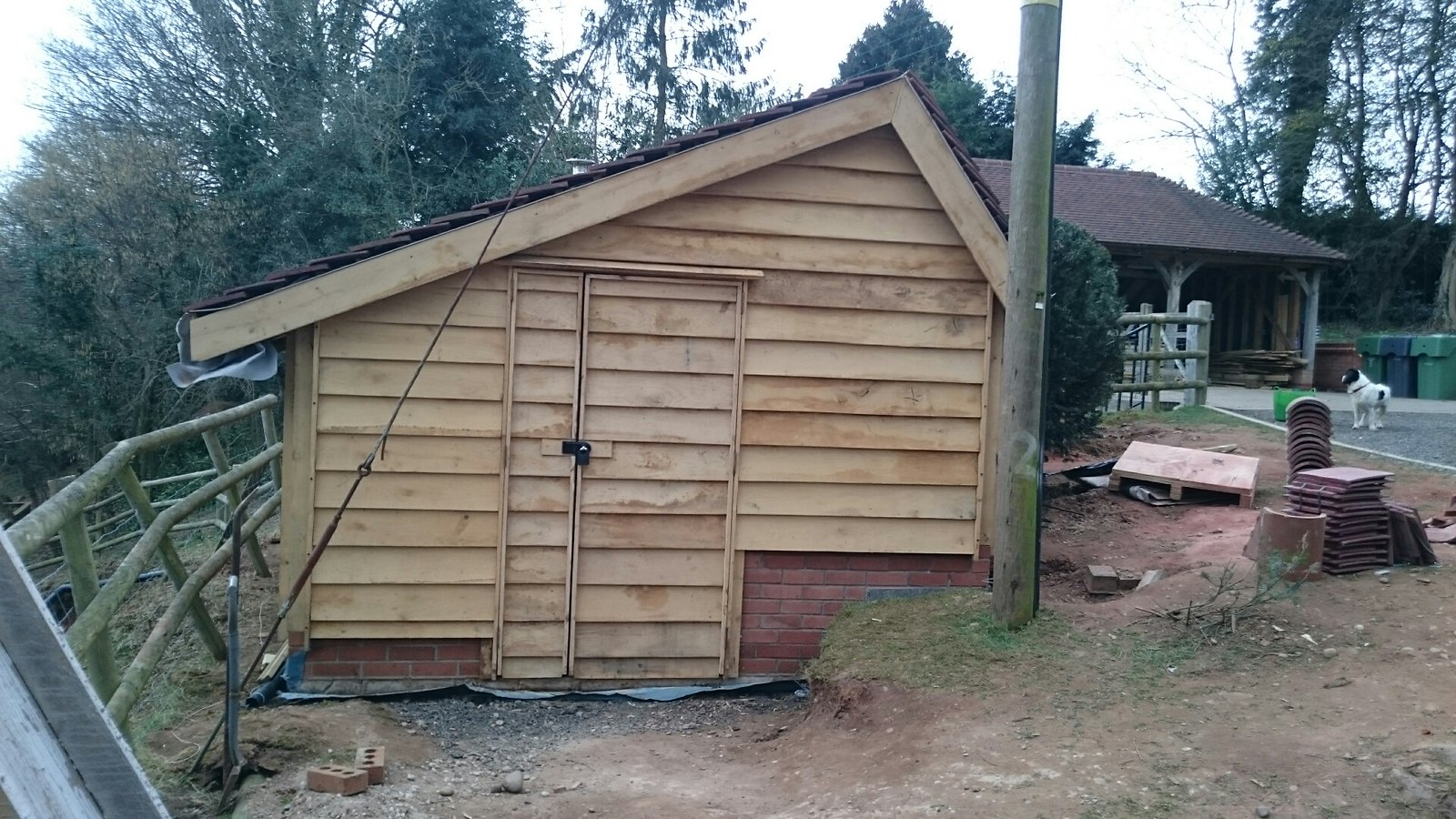 [/img]
To dos include the wiring (including inverter etc for the PV due to go on the south roof), curtain drain / guttering / ridge tiling and compounding the shed. And a million and one other little jobs that I keep thinking of - such as a limescale filter on the water main!
Well we are commissioned and have been running for 5 days. So far I am delighted! A leaky pipe when we pressurised the system was fixed fast and the boiler has been working away merrily, the house is warm and everything seems good so far.
We are using a weather compensated system and I thought the external sensor was ugly so hid it...
[img]  [/img]
The PV is on and running happily:
[img]  [/img]
and the inside of the boiler house is coming together. Still not insulated it yet.
[img]  [/img]
Topping up the hopper at my stepdads place this morning. Its amazing how much timber the thing gets through through.
[url=http:// http://www.photobox.co.uk/my/photo/full?photo_id=20691050533 ][/url]