UPDATE: CLASSIFIEDS section refreshed, redesigned, searchable: Go take a look
Interesting article with pics showing the changes in Glen Feshie, both natural as the river shifts course, and man made as grazing pressure from deer was drastically reduced.
The pic above is from the link. For anyone familiar with the current landscape around the bothy here is one of my pics from circa 1981.
As far as deer numbers go - I first visited the bothy with my dad around 1972. In the autumn the glen was hoaching with deer. Recently I visited the bothy and spoke to another user who claimed he had asked the keeper how many deer were in the glen now. I don't know what answer he expected but he says the keeper said "7".
All the regrowth in the glen was achieved without fencing. Just cutting deer numbers down. Across most of the highlands they are many times to high.
Not sure how they can work out an exact number for deer as the area is not fenced off. There is no doubt there’s a lot less now, which has been great for the young trees getting established. I have seen a big herd of deer in that area in the past few years.
I do notice that on the other side of the A9 in the Monadhliath you see a lot more deer.
I think that’s the case. With it being in private hands, they can effectively do what they want, so have been culling deer pretty severely, and the landscape has benefitted.
In a similar fashion, Mar Lodge estate has been trying to re-wild, whilst still having to remain a sporting estate by the terms of their ownership agreement (from when the estate was given to the National Trust). They have culled deer there, but came under severe pressure from neighbouring shooting estates as all “their” deer headed to Mar Lodge estate as there was lots more food, due to the lower deer numbers.
“Regeneration” by Andrew Painting is well worth a read if you’re interested in the process. He’s the chief ecologist at Mar Lodge.
Just cutting deer numbers down
Am I right in thinking it's been done with aggressive culling?
Yes it was. Which was needed. By reducing the numbers of one species the slow death of this Scots Pine forest has been reversed and the habitat improved for numerous other plant and animal species.
Pity it takes a foreign billionaire owner to do it while the estates owned by our supposedly green minded king are still barren deserts by comparison.
Wildland Scotland (who own Glens Feshie and Tromie) have a pretty much zero tolerance approach to red deer. They are also taking out lots of non-native trees and allowing natural regeneration where possible. It's quite the story. Part of the work has involved substantial new forest roads to permit logging. If you're into gravel riding the opportunities are mega.
At one point the aim of the estate was to reduce deer numbers to 1050.
“Arrangements are in place to assess progress towards a total estate population of
1050 deer.”
If there are only 7 now I can only assume they just got carried away.
Maybe they buggered off elsewhere after seeing all their pals get turned into sossijes and hammered into lawns.
Just imagine what it would be like with some wolves and lynx about.
(Would a lynx be able to take a fawn? Anyway, they'd have a go at the rabbits)
Wolves aren't stupid. Why would they run about chasing deer up and down hills and through heather and bog when they could enjoy an all-you-can-eat buffet in a nearby field of sheep?
I'm sure the wolves were originally there well before all the sheep were introduced, so perhaps they should just take their chances?
The interesting thing about Glen Feshie/Tromie is that it has proved regeneration happens with reduced deer numbers. The experts used to say it was impossible. I read an article in THe Scotsman magazine years ago which stated regeneration of native forest could only happen in fenced enclosures. This sort of thing.
"However, Ronnie Rose, from the Scottish Gamekeepers Association, is opposed to the planned cull.
He said the estate should be using fencing to reduce damage to trees and that other deer would simply move onto the estate to replace those animals that are shot."
http://news.bbc.co.uk/1/hi/scotland/4018439.stm
Just imagine what it would be like with some wolves and lynx about.
(Would a lynx be able to take a fawn? Anyway, they'd have a go at the rabbits)
Lynx would not be able to take red deer at all I think. According to the pro reintroduction stuff I have seen its Roe and Fallow deer they would take ( actually sheep really I bet)
Deer management is essential - there are far more deer now on the hills than there used to be and the deer are in poor condition because of lack of forage - basically eating the countryside bare
Again IIRC Feshie estate killed ALL the deer on their land. It took a while for them to return over the hills from surrounding estates
However, Ronnie Rose, from the Scottish Gamekeepers Association, is opposed to the planned cull.
The thing here is that we’ve far, far too many deer and the end result is, apart from everything being grazed flat, they’re all malnourished. You’d have thought there would be more challenge in hunting a healthy stag…
Again IIRC Feshie estate killed ALL the deer on their land.
it’s a pity that often the culled deer aren’t viable as venison, particularly when we import farmed venison from NZ…
I read a few articles related recently - summarised as:
- natural regeneration of trees is proving faster, more resilient and more of a carbon sink than human efforts to plant trees after 10 years....
- current deer number recommendations are based on some work in 1960's by Forestry Commission when the deer population was already enlarged over time and was 'informed by the landowners' rather than any hard science. Basically whatever density now 'recommended' is a fallacy/creep up over the years, and the real number for natural process to restore balance is much lower...
So yes, Feshie and other places are a positive step forward.
There's local venison in a few places - notably the butcher in Nethy Bridge, Rothiemurchus farm shop and Dalraddy campsite. The latter is all from the Cairngorms Connect project.
The venison served at Corrour Station is all from the local estate too.
@scotroutes I’d been led to believe that a lot of the time the value of the carcass is often less than the cost of getting it off the hill and inspecting it etc.?
Dunno about the costs. FWIW the RSPB at Forest Lodge (Abernethy) has an operating deer store too - possible supplying Bailiefurth butcher. There is some local deer farming too of course. Either way, local venison isn't difficult to come by and, yes, it annoys me when I see venison imported from NZ but I'm guessing there's not enough UK product to go around.
Yeah, not sure I buy the it's too expensive to get off the hill in a neat statement.
When there's a cull on in crowded deer areas they bag a few at a time (let alone a full day catch) and usually get a vehicle pretty close etc...
I can imagine that one carcass halfway up a hill on Harris is a different economic case.
There was a load of stuff a couple of years ago about how we should all be eating more wild venison. And venison sausages are very good.
I'm guessing there's not enough UK product to go around.
I don’t think that’s the issue TBF.
@scotroutes I’d been led to believe that a lot of the time the value of the carcass is often less than the cost of getting it off the hill and inspecting it etc.?
A friend of mine has a contract with the Forestry Commission to cull deer in one of their forests. He is retired and as far as I know the deal is he gets the job of shooting them and sells them to a game dealer and keeps the cash. So zero cost to the FC and venison supplied to the public via the game dealer.
In his case it is part hobby part job as he also has a pension but when diced venison sells for £12 or more a kg and prime cuts are more expensive I am surprised we need to import it from New Zealand when the country is crawling with deer,
When you see the scale of the deer farms in NZ it’s not hard to see why we import from there. My guess is that the transport costs are a small enough fraction of production cost that they can easily undercut domestic venison (and maybe even have a more reliable quality).
Having a lot of animals is only one part of the supply chain. Maybe there’s scope to invest in the infrastructure in Scotland to compete but I doubt it would have much to do with upland ecology.
The price you see for venison in the shops/ butcher is no where near what is being paid to the stalkers that’s for sure.
There is times when carcasses are getting left on the hill because game dealers don’t want them. During the winter it can be down to £10 per carcass and that’s you taking them to the game dealers so not worth the effort to take them off the hill and driving them to the dealers.
The big problem in Glen Feshie and surrounding areas will come if Sika dear spread into them areas. Current cull targets don’t differentiate between species but red are far easier to cull than the non native sika which is spreading through Scotland with alarming speed and also hybridising with reds.
In his case it is part hobby part job as he also has a pension but when diced venison sells for £12 or more a kg and prime cuts are more expensive I am surprised we need to import it from New Zealand when the country is crawling with deer,
imagine hunting/killing deer on remote Scottish hillsides and removing each individual carcass compared to hunting/killing a herd of deer that’s held in a 10acre fenced in field.
I know what will cost less, and be fully regulated and cleared for entry into the food chain
I have seen more and more deer farms in Scotland.
Let's not forget, maintaining deer on UK hills isn't about food. It's about wealthy old giffers going shooting.
And while they are not bred in captivity, there's a strong whiff of Schroedingers Pheasant about the attitudes from many about deer.
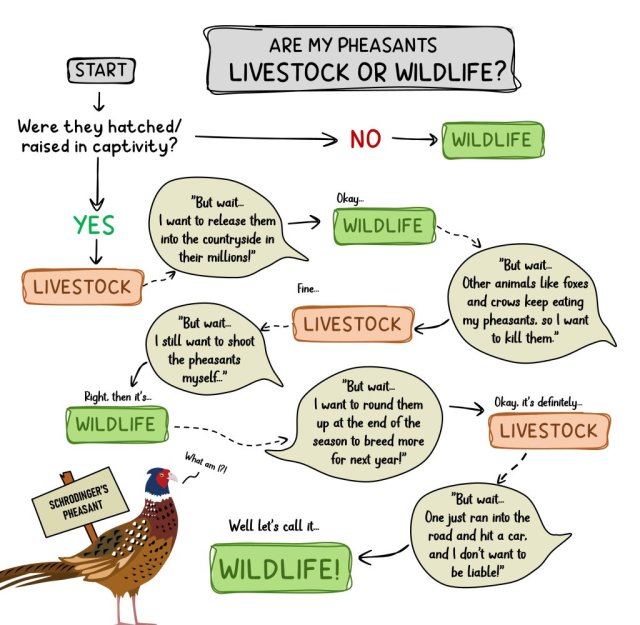
Of course it has been debated here before.
https://singletrackworld.com/forum/off-topic/grouse-moor-licencing-scotland/paged/19/
I have seen more and more deer farms in Scotland.
This is the issue - we need to be eating wild venison but there are a load of issues with wild deer being malnourished (as there are too many of them) and not in a veterinary chain.
I agree. We need to eat our way through about 75% of UK deer, and remove any urban dwelling cervidae.
I agree. We need to eat our way through about 75% of UK deer, and remove any urban dwelling cervidae.
I was up by loch hope yesterday - interesting to see some reforestation on the west bank. I couldn't see fencing either. I( must say tho the progress seems slow at times the landscape of Scotland is slowly changing with more tree growth of native trees, more birds of prey and more wildlife tourism. 50 years I have been going into the highlands and its changed significantly
more wildlife tourism
I'm sure someone has posted this up somewhere before, but it would be really interesting to see the economic balance between shooting and wildlife tourism. I'm sure I saw something somewhere that said the latter employs far more people and brings in more income...
I did read that wildlife tourism is worth 5 million a year to Mull and that was a few years ago
Trouble is you can charge thousands to fish or shoot things but folk will not pay that much to go look at animals - so you need many more of them.
I'll bet tho wildlife tourism is increasing and brings in good money while blood sports are decreasing.
One of our neighbours is a keen nighttime shooter and drops us off a big hunk of deer periodically so we are lucky, but the whole point of venison for me is that its NOT farmed.
We need less deer and in the absence of any other predator we might as well eat them. The regen in Glen Feshie is great to see but I do miss some of the bleakness of hills in my past
we might as well eat them.
I'm trying my best 😂
Sausages from the Nethy butcher last night were awesomes and I've a chunk of diced venison for a chilli.
Trouble is you can charge thousands to fish or shoot things but folk will not pay that much to go look at animals - so you need many more of them.
The money gets spread around a lot more for eco-touism. Shooting is *big money but it all goes to a handful of estates only. In terms of economic activity, shooting is a drain.
There's much more detail here: https://www.theguardian.com/books/2019/may/18/rebirding-rewilding-britain-and-its-birds-benedict-macdonald-review
*not even a rounding error on the national spreadsheet tho!
One of our neighbours is a keen nighttime shooter and drops us off a big hunk of deer periodically so we are lucky, but the whole point of venison for me is that its NOT farmed.
We need less deer and in the absence of any other predator we might as well eat them. The regen in Glen Feshie is great to see but I do miss some of the bleakness of hills in my past
You don't need to go far for bleak. The Monadhliaths have it in abundance. I was there a couple of weeks ago. Hundreds of deer in the upper reaches of the Dulnain River. It is an artificial landscape though caused by over grazing.
The likes of Feshie, Alladale, and Mar Lodge etc are very much the minority.
I'm sure someone has posted this up somewhere before, but it would be really interesting to see the economic balance between shooting and wildlife tourism. I'm sure I saw something somewhere that said the latter employs far more people and brings in more income...
I don't have access to the numbers but I did have an interesting conversation with someone involved at the policy level for deer management in Scotland. He told me that for lots of estates the value doesn't lie in the fees charged for the shooting/fishing/etc but with the soft power that hosting these things affords. My interpretation of what he was saying is that taking some rich dude somewhere remote, letting him feel like he's good at hunting* then sitting down for a whisky with him is a pretty good way to get someone on your side in a business deal.
I'm sure hunting estates do have some local economic benefits but from what I can tell most of the money involved gets nowhere near rural communities. I'm definitely not smart enough to know what the solution to this is but it's clear to me that the land ownership situation in Scotland isn't doing much for the people who live here.
* I don't think any of the animals on shooting estates have been chosen because they present a challenge to shoot at.
keen nighttime shooter
Is it his delight on a shining night, in the season of the year?
Yes it is 🙂
I don't think any of the animals on shooting estates have been chosen because they present a challenge to shoot at.
That's certainly true. Anybody who has tramped over our moorlands will know that the average grouse just waits until you are almost on top of it before jumping up and shouting "shoot me, shoot me". You have to deliberately position yourself further away and get somebody else to flush them out for you to make it even vaguely sporting.
Not really sure what I think about estates to be honest. As long as I'm allowed access to them (including all those lovely paths they've made) I'm generally happy to let them get on with managing the land as they see fit. There are lots of aspects about it that I'm not so keen on, but if granting access to the great unwashed (i.e. me) results in lots of people complaining about how you manage the land then I guess you aren't going to be very willing to allow access. I interpret the land reform act as giving me access to the Scottish countryside on the understanding that I don't interfere with the landowner's management of it for commercial gain.
Getting back on topic, I suspect the positive results seen in Glen Feshie will do more to persuade landowners to change their practices than anything else really, so it's good to see that it seems to be working well.
I'm generally happy to let them get on with managing the land as they see fit.
draining burning and killing all good with you?
It might be worth saying that we're starting to see access restrictions requested in areas where peatland restoration is underway, so it's not always the case that a change of use away from sporting use to ecological improvement is good for leisure users.
more wildlife tourism
I'm sure someone has posted this up somewhere before, but it would be really interesting to see the economic balance between shooting and wildlife tourism. I'm sure I saw something somewhere that said the latter employs far more people and brings in more income...
I cannot relate to any national or academic study of such things.
But I can say that my old outdoor centre had 16 full time and 6 part time permanent staff, and 2 full time seasonal staff, spent as much of our budgets as local as possible from food to outdoor kit to vehicle servicing, rented 4 houses locally for staff, and donated time out of season to local youth, children's and adult work. Plus of course staff spending money at the local outdoor kit shop, renting more houses, servicing more cars, buying at the co-op and more. We turned over £1.1m a year, and a really significant proportion went into the local economy between a couple of villages.
The hills and rivers we used to walk and paddle employed a similar number of gamekeepers and farmers. I could not tell you what their turnover was, but I do remember emptying a whisky bottle with a local farmer one night and discussing his stalkers had brough it £350 that day to him, but my 60 primary kids who had kept off the hill brought in £4k....
I would also say that renewables will have bigger impact that tourism for many.
Again, my old centre installed two hydro schemes in Ardgour - income of £400k+ annually on an estate where the shooting rights were in the few tens of thousands a year and rent for the old manor house (our outdoor centre) was peppercorn. In a 'village' that had less than 20 people living there.
Glen Lyon (longest, loneliest and loveliest glen in Scotland...) has 13 micro to mid-size hydro systems, with the largest forecast to bring in just shy of £1m. Glen Lyon has a population of around 100 people in total, and the farm with the £1m income scheme cannot have made anything near that from farming and renting out shooting rights to managed-estates...That will slowly be transforming the economics of that glen.
Hunting, shooting and fishing and some upland farming, and as an output bare hills, is rarely about maximum profit. It is a complexity of income, cultural and historic issues...
Interesting points. I hadn't thought about peatland regeneration requiring people to be excluded for a while but I guess it makes sense. There are certainly a lot of wind turbines being installed on estates over this side, which must change the economics somewhat. Don't know whether they add much to the local economy but someone has to service them all I guess.
Hunting, shooting and fishing and some upland farming, and as an output bare hills, is rarely about maximum profit. It is a complexity of income, cultural and historic issues...
Indeed. That's why I say I'm not sure what I think about it. Plenty of things trouble me but I try to avoid commenting on stuff that I don't really understand. Although obviously I have to bend that rule sometimes otherwise I'd never post at all 😀

