Neat - thanks for sharing
Aye, very good article that.
Kinda pisses on poles chips, eh?
Good article! The best bit (kinda missing the point) is the pic of the carbon mtb frame with all of it's constituent carbon fibre parts laid out around it....amazing stuff!!
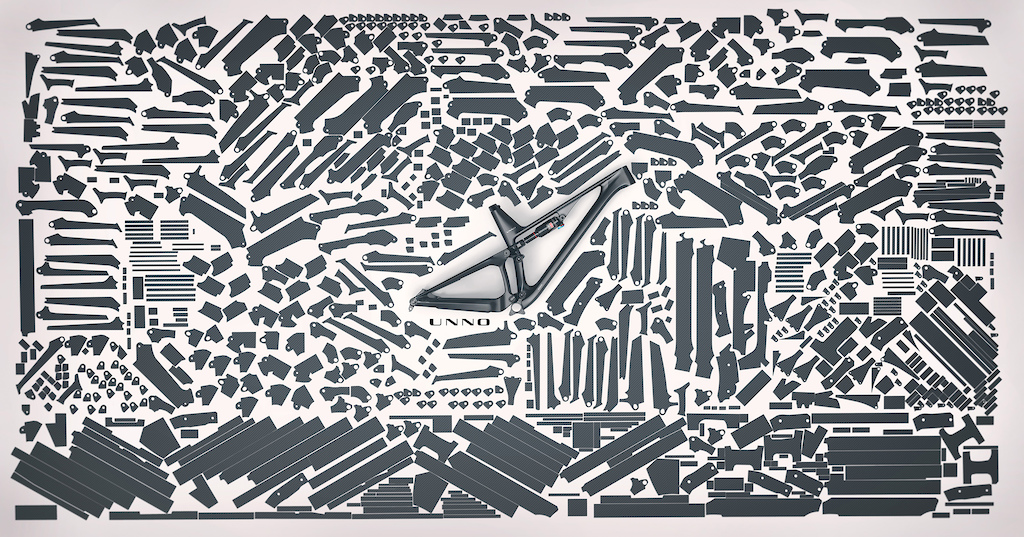
Nice to see the MTB media doing stuff like this, even if it begged a couple of questions that it didn't answer...
1. What's the proportion of freshly extracted vs recycled alu used in the typical bike frame?
2. What about decent cro-mo?
Great to get some perspective on this from someone without an agenda to push (although I did feel a little CF bias).
I can't help but think though that the best approach from an environmental perspective would be to build frames that last and have standards that are backwards compatible to encourage riders to keep their frames for longer. But I guess that doesn't help sell new bikes.
Thing is, you can recycle a steel and aluminium frame once you're done with it.
Once you've claved your CF, it's useless as anything else, and can't really be re-used .
"Thing is, you can recycle a steel and aluminium frame once you’re done with it.
Once you’ve claved your CF, it’s useless as anything else, and can’t really be re-used ."
Did you read the article?
‘Thing is, you can recycle a steel and aluminium frame once you’re done with it.’
Given that (from the article) you get >$7 for recycling a frame, I’m guessing most wont bother...
Once you’ve claved your CF, it’s useless as anything else, and can’t really be re-used .
Sure, but a CF frame is made from a couple of kilos of oil. Throwing away a CF frame probably uses as much oil as driving a 50 km round trip to go riding (more like 20 km if you drive a Land Rover Defender). There are plenty of cyclists who don't own cars, but the are plenty more who use trucks or helicopters to do shuttle runs. That's much more wasteful than trashing a CF frame every few years.
Being environmentally friendly or "green" can mean different things, all of which can be valid, as the motoring business has been learning in recent years with its CO2 vs NOx problems. But, be it bike, car or vacuum cleaner the best option is often to keep the one you've got, regardless of its emissions or electricity consumption or out-of-fashion wheel size. Unfortunately my "new" bike is ten years old and buying a new rear shock should have cost a sixth of the cost of a new bike, and finding other bits can be difficult. Obviously none of this means anything to those who change bikes every couple of years.
Hols, true, but these riders would still do that whether they ride a carbon or alu frame, so it’s a bit of a moot point isn’t it?
Great read!
Has actually changed my view on CF production somewhat, I just hope that the factories using the stuff are actually following good practice for disposing of waste - but that can be said for any factory, using any material.
I thought that hemp/ flax would be the next thing...
we make R&D parts from hemp and flax , has less stiffness
you think dumping a few tons of frames is bad ? the potliner for an aluminium smelting furnace is made of carbon they weigh around a ton some facilities have 700 pots the potliner used to just get dumped ( well it was before it was noted that they are I credibly toxic , cyanide and fluoride Iirc there are entire areas of Australia that the water table is pretty ****ed due to dumping spent potliners ) can't remember what happens to the butt ends of the carbon cathode that goes into the pot but again it uses a lot of carbon.
so aluminium uses a ton of carbon to begin with
Did you read the article?
Afraid so, I know it gets burned and chopped down, did before I read the article, Ali and Steel can be re-purposed as source material again, the shavings from Pole's CNC process can be re-purposed as new billets to make more frames, and it doesn't need to come from a massive hole in the ground.
Steel is very similar. OK, you might not get a lot for your old scrap frame, but if it ends up on the heap with a load of other frames, what do you think happens with that material?, it gets smelted down again and becomes potentially, another bike.
I'm an odd one, I like steel bikes that are built to last a bit and tend to hang on to stuff for ages. CF frames don't come across to me as built to last, they're definatly more difficult to repair too., but repairs don't sell bikes I guess.
My 2017 Kona Unit will still be with me a good few years down the line, and it'll still ride like it did when I got it for the most part.
My Orange AirO I bought used, and upgraded with used parts.
My charge plug 3 (2015) still rides like it did when I got it, granted, I've had a few cassettes, tyres and chains, but that's about it.
I've even got a Raliegh Solitaire from the 1970's, and a RoadRunner, they're still usable servicable bikes.. Sure you won't thrown them down a trail any time soon, but as I don't ride in competition, that's not important to me.
The Carbon is more green argument doesn't hold water with me, sorry :).
It's a great material for making a light bike for competition, but it's not what I need. I did consider a Chinerbike frame of some sort a while ago, and I flirt with the idea of Carbon components, but my bike weights less than I could loose, so I'd rather have less pies than spend the money on a svelte rocket.
I recognise I'm a bit niche in thius respect.
fascinating stuff, and the comments section underneath is really, and I mean really, heating up
the comments section underneath is really, and I mean really, heating up
Have they descended to "chickenshit poltroon" yet?
Those Pivot Cycles layup workers need to be wearing latex gloves. Sensitisation to epoxy resins in prepreg isn't nice....
'they’re definatly (sic) more difficult to repair too.'
Are you sure?
I'm intrigued by his recycling prices where aluminium cans have a higher value than clean unpainted scrap (offcuts, swarf, start and end of extrusion runs etc). I presume it is because they are a "known" alloy composition - cans are most definitely not clean as they have all manner of internal coatings - epoxy, polymer etc, tailored to whatever the can contain (coating and beverage have to suit each other to avoid massive corrosion or contamination problems).
Great article.
The point I took from it is that consumers choosing carbon vs alu vs steel vs whatever as a material for bike frames, and the environmental impact/sustainability of this choice is a total non-issue.
They're all quite bad, and if sustainability and the environment was our number one priority, recreational cycling would go on a list of stuff we wouldn't do, along with a load of other stuff that many of us are not going to stop doing either. For example flying on holiday, eating meat, being forced to travel to the office/meetings for no reason, excess packaging, clear felling rainforest for beef or avocados etc etc.
Pick your bike based on other reasons. Enjoy it. There are decisions you make elsewhere in your life that will make a bigger difference than what your bike frame is made from.
All that being said, it'd be better if there was a bit more transparency regarding which manufacturers and factories were pursuing better recycling programmes etc.
And stop with the excess packaging. This does my head in. Just received a Race Face stem which was in two boxes. What for?
[b]hols2[/b] wrote:
Once you’ve claved your CF, it’s useless as anything else, and can’t really be re-used .
Sure, but a CF frame is made from a couple of kilos of oil. Throwing away a CF frame probably uses as much oil as driving a 50 km round trip to go riding (more like 20 km if you drive a Land Rover Defender). There are plenty of cyclists who don’t own cars, but the are plenty more who use trucks or helicopters to do shuttle runs. That’s much more wasteful than trashing a CF frame every few years.
The other point which doesn't seem to have been mentioned is that from an environmental perspective the carbon in a frame is locked in, rather than released as CO2 into the atmosphere.
That's even assuming the CF in the frame isn't recycled, which is the article points out it can be.
[b]mick_r[/b] wrote:
I’m intrigued by his recycling prices where aluminium cans have a higher value than clean unpainted scrap (offcuts, swarf, start and end of extrusion runs etc). I presume it is because they are a “known” alloy composition – cans are most definitely not clean as they have all manner of internal coatings – epoxy, polymer etc, tailored to whatever the can contain (coating and beverage have to suit each other to avoid massive corrosion or contamination problems).
I think the difference is that the alu can easily be separated from the coatings - I presume you just melt it and anything non metal separates or gets burnt off - at which point you have pure alu (if I understand the article correctly alu cans are pure alu rather than any sort of alloy - it makes sense as an alloy would be more expensive). It's not so simple to separate alu from any alloying components.
The other point which doesn’t seem to have been mentioned is that from an environmental perspective the carbon in a frame is locked in, rather than released as CO2 into the atmosphere.
Yup, but for that 2kg of 'plastic' how much oil was burnt at the refinery in making it?
The point is still moot though, you burn more driving from London to BPW than is in the frame.
It does help debunk a few myths about both materials doesn't it!
As a sport we're not anywhere near as enviro-friendly as we sometimes think, what with driving to the middle of nowhere to go for a ride, uplift services and our collective addiction to the latest bit of shiny tech but we pale into insignificance compared to football! All those fans driving to all those games every few days is much more damaging. We should improve but we need to keep a sense of perspective here.
CF frames don’t come across to me as built to last, they’re definatly more difficult to repair too
"Come across" ? Not much of a basis to argue from. Given they don't fatigue or corrode like alu frames do, I'd expect them to last a long time. My road bike is 11 this year.
Also hearing lots of good things about carbon repair.
Given they don’t fatigue or corrode like alu frames do, I’d expect them to last a long time. My road bike is 11 this year.
I'm not sure I'd trust a carbon frame that old.
[b]hols2[/b] wrote:
I’m not sure I’d trust a carbon frame that old.
Did you even read the article? I'm not sure I'd trust something that old which corrodes...
Yes, I read the article. This part seemed noteworthy:
Mr Contarino said there were some things people could not pick up unless they were looking for them. He said a comprehensive internal scan was the only way to pick up all the cracks in a bike frame.
“We use a penetrating dye that is UV fluorescent— with carbon fibre you don’t see all the cracks without fluorescers,” he said.
He advised people buying second-hand carbon fibre bikes that getting an expert to check it was worthwhile and said the process was far simpler for aluminium bikes.
“If it’s aluminium you need to look for dents and bends. If it has got dents underneath the top tube don’t buy it,” he said.
[b]hols2[/b] wrote:
Yes, I read the article. This part seemed noteworthy:
He advised people buying second-hand carbon fibre bikes
In relation to not trusting carbon frames due to age?
I suspect our mileage getting to trails substantially supersedes any difference in materials.
If the environment is truly your concern, you probably need to turn off your computer, your lights, quit biking/driving, stop eating anything from a shop. Do your bit but society needs to overhaul how we do things
road.cc did an article last year along similar lines except not nearly so well researched and they came up with the classic line about "if your steel frame breaks you can just get it welded at yoyur local blacksmith..."
I pointed out that I didn't have a local blacksmith but I did have two excellent carbon fibre repair shops within 5 miles of me. One of them has even done some "under the counter" repairs for pro riders - when it's not worth going through the team to get a new frame and can easily be patched up, he's fixed all sorts including full tube breaks. When he's finished you can't tell it was ever broken.
That's a really good article, thanks for the posting the link.
"As a sport we’re not anywhere near as enviro-friendly as we sometimes think..."
But what sport is?
It's a tempting argument that people that do outdoor sport and appreciate the outdoors are better placed to educate others in the damage that we, as a single entity, are doing.
In the bigger picture articles like this are merely a way of leading the charge.
It's an interesting article. Although I think I've read fairly similar arguments before.
A few things aren't right in it. There is an implication that bikes being sold on 10+ years after they were made is a bad thing. It isn't is it. It's re use ahead of recycle.
To me the elephant in the room is tyres. There will be plenty of bikes sold today where the tyres weigh more than the carbon frame. I don't know exactly what the environmental impact of rubber is but I can't be far from carbon weight for weight. Even people who dabble like get through more tyres than frames. A quick google suggest that the UK can't recycle bike tyres (plwase tell me I'm wrong). So the article is a bit of a red herring really.
I expect road cycling is way lower impact than mountain biking. Based on lower miles transporting a bike and lower weight tyres.
Of course anyone who genuinely replaces car miles with bike miles is in another league of goodness
I don't think we should all feel bad about this. But we should probably all be aware of the impact we are having and be sensible about minimising our impact. So when something reaches the end of its life we make sure it does got for recycling