UPDATE: CLASSIFIEDS section refreshed, redesigned, searchable: Go take a look
I found this little stone the other day, it's only about 4cm across and it has this unusual crazing on one side. Does anyone know what might have caused it?
The other side is just plain blacky-grey...
[URL= http://i755.photobucket.com/albums/xx198/V5C/Stone_zps8zatkycs.jp g" target="_blank"> http://i755.photobucket.com/albums/xx198/V5C/Stone_zps8zatkycs.jp g"/> [/IMG][/URL]
marks left by algae?
That's very strange! Whereabouts did you find it? Looks a tiny bit like a flint nodule? Perhaps geology doesn't hold the answer though - what about algae?
A bit of charcoal that didn't quite light properly?
Its definitely rock and not a bit of tar?
It's definitely rock, hard and heavy. I found it in the River Ribble, Lancashire.
The stone is similar to a lot of the shale bed - a mix of slate, millstone grits and granites...
Looks like a very small scale version of pillow lava (if it seems igneous?), otherwise might be de-watering structures if sedimentary. Alternatively, it could just be marks from something growing on it...
One of the royal family's been shedding their skin?
It could be igneous, but it was in a river so it's worn quite smooth. The colouring 'appears' to be the actual rock, although it is only on one surface.
It's quite attractive colouring, even more so when it was wet which is what made me pick it up!
I reckon the patterns are created by the roots of a plant that've grown down inside a crack. Maybe the one side fell off, and the unexposed bits weathered or grew algae, then that half eventually fell off into the river as well.
I assume it's public so I'm going to share it on FB for my sister (who's a geologist)
Cheers Molgrips! Your theory sounds plausible, but I would have expected the stone to have appeared more sheered or cleaved had that been the case.
Unless it was a harder inclusion in some sedimentary rock and the patina formed after it had worn smooth...
Looks like algae or plant growth to me (I pretend to be a geologist)
I have a geology degree.
Geology rocks
That's one of the seals of the Dark Lord's prison, soon He shall be free!!1!oNE!
Looks like it could be alteration by fluid moving along a weakness in the rock, but funny how it seems to go over the rounded edges. Also it doesn't look very slate like in its weathering, slate doesnt normally get rounded like that, it usually breaks along its cleavege and ends up pretty jagged.
It's part of a broken Septarian Nodule, rather a flattish one I'd guess...
https://en.wikipedia.org/wiki/Concretion
... scroll down a bit. The inside of a hard lump shrank and cracked, and more stuff filled the gaps, all because of stress and chemistry. R. Ribble - Carboniferous shales - probable source.
Nice rock.
Mud cracks (from drying out) in the shale filled in with sand.
I'm with either SOG or Molgrips. More SOG.
Well, if ever there was going to be a winner, I think it would be Slow Old Git's Septarian Nodule!
Thanks very much for that, I'll print it off so I can give it to my nephew... He's obsessed with stuff like that!
Cheers SOG! 🙂
Looking at it more closely, it makes far more sense than algal growth or roots - the shapes roughly follow the 5-sided form you get when rocks cool (Giant's Causeway) or when mud shrinks as it dries...
[img] 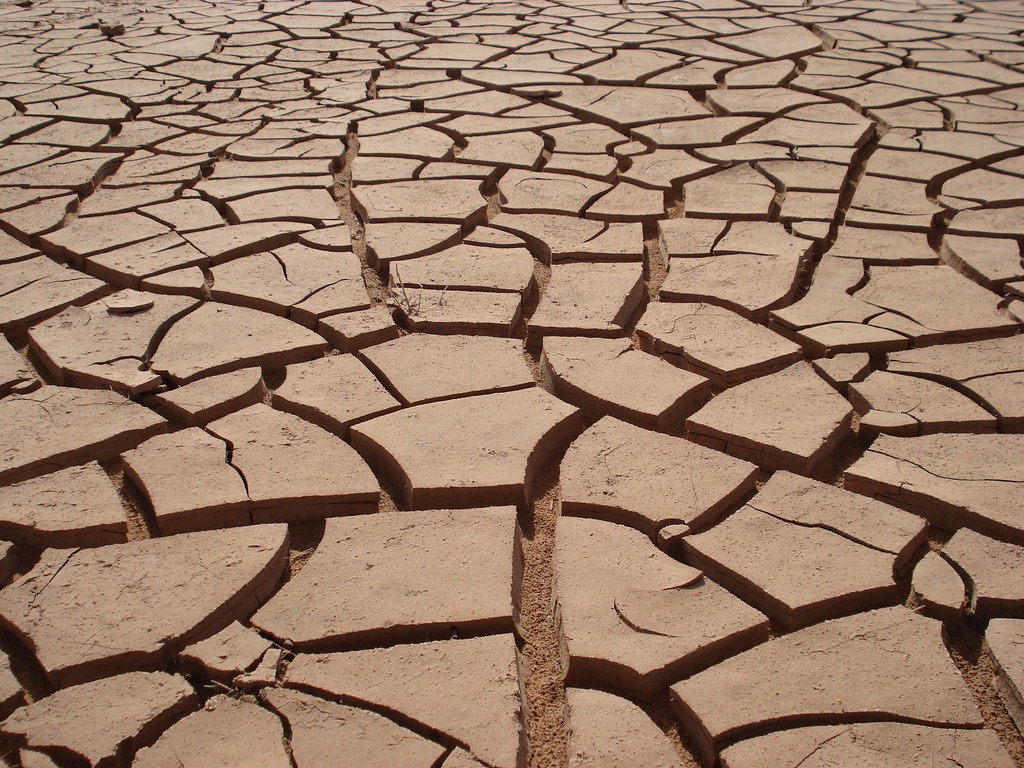 [/img]
There's a resident geologist at Clitheroe castle if you are ever in need of rock advice. A Scottish lady.
Ooh, I'll bear that in mind - I'm often in Clitheroe... Thanks!
I was thinking of some material drying out and cracking, followed by more, different material flowing into the cracks and solidifying, then I got to sog's post, which confirmed my suspicions, along with a proper name for it; cheers for that, it's always nice to know there's a proper name for something as odd looking as that rock. 😀

