When Alpkit went into administration back in January, plenty of us feared the worst for one of Britain’s best-loved outdoor brands. Six months on, it’s set out how it plans to rebuild – and it’s a good deal more reassuring than that winter headline suggested.
Alpkit today confirmed the shape of the restructure that follows the investment which rescued it in January. The short version: new leadership at the top, a deliberately simpler business, a tighter Sonder bike range, and a store estate that comes through largely intact.
Start with the shops, because that’s where the human story sits. Of Alpkit’s ten UK stores, two – Inverness and Ilkley – will close later this summer. The Kingston store is set to relocate to new premises in the same area, and the remaining seven stay open and get money spent on them: refreshed layouts, locally curated ranges and better merchandising. The company says it’s still on the lookout for new sites, too. For a brand that was staring down administration six months ago, keeping seven of ten stores open and reinvesting in them is not a bad outcome at all.
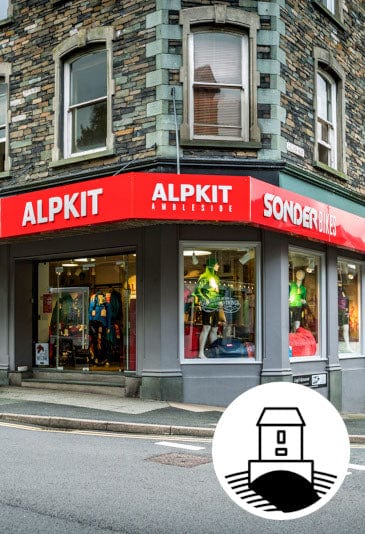
It won’t feel that way to everyone, though. Two closures means real uncertainty for the teams at those shops, and that’s the sober note beneath an otherwise upbeat announcement. Our thoughts are with the staff affected.
On the money and the boardroom: the investment came in January 2026 from entrepreneur Jeroen van den Berge, who has since taken the role of Executive Chair alongside Alpkit’s original founders. “The decisions we’re making today are about taking lessons from the past and building a stronger business for the future,” he said. “We’ve focused on what Alpkit does best, creating a business that’s simpler and financially stronger.”
For Sonder, the bit closest to home for us, the plan is to concentrate on its strongest adventure bikes and retire the lower-volume models, freeing up investment for new metal. There’s “an exciting new gravel bike” promised for later this year, which we’ll be keen to throw a leg over. Elsewhere, Alpkit launched its first footwear range earlier in the year, rounding out a genuinely head-to-toe kit list.
Co-founder and MD Nick Smith framed it all as a return to first principles. “Some people felt we’d tried to do too much, too quickly, and had drifted from the focus that made Alpkit special,” he admitted. “Every one of those decisions has been guided by a simple principle: getting Alpkit back to doing what it does best… Our mission hasn’t changed.”
Our take: It’s a familiar arc. A much-loved brand expands hard, hits the wall, then trims back to what it’s actually brilliant at. The “Go Nice Places, Do Good Things” ethos, the direct-to-consumer value pricing and the 1%-of-sales Alpkit Foundation all survive. If the restructure does its job, this looks less like a retreat and more like a brand adapting to a brutal retail climate with its identity – and most of its footprint – intact. Alpkit’s a long-standing favourite around here, so we’ll be watching to see how it plays out.



That’s an understandable response but dealing with business failures has been my day job for nearly 30 years.
For avoidance of doubt and before writing anything more I have no involvement in the Alpkit situation.
The hard reality is that in most/many cases more creditors in number lose out and by far more in total value if you close the doors. In general terms as I can’t quite recall how the Alpkit deal was done and I can’t be bothered to read the report again to remind myself.
Assets are worth less on removal and sometimes need to be abandoned completely as uneconomic to sell
You’ve not got any support in addressing issues because the staff and infrastructure are gone
A close and remove strategy costs a lot. Insurances, rent, utilities, agents, auction fees, security issues, waste clearance, unoccupied premises code of conduct, H&S risk management (and I’ve seen some real screamers left behind there)
A TUPE transfer (I think there was one here) saves jobs and saves the state a massive whack on step in payments to former employees
The property leases end, which often causes huge landlord claims once you apply the accepted principles to valuing them
Suppliers lose a customer (plenty of times I’ve heard – we will never deal with these ****s again and then find out in a phone call a few weeks later that they are in fact dealing with them again after all).
From a regulatory perspective you’ve actually got to be able to demonstrate you’ve assessed this stuff and backed it up with evidence and analysis. If you’re selling to a connected party there are further safeguards.
I hope they survive, but I think they need to rethink their products and market position. As others have said their success was based on decent kit as good prices. Sad to see ilkley going, but I can’t remember the last time I bought something from there. I guess I’ve moved on to other brands.
I thought the Trakke bags were completely out of sync with the brand.
Love my signal ti, but I bought it from their eBay site.
I’m another would-be customer who wanted to buy from Alpkit but got so confused by the product range that I gave up and went elsewhere instead.
I suppose you’ve gotta spin some story to flog a £300 bag.
I expect I’d really love one if I’d one had one in my hand but the reality is they couldn’t make it work for ever.
Being harsh a high quality bag is nice but there’s a lot of bag makers in that market.
I like a quality product and appreciate the construction but the whole heritage BS always does my head in, a good product doesn’t need a story.
I worked in a shoe factory now obviously a housing estate with shoe type road names because manufacturing sucks.
The Trakke bag thing just makes me think that the folk at the top of Alpkit aren’t living in the same world as their target customer base and that they completely lost sight of why they had customers in the first place. Have lessons really been learnt? I guess time will tell.
I have a fair amount of Alpkit stuff but it was all bought in the early mail order days. It was decent, not ground breaking but above all , cheap, £80 for a hooded down jacket etc. Now it seems to be decent not ground breaking but expensive, not a good business model. The shops weren’t a good idea, you need too much stock as well as all the costs involved in maintaining bricks and mortar. As many have said they need a simpler product line at a lower price point. Once you have positioned yourself at the cheaper end of the market it is very difficult to upgrade to being a premium product
While bags like Crumpler exist I can’t see the value in a £300 bag. I bought a Crumpler laptop bag probably 20+ years ago now to carry my G4 Macbook Pro. I still use that bag daily and the only thing wrong is one of the buckles, which my dog chewed, has broken! Crumpler have more ‘heritage’ too!…
https://crumpler.co.uk/products/dinky-di-messenger-16-classic
The bag/every day carry (I feel sick after saying that) scene is worth $10 billion a year with growth of 10% to 15% a year, if you can capture a minuscule amount of that growth using a story, heritage fabrics and build quality then you will do well.
I bought mum a wee trakke shoulder bag a few years ago and she loves it, the fabric is eventually starting to wear in nicely
My crumpler wonder weenie was bought around 2004 (ish) ad I never leave the house without it…its a bit worn and patched up on the bottom and inside – its no longer dark blue, the velcro on the flap doesn’t work anymore and I found out if you place it on a hot stove it melts.
I’m perfectly happy with it, absolutely no intention or desire to buy anything else. You can age it with the mountain biking uk velcro watch strap on the shoulder strap
[img]
My £50 Delta was similarly poor QC – inner was about 3cm too long and high. Cracking wee tent that I used a lot after some needlework on the inner..
https://flic.kr/p/eeRjpV
I’m pretty sure my delta is still in the attic, I only used it a few times as the condensation ran down the inner where it made contact, I bought a terra nova solar which to fair wasn’t that much of an upgrade but was light for weekend biking trips
I actually sent them an idea a year or two ago, but they’ve done nothing with it.
Along the lines of their “Go nice places, do good things" mantra I suggested an ‘adventure’ take on a triathlon short. Basically a lightly padded short that has got enough padding to take the edge of cycling but works for running/hiking and swimming too. The idea being that on mega days you put them on; ride, hike or run to somewhere to have a play in the water and then go back all without the need to get your kit off. A mesh pocket or two to hold stuff like your phone or gel and made of a quick dry material. Maybe a little bit ‘lycra’ for some of you but there is a market for it I reckon. I use my old triathlon shorts (they seem to be disappearing as a thing to buy) to run (sort of) over Cairngorm to have a dip in Loch Avon and back. It feels a very ‘Alpkit’ product to me.
Also sent them a photo of their exo-rail (seatpack support thingy) that I tweaked with a TIG welder to work with a dropper post. Again – no reply.
I forgot this one earlier when I said they’d not had any innovation – the element wetsuit idea was good…a recreational swimming wetsuit that’s not as hardcore racer as a triathlon wetsuit but a lot more utility and easier to put on on your own. Perfect for ‘wild swimming’. I see they are now in the clearance section so what do I know!!!!
Good example. When the Element kit was launched, Mrs S and I went to look at/buy it for our open-water swimming as it looked ideal. The Inverness shop had none and couldn’t tell when they’d be receiving any. Online had a very limited stock and nothing in our (very average) sizes. I opted for an in-stock email which was about 9 months later by which time we’d bought other kit.
I have a friend who is an outdoor clothing designer, pretty much any genius idea I’ve thrown at her, she’s dismissed as basically being ‘too niche’ for commercial production.
I love ME, their shell jackets are, ime, the best out there including Arc’teryx – I think their block has gone uber wide in the shoulders in the last few years, ME’s alpine cut is just excellent, close fitting without being restrictive.
I think one of the issues with Alpkit is that their stuff is patchy. Some of it is genuinely good, the Katabatic Jacket for example and the Morphosis Hoody, and their top-end mountain shell for the price, but some if it is just a bit meh. With a brand like ME, you can be pretty sure that the entire range is at a level, with Alpkit some of it is actually good, but some of it really isn’t, so you’re never 100% certain it’ll do what you want it to.
Like my ‘ideas’ for bike clothing : ) I had a sleeping bag design sampled by PHD ages ago and they made some for sale (I still use it) but the jacket/layer system idea wasn’t a goer there or the other 2 places I’ve worked that have bike clothing lines. Maybe now long distance racing and bikepacking is a bit more mainstream it would work. I’d buy it but that’s almost the stamp of ‘a bit niche or odd’.
Good to see Alpkit on track though. I was a bit concerned by the scale of things but took it as a sign things were going well. A more concise range seems wise – maybe using the UK manufacturing to have more options for colour etc but fewer basic designs. Better to explain why the 2 or 3 things you have cover the full range of needs/use than keep splitting differences hoping we find what we want.
She clearly doesn’t work for Alpkit