Avinox talk the torque. The debate rolls on.
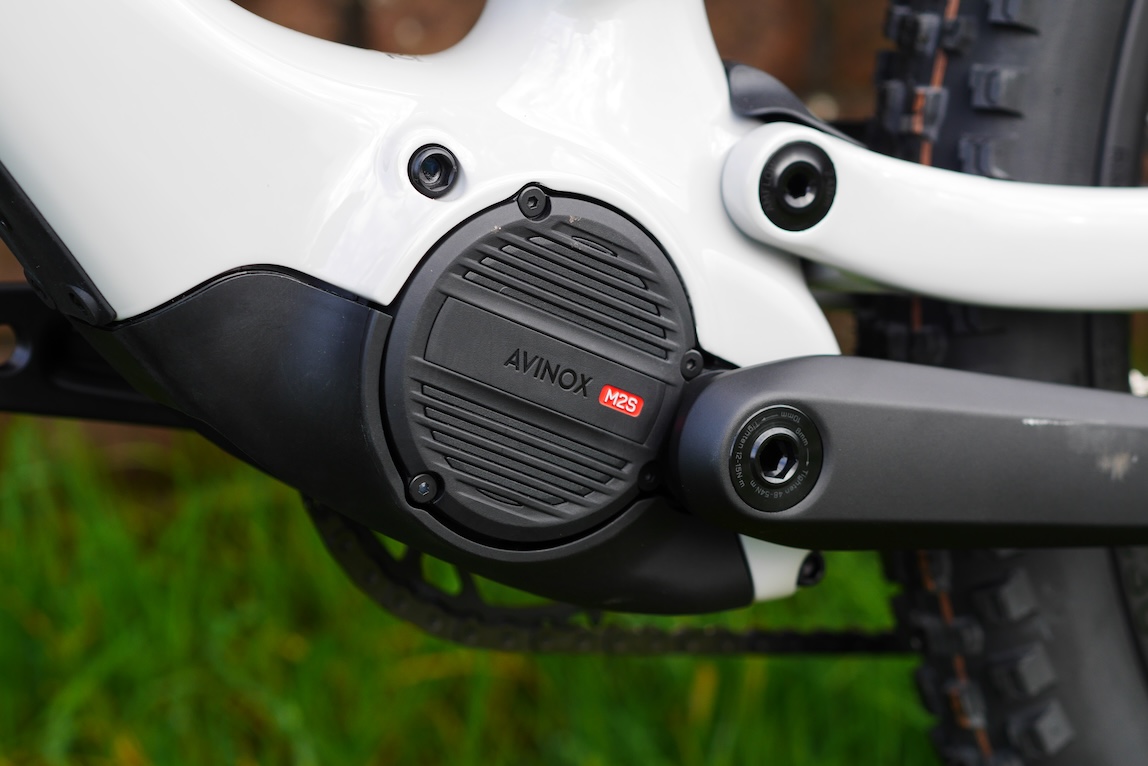
Avinox Pursues Power with Purpose
Avinox reveals its philosophy and makes the case for more power in mountain biking
In mountain biking, power is often misunderstood. For some, higher motor output raises concerns about safety, trail impact, or component wear. For Avinox, power is not about excess, but about possibility. Power can help more people ride farther, climb steeper, and tackle terrain that might otherwise be out of reach.
Our approach to power is rooted in a simple principle: technology should expand access to mountain biking while preserving safety, reliability, and rider control.
Power Is About Capability, Not Speed
When people hear that an eMTB motor delivers high power, they often express concerns about danger, assuming higher power also means higher speed. In reality, these are two very different things. Speed is what ultimately determines safety risk. Power is the force that helps riders accelerate, especially at low speeds and in demanding situations such as steep climbs, technical ascents, and navigation around obstacles.
Avinox systems comply fully with all applicable speed regulations, and we strongly support the implementation and enforcement of speed limits. That means our high power output is not designed to make riders go faster than allowed. It is designed to make difficult terrain more manageable. Whether it is clearing a rocky ledge, climbing a steep incline, or helping a less experienced rider maintain momentum, more power can make mountain biking both easier and safer.
Safety Is a Function of Control
Any bicycle can gain significant speed on a descent, whether it is powered or not. This is not unique to eMTBs. The safety challenge in mountain biking is managing speed, maintaining traction, and giving riders the confidence to overcome high-resistance obstacles in complex terrain.
Avinox focuses on delivering power precisely when it is needed. Our intelligent assistance algorithms provide smooth, predictable support that helps riders maintain control in various situations. In many cases, more available power improves safety by reducing the likelihood of stalling, losing balance, or being forced to dismount in difficult terrain.
Flexible Power for Real-World Riding
Different riders face different challenges. A steep technical climb requires a different level of support than a flowing cross-country trail. A loaded cargo bike climbing a hill has different needs than a lightweight commuter.
Avinox addresses this with customizable riding modes and user-adjustable settings, allowing riders to tailor assistance – including maximum output – to match the terrain and their personal preferences. This flexibility provides support when it matters most while maintaining efficiency and control.
Democratizing Mountain Biking
Mountain biking should be accessible to more people, regardless of fitness level, body type, age, or physical limitations. High-powered systems help make that vision a reality. With greater assistance, riders can:
- Conquer steeper climbs
- Ride longer distances
- Explore more challenging trails
- Recover more easily from technical mistakes
- Build confidence faster
For heavier riders, riders with disabilities, and those hauling cargo, higher power can be considered essential, rather than a luxury. A rigid, one-size-fits-all power limit risks excluding riders who benefit most from additional assistance.
Designed to Protect the Bike
Power only matters if the system remains reliable. Avinox carefully balances performance with durability, avoiding the trap of increasing output solely to claim bigger numbers. Advanced sensors and software continuously monitor riding conditions and adjust torque delivery to protect key components.
For example, the system automatically reduces power during gear shifts, minimizing drivetrain stress and extending the life of chains, cassettes, and derailleurs. Smooth, precisely controlled power delivery also reduces wear on tires, brakes, and wheelsets.
System-Level Optimization
A high-performance motor cannot be developed in isolation. Avinox takes a complete system approach, optimizing the entire bicycle platform to handle elevated power output, including:
- Tyres
- Brakes
- Wheels
- Frame design
- Battery architecture
- Charging systems
- Software controls
This integrated engineering ensures that riders benefit from maximum capability without compromising safety or reliability.
Higher Power Does Not Threaten the Industry
Some argue that offering more powerful motors could invite regulatory scrutiny or harm the industry. We believe that view oversimplifies a much more nuanced issue. Avinox supports responsible regulation and strict compliance with all applicable laws. At the same time, we believe innovation should not be constrained by arbitrary power limits that lack a clearly explained basis.
The industry benefits when manufacturers focus on solving real rider challenges and respecting the diverse needs of users. Progress should be guided by safety, performance, and accessibility, not by assumptions that more power is inherently problematic.
Beyond Power: The Full Avinox Advantage
Power is only one part of what makes Avinox different. Our commitment to innovation is reflected in every aspect of the system, including:
- Compact and lightweight motor design
- Outstanding power-to-weight ratio
- Seamless hardware and software integration
- Intelligent assistance algorithms
- Lightweight, high-capacity batteries
- Fast charging capabilities
- Sophisticated system controls
Together, these technologies create a riding experience that feels intuitive, natural, and remarkably capable.
The Future of eMTB Performance
At Avinox, maximum power is not about pushing limits for the sake of headlines. It is about empowering more riders to experience mountain biking in ways that are safer, more enjoyable, and more inclusive. By combining high power with intelligent control, system-level engineering, and rider-focused innovation, Avinox is redefining what an eBike motor can do. Because when technology is thoughtfully designed, more power means more opportunity.
— Ends —
Where does Singletrack World Magazine stand on this?
We’ll be honest with you: we don’t know.
We certainly clutched our collective pearls when news first broke about the Avinox motor’s power numbers. We very nearly came out with a statement even (“We stand with Hans” etc). But we held off until we the actual bike arrived and we could experience it it firsthand.
And after riding the Avinox-ed Amflow PX… we don’t know what we think now.
Our initial reaction was possibly conflating “more power” with “more speed”. But the assist stops at 15mph like every other motor out there. And, crucially, the Avinox system is significantly less prone to wheelspinning/kicking up dirt than rival systems, due to its more sophisticated hardware (and arguably software).
The sole ‘problem’ we keep circling back to is that the Avinox motor’s power can virtually remove the whole ‘Type 2 Fun’ aspect of cycling. It can make things (well, climbs) very, very easy. Is this a problem for anyone other than the rider on the bike? We’re entering the weird – but still important – arena of the ‘point’ of mountain biking.
Needless to say, we shall be discussing the whole thing in an upcoming Podcast. Stay tuned.



I get that thrashing up everything in sight like a rocket must be fun on an ebike but taking the old Chicksands xc trails (not the bike park) as an example, the trails are trashed and new lines crossing the hillsides are all over the place. How long before the land owners take exception to the damage?
The future of this for me is not power, it’s lower weight and efficiency. Apply all this magical power (which is more than sufficient) into a smaller package, lighter battery, more efficient support when needed and not when not called for, perhaps even cost and maintenance reduction.
I also can see some ‘impossible lines’ on local hills and woods forming. And I also still enjoy the challenge and increased physical activity of doing it without assistance. And the cost of these things also excludes at the moment.
eBikes absolutely do have a place.
…and then a few weeks after his letter, his bosses at Bosch upped the power and torque of the Gen 5 to compete with Avinox.
I agree with matt_outandabout in that lower weight, higher efficiency, a smaller package and lighter battery is where things should be heading. Ebike batteries are “borrowed" tech though, bike companies just repackage 21700 cells made for other industries so I don’t think we’ll see any advancements in the near future.
Actually it’s not, it’s a test in an EN standard for all electric motors and the CRP test is about heat stability, +/-2 dec C per hour max when run at a certain level. If it can run at a stable level for over an hour it’s no suprise that much more power can be put out for 5-20 mins etc. I’d agree this might seem unsuitable for the use here and the e-bike standard could be improved. However the EN standard for e-bikes is intended for bike companies who are mostly component re-sellers, the motor brands are working to the more detailed motor regs. The e-bike standard just says ‘make sure the fitted motor meets the EN motor specs at 250W max CRP’. And that’s where Bosch chipped in, to say the the standard should be re-written, max output peak should be capped.
I don’t either, and RE this point generally, I don’t want to sound like I don’t care about this bc I do, but.. A lot of the trails I ride are deer tracks, footpaths etc. I’ve never had a right to ride them and it’s been that way for almost 40 years. I tend to ride solo, or with 1 or 2 others max, Rule #1 around other trail users and we don’t dig or build in the woods. No-one cares what we do, it doesn’t matter to anyone else, it’ll be free to carry on whatever. In all honesty, I don’t think e-MTBs will change access for any of my riding. And regular bikes access on bridleways isn’t going to change either. Realising it’s different in the US, but what trail access here do we think a pedal-activated 2000W MX bike that might be the Avinox 2028 model would risk? It won’t be private bike parks, might it be trail centres? I can see how e-bikes might leave new visible lines in places but unpermitted trail building has always been a risk to MTB’s image and goodwill, it’s been going on a long time and hasn’t caused any real access issues, just some PR issues.
Having been totally happy with the 565 watts and 90Nm of my Specialized Brose motors, riding with the latest Bosch motors (never mind Avinox) is becoming increasingly annoying – that’s before my mate even did the update. It only really becomes apparent uphill and I don’t know why he can’t just ride at the speed of others, but hey ho – I’ve stopped rinsing it trying to keep up with him, he just has to wait at the top
Then – “E-MTBs level up riding"
Now – the group is no more evenly paced than they were in 2005. But instead of pace being about fitness that only cost us time and energy to gain, now it’s based on something that can be packaged up and sold to us. Gotta love late stage capitalism.
I just get the feeling this power race will inevitably end in tears sometime with restrictions on bike access to trails. The vast majority of e-bike riders – Avinox or otherwise – are sensible and don’t ride like dicks, it’ll be the tiny minority that spoil it for us all.
I’m with others who’ve posted already in that I’d rather see improved reliability, lower weight and increased efficiency, i.e. the good bits of an e-bike but in a lighter package. No interest whatsoever in the MOAR POWERRRRRR approach.
Edit: my 4,000th STW post and I’m moaning about e-bikes FFS 😆
That’s been happening for decades – there are plenty of cheeky downhill sections been created by skilled riders that I wouldn’t dare attempt! But eBikes have definitely added the uphill equivalent already…. which is worse?
Me too. Most definitely. Until I couldn’t enjoy it.
I wouldn’t (would? it’s a double negative) bet on it. Battery technology is developing rapidly, and there’s aspects of batteries that are current production that are bottlenecked by development elsewhere so we’re using only a fraction of what the materials are capable of. Figure out those solutions and you’re unlocking a lot of technological potential. Certainly the Wh/kg of the batteries will go up a lot more in the next few years than I suspect motors will manage.