UPDATE: CLASSIFIEDS section refreshed, redesigned, searchable: Go take a look
Winter is approaching and I want to sort out a gallery space for the spring. The studio has glass on four sides and nowhere to exhibit my paintings so I'm going to covert a couple of barns into an exhibition space.
Leffeboy and I have set up a blog to show how the project is progressing, there is a facebook link so you'll get updates as it moves along if you click on Like
http://www.petermclarenfineart.com/Blog/GlassmountGalleryProject
[img]  [/img]
That's a fantastic building,good luck with the project.
Helping hands if required!
If you don't fill it with wood first. Is that yet another wood store at the side? You don't need to cut down every tree you know 😉
Helping hands if required!
Cheers Josh. When I get all the materials on site I'll give you a shout.
Leffeboy, when it's emptied it's toast. Holz Hausen city from now on.
That's a fantastic building,good luck with the project.
It's a crying shame I've not done anything more productive with it before now. It's time has come.
I could live in that!
The studio has glass on four sides and nowhere to exhibit my paintings
This seems to work 😉
[img]
 [/img]
No fergie?? I'm oot.
No fergie?? I'm oot.
Oh all right then....
[img]  [/img]
[img]  [/img]
[img]  [/img]
Gorgeous building.
I want to come up to Fife and run a tea room and gift/craft shop alongside your gallery 🙂
I love the fact that you just happen to have a spare building like that!
fab!
I could live in that!
I could run a bike shop in that. Though closer to Glasgow would be handy 😉
'Got wood'?
Nice shed that, part of an old estate or big farm to have such nice buildings? (judging by the arches and quoins)
indeedy lovely building
I want to come up to Fife and run a tea room and gift/craft shop alongside your gallery
We've had a massive clear out of the stables, and sheds. There is a surprising amount of room. If we could get a better estimate of how many visitors we'd get to make a bigger shop or even a tea room viable I'll give you a shout. At the moment plans are fairly modest.
Meantime my brother is setting up an upmarket galley/gift shop in Falkland next to the Palace. They have coach loads of visitors daily throughout the summer and autumn. I could pass on details of your work to him if you'd like.
The stable block was built in the mid to late 1800s by a well heeled wine merchant. Sadly for him, he died before he saw their completion. We think that the whole block would have been harled as only the door and window openings have the finished sandstone that the render would reach up to. The stone which would have been covered is much more random.
We are on top of a hill, back then, they only had spring water. Rather than squander it on the garden, all of the rainwater was captured from the roofs then canaled into a building which contains two massive tanks. The cast iron gutter than joins the two buildings in the last picture carried the water to the water shed.
And then to the third tap.
If you remember we had this discussion?
Well according to wikipedia it was common practice for rainwater harvesting to include a tap in the scullery for rainwater as the water from spring fed water supplies could be to hard.
Hill of tarvit was the house I saw it in.
FFS give that tractor a paint....
*meanders away swearing under my breath
FFS give that tractor a paint....*meanders away swearing under my breath
Classic car collectors pay a premium for that 'patinated' look.
Moont towers are awesome. I have severe jealousy.
I cleared out the south facing space and was surprised how much of the afternoon autumn natural light found its way in. The one door that was opened obscured some but in summer much more will flood in directly for more of the day. Certainly that is my experience with the studio on the other side of the woodpile.
The challenge ahead is that the floor slopes in two directions. To maximise the window area the floor needs to be as low as possible. I will have to lift some of the cobbles to lower the floor at the high corner. As much as I like the texture and mellow colour of the lime plastered walls, hanging pictures against them may be tricky.
http://www.petermclarenfineart.com/Blog/GlassmountGalleryProject
[img]  [/img]
[img]  [/img]
[img]  [/img]
Would you have any damp problems with the building and the art work displayed? Just thinking out loud really.
Shame the Fergie hasnt got a banana front end loader, got a watercress farmer down here who has 8 of them that are still used daily. He would pay good money for one.
Top progress
[img] 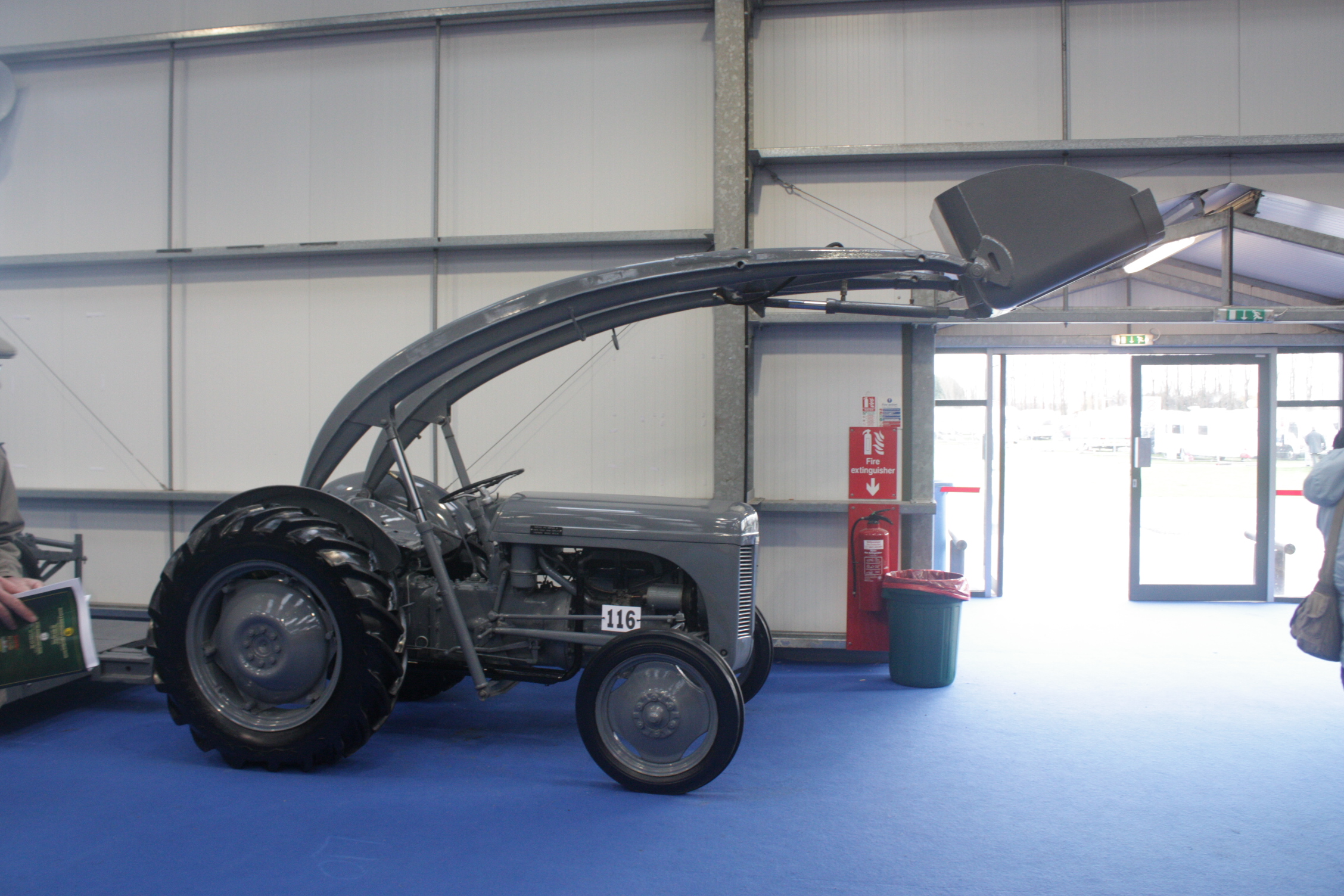 [/img]
Would you have any damp problems with the building and the art work displayed? Just thinking out loud really.
The space itself is very dry, but I will put a woodburning stove in. I don't anticipate keeping paintings in there throughout the year, it'll be mostly for the summer months. I'd rotate paintings between what I have in the studio, home gallery and those elsewhere that show my work.
EDIT - Nice Fergie! Mine is a MIL loader, I can only dream of mine looking that clean and rust free.
FFS give that tractor a paint....
What are you talking about man..... are you mad 😯
Thanks for bringing the Fergie in MM - I'm now back in 🙂 Isn't it great having a loader? I bought a back-end loader for my tractor years ago and hardly used it - using it quite a lot now I'm getting big loads of wood delivered for cutting/splitting/storing.
I love the stone floor ^^.
Isn't it great having a loader?
What I really need for mine is a counterbalance weight to fit on the three point linkage. When the bucket is full traction at the rear is sketchy. It also puts a hell of a strain on the front kingpins and axle that the front end was never designed to take.
Couldn't live without it though.
Been there with my old tractor and front loader. Your solution is below:
1) Take 1 x large plastic drum and cut in half
2) Drill a 1.5" hole on either side of the drum near the top
3) Insert steel rod through the holes (make sure it's long enough to protrude 6" either side of the drum)
4) Fill drum with heavy stuff or concrete
5) Attach to 3PL as a counter balance
Sharkbait has it, old 45 gallon oil drum filled with concrete is what we had.
The space itself is very dry, but I will put a [b]woodburning stove[/b] in.
Ah the true motive is revealed 😀
Where is your place?
I've been working on other stuff, but here's an update.
I've managed to lay the joists to support the south facing gallery floor. As I anticipated it would be tricky with the sloping floor. It's worked well. I will need to clear everything I moved into the north facing gallery and lay the joists there before I can floor it, then start glazing the door apertures. Still, it's progress.
http://www.petermclarenfineart.com/Blog/GlassmountGalleryProject
[img]  [/img]
I quite liked the old stone floor. Shame it had to come out.
I quite liked the old stone floor. Shame it had to come out.
It was a wrench, but it wasn't that easy to walk on or set anything level on it. I've saved the stones I lifted, I'll pack them under the floor, so that if someone in the future wants to put it all back they are still there.
It was really just the last six feet or so at the back that were lifted.
Did you dig up the stone floor or just lay the joists on top?
Edit: just seen the responses above....
I woke with a hellish cold and didn't think I'd be fit for today's ride so I set to clearing out the north facing space this morning. It's linked to the south facing space by a wide doorway. There is a brick built henhouse in the corner which steals some room. The nesting boxes are reached through an exterior door. Although the space is smaller, the opening into the stable yard is full wall width, which should allow a lot of natural light in.
The two doors that face west lead into a byre and then into the barn. If things work out I may develop these too. The cobbled floor slopes less dramatically than in the other space, so I shouldn't need to remove any of the stone.
I've decided to preserve the lime plastered walls rather than line them with board. I will repair the damaged plaster and give it a few coats of lime wash.
More pictures here.
> http://www.petermclarenfineart.com/Blog/GlassmountGalleryProject
[img]  [/img]
Would you have any damp problems with the building and the art work displayed? Just thinking out loud really.
I had to install an exhibition in some old stone barns once. Damp was a bit of an issue but also the the building was listed which prevented too many fixings going into the walls. I rigged up a version of the wire hanging systems some galleries used but fixed the wires top and bottom so they were taut and held the work away from the stone
[img]  [/img]
[img] 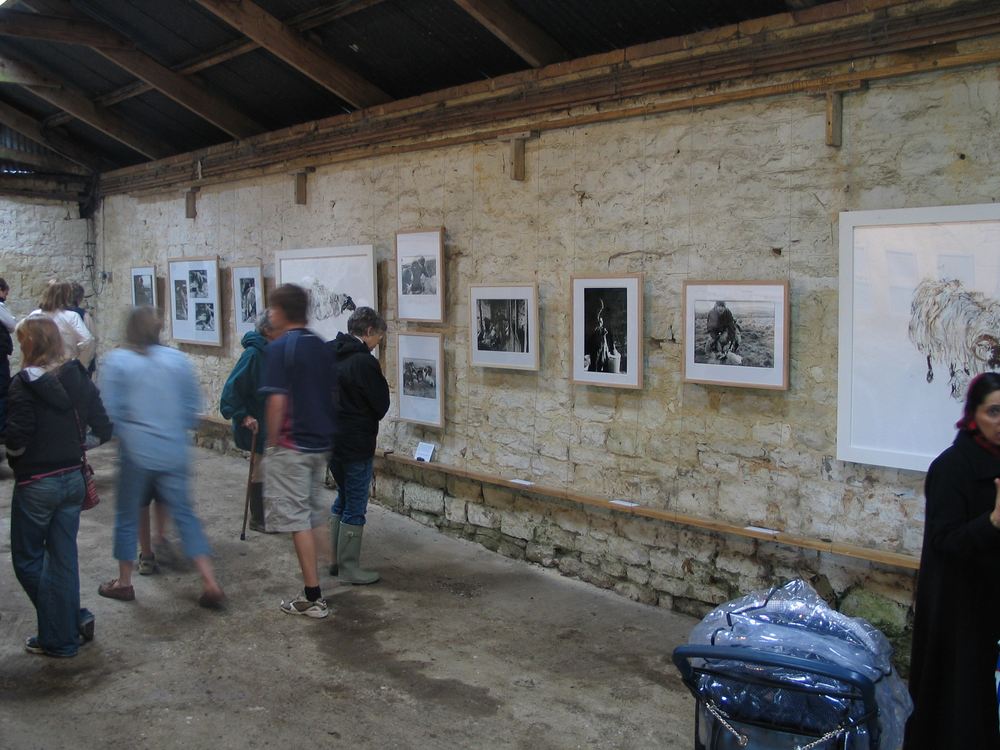 [/img]
[img] 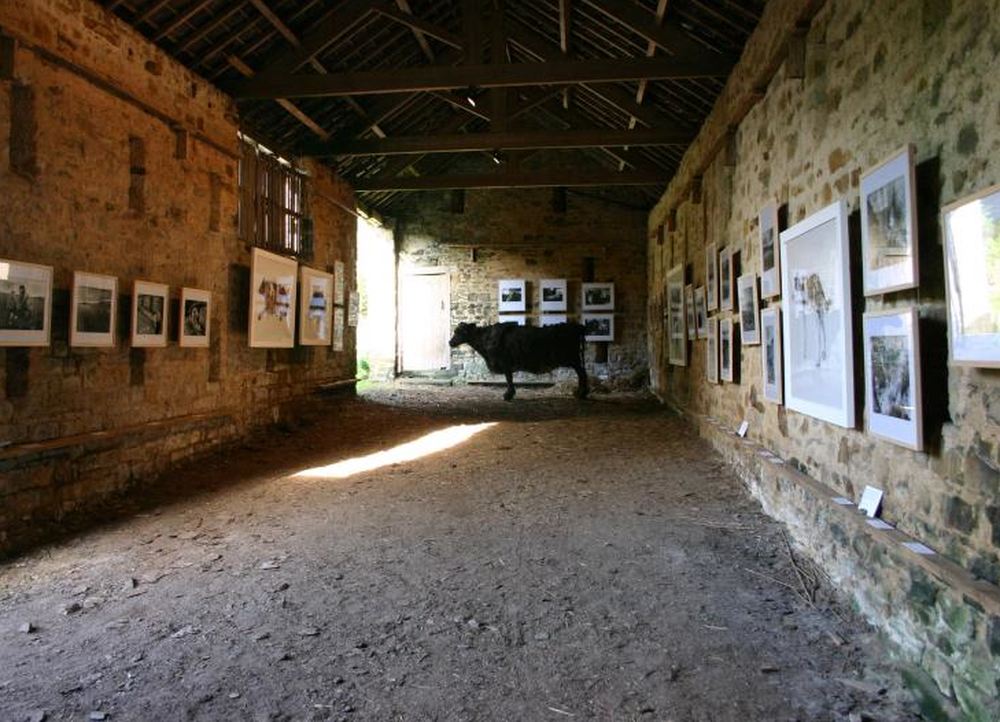 [/img]
Looks great Mac.
I've got a hanging system which just holds pictures from the top. It will just need a single rail to hang things from.
I wont hang anything on paper, it will be solely for framed, glazed oil paintings on board. I hope things will only be kept there for a few weeks in summer. The stove will help, but it is a dry space. I'll have to suck it and see.
A friend suggested using the spaces for tuition, I already teach a class at Gleneagles House and up on Speyside, so that may be another thing I could use the space for. Anything is better than the use we've put it to for the last thirty years.
maccruiskeen, can't work out if the sheep+cow are part of the exhibition or just the usual tenants of the building?
McM, that's a fabulous place, going well. 😀
mogrim -]they're sculptures (by Sally Matthews) made out mud, sticks and straw. The did seem to make themselves at home there.
Despite a runny nose and incessant cough I've laid the joists to support the floor in the north facing gallery space. It was more straightforward as the floor was almost level so I didn't have to lift any of the cobbles. I will need to build a step to link the spaces. Once that is done I will lay the floor boards and make a start on glazing the doorways.
More pics here
> http://www.petermclarenfineart.com/Blog/GlassmountGalleryProject
[img]  [/img]
Progress has been sporadic as I've been painting some new work for an exhibition in London.
I've managed to get three coats of lime wash on the walls of the stable yard space, it needs one final coat. Lime wash is a centuries old form of 'paint'.
You mix the hydrated lime powder in a vat with water to about the consistency of single cream. It's a tricky product to use as it goes on almost transparent. Once it dries it appears as a chalky white. You can add various oxides and earth pigments to tint the colour, I've even heard of Damson and Beetroot juice being used too. Unlike a modern synthetic paint, it creates a breathable porous whitewash. It both reflects light and is translucent.
I can cut back through the lime wash to sharpen the margins between the plaster and the tooled sandstone reveals and remove the splashes and drips.
I've decided to embrace the distressed surface of the pitted plaster, stone and brickwork. The limewash compliments the space rather than lining the walls with something more clinical and modern.
The lime is a bit caustic and I've burned my hands so I will need to review my own health and safety procedures.
More pictures here...
http://www.petermclarenfineart.com/Blog/GlassmountGalleryProject
[img]  [/img]
[img]  [/img]
Lime wash for traditional masonry walls, brilliant choice, wears well and breathes. Looking good. Even lime tradesmen can suffer, depends on skin, apparently. Great updates. Can't wait for the [i]soft[/i] opening ... old bikes hanging off walls;)
This morning Paul came over to frame the door. I had precut the wood to form the arch. with two pairs of hands and Paul's experience, we had the door posts and arch up in no time. As we worked away it became apparent that the space above the horizontal rail could be glazed too. It'll mean some tricky glass cutting but it's too nice a detail to panel over.
There will be a door in the centre and a pane either side.
http://www.petermclarenfineart.com/Blog/GlassmountGalleryProject
[img]  [/img]
My brother is coincidentally making a gallery space at Maspie House in Falkland, next door to the Palace. The space he is creating is pristine and clinical, sharp white walls and a sky's the limit budget.
The lighting he has had installed is a mix of s****y LED and halogen. I asked him about the costs thinking I might try something similar. When he told me each light unit was over £250 I was stunned. So when I was at Screwfix , I asked the guys there what would give me a floody light adequate to light the space and to pick out the paintings I intend to hang. Their suggestion was a £5 halogen security light unit. Lots of floody lumens which might be more expensive to have on all day compared to an LED. That's not too big an issue as I'd only have them on when I had visitors or I was working there. I don't want to spend a fortune on something that at this stage is just a toe in the water experiment. I can always upgrade later reusing the existing wiring.
So I spent the day fitting the lights and wiring them up. The reflected light on the walls is excellent, there should be less reflection on my paintings which I always glaze. Once the varnished floor and glass is fitted to the doorway more light will be reflected too. The last picture show a single coat of limewash on the walls of other space. I've found a suitable woodburning stove which will should be easy to pipe into the existing chimney.
I've also found some flush floor sockets with flip up lids to bring power in without having to raggle conduit and boxes into the walls.
More pics here...
> http://www.petermclarenfineart.com/Blog/GlassmountGalleryProject
[img]  [/img]
Love it. I am taking notes as to how neat my work space should look in future...
coming on well P.
Dont forget comfortable seating if you're having a wood stove in there. I might want to spend a while.

