UPDATE: Reviews section refreshed, redesigned, searchable: Go take a look
A few years back, everyone banged on about shorter being better. Every bike review suggested swapping to a 35mm stem immediately as product managers couldnt keep up with fashion.
Then anything with 120mm travel and up started coming with a 35mm.
Then seat angles got steeper. Obviously any mtb needs to be sized by standing position (so reach, or reach+stem, or maybe including stack height....) but there is a physical limit where you do have to do seated pedalling without overstretching your back too.
That seems to have cooled off now, and bikes that would have come with a 35 now come with a 45-55mm as standard.
The new scalpel (which is now a 120 travel, 66.5 HA bike) comes with a 70mm stem. Go back 6 or 7 years, my Bird Aeris 120 had similar stats but with a 35mm stem. Other figues were obviously different to make it fit a static rider, but in terms of steering feel, which is correct, or can both be?
A coaching session in the autumn revealed that I have my weight too far back, and while obviously I can and am trying to adjust my physical position on the current bike, a slight forward weight shift and slower steering would, I think, help me weight the front whilst also keeping confidence that the steering is still going to work.
But I dont want to take it too far and end up with the handling of a 10 year old steep bike where the front tucks under. I had that on a mk1 solaris, still got the scar.
Anyway, I'm sure I'll get 15 conflicting opinions and I''m not even sure exactly what I'm asking for.... but any ideas or experiences?
A coaching session in the autumn revealed that I have my weight too far back, and while obviously I can and am trying to adjust my physical position on the current bike, a slight forward weight shift and slower steering would, I think, help me weight the front whilst also keeping confidence that the steering is still going to work.
How best would you describe your frame 'size'; too small, too big or about right?
And (siting down-wise) do you use a straight seat post or layback, and where is your saddle positioned; centre, forward or rearward?
Just do whatever works for the riding you do. Think about two riders with the same leg and torso sizes, but different length arms. If they rode the same sized frame on the same trails, the one with longer arms would need a longer stem to fit on the bike the same. Just experiment and find what suits you.
I went through exactly this myself, shorter and shorter over the course of about 4 or 5 bikes, right down to 35mm, and then I've gradually gone back to around 45/50mm for most mountain bikes.
On my current LLS bikes with 500mm reach, 35mm stems on both. When I was forced back onto a bike that was a bit smaller I went back to a 50mm stem and really didn't like it. Even the smaller bike handled better with the 35 for my tastes. (disclaimer: I'm not much of a 'cyclist' I just pedal around looking for jumps and steep stuff)
A coaching session in the autumn revealed that I have my weight too far back, and while obviously I can and am trying to adjust my physical position on the current bike, a slight forward weight shift and slower steering would, I think, help me weight the front whilst also keeping confidence that the steering is still going to work.
I don't buy into all this stuff. Look at the arguments we've had on here about high rise bars! Adding or removing a few millimetres of stem, headset spacers or handlebar doesn't just tip your entirely rigid body into the wrong position and ruin your handling. Not if you have flexible elbows and wrists and hips. Especially when you're standing up in attack mode, your bodyweight is wherever you place it.
The length of a stem has a real effect on steering feel so adjust this to suit. Everything else is just getting your hands into a comfortable place and learning to ride the bike.
How best would you describe your frame ‘size’; too small, too big or about right?
And (siting down-wise) do you use a straight seat post or layback, and where is your saddle positioned; centre, forward or rearward?
6ft and a bit, 2021 Santa Cruz large. 6'1 is SC's changeover between L and XL. I think I'm slightly longer in the leg and shorter in the torso than "average" for my height.
Straight seat post, saddle forwards. With my long legs and SC's slack actual seat tube mean I think I'm just returning to "neutral". Nose of saddle is still behind the BB.
I never felt cramped - but until this coaching where I saw a video of myself, I didnt realise how much I pushed myself rearwards. I know that on its own, the extra inch of top tube on an XL or a longer stem wont be able to correct this.
What does your arm position look like?
If you're too far back and your arms are bent and elbows are out then a longer stem may help.
However if you're too far back with straightish arms, all a longer stem is going to do is move your crap body position slightly forward and make you slightly more likely to go OTB.
The new scalpel (which is now a 120 travel, 66.5 HA bike) comes with a 70mm stem. Go back 6 or 7 years, my Bird Aeris 120 had similar stats but with a 35mm stem. Other figues were obviously different to make it fit a static rider, but in terms of steering feel, which is correct, or can both be?
A coaching session in the autumn revealed that I have my weight too far back, and while obviously I can and am trying to adjust my physical position on the current bike, a slight forward weight shift and slower steering would, I think, help me weight the front whilst also keeping confidence that the steering is still going to work.
Look at the arguments we’ve had on here about high rise bars! Adding or removing a few millimetres of stem, headset spacers or handlebar doesn’t just tip your entirely rigid body into the wrong position and ruin your handling. Not if you have flexible elbows and wrists and hips. Especially when you’re standing up in attack mode, your bodyweight is wherever you place it.
I discussed this on here a while (5 years or so) back and was told I was wrong, but maybe fashion is catching up with me!
I swapped to a 70mm Stem on my Scandal because (especially when clipped in) there wasn't enough weight over the front. The Scandal has similar geometry to the Scalpel.
Yes you can solve that by adopting an even more aggressive riding position, but you still need to be comfortable on the rest of the trail that isn't ridden in full attack mode. What works on a DH bike might be a massive compromise on a flat corner.
MTB'ers and the obsession with 35mm stems + 800mm wide flat bars is the new Roadies with slammed stems from circa ~2010, or Much Better (with) Raisers Magazine from the 2000's.
I've got a fairly stubby stem on my other bike, but:
a) it only has flat pedals which I'm convinced makes a difference
b) it works, and that's the key thing. If it makes you faster, safer, more confident then it's a good thing regardless of what someone on the internet thinks.
I’ve settled on 50mm stems. But once stems are this short then the actual bar sweep (not the angle but the set back of your hands vs the steering axis due to both sweep and any effects of bar rise) matter a lot.
So on my two bikes I’m running the same bars and stem but one has the bars rolled back more than the other so there’s about 5-10mm difference in how far forward my hands are (they’re both 40mm rise so the roll makes more of a difference).
a) it only has flat pedals which I’m convinced makes a difference
I'm pretty much exclusively flats off road, what is the difference it makes?
But once stems are this short then the actual bar sweep (not the angle but the set back of your hands vs the steering axis due to both sweep and any effects of bar rise) matter a lot.
I found an old PB article where this was measured. Straight line through the middle of the grips, vs centre of steerer. Interesting in that (for example) a 35mm stem might get your hands 5mm off the steering axis. Swapping to 50mm (and bars remaining the same) would chnage this to 20mm off the steering axis which proportionally is a big difference - its four times bigger.
However going from a 50 to 70mm stem in the same scenario might change the key dimension from 20mm to 40mm, only twice as long.
You can see how on road bikes, with stem plus the offset to the hoods being in the 150-200mm range, stem length changes make minimal difference to handling and could be considered a purely static fit adjustment.
I’m pretty much exclusively flats off road, what is the difference it makes?
Unless you have some special SPD shoes with mid-position cleats you'll generally be slightly further forward on flats. So in terms of weight distribution the flat pedals do the same thing as lengthening the stem.
My opinion is that stem length is a tool to adjust steering characteristics, not for bike sizing or weight distribution, thats a hangover ftom road bikes.
Side note, if you were to design a road bike from scratch, would the right solution be to run a 100mm stem?
40-50mm is my preferred range on modern geometry bikes.
Currently have a 40mm with 800mm bars on my Moxie hardtail and 42.5mm with 780mm bars on my Aether 9c short travel bike. Both with 42mm offset forks FWIW. I just like the way my bikes steer with this length and then to some degree tune my weight balance on the bike via bar height/stem spacers.
TBH I think it's pretty complicated purely because there's a human involved and we're highly adaptive and just tend to get used to whatever we already have, so even things that on paper are 100% improvement can feel weird and wrong.
I've ended up with 32mm on both my main bikes, but they're quite modern and reachy. My one shorter bike still has a 50mm on it and I don't like it with anything shorter, and likewise my last bike just didn't really work well with shorter than 50mm, it got waggy. TBH stems are cheap enough to fanny about with, especially since they're a good used buy (as long as you don't fall for buying super expensive nonsense, basic stems are fine)
I went through exactly this myself, shorter and shorter over the course of about 4 or 5 bikes, right down to 35mm, and then I’ve gradually gone back to around 45/50mm for most mountain bikes.
This. I went down to 35mm but didn't like how the bike handled so have settled on 50mm as my sweet spot for general duties bikes.
My opinion is that stem length is a tool to adjust steering characteristics, not for bike sizing or weight distribution, thats a hangover ftom road bikes.
I don't disagree, but weight distribution is an important factor in how a bike handles. And that's impacted by the relative position of the bars to the front wheel.
Side note, if you were to design a road bike from scratch, would the right solution be to run a 100mm stem?
Road bikes are a novelty in this regard as their design is basically dictated by the UCI. If you wanted to build the fastest bike for a bike race it would probably look more like this:
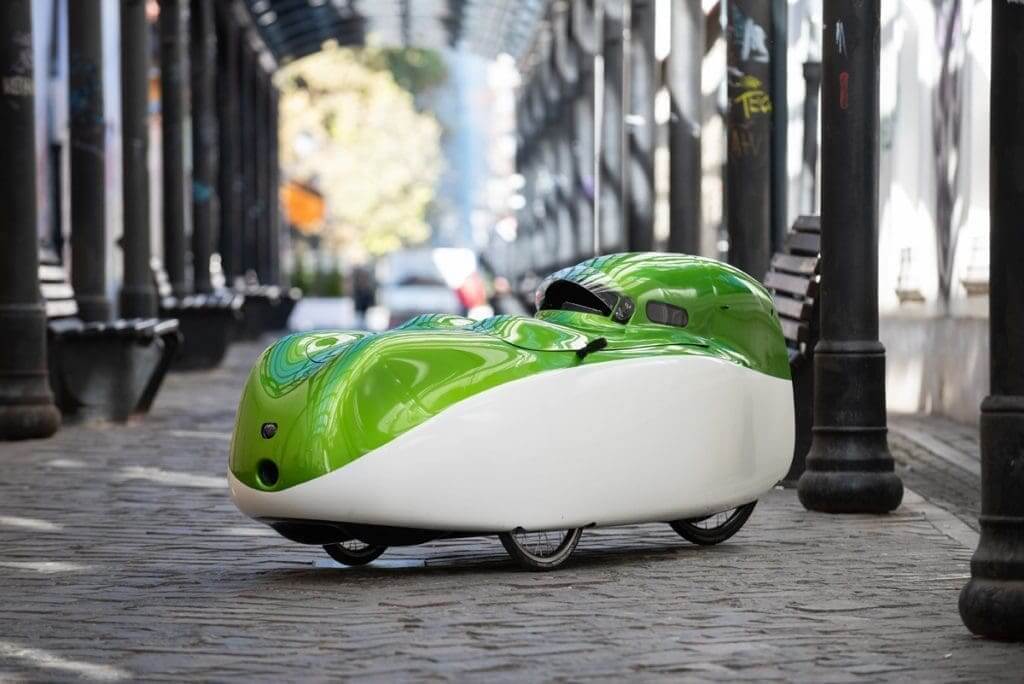
deanfbm
Side note, if you were to design a road bike from scratch, would the right solution be to run a 100mm stem?
I've often wondered this. Why not employ forward geometry and get rid of the floppy steering and toe overlap? I can't imagine there's any downsides?
For me, it depends on the bike and I think the sizing / my positioning. I have two very similar, modern enduro bikes with one big difference, one has a 20mm longer reach than the other. I tried stems on both bikes from 30mm to 55mm; five different sizes. I can definitely notice the immediacy of steering dropping to the 30mm. However…
30 mm stem on the longer bike feels spot on with no loss of front end grip.
45 mm is perfect for my shorter, most used bike, which doesn’t actually feel shorter, although clearly it’s negligible.
Both bikes have the same bars and roll and neither bike suffered notable grip issues from different lengths. The main differences for me were how centred I felt on the bike and how the bike felt in fast tight turns. 🙂
I’ve often wondered this. Why not employ forward geometry and get rid of the floppy steering and toe overlap? I can’t imagine there’s any downsides?
It pushes the front wheel out, makes drafting harder and TBH, road bikes *don't* have floppy steering when they are being used as designed. Toe overlap is massively overstated as an issue, i have it on all my bikes, even those with short cranks and haven't had a toe to tyre incident in 35 years. I've even gone to a semi midfoot position (cleats are now 20mm further back than was possible with the standard slots) and *still* haven't had an issue.
For touring/gravel/cx, forward geometry would probably work really well.
Never liked the really short stems with a 170/180mm travel fork, I just can't weight the front wheel properly, I can see the appeal with shorter travel steeper head angle bikes but for me it's 45 minimum, but typically 50mm.
My opinion is that stem length is a tool to adjust steering characteristics, not for bike sizing or weight distribution, thats a hangover ftom road bikes.
Mostly yeah, but I'd say it's about 70/30.
If I'm on a bike with about 460mm reach then a 40mm stem works best.
Moving up to 470-480mm and I'm back on my trusty 35mm stems.
There's a bit of fine-tuning for weight distribution basically.
For touring/gravel/cx, forward geometry would probably work really well.
That's generally how things have been evolving. Road (racing) bike stems seem to actually be getting longer with Large bikes now often coming with 120mm stems. Whereas non-race bikes 100mm stems and frankly obscenely tall headtubes has become normal (along with shorter and shorter reaches). I've only got short legs so that's made finding a new 'audax' bike surprisingly difficult.
I’ve often wondered this. Why not employ forward geometry and get rid of the floppy steering and toe overlap? I can’t imagine there’s any downsides?
MTB'ers overthink road geometry and handling. Road bikes handle just fine as they are.
And especially for riding in a bunch you really don't want "stability" or a longer wheelbase. One of the accreditation drills at the velodrome is to ride round with approximately 1 1/2 bike length gaps on the pursuit line and on the whistle the last ridder has to sprint up through the line slaloming between each rider. You need the bike to change direction quickly, not set it up for a corner.
Toe overlap is a thing if you try and do a slow u-turn on a fixie. JRA you simply never turn the bars far enough, and with a freehub it's a complete non-issue
I’ve often wondered this. Why not employ forward geometry and get rid of the floppy steering and toe overlap? I can’t imagine there’s any downsides?
There really is - I had a couple of frames built like this and found some real negatives for a drop bar bike. Going for a moderate adjustment of reach and stem length is good, going too far just upsets the weight distribution of a good drop bar bike ime. Toe overlap can be sorted on most frames w/o going too far from the norms of road stem/front end geo layouts.
MTB cornering techniques are not the same road bikes, road bike tyres don't slide and the steering is initiated differently. Gravel bikes can be somewhere in between, but all in all imho if you have a light drop bar bike it needs to be a good road bike as much as an off-roader and I found having to compensate for MTB-style fwd geo when riding on the road got old very quickly. But since a skinny tyre drop bar bike will never be that great on more interesting off-road trails at speed, the fwd geo approach wasn't much of a gain there. (edit for clarity, when I say fwd geometry style I mean in the range where you're half way toward or closer to MTB reach and stem ratio and front-reac centre balance than trad road bike proportions)
Currently happy with 50 for trail, 70 for more xc type stuff and 90 for gravel. Tall with long arms. Tried shorter for xc and trail but prefer those lengths. Haven't tried shorter on the gravel bike because 90 was as short as Redshift went at the time and it's likely I'd end up banging my knees on the bars.
There was a theory a couple of years ago from some pros that they didn't like a stem shorter than the fork offset. I can't quite remember what the logic behind that was?
"There was a theory a couple of years ago from some pros that they didn’t like a stem shorter than the fork offset. I can’t quite remember what the logic behind that was?"
That was one of those theories which was 99% a load of coincidence. Stem length isn't really a thing in bicycle geometry - the two numbers that matter are forward offset of the grips vs the steering axis measured vs the steering axis and measured horizontally.
If handlebars were straight tube then the stem = fork offset idea could be a decent hypothesis but they're not even close to being straight!
IIRC, my '20 Voodoo Marasa came with a 50mm, which has always felt fine with a ~720mm bar.
IIRC, my '16 Voodoo Wazoo fatbike came with a 75mm, I swapped it to a 35mm when I fitted 747mm Knuckleball bars and it felt dangerously twitchy on tarmac sweeping descents... Swapped it out for a 110mm and it felt great.
There was a theory a couple of years ago from some pros that they didn’t like a stem shorter than the fork offset. I can’t quite remember what the logic behind that was?
It's in the video above that @mattrockwell just posted. Something to do with understeer.
Put simply alters the weighting of your front tyre. So stands to reason it'll be more noticeable when cornering.
Bar sweep and roll can of course also put your hands behind the front wheel axle. But any downward forces from your hands still go through the stem/bar interface when loading the front tyre. Not the fresh air below your grips.
A stem shorter than your fork offset shouldn't be an absolute deal breaker though. it simply means you'll be required to compensate with body weight/position and the forces you put through the front of the bike. But we have to do that with ALL set-ups anyway.
It's all a compromise. Just don't compromise so much it's to your detriment.
I just watched that video about stems and bars. So he starts off talking about the clear differences between the steering behaviour of 40, 45 and 50mm stems and relating it to his 44mm fork offset (to the point that he says he’s thinks a 44mm stem would be better).
He then talks about various bars which have 7, 8, 9 and 10 deg backsweep. Here he’s talking mostly about compliance and how the resulting grip angle affects your wrist comfort and arm position (7 most attacking but least comfortable and vice versa).
The thing is, unless I’ve forgotten how to do trigonometry, that 3 deg angle difference across ~350mm of bar width (centre to grip) is ~18mm difference in longitudinal position at the grips. Ok, maybe the bars don’t sweep consistently from centre to ends but even a third of that change is bigger than the 5mm change between 45 and 50mm stems.
I don’t disagree that this stuff matters a lot - I can feel really tiny differences, just a few mm and I’ll notice. But I think the stem matching fork offset theory is people using poor science to support a coincidence.
poor science to support a coincidence
An excellent phrase. It might turn out to be the most concise summary of everything that happens in 2025.
But back to the cycling context - I refer you to The L-Shaped Crank
That video .. clearly he can out-ride me but .. your weight distribution comes mainly from where your BB is relative to the axles. Front-rear centre balances. The majority of your weight goes through your feet. After that it's geometry eg HTA and how far behind the front axle the stem ends up. Changing your bar/stem spec will move you back and forth a bit but if you look at how your weight is split between f and r wheels on a bike when you're in a neutral position, and then move about, you see that the change in weight on the front wheel is small compared to the split the axles to BB dimensions create. Certainly 5-10mm on a stem makes little odds there.
You also don't want to be propping up too much of your weight with your arms, you want to stay fairly neutral so you can weight or unweight the f wheel as needed, that itself shows how little weight we 'push' the front wheel down with. Compare the pressure on your grips with the pressure on your pedals. There's times when you're compressing in a corner or trail compression but generally the BB are is compressing equally too so the split is similar.
The stem matching fork offset theory - if that's about stem length and the leverage on the streerer in a corner and under/oversteer, it has to take trail into account since trail is what produces the torque on the steerer tube, not offset. Offset is just something that influences trail. Short vs long offset feels different in some ways but relating it to stem length seems a bit like the whole KOPS thing, as CGG says, a coincidence. He's describing what he feels so that in itself won't be wrong but I think the theory of why it feels that way wouldn't line up the same on a different bike geometry eg a shorter ravel XC bike. 5-10mm of stem length won't be changing weight distribution much at all, just the steering feel or feedback.
In your haste to outscience and overthink one another it seems some of you may have inadvertently forgotten that the stem is acting as a lever. Irrespective of offset, trail or anything else.
“ In your haste to outscience and overthink one another it seems some of you may have inadvertently forgotten that the stem is acting as a lever. Irrespective of offset, trail or anything else.”
The stem is one part of the stem+handlebar lever. If the total handlebar backsweep equals the stem length (easily done on a 35mm stem) then the stem has zero leverage.
your assumption is completely wrong
independent of bar sweep or hand position the stem still always acts as lever. in all directions
This is one of the most interesting threads (for me) in a while and nobody has fallen out yet…. After a lot of measuring involving bits of string I fitted some lovely Shimano Pro, 800mm carbon bars that I won in the megasack with a stem much shorter than the 90mm fitted to my 2000 model Orange Gringo. My main objectives were reducing the leverage so I didn’t go, or feel like, I was going over the bars and to keep my torso in the same position, i.e. not too much weight on my wrists. It worked and although the steering felt more twitchy than before (probably just easier and quicker) it achieved the objectives. The geometry talked about above is interesting and what I was trying to calculate with my bits of string! If anyone can post up some diagrams as an additional explanation I for one would be very grateful. My more modern fat bike has better geometry, 800mm Shimano Pro carbon bars and short stem and is lovely to ride too.
@jameso @chiefgrooveguru what else have you got to do on a damp Sunday??
“your assumption is completely wrong
independent of bar sweep or hand position the stem still always acts as lever. in all directions”
I’m sorry but this is basic physics. I’m sorry you disagree but if you don’t understand then I can’t help.
” @chiefgrooveguru what else have you got to do on a damp Sunday??”
I went MTBing before the storm arrived. I’m now making lunch for the family. I’m going bouldering later with my eldest. In between I’m trying to wallpaper the inside of an old radiogram which is a horrible job and I’d rather argue about geometry…
I don’t want an argument, I’m just keen to learn. Admittedly at nearly 65 I might have known all this stuff at some point but have forgotten it all!!
Educate me.
For simplicity. Say you were to fit a zero degree 100mm stem and a set of flat curved bars with the exact amount of sweep to place your hands directly inline with the steerer.
Pushing on the grips straight downwards in line with the steerer tube. where will that downward force act?
A. Downwards with a twisting moment where the bars are held in the stem clamp causing the stem to act as a lever .
or
B. directly and only straight down through the centre of the steerer not causing any leverage on the stem at all?
Thank you in advance for taking time away from your busy schedule to help me.
I’m sorry but this is basic physics. I’m sorry you disagree but if you don’t understand then I can’t help.
Exactly. The leverage comes from the position of the hands (which exert the force) in relation to the steerer. If the hands are in line with the steerer, there is no leverage. Wide bars with a lot of sweep will reduce the leverage that a longer stem creates.
“ I don’t want an argument”
Are you sure, I can do 5 minutes or the full half hour! ?
Bicycle steering and handling is super complicated and no-one really understands what’s going on. But you can break it down into digestible bits - and when discussing stem length the correct discussion is about effective stem length, not actual stem length.
Some old threads on this:
https://www.singletrackworld.com/forum/topic/shorter-stem-advantages-disadvantages
https://www.singletrackworld.com/forum/topic/stem-how-short-is-too-short
https://www.singletrackworld.com/forum/topic/to-all-who-have-never-tried-a-35mm-stem
@Gaah can we have a discussion on here without sarcasm? I for one find it interesting and rudeness will not help participation from others!

