UPDATE: CLASSIFIEDS section refreshed, redesigned, searchable: Go take a look
What are you actually suggesting for a surface?
I think Sustrans likes to trumpet the number of miles it has in it's "network", when lots of those miles just aren't fit for that purpose.
Yes, I've been disappointed by a lot of the Sustrans routes. OK for a casual weekend leisure cycle, but often not very good as a practical, day-to-day method of getting from A to B, with inconsistent surfaces and often circuitous routing that pieces together random paths and back streets.
My commuting bike can cope with rough tracks and gravel, but I would much rather ride on a properly surfaced and maintained tarmac cycle track.
Some interesting viewpoints. I can see views on both sides, however my concern is that routes like this are not just used by cyclists, tracks like this are used by walkers, dog walkers, horse riders because they are usually not busy routes, purely because of the nature & state of a track. As soon as you widen it into a tarmac cycle 'strava' superhighway, even with a parallel off road track, you change the character of the track. Which will then draw cyclists into conflict with pedestrians & horse riders. As it is currently this is a natural speed tamer, which will limit conflict between cyclists & pedestrians.
I quite often use the Imber Range Path around Salisbury Plain, the DIO have put down hardcore gravel tracks, and vehicles are allowed to use them and the amount of times I have nearly been run off the wide track by Mr <Insert Car Make> bombing round it and not slowing for pedestrians or cyclists . The only thing that will slow them down is when we have a fair amount of rain and the potholes start to appear.
My other concern is if we take the attitude that it should be ride-able by any cycle surely that could be applicable to any bridleway in the Country and while we are at it why not every BOAT, so that all vehicles can drive along them. Where would it all end!!!!
OK, so question for all the NCN complainers (of which I am one!), what do you think should be done about it?
Being that there's no central governmental body who is going to have either the funds or inclination to do anything about it, nad local government is just as bad in most places, we are reliant on organisations like Sustrans to even have an NCN, even one that needs improving.
So are you members (of Sustrans or another local group)?
Do you donate time or money/support ni any way?
Do you get involved locally or nationally pushing for change?
Or do you just* complain and hope somebody else fixes it?
I know I'm coming over a bit preachy but it really gets my goat when this comes up, because the NCN does have problems, some bigger than others, and in some places worse than others, but the solution to fixing them is [i]more [/i]support for Sustrans and organisations like it, not just complaining and inaction.
*Apologies to anyone else who is active, but I'm sure those people share my view 😉
however my concern is that routes like this are not just used by cyclists, tracks like this are used by walkers, dog walkers, horse riders because they are usually not busy routes, purely because of the nature & state of a track. As soon as you widen it into a tarmac cycle 'strava' superhighway, even with a parallel off road track, you change the character of the track. Which will then draw cyclists into conflict with pedestrians & horse riders. As it is currently this is a natural speed tamer, which will limit conflict between cyclists & pedestrians.
They are not heavily used by cyclists because they are unsuitable as a general transport link. To argue that they should stay not busy because they are not busy is circular and a bit bizarre.
If the route was suitable then you would still get walkers, horse riders, cyclists using it, but you'd also get more of them, and other users, wheelchairs, mobility scooters, children etc. And you'd have a safer alternative as well. Lets not forget that many of these routes, and one referenced in the article were actually previously roads/cart tracks between villages, and in some cases more recently, railways, these are not some quaint little sheep track in the middle of nowhere, they are historical transport routes that have fallen into disuse and disrepair due to increased focus on providing for cars.
Making a route usable for general transport does not have to introduce conflict or turn it into a 'Strava superhighway' as you put it. Every problem you have described in your post (car drivers bombing around, 'Strava'ists etc.) is from the attitudes and actions of the people, not the route. Just becasue a route has a nice fast, mud free surface doesn't mean you can bomb along it at 20mph if there are kids and pedestrians also using it. this can be tamed with decent infrastructure design but its fundamentally about people using it appropriately, and a few inconsiderate people is not a reason to stifle progress or an improvement that can benefit many.
My other concern is if we take the attitude that it should be ride-able by any cycle surely that could be applicable to any bridleway in the Country and while we are at it why not every BOAT, so that all vehicles can drive along them. Where would it all end!!!!
This is just exaggerative whataboutery, the points in the article are clearly about local transport links between populated areas that could benefit from decent surfacing, it's not about bridleways in the middle of the countryside and nor would it ever extend to that. It would end precisely where it began, in your imagination.
Anything defined as a national cycle way, should be well finished and as straight and direct as possible. Or else how is it a nation cycle way.
Anything defined as a national cycle way, should be well finished and as straight and direct as possible. Or else how is it a nation cycle way.
Which part of my comment that "well surfaced and well maintained does not need to involve the use of tarmac" would you disagree with?
I'm also intrigued as to what you'd suggest that isn't tarmac? Personally it seems perfect to me.
Amedias, I did not realise Sustrans was a charity until your post. I honestly thought it was an EU funded quango!
So I've fired off an email offering to volunteer locally.
I think the article raises some good points in relation to that specific trail and if I lived there I'd like to be able to use it year round. My issue with the article - and with the whole trail maintenance debate - is the comment at the end (emphasis mine).
For all these reasons, isn’t it time we jumped forward two hundred years to 2014, and engaged seriously with the benefits of properly designed infrastructure for walking and cycling, [b]wherever it happens to be, and wherever it needs to go?[/b]
"Wherever it happens to be" and "wherever it needs to go" are hugely important factors in deciding the most appropriate way of surfacing and maintaining a trail. The very problem advocacy groups like Peak District MTB face is the "one size fits all" approach to byway maintenance adopted by authorities like Derbyshire County Council.
Funny isn't it - go half a page up the forum and you've got nothing but people decrying the sanitisation of trails, how dare they go and trash It by destroying this beautiful trail that's been there for hundreds of years
Perhaps if they had offered to Tarmac it instead they wouldn't have had all the trouble?
As for what material, well there's a myriad of materials in keeping with the local area, in some places they use sandstone, in other areas whinstone, and in others crushed granite or Flint, or even good old cinder paths, even stone setts, these surfaces have been good enough to survive for the last few hundred years, in some cases thousands, without descending into muddy quagmires, all because of being properly built, drained and maintained, and without any need for Tarmac. Guess what, The path wasn't tarmac when they added it to the NCN, so why should there be a need to sanitise it now?
The answer here isn't to Tarmac over the paths we already have, but to make the roads safer, and open up the already existing well surfaced tracks that are already there (not an ounce of mud on them) but we as cyclists are not allowed to use!
Amedias, I did not realise Sustrans was a charity until your post. I honestly thought it was an EU funded quango!So I've fired off an email offering to volunteer locally.
Hurrah! 🙂
Many people don't realise they are a charity, and they're far from perfect I won't deny it, but the more people get involved and support* the better!
*Not just Sustrans BTW, there are a lot of very good local groups and charities doing good work as well.
Funny isn't it - go half a page up the forum and you've got nothing but people decrying the sanitisation of trails, how dare they go and trash It by destroying this beautiful trail that's been there for hundreds of years
It's all about the shades of grey isn't it. There's a world of difference between proposing to tarmac a disused railway that's got a bit muddy but conveniently links up two areas of population, versus flattening and sanitising a hill trail that is ostensibly only used for leisure.
And as you've already pointed out, providing a clean and sustainable surface doesn't have to mean tarmac, and also doesn't have to mean destroying an existing trail where there is room for both.
Funny isn't it - go half a page up the forum and you've got nothing but people decrying the sanitisation of trails, how dare they go and trash It by destroying this beautiful trail that's been there for hundreds of years
The path in the link isn't a trail FFS! It's an old railway line that's 10 foot wide for virtually its entire length!
[img]  [/img]
[img] 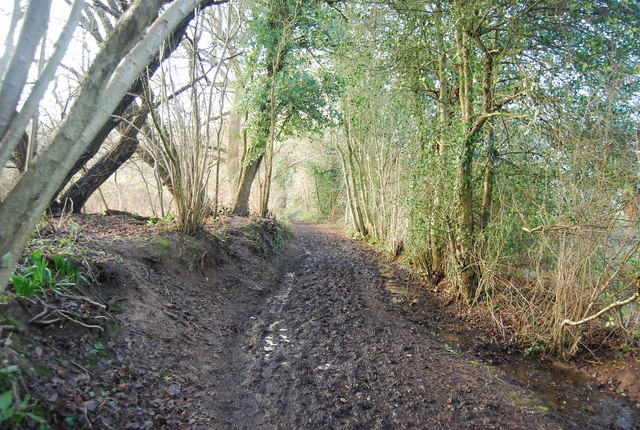 [/img]
[img]  [/img]
We're not talking about anything that is even approaching a trail. It's a path that goes from a to b, and gets incredibly muddy in winter, spoiling its potential usefulness as a superb traffic free route from Guildford to the south coast.
In summer, when dry, it's full of families and dog walkers and horsies and what not. In winter, when it's a shitty bog, it isn't. Surely having a decent all weather surface will enable more people to use it? How can that be bad?
It's a corking straw man to get all hand wringy about 'tarmacing all our trails' on the back of it!
The answer here isn't to Tarmac over the paths we already have, but to make the roads safer, and open up the already existing well surfaced tracks that are already there (not an ounce of mud on them) but we as cyclists are not allowed to use!
But this particular example would benefit significantly from being tarmaced. Cinders, gritstone, whatever would offer little improvement IMO. It's not solely about making the roads safer, I'd far sooner ride my road bike on shared use off-road paths with a decent surface than I would do it on the road.
So what legal standing does the NCN have, as a Public Right of Way?
Given that one close to me goes through the Private Estate of Longleat and there was some confusion as whether it was accesible due to the security clampdown over the last few years. Plus the one that Cinamon Girl mentioned across the centre of Salisbuty Plain, smack bang in the middle of Larkhill Artillery Impact area, which is out of bounds when firing is in progress. So inaccesible as it is not passable due to local byelaws in the case of Salisbury Plain or inacessible due to weather conditions.
Surely the problem here is the poor designation as an NCN by SUSTRANS & the expectations of it's users. After all I can legally ride on Bridleways and have found plenty that are impassable after a lot of rain, doesn't mean that they should be resurfaced, and these are on the edge of urban areas that people use to get from A to B and one is in fact designated as part of the NCN.
Also how many people cycle in the winter? One of my rides takes me along a rural road that is part of the NCN, teaming with cyclists in good weather this time of the year I rarely see any out using it all recreational or commuters.
The answer here isn't to Tarmac over the paths we already have, but to make the roads safer
This. I object to the attempted ghetto-isation of my choice of transport.
Fantastic photos, looks lovely
One bit of mud that's clearly a drainage issue, and could be solved in a couple of hours with a machine, I'm sure the rest of it might benefit from someone clearing out the drains occasionally or filling in the odd pothole.
The rest of it needs nothing but a set of mudguards and a sensible choice of tyre, it's hardly the 'king Somme!
Tarmacing a lovely countryside trail like that so it could be used by 23mm tyred road bikes would be a bloody travesty!
So is is a question of
a) Leave as is
b) Tarmac
What about install drainage, divert water, change surface material, create a cambered surface - have those options been explored, or is just as case of councils don't tend to do maintenance, they just build/ignore/replace, so tarmac is the best option?
We're not talking about anything that is even approaching a trail. It's a path that goes from a to b, and gets incredibly muddy in winter, spoiling its potential usefulness as a superb traffic free route from Guildford to the south coast.
and
It's a corking straw man to get all hand wringy about 'tarmacing all our trails' on the back of it!
Yup. It's a very specific article,
And as for 'ruining it's character' as someone mentioned, it's almost completely flat and pretty much straight. The best thing about it (apart from being a more direct route than the roads) is the views. Which wouldn't be spoiled by tarmac.
ninfan - MemberFantastic photos, looks lovely
One bit of mud that's clearly a drainage issue, and could be solved in a couple of hours with a machine.
The rest of it needs nothing but a set of mudguards and a sensible choice of tyre, it's hardly the 'king Somme!
Tarmacing a lovely countryside trail like that so it could be used by 23mm tyred road bikes would be a bloody travesty!
Funny how the majority of the people who know the Downs Link (on this thread - 1 against from memory) don't have a problem with the idea of making it more accessible, while those that don't have to resort to ridiculous hyperbole to keep an argument going.
"exaggerative whataboutery" is a genius phrase. If the OED need help with the difinition they just need to look at this thread!
Surely the problem here is the poor designation as an NCN by SUSTRANS & the expectations of it's users.
Yes, there is an acknowledged problem in that some parts of the NCN do not meet with the expectations of users.
But that's mostly a separate issue from your tarmac one. The NCN is a route created by a charity (with the aid of lottery and other self funding), mostly using existing routes, signposting those routes, and performing upgrades or maintenance where required and where possible.
So what legal standing does the NCN have, as a Public Right of Way?
The NCN mostly [i]uses existing rights of way[/i], it is not a right of way in it's own right, although some new sections have been built/upgraded. If part of a route has its status changed and is no longer a right of way for cycles then it should/will be revised. Likewise new sections may be included if they become rights of way.
Remember a right of way isn't a guarantee of suitability for a particular vehicle. That's why not every bridleway etc. is included but the NCN is [i]supposed [/i]to only include sections that adhere to the goal of providing a suitable route, but that's where the contention lies, some of it doesn't quite meet those requirements, or did but now doesn't due to degradation.
You should think of it more as groups of existing rights of way signposted (sometimes poorly, sometimes well) to produce overall routes.
There are sections which are brilliant, and sections that are less so.
It is not a local government scheme, nor a national government one, it is also technically still a [i]work in progress[/i]. The original goal of a network suitable for all and with 50% no being on roads is still being worked towards, and will fluctuate as conditions degrade and sections need maintenance (which is paid for by who exactly BTW?)
Also how many people cycle in the winter?
Lots, and more would if there were surfaced and mud free options for them to get from where they are to where they want to be. If you're arguing that they're not used in winter so no point in surfacing, you're missing the point that they are used less in winter [i]because [/i]they are not surfaced
Tarmacing a lovely countryside trail like that so it could be used by 23mm tyred road bikes would be a bloody travesty!
It's not a lovely countryside trail, it's an old railway for flips sake! It is by it's own definition a constructed path for the movement of goods and people using large machinery! The fact that through disuse it's become a muddy mess is the travesty. Surface it, and open it back up for use as a sustainable transport link.
You might be happy going along that trail on your bike, but I know my mum wouldn't, and I bet a lot of other people wouldn't as well.
It's not exaggerating whataboutery, I fundementally oppose the tarmacing over of perfectly good existing trails as an alternative to either
i) making our roads safer
ii) increasing access to well surfaced trails that already exist but bikes are not allowed to use
And it's not just about the downs link, as the article referred to several routes, including a very old established bridleway that they thought should be tarmaced
(And ps, many of the NCN routes are not on rights of way or highways, many are permissive, for example very few Sustrans routes are rights of way)
I'm somewhat ambivalent about this - down my way we have a number of byways that are in dire need of tarmacing, because they're impassable during the wetter months and are downright dangerous with hidden ruts.
But some sections [i]might[/i] be better for the wider public if they were tarmaced?
They might be better used if they were just maintained properly too...
They might be better used if they were just maintained properly too..
What, you mean by putting a decent surface on? Maybe something like tarmac?
Tarmacing a lovely countryside trail like that so it could be used by 23mm tyred road bikes would be a bloody travesty!
Why? Out of interest? Genuinely, how would that be worse off if tarmaced? You'd be able to use road bikes, pushchairs and wheelchairs on it. Sounds horrendous. Much better to leave it muddy! You still seem to be thinking that it's some trail centre for gnar gods, people won't use a path that requires "a set of mudguards and a sensible choice of tyre". They would use a genuine all weather path a lot more I'd wager.
It's a lovely path, very useful, and I use it regularly, but the surface does nothing for it IMO.
ninfan - MemberIt's not exaggerating whataboutery, I fundementally oppose the tarmacing over of perfectly good existing trails as an alternative to either
i) making our roads safer
ii) increasing access to well surfaced trails that already exist but bikes are not allowed to use
Well, again, as someone who knows the paths in question and the alternative road routes, I agree that the 3 paths mentioned would benefit greatly from being tarmaced.
The point is they're not 'perfectly good' (perfectly good for who, btw?). Also making the roads safer doesn't change the fact that these paths are a more direct route, another point made in the article.
I fundementally oppose the tarmacing over of perfectly good existing trails as an alternative to eitheri) making our roads safer
ii) increasing access to well surfaced trails that already exist but bikes are not allowed to use
I'm all for i) and ii) but I don't see why that should exclude appropriately surfacing appropriate routes as well.
The use of the word 'alternative' implies you think it's wrong on principle, and that those options are mutually exclusive when they're not. It can easily be in [i]addition [/i]to i) and ii) and sometimes it is actually a genuinely good alternative.
The routes in the article cannot be replaced by i), as they are more direct anyway so more desirable, and even if the road was 100% safe, they would still be noiser and smellier. They also can't be replaced by ii) for the same reason, even if magically overnight ALL the 'well surfaced trails that already exist but bikes are not allowed to use' in the area were suddenly opened up for access, the routes in the article would still be more direct and less fragmented, so still the better alternative!
The use of the word 'alternative' implies you think it's wrong on principle
Yes, I think it's wrong in principle to cover any more of the countryside in Tarmac, given the fact we already have in the region of two hundred and forty five thousand miles of the stuff, especially at the sacrifice of any of the hundreds of years old unsurfaced bridleway network, as proposed in the original linked blog.
Just as I would regard it as wrong in principle to put up streetlights, a car park or a tesco metro on a countryside track if they told me that would make it more 'accessible' to cyclists or any other user group.
As alexsimon asked above
So is is a question of
a) Leave as is
b) TarmacWhat about install drainage, divert water, change surface material, create a cambered surface - have those options been explored, or is just as case of councils don't tend to do maintenance, they just build/ignore/replace, so tarmac is the best option?
As it stands, a large part of the downs link, is a muddy shit pit. With a more suitable surface, it will become more used by all groups.
At the Guildford end, it makes a great link from gudford, to cranliegh, and onto Horsham. Unfortunately, no one uses it because its a swamp most of the year, and because the road alternatives aren't good, people drive instead.
Please, don't get this path confused with a lake district byway, its not. Fifty years ago, it was a railway.
But the linked blog is about an old railway, not a hundreds of years old unsurfaced bridleway?
Also, a lot of bridleways are and were surfaced, just not with tarmac, it's only due to the relatively modern swap to cars that those older routes that have not been converted to roads have fallen into disrepair. Obviously there are still a lot of unsurfaced completely natural bridlepaths, but they're not the ones being discussed.
If we want to actually use them for transport (cycling walking, whatever) then they need a decent surface, and in some cases tarmac is the best option.
I admire your desire to protect the countryside*, but sadly if we stick to it as doggedly as you suggest the result will be more people in cars and on roads, which is worse!
Are you this opposed to the building of new roads? A whole bathtub of worms to be opened there i'll admit, but it's a valid point. If you're this het up about the potential tarmacing of an old railway that would become a very useful sustainable transport link, I'd like to think you're also just, if not more, wound up about the roads they are building and expanding to allow all those people (who could be using the railway) to get where they need to go in their cars instead.
When motorways are being widened, and bypasses built round villages, and new housing estates getting DC link roads for future expansion I think bemoaning the odd tarmac path for human powered locomotion that would actually do some good is a bit odd.
* although arguably what you're trying to protect in a lot of cases is a network of man-made tracks that have fallen into disrepair. Actual countryside and natural trails are very different.
I quite often use the Imber Range Path around Salisbury Plain, the DIO have put down hardcore gravel tracks, and vehicles are allowed to use them and the amount of times I have nearly been run off the wide track by Mr <Insert Car Make> bombing round it and not slowing for pedestrians or cyclists . The only thing that will slow them down is when we have a fair amount of rain and the potholes start to appear.
I ride it most months. I have never had this experience.
At this time of year I go up there nearly every weekend as it is a great ride when the rest of Wiltshire has turned to crap. In contrast the NCN track down to Avebury is downright dangerous due to being 1 foot deep in mud at the bottom and glassy chalk at the top. My friend's wife broke two fingers on it .. crashing after riding in a straight line.
But the linked blog is about an old railway, not a hundreds of years old unsurfaced bridleway?
No it's not, ithe blog discusses several routes, one of which is a bridleway that appears on old maps as a lane
Though I guess that since it's an old 'lane' we should Tarmac it, put some 30 signs up and make it more accessible for car drivers as well...
ninfan - Member
Just as I would regard it as wrong in principle to put up streetlights, a car park or a tesco metro on a countryside track if they told me that would make it more 'accessible' to cyclists or any other user group.
Are you that desperate? Clutching at strawmen.
They might be better used if they were just maintained properly too...
This x100
ninfan - Member"But the linked blog is about an old railway, not a hundreds of years old unsurfaced bridleway?"
No it's not, ithe blog discusses several routes, one of which is a bridleway that appears on old maps as a lane
Which one?
i have read the article, and agree with it completely.
more well-surfaced* traffic-free routes please, and yesterday.
(*tarmic is ok with me, but i don't mind compacted gravel-type-stuff, as it's less sketchy in winter)
Why? Out of interest? Genuinely, how would that be worse off if tarmaced? You'd be able to use road bikes, pushchairs and wheelchairs on it.
My concern with tarmacking paths like in your earlier picture, how suitable is tarmac going to be in later autumn and over winter? Your pics show full tree cover and side banking, the mud is there because it stays damp the whole season long. Without cars to scrub the surface the tarmac will be left very slippy, it wont be cleaned by the council will it. Yes many areas could be improved but there is a risk with tarmac in this type of loaction, especially in winter with ice (see the thread about riding on the road in winter, a sheltered track will be much worse for ice). It certainly does need something done to it tho, but as mentioned maintenance and proper preparation of the surface could make it useable all year round.
I know those lane comments were in jest, but... if it really is a lane, then presumably that means horses and carts once upon a time? And again not a countryside trail, but if provides a genuinely useful link between places that would get used if it had a better surface then why not surface it and open it up to cyclists as a viable non-road option?
Afterall, all you'd be doing otherwise is letting another lane fall into disuse bar a few walkers and the odd intrepid mud-loving cyclist.
If we ever want people to use more sustainable forms of transport and be less dependant on cars then there needs to be appropriate and accessible infrastructure.
Since we can't just throw all the cars off the road overnight, nor claim back even 30% of road space for cycling on all roads to facilitate it then decent surfaces on other routes are an option.
Throw in the fact that once humans are moving under their own steam they invariably will take the most direct and easiest route possible then that means that often existing roads are NOT where they want to be as even when totally traffic free they may not be the most direct route, which is precisely why so many old lanes and bridleways exist like this, because they take direct routes.
Old railways are another example of this as they will be mostly flat and straight between areas of population, perfect for conversion to cycling and walking routes, to not take advantage of them is madness.
I think getting hung up on tarmac is a bit of a mistake as well, decent surface doesn't have to be tarmac.
The point being that it needs to be suitable, ie: hard wearing, smooth, and clean. in a lot of situations tarmac is appropriate, but where it isn't other surfaces are available as an alternative.
But if we get to the stage where the only problem we have to deal with is routes being surfaced inappropriately that's a much easier problem to address than the current one of routes not being surfaced at all!
To be fair the tarmac will only be pristine for a couple of years then it will break up into more challenging terrain.
I'd think a hard pack surface - akin to the section from Bramber castle to Shoreham would be a better solution.
They might be better used if they were just maintained properly too...
Who's going to provide ongoing maintenance to a 40 mile path than runs through 2 counties and at least 4 different local authorities?
It would be cheaper, easier and more effective to surface it properly, and for this particular path (not every path, this specific one, which I know well) I think tarmac would be a great choice.
Without cars to scrub the surface the tarmac will be left very slippy, it wont be cleaned by the council will it
Mmm, interesting thought. I must say I was imagining something akin to the Bristol-Bath railway path, which is tarmaced, and similarly sheltered along its length, and yet doesn't seem to have any such issues. Not sure if they do anything special to protect it.
Which one?
Last example
Who would want this?
[img]  [/img]
or this...
[img]  [/img]
When they can have this?
[img] 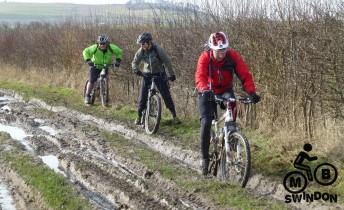 [/img]
The first is in the Veluwe national park and the second is on an island just off the North coast of Holland. Not my pictures but I have similar of my family on the same two paths including my 75 year old parents, my young children and my wife's disabled mother on an electric bike. I have many many pictures in fact despite not living there. Funnily enough I have yet to persuade the same group of people to try the various bridleways near me and so though we live here, I omly have selfies and pictures of my muddy mates.
EDIT: also these trails go somewhere, lots of places in fact. So even in the rain with no special clothing other than a waterproof and mudguards one can cycle to the beach café or the pancake restaurant or the cinema or the pub or an art gallery or......and wander in without looking like a mudwrestler
Who's going to provide ongoing maintenance to a 40 mile path than runs through 2 counties and at least 4 different local authorities?
This is such a massive problem at the moment, there is no joined up thinking or planning from central government on transport unless it's motorway or high speed rail, and even then it's not that joined up!
It's really only charitable organisations that have made any attempt at a national network, or even intra-county, and that's a major problem for such small organisations with limited funds.
Even if we could get local governments and councils to plan and build properly it would be a start, at least then the national focus would be on linking things up, rather than starting from scratch, but we don't really have much to link at the moment as routes can be wildly differing on ones side of a town to the other, let alone between towns or counties!
Mmm, interesting thought. I must say I was imagining something akin to the Bristol-Bath railway path, which is tarmaced, and similarly sheltered along its length, and yet doesn't seem to have any such issues. Not sure if they do anything special to protect it.
A lot of minor maintenance on the NCN is done via volunteer rangers, and when not done by them, its reported by them to the local authority responsible when action is needed, and they then have a duty to act on it, even if that action is often lacking.
Also if the infrastructure was built and provided by local authority then they will and do maintain it, but the level of maintenance varies depending on what is actually required and what resource is available. There's a few sections round here that literalyl need nothing doing to them ever, and others, on the same route where obstructions are frequently removed, and maintenance crews are sent to clear debris (leaves, mud etc) when necessary.
This is why bits of the NCN around urban areas are often so much better, not only are the rangers more active on them to do minor work, but they report on it more regularly, and it's given more focus in populated areas by local authority, it's often smaller sections too, but then once you start moving outwards it's where it becomes trickier, less used, less frequently maintained, and less incentive to do so, and you end up with large chunks of totally inappropriate NCN.
For the specific path, perhaps they want to emulate the Cuckoo Trail, also in Sussex, part of route 21 and also an ex railway line. It joins towns, is flat, and is heavily used by commuters and families.
For the most part it is a tarmac-type material running alongside a compacted mud path (for horses and the gnar), the tarmac sort of disappears in more rural bits though. Deaf n blind dog walkers are more of a concern tbh.
I've no issue with unconnected poorly surfaced bits of path that you can cycle on. Like bridleways. Joining these up though and calling them a National Cycle Network gives a false impression of a, erm, national network of cycle paths that you can actually travel around the country on a normal bike.
Anyway, my local volunteers meeting is on the 17th and I'll be there.

