Estimated reading time: 21 minutes
For the first bike test in Singletrack we decided to do something just a little differently. We’ve not picked three similarly priced hardtails. Nor have we plumped for a range of full suspension bikes. Instead we have three bikes from the best of Britain’s bike industry.
First for the off we have pure handmade XC race-bike porn from who else other than Pace up in North Yorkshire. Next, we head west to Halifax and Orange with perhaps the UK’s finest all round full suspension bike. Finally we head south down the Calderdale valley to ride a very curious bike from PlanetX.
What ties these three very different bikes all together in one thread other than the Yorkshire connection is that each of these bikes has been acquired from their manufacturers or designers pre-production.
Latest Stories

Click a bike label below to open the full review
To anyone who’s been around since 1989 when the first square tubed Pace RC100 bikes arrived, or anyone who’s dreamed longingly of the subsequent RC200 frameset, the Pace RC300 looks instantly familiar. Square tubes, external butting, beautiful welds and top notch machining, but Pace have gone one step further with this bike by trimming weight down by 25% and bonding in a carbon fibre seat tube for the first time. Like all previous Pace bikes it’s all beautifully hand made in-house by Pace themselves.
This particular bike is the last prototype before production so it’s almost identical to the final bike bar minor cosmetic changes. Adrian Carter at Pace has been testing the RC300 by swapping suspension forks for rigid forks on various prototypes for over a year to tune the feel of the bike.


Frame
Pace have been refining their 7000 Series aluminium tubing profiles for some years now and felt they’d gone as far as they could with their RC200 F8 frameset. The RC200 frame is renowned for its tight handling and rat-up-a-drainpipe climbing ability but it’s also not one of the most comfortable bikes in the world to ride.
The design aim in the RC300 was to produce the ultimate in lightweight hardtail race bikes yet make it comfortable enough for day-long trail riding.
Pace have taken their RC200 F8 frameset and trimmed off ‘excessive’ metal. Every bit of the frame has been redesigned to save weight. The rear CNC’d dropouts are trimmed internally, the head tube triple butted externally, the rear stays reprofiled and even the holes in the head tube where they are welded to the ends of the top and down tube are enlarged to save weight. All this paring down of the frame material makes the frame lighter and somewhat more compliant than the standard RC200 F8 frame. We suspect also not as strong, as Pace have slapped on a rider weight limit of 95Kg, (210lbs or 15st). A still generous margin for most purchasers of a bike of this type.
The ace up the sleeve for Pace is the new carbon fibre seat tube. This is some 33% lighter than the aluminium tube it replaces and because of the way the carbon fibre has been laid, Pace claim it makes the frame more compliant and ultimately more comfortable to ride. The seat tube is bonded either end into a typically beautiful CNC’d bottom bracket shell and top tube seat cluster. The seat tube cluster features Pace’s unique seat post clamping system that negates the need for a split in the seat tube. On our prototype, we had a production clamp on a pre-production cluster, which didn’t quite match up smoothly.
The top tube is drilled for internally routing disk brake hydraulic lines as the RC300 is disk brake only with part of the weight loss being the lack of canti mounts. Again, our prototype was missing plastic guides for the hydraulic pipes through the top tube and down onto the seatstay.
Gear cables were crossed and routed under the bottom bracket. The front derailleur having an aluminium split spacer under the clamp so as to prevent over tightening onto the carbon fibre.
Geometry-wise, the frame shows its racing heritage with short chainstays and a 23” effective top tube length on the 18” bike. This coupled with the 0° rise stem and flat bars gives a long, low, classic XC racer stance.
Up front, to further stamp the bike with its XC racer credentials, we have a new Pace RC38 Air Force II fork with 63mm of travel. This features two low pressure compression air springs, one per leg, a third negative air spring in the lower right leg to smooth out top-out and control the initial fork action, oil based adjustable rebound and factory preset compression damping with a remote lock out on the handlebar to wind on full compression damping and make the fork rigid when needed.
Externally, the forks have the new radiator crown for 2001 which has a bonded, in forged aluminium steerer and bonded in cro-mo stanchions instead of last years bolted crown. As with last year’s Air Force I, however, the II has a single magnesium brace and magnesium dropouts with ISO 100 disk mount.
Detail
To go with such a top flight frame, no expense could be spared on the rest of the bike and although we’d not call any of the components heavy, Pace hadn’t gone out of their way to create the lightest bike possible. There are no compromises in strength to get weight down.
Shimano provided its XTR groupset of course where top Brit bits weren’t available. Hope providing its XC4 disk brakes, Ti Suspension front hub, TiGlide Rear hub and Titanium bottom bracket. Middleburn chipping in with an RS3 crank on to which Pace had put its own chainrings. Pace also providing a 0° 100mm RC45 stem and now fairly ancient RC130 flat bars. Somehow it seemed sacrilege to contemplate anything other than flat bars on a Pace.
Wheels were dependable Sun DS1-XC Disk specific rims shod with Tioga Factory XC tyres. Not our favourite tyres but grippy enough in most situations.
Lastly an in-line Ringle Moby post with surprisingly comfy SDG Satellite saddle on top of it provided the rider a perch. The long top tube and low position suited the in-line post well for most riders.
Ride
Step over the bike and grab the low flat handlebars and you’re instantly in cross country racer ‘head down and hammer’ mode. You can’t help it. As soon as you hit a bit of smooth trail or flat singletrack you’ll find yourself sprinting like your legs had just been shaved.
Point the bike uphill and the characteristic Pace climbing ability shines through with its short, stiff rear end and long, low front balancing the weight beautifully. Picking lines through rocks and ruts becomes almost an instinct with the bike seemingly knowing where to go. The
22.5lb weight adding to the climbing experience. This bike rockets up hills.
Downhill, the ride is stable and smooth with the forks and compliant frame shrugging off trail chatter like the best titanium and steel hardtails do. Increase the speed and size of the bumps in the trail and the ride can get skippy which we’d largely attributable to the lack of weight in the bike. Point it down some of the routes we took the Planet-X Compo and the riding position and short travel forks soon show it’s not a bike for big rocks.
We’d set the RC38 forks up fairly softly so as to use most of the travel in normal riding. Locking the fork out using the neat thumbshift on the handlebar makes them just about the most expensive rigid fork out there but stops a little bit of bobbing on long fireroad climbs. The huge slider overlap on the RC38 more than makes up for the single brace with noticeably less twang than the 100mm travel ProClass 2 forks.
Summary
Having ridden the RC200 in the past we were expecting to have our fillings rattled and our back aching within miles of leaving home but oddly and somewhat thankfully our first rides across the Pennines were noticeably smooth. Almost got us thinking of entering XC races again. Almost…
Pace seem to have got the art of tuning aluminium tube thickness and carbon fibre lay up down to a tee. We’ve been more beaten up on a ride on some suspension bikes!
The RC300 represents the pinnacle in XC hardtail design for us. It’s not a bike for everyone and with a £1095 price tag for the frame alone and a 15 stone rider weight limit, it can’t be. For that kind of money you could buy any number of top end full suspension frames and indeed any number of perfectly adequate complete bikes but you’d be missing the point. The RC300 is a consummate work of art and engineering combined. A true one-off and a unique ride.
Speak to any UK trail rider who rides week in, week out in some of the most inhospitable weather and single pivot
suspension bikes are the bike of choice. A single large bearing to look after instead of many small bearings reduces maintenance to a minimum whilst providing a bike with comfort built in. Marin got it perfectly right with the ‘Ford Mondeo’ of single pivot bikes in their Mount Vision as have Santa Cruz with their slightly more pricey Heckler. Hailing from North West England with offices in Penrith and a factory in Halifax, Orange produce a range of single pivot bikes with the Sub5 filling the lightweight trail bike in their range.
This particular bike is actually Michael Bonney’s personal steed based around a 2000 Sub5 frame. [See our interview with Michael on Page 18.]
For 2001 the frame is unchanged bar the paintwork and stickers. Of interest here though are the spanky new 2001 components fitted to Michael’s bike, showing how Orange test out ideas for their bikes in the year preceding.
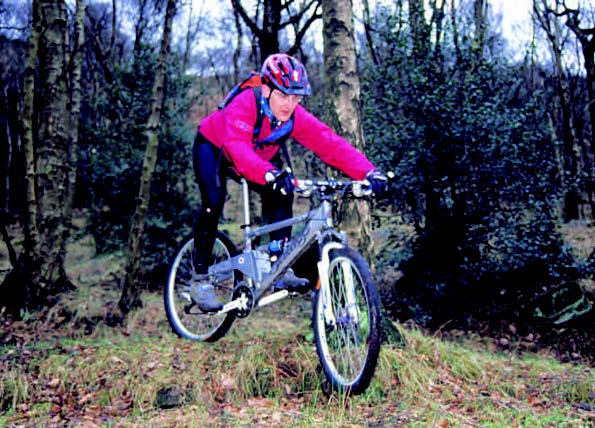
Frame
The first thing that strikes you about the Sub5 is the HUGE down tube formed by bending a single thin sheet of 6061 aluminium and welding it into an octagonal tube. The rear swingarm is similarly formed from 6061 sheets and attached to the downtube at the pivot with cartridge bearings running on a spigot sticking out from the downtube; the bearings sealed from the muck with aluminium covers. The pivot being some distance away from the chainrings helps give the Sub5 its 5” of rear travel.
From the corner of the swingarm to the mount on the downtube there is, in this particular case, a RockShox SID Dual Air shock. This had been specifically built by Tim Flooks at RockShox for Michael to test as until this year the SID shocks weren’t available in the 200mm length the Sub5 requires. Previously Orange have used Fox Shocks but the positioning of the air valves have proved awkward to get to with some suspension pumps. Not a problem with the SID whose dual valves for both the negative and positive spring chambers are easily available. A dial provides clickable adjustment of the rebound damping.
The swingarm on the Sub5 is the ‘ultra-lite beam’ as used on the Sub5 and MrXC bikes. This uses a thinner wall than the Patriot to save weight at the expense of some lateral rigidity and twisting. Orange have been experimenting with even lighter swingarms but as yet only Michael’s partner has got one.
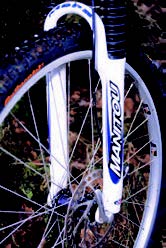
At the front we have an 80mm travel Manitou Mars fork but as with the rest of the bike this isn’t all it seems. The internals have been rebuilt to suit Michael’s weight by Manitou and most of a Mars Elite fork internals inserted. So this Mars fork has air and coil springs with Manitou’s Twin Piston Chamber damping. The Elite internals provide rebound damping adjustment as well as the standard preload adjustment from the normal Mars forks.
Fitting a 5” fork to the Sub5 isn’t a practical option as it slackens off the head angle on the bike and destroys some of the tight handling traits that a correct 71° head angle provides. Orange would prefer long travel fans bought the Patriot XC which weighs 3/4 lb more and uses thicker plate in the swingarm and downtube should you get your kicks from more challenging terrain.
Detail
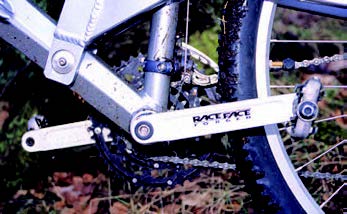
As this is a test bike in the truest sense Michael has a pick ‘n’ mix of components on his bike. Many of which you’ll see on this year’s Orange bikes. Of note are the Race Face components. Turbine LP cranks and chainrings, SYStem front loading stems and headsets will feature heavily on 2001 Orange bikes as these are the components Orange choose for themselves and not just whatever they can get cheaply. DeoreXT provides most of the rest of the drivetrain front and rear with Rapidfire+ shifters and derailleurs.
Braking is an odd mix of Hope XC4 rear and Shimano Deore hydraulic front with a Hayes disk rotor! The final choice for this year’s disk equipped Sub5s however are Hope’s excellent Mini open system 2 piston brakes.
Wheels are WTB Speedmaster rims with Hope Sport disk hubs and Continental’s excellent Explorer 2.1” tyres which feature the same tread pattern as the larger Vertical Pro’s.
Rider contact points are a WTB SST saddle perched on an ageing USE inline seatpost complete with purple anodised clamp – really, how 1993 Michael! – and an Orange HotRod2 flat bar with a red and a blue grip. When asked, Michael tells us this is because they were testing two different compound grips and the easiest way to tell is to make one red and the other blue!
Ride
After some time adjusting the SID Dual Air shock and Manitou forks to balance out a rider’s weight, the feel of the Sub5 suspension can be best described as ‘floaty’. It shows that these particular suspension systems have been fettled with by the masters with almost zero stiction letting the bike’s characteristics shine through.
Unlike Marin, Santa Cruz and Scott who place the pivot point in between the middle and outer chainring, Orange have taken cues from their more downhill specific bikes and moved the pivot higher up the downtube. This results in a more active suspension action than the former bike’s to the point that some found it a little too much on climbs. The short rear end, a whole inch shorter than a Marin, mitigates the pivot location helping in the bike’s climbing ability and as Orange is over generous in providing 5” of rear travel, many riders preferred to set up the rear shock firmer and not use the full 5”.
When provoked, we noticed a discernible amount of twist in the rear swingarm although it oddly didn’t seem to matter with the bike tracking well through rocky sections of downhill, the Conti tyres holding on to every change of direction well. And downhill is where the Sub5 shines with the active and supple rear swingarm soaking up the bumps.
The Manitou Mars fork, on the other hand, worked well enough providing you didn’t expect too much from it. It’s an XC fork built to a weight of around 3lbs and giving just 3” of travel so suffers slightly when hit with large bumps and flexes more than we’d like under heavy braking. It would seem an odd match for the 5” rear of the bike but given the XC/Trail remit from Orange we can see this appealing to riders who prefer low weight and finesse over big hit performance. Dial in the rear shock firmer and you’re sorted.
Elsewhere we had no gripes with the component choices. Race Face kit not only looks special but IS special and it’s good to see a bike manufacturer building to a performance level rather than a price point. The Deore front disk brake on Michael’s bike was a bit of a revelation outclassing the Hope XC4 for power easily. And lastly we preferred the red grip instead of the blue one.
Summary
If you’re looking for a general all rounder that is happy to pound trails all day and just as happy rattling down rocky hillsides at sensible speeds then you’d do well to consider the Sub5. Real nutters need look no further than the new Patriot XC for kicks.
The Sub5’s supple suspension makes it a good day bike where speed isn’t the greatest concern but the rider’s endurance is.
It’s beautifully made although the aesthetics of the final product aren’t to everyone’s taste. Orange have dared to be different and pulled it off.
Why would we want to review a PlanetX bike?” was one of the thoughts that went through our collective heads when the prospect of bike reviews came up. It’s a jump bike isn’t it? No. Trials bike? No. Dual Slalom? No.
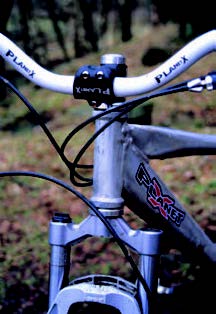
We’re confused. Just what are Planet- X on? The Compo is named after a character from “Last of the Summer Wine” and the bike’s designer, a certain Mr. Brant Richards from Calderdale, describes it as a bike for “Leckin’ about on’t moors”. In particular the moor north of Shore, West Yorkshire. So this would be a “North Shore” bike.
This bike is a true prototype. It’s not even been finished. There’s no paint on it, or anodising and even the welds still have the welder’s torch marks. Parts are a mix of PlanetX and whatever was lying around in the back of the shed.
We donned our SPD compatible wellies and safety woolly hat to find out what “Leckin” meant.

Frame
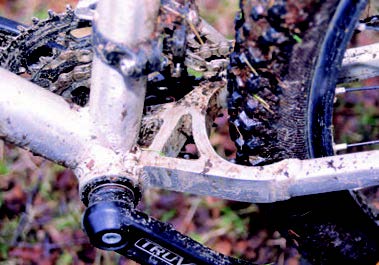
Hit with the ugly stick or functional? We’re not sure which it is but what you get is a very short 21.5” long front triangle made from Easton’s Downhill RAD tubing with a radically sloping top tube. The seat tube sticks up a further 4 inches from the top tube with a gusset to hold it in place. A chunky machined headtube makes sure you’re not going to damage the frame in any kind of frontal impact. The rear sees a CNC’d bridge which has been nicknamed the ‘Brunel Bridge’ and square section 7005 series ‘snake’ stays with chunky disk compatible forged dropouts. Cable routing is along the top tube with guides for hydraulic disk pipes on the stays.
At over four and a half pounds without the paint, this is as far from the Pace RC300 in concept as you’re likely to get and still be able to call it an XC bike. It’s also the antithesis of Fisher’s Genesis geometry. We’re sure it would be much heavier if it wasn’t for the diminutive size.
Fork choice is dictated by the frame’s geometry with 100mm+ travel forks being de rigeur. Our test bike coming with Pace’s new ProClass2 forks which feature a progressively wound Eibach spring and oil damping, Like the RC38 Airforce II on the RC300, this features Pace’s new bonded crown but unlike the Airforce has two braces to maintain fork rigidity.
Detail
It seems harsh to judge a bike thrown together like this but for the record, here goes. Drivetrain is SRAM’s ESP 9.0 system which has come on leaps and bounds since their Gripshift days thanks to a new spring system in their shifters. The rear mech retains their 1:1 actuation ratio and generally works better for longer than Shimano when the weather turns nasty. The 11-34 SRAM Powerglide II cassette is a favourite of ours being both lighter and shifting better than anything from Shimano.
Truvativ Stylo cranks with Trushift rings running on an ISIS spline pattern bottom bracket are top notch alternatives to Shimano although it’s yet to be proved if ISIS with its larger diameter axle and rounded spline ends will prove as reliable as the Shimano pattern. In theory, it should be.
The wheels are a mix of Mavic CrossMax disk front and CrossMax rear. Tyres are the truly wonderful Continental Vertical Protection 2.3” front and rear which provide large air chambers and a round profile. Ideal for rocky Calderdale or the Peak District.
Braking comes from a Hope XC4 with Wavy disk at the front and SRAM 7.0 V- brake for the rear. The XC4 is really out of place here and we suspect it’s there solely because that’s what was handy to fit the disk-only fork.
The rest of the kit is from PlanetX and consists of a short, chunky stem, microadjust seatpost with a little layback, WTB SST style spangley saddle and some quite ridiculous white 2” riser bars which nobody liked.
Ride
With its short dimensions and high bottom bracket, the Compo is an unusual bike to ride. On first ride it feels completely wrong with the rider sitting upright and high on the bike, leaning further back than many riders would be comfortable with. It led to one test rider describing the front of the bike as being ‘optional’ feeling not unlike riding a unicycle.
If all you ride is flat or rolling hills then you won’t be able to appreciate exactly why this bike exists. If you, however, spend a fair amount of your time climbing up and down the sides of technical, loose rocky valleys such as those prevalent in the Peak District, Lake District and the bike’s native Calderdale then this bike makes a whole lot of sense. Despite its slightly porky weight, the Compo climbs extremely well out of the saddle and the overbuilt construction inspires offroad lunacy. Big volume tyres are mandatory and thankfully the rear stays allow lots of clearance even on the 2.3” Conti tyres fitted.
Steering is fast and sharp allowing a certain amount of brute force to make your own lines where no lines exist. Sprint through rocks, ruts and roots and the high bottom bracket means you’re unlikely to catch a pedal allowing you to maintain your speed with confidence.
The Pace fork does its best to keep up with the abuse we’ve been giving the Compo but we feel it’s slightly outclassed by the brutish nature of the bike. A RockShox Psylo or Marzocchi Bomber may suit the character of the bike better and let you to run more travel than the Pace forks allow.
Summary
It’s a brave bike that will appeal to very few riders – and they probably know who they are already. The bike demands extreme terrain and isn’t happy doing miles of tarmac or smooth tracks. We can’t imagine anybody being happy riding this kind of bike on epic rides where comfort and riding position are so important but that isn’t what it’s for. The Compo is happiest messing about up and down rocky trails, on and off logs and picking lines you’d usually take a suspension bike. If you’ve only got a few hours to get in a muscle pumping workout then we can’t think of a better bike to pull out of the rack.
| Bike Test Issue 1 Specifications Table | |||
|---|---|---|---|
| Pace RC300mpo | PlanetX Compo | Orange SUB 5 | |
| Price | £1095 – frame only | £499 – frame only | £1399.95 – £2099.95 |
| Overall Weight | 22.5 lbs | 26.75 lbs | 25.5 lbs |
| Frame | |||
| Material | 7000 Series Al and Carbon Fibre | Easton RAD (7005 Al) | 6061 Al |
| Rear Shock | n/a | n/a | Custom RockShox SID, 200mm length |
| Fork | Pace RC38 Air Force II (63mm travel) | Pace Pro Class II (100mm travel) | Manitou Mars (80mm travel) – Mars Elite internals |
| Headset | Chris King Ahead | Cane Creek C2 | Race Face |
| Transmission | |||
| Chainset | Middleburn RS3, Pace chainrings | Truvativ Stylo ISIS, Truvativ Rings | Race Face Turbine LP, Race Face rings. |
| Front Derailleur | XTR | SRAM 9.0 | Deore XT |
| Rear Derailleur | XTR | SRAM 9.0 | Deore XT |
| Shifters | XTR (9 speed) | SRAM 9.0 (9 speed) | Deore XT (9 speed) |
| Cassette | Shimano M900 (11-32) | SRAM 7.0 (11-34) | Shimano M737 (11-32) |
| Chain | Shimano HG90 | SRAM PC89 | Shimano HG90 |
| Pedals | Ritchey | Wellgo (Ritchey style) | Shimano 747 |
| BB | Hope Titanium | Truvativ ISIS | Race Face |
| Wheels | |||
| Hubs | Hope Suspension Front, Hope Tiglide rear | Mavic CrossMax Disk Front, non-disk rear | Hope Sport front and rear |
| Rims | Sun DS1-XC Disk specific | Mavic CrossMax Disk Front, non-disk rear | WTB Speedmaster |
| Tyres | Tioga Factory XC 1.95” | Continental Vertical ProTection 2.3” | Continental Explorer 2.1” |
| Brakes | |||
| Front | Hope XC4 150mm disk | Hope XC4 150mm Wavey disk | Shimano Deore 160mm |
| Rear | Hope XC4 130mm disk | SRAM 7.0 V-brake and lever | Hope XC4 130mm disk |
| Details | |||
| Bars | Pace RC130 | PlanetX 2” riser | Orange Hotrod2 |
| Stem | Pace 100mm | PlanetX 90mm | Race Face SYStem 90mm |
| Saddle | SDG Satellite | PlanetX (WTB SST clone) | WTB SST |
| Seatpost | Ringle Moby Inline post | PlanetX | USE Inline |
| Geometry | |||
| Listed Size | 18” | Small | 18” |
| Seat Tube | 17.5” | 17.5” | 18” |
| Standover | 30” | 28” | 29” |
| Effective Top tube length | 23” | 21.5” | 23” |
| Chainstay length | 16.6” | 16.5” | 16.6” |
| Head tube | 5” | 5.25” | 4.75” |
| BB Height | 12” | 13.125” | 13” (uncompressed) |
| Head angle | 71° | 71° | 71° |
| Seat Angle | 74° | 74° | 73° |
Final Word
The diverse nature of the UK and in particular, Yorkshire’s riding conditions has produced three bikes of such contrasting styles yet of which all could be defined as ‘cross country’. Each is as much a product of their environment as they are that of their designers’ imagination and skill.
North Yorkshire’s rolling open moors providing a fast, smooth, refined, racer in the Pace RC300 whilst West Yorkshire’s punishing Pennine trails giving us a strong hardtail for bashing up and down valley sides and a comfy all round trail bike with the PlanetX Compo and Orange Sub5 respectively.
It’s unfair to compare each against the other so we won’t. In a perfect shed, there’s room for each of these bikes in your collection as each does what they do well. It’s up to you how you define cross country.


