Up next in 10



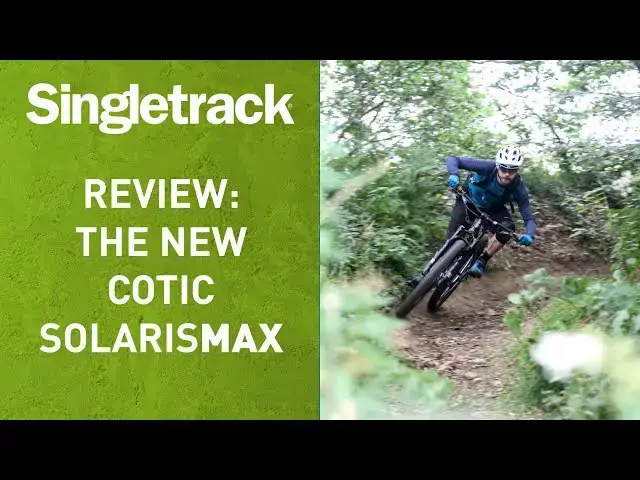
We've been testing the brand new SolarisMAX from Cotic Bikes, and it is an absolute corker! You can now read the full review online right here: https://singletrackworld.com/2018/07/review-the-latest-cotic-solarismax-is-one-of-the-fastest-hardtails-weve-tested/
Show More Show Less View Video Transcript
0:00
Hey everybody, it's Will here from Singletrack Magazine and Singletrackworld.com
0:05
And I'm currently on a trail local to the Singletrack office in Tobiton, and I have with
0:09
me here this bike. This is the Solaris Max from Kodik Bikes
0:13
Now, this bike is brand new for 2018. We've been testing one for the past two months, and you can now read the full review on Singletrackworld.com
0:22
Kodik has actually had the Solaris in its lineup for about five years now, and this one
0:26
here represents the third generation of the platform. still a 29 inch steel hardtail and in terms of where it sits in the Kodak lineup you can kind of
0:34
look at this as a big wheel version of the Soul or perhaps alternatively as a hardtail version of
0:39
the Flare Max. Whatever way you choose to look at it though there is no denying that this is a
0:44
properly rapid hardtail. Now let's go through some of the basics on this bike. It uses a steel frame
0:50
and we have Reynolds 853 tubing for the front end. That includes a 44 millimeter head tube up front
0:56
and a fat 34.9mm seat tube. Both of those are designed to add a lot of stiffness to the chassis
1:02
which it needs because, as you can tell by the top and down tube, this bike is enormously long
1:08
I'll go into a little bit of detail about that shortly. Outback, we have 4130 Chrome Molle Stays
1:13
These are nice and shapely to give plenty of tyre clearance. Synthase X12 through axle, threaded bottom racket shell
1:20
ISC G05 tabs, and, probably one of my favourite features, almost entirely external cable routing, which is really nice if you're working on gear cables
1:29
or changing brakes around as we have. Now the biggest change on this Solaris Max compared to
1:35
the previous version is no doubt the geometry. Kodik have implemented what it's calling long
1:40
shot geometry. Long shot essentially refers to a much longer front centre on the bike
1:45
How long you ask? The answer is bloody long. This bike is enormous. The medium that I've been riding
1:51
has a reach of 463 millimeters. Now to put that in perspective that's actually longer than the
1:59
previous versions extra large so it is absolutely enormous. Kodix even added a small frame size back
2:05
into the Solaris lineup. The small still runs a reach of 440 millimeters which is pretty similar
2:11
to a lot of other brands medium frames so yes it is very very long and that's paired to a really
2:17
short 35mm long stem. This stem comes on the small, medium, large and extra large frame sizes, so each frame
2:24
is designed to run the same bar and stem Now other geometry figures on this bike we talk about the head angle and seat angle which Kodak actually measures with the suspension fork at sag to simulate a rider being on board
2:38
So at 25% sag you're looking at a 66 degree head angle of the front which is very slack
2:43
a 74 degree seat angle which is quite steep and in terms of the rear centre length that is 444
2:50
millimetres which is really quite long particularly when a lot of other hardtails are going as short
2:54
as possible. Kodak of actually going the opposite way and extending the rear center. That combined
3:00
with the long reach, the slack head angle, gives this bike a huge footprint on the trail. You're
3:05
talking nearly a 1200 millimeter wheelbase which is huge. That gives this bike a load of presence
3:11
and a load of stability on the descents. Up front we've got a 120 millimeter travel fork from X-Fusion
3:17
This is the McQueen HLR. It's got independent high speed and low speed compression damping
3:22
rebound damping, air spring adjust, and you can even adjust tokens inside the air spring as well
3:26
so loads of adjustability. Now with the new Solaris Max, Kodik has increased the available
3:31
fork travel you can fit to this bike, so although ours comes with a 120mm fork, you can fit up to a
3:37
140mm. Obviously that'll slacken off the angles and it will lift up the BB height a little bit as
3:42
well, and I can only imagine how much faster this bike will go with a longer fork on it. Like the
3:48
the Solaris Max before it, this model is also compatible with 27.5 inch plus wheels and tyres
3:55
There's room in the back for a 27.5 by 3 inch tyre. Right now I've got 29 inch wheels in here
4:01
and we've got 2.6 inch rubber. That is very, very high volume and the Bontrager SE4 tyres that I'm
4:08
currently running do measure true to size. So these are a proper 2.6 inch tyre and there's still
4:13
clearance in the back for mud, which is really nice. You could potentially go a little wider
4:18
again if you wanted at your own risk, but I think this 2.6 is probably about the limit that you can
4:22
fit in the back of the Solaris Max. As for the build kit, the bike is a little bit of a mishmash
4:27
and that's because I've been testing a few other parts on this bike including a SRAM NX Eagle 1x12
4:32
drivetrain and guide T brakes. In terms of the cockpit, I have made a couple of adjustments
4:38
I wasn't really a big fan of the Kodak branded saddle and grips, so I've replaced that with a
4:44
Pro Griffin saddle, which is much flatter, much more my style, and I've also fitted on a pair of
4:49
DMR death grips. These are the slim diameter in the soft compound, and they are fantastic
4:55
The cockpit itself is really roomy As you can imagine with that big long reach there plenty of space to move around on I really like Kodik branded handlebar and stem We got a 780mm wide riser bar paired to that
5:07
short 35mm stem. Very comfortable and not too stiff either. Kodik actually developed this bar
5:13
and stem specifically with a 31.8mm diameter because a lot of their vendors are moving to
5:18
35mm diameter bars and stems which Kodik believes is too stiff and also just looks a bit weird with
5:25
the skinny steel tubing on this frame. Right, so how does this bike actually ride? In terms of
5:30
cruising along and climbing, it's a pretty unassuming steel hardtail. It's not the lightest
5:35
bike in the world, so it's not going to set any comms on the climbs. However, it is really
5:39
comfortable to climb on, and a lot of that has to do with the big open cockpit that gives you
5:44
plenty of room to move around on. You never feel cramped on this bike, even as you're going up
5:49
steep fire road climbs. So quite comfortable, but it gets even better on technical single track
5:55
climbs. There's a load of traction from these big tires so that helps when the trail surface gets a
6:00
bit rough and loose but because of that long rear center that 4-440mm chainstay length this bike is
6:07
actually really planted on the climbs. I wasn't expecting that because it is quite slack and you
6:11
do have that short stem there and typically that results in quite a light and potentially
6:16
wandering front end but because this bike has such a long wheelbase it stays really steady and it
6:21
stops the bike from kind of tipping backwards when you're going up really steep pinches
6:26
So technical climbing is actually really good. There's a good amount of pedal clearance too
6:30
so even when it's quite rutty and washed out, there's still clearance there for the pedals to
6:35
kind of claw your way up really steep pinches. Where this bike shines though is on the descents
6:40
That's where this new long shot geometry and those big 29 inch wheels come into their own
6:45
It is really, really fast. You get it on rough, rocky terrain, let off the brakes, and it builds momentum very, very quickly
6:55
Thanks to that slack head angle and long wheelbase, it's very steady and very calm in situations where a hardtail probably shouldn't be this calm
7:03
In fact, I surprised myself on a load of regular descents that I would normally ride on much longer travel full suspension bikes
7:10
with how fast the Solaris Max can travel down those same descents
7:14
One thing I did have to work on though was pre-emptive braking because there are situations
7:18
where you end up coming into a corner or the bottom of a descent going way too fast than you
7:24
should be but because this bike is so calm and steady in those situations it doesn let on that you going that fast until perhaps it too late So I did spend a bit of time relearning my braking points and working out when to slow down and when to rein this bike
7:38
in because if you let it off the hook it'll charge as fast as you're willing to let it
7:43
As for cornering I was pretty surprised actually with how well the Solaris Max goes through the
7:47
turns. It is a really big bike it's quite slack normally you'd expect a 29er with that kind of
7:53
geometry to be a lot of hard work through the tight stuff. Surprisingly that's not the case
7:57
Kodik have got the handling spot on with this bike. Now on wide open flat corners coming out
8:04
of long straights it does require a bit more work to kind of carve the bike through those turns
8:09
because there is so much momentum in the wheels and in the bike itself when you're kind of steaming
8:13
along. Get it into the tight stuff though and you'd be surprised with how well this cuts through
8:19
those turns. A lot of that has to do with weight distribution. You're positioned right in the middle
8:24
of the bike and like a mid-engine sports car that actually makes it relatively easy to change
8:29
direction and also change your weight distribution on the front tyre to the rear tyre. So if you can
8:35
feel one actually starting to give through the corner it's quite easy to move around on the
8:39
cockpit, shift your weight and get grip back onto that tyre so you can keep on your line. So although
8:44
it is a big bike surprisingly it gets through corners really really well. It just takes a few
8:49
rides to get used to it but once you do get a feel for that weight distribution and how much
8:54
traction there is in these tyres, you can really, really rail corners hard and fast. So for me
9:00
there were very few downsides to the long shot geometry on this bike. I guess one of the potential
9:05
downsides is the seat angle. I would like to see this a little bit steeper. I've had to slam the
9:10
saddle as far forward on the rails as it will possibly go. That has actually steepened the
9:16
effective seat angle, but I'm at the limit. And for anyone else out there that would want to go
9:21
steeper again you basically don't have any more room to move so I'd like to see the seat angle
9:27
perhaps a degree steeper just to bring that saddle a little bit closer to the grips
9:30
but with the saddle in its current position I've had no issues with comfort or with getting the
9:36
power down on the climbs so overall this geometry and this bike as a whole has really impressed me
9:41
now if you'd like to read a bit more about this bike then you can jump on singletrackworld.com
9:45
to read the full review on the new Solaris Max from Kodak bikes in the meantime if you've got
9:50
questions about this bike including how it's gone with 27.5 plus setup pop them
9:55
in the comment section below and I'll do my best to answer them for you otherwise thanks for watching guys hope you've enjoyed we'll see you next time
10:02
to route
#Sports