UPDATE: Reviews section refreshed, redesigned, searchable: Go take a look
And the Magnus Effect can be used to model lift and drag characteristics of airfoil shapes.
edit: ignore that, it's a similar principle but not quite what's going on.
As I wrote above, it's all horribly complex if you want to model it properly.
Back to the original question...
In paragliding, broadly speaking, the glide ratio of the wing is determined by the aspect ratio (wing span/width front to rear), with a higher aspect ratio giving more efficient gliding, but a less stable and faster wing.
Assuming similar characteristics for plane wings, that would explain why they're relatively spindly, especially since they have flaps and whatnot to increase the area and lift and reduce stall speed for take off and landing
but a less stable and faster wing.
That's interesting, is that longitudinal or lateral stability? And do you mean stability or maneuverability? My aerodynamics is pretty rusty and I'm trying to get my head round a tail-less setup
It's all thrust demons and lift pixies.
Not quite sure why people seem to be so quick to dismiss the effect of camber on lift, angle of attack may be important but it's certainly not the only thing (outside of very specialised planes like the Starfighter or Lightning).
OP: you might want also to take a look at the difference between pigeons, hawks and seagulls, and think about where they live (at least in nature - I appreciate seagulls are all over the place 🙂 ). Their natural habitat and the wing shape are closely related - pigeons have short, wide wings which are ideal for manoeuvring in tight spaces like forests (or indeed cities). Gulls have long, thin wings "designed" for long flights at minimal effort over water. Etc.
That's interesting, is that longitudinal or lateral stability?
Suppose to some extent that's going to depend on wing design and cell distribution (bearing in mind paraglider wings are made up of inflated cells)... that said, I'd imagine it's more relating to lateral stability, since you effectively have a thinner wing, which in many respects is like a shorter wheelbase.
And do you mean stability or maneuverability?
I'm refering to stability in this instance.
[b]Camber [/b]generates both lower wing surface angle of attack in planes and a downwards flow of air over the trailing edge of the wing which causes a Newtonian reaction upwards. And flaps and leading-edge devices/droops used at slow speeds increase this. You don't need to invoke every out-of-touch physics teacher's inappropriate use of Bernoulli to explain lift.
I'm pretty sure we did this one some years ago btw...
[quote=mogrim ]Not quite sure why people seem to be so quick to dismiss the effect of camber on lift
I hadn't spotted anybody doing so - if I'd remembered that term I'd have used it in my post. It's just that camber only provides a small amount of the lift through the Bernoulli effect - there are other more important reasons for camber.
Explain this then.
Is it: Because they are German?
I'm right aren't I
Think the wings look narrow compared to the size of the plane?
Take a look at Paul Allen's Stratolifter:
[IMG] 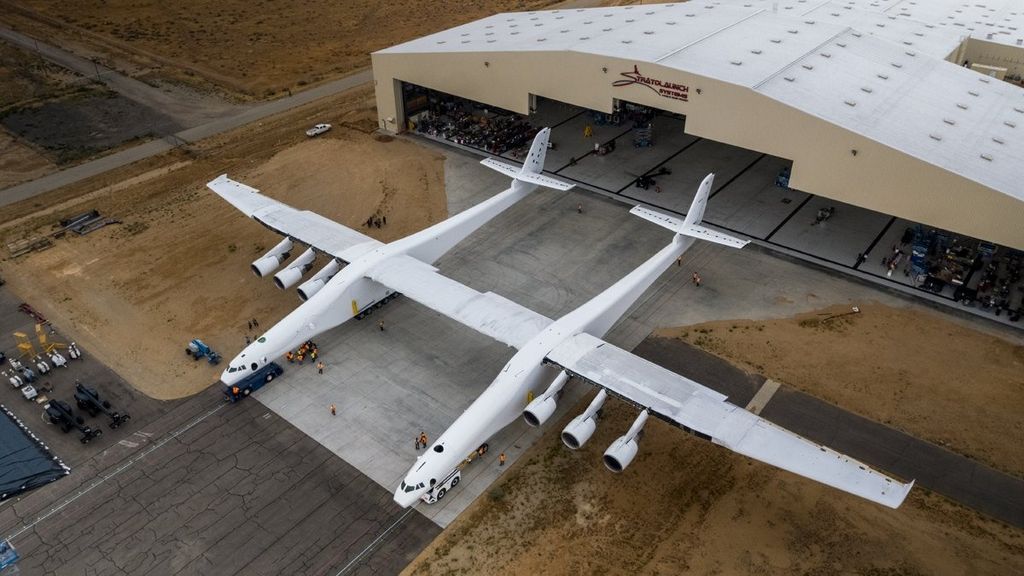 [/IMG]
385' wingspan, six Pratt & Whitney turbofans from Jumbojets, and all-up weight on take off 1.3 million pounds, 500,000lb payload! 😯
http://stratolaunch.com/news/FirstRollout.html
At max take-off weight my Jet would crush a treadmill. So we use concrete instead.
So it's magic sucking that keeps the plane in the air.
[url= http://www.traveller.com.au/cockpit-sex-scandal-forces-cathay-to-rethink-marketing-1itmn ]Only on Cathay, "the team who go the extra mile to make you feel special"[/url]
[url= http://www.thevintagenews.com/2016/03/10/caproni-stipaan-experimental-barrel-shaped-italian-airplane-designed-1930s/ ]Seems like a good time to mention the Stipa-Caproni[/url]
[img] 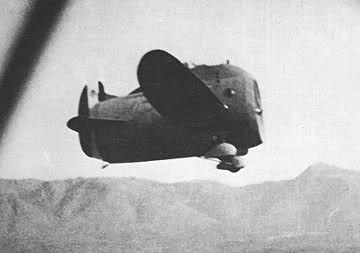 [/img]
[img] 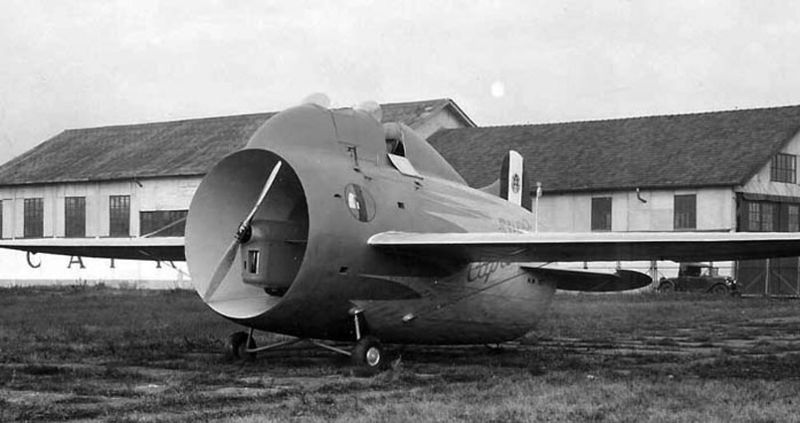 [/img]
Tedious technical correction:
Flaps increase lift by increasing the surface area of the wings (along with some aerodynamic tweaks). However, they also reduce the critical angle of attack, making the extra lift a bit useless as you slow down.
Slats are there to increase the capability of the wing by increasing the critical angle of attack and moving you away from a stall as the flaps deploy. For this very reason slats go out first and in last.
Yet more complicated still is the odd aircraft with flaps on the leading edge of the wing, which are there to encourage a stall, if it happens, to start in the right place.
I'm still not convinced completely by any explanation of how lift works, and I drive the things... 🙂
Well bernouli's was what I was as the taught back in uni And what we used in the design office in my early years post apprenticeship so it works for aircraft design. It Is complex for sure but the cobra manoeuvre is only possible due to bernouli's and it is only bernouli's that kept Concorde flying at speeds below the speed of sound due to the S-shapes leading edge of the wings generating huge high speed vortices above the wing to reduce the pressure further ( fast moving air has lower pressure) and keeping it flying at subsonic speeds.
The amount of 'lift' produced per square inch on a typical airliner is equivalent to a baby sucking on a straw but it applies over enough of a surface area it lifts the aircraft into the air. Airliner wings are very big. And for aircraft where wings are not big (e.g. Star fighter) then the aircraft is very fast to generate more pressure differential.
But airliners want wings with a high aspect ratio so a large wingspan and a narrow wing. This is a lot more efficient and gives a wing with a large internal volume for carrying lots of fuel. But airliner and wingspans are limited to 80m to be able to fit into airports. The a380 should ideally have a much wider wingspan for ultimate efficiency, but coulbn't as they would have broken the 80m wingspan, so it's wings are relatively short and stubby, but the new Boeing 777x family of aircraft in the early 2020's will have foldings wing tips like aircraft carrier jets so they can have a greater than 80m wingspan on flight and fold up the wingtips once why've landed and taxi'ing into the stand, which will be interesting, especially when (not if) the mechanism fails and the aircraft is stranded out on the taxi-way full of passengers who just want to get off the plane!
It's all very interesting and all a huge compromise between efficiency, structural requirements, aircraft handling, airport infrastructure needs, maintenance and repairability and a whole host of other things.
[b]Flaperon[/b] seems to work though... thanks for the insight
[b]wobbliscott[/b] Isn't this one of those things where it is a useful pragmatic mathematical model under some circumstaces, but one which is based on a false analogy rather than fact, a bit like thinking of electrons as actual physical particles with a location?
Or Newtons laws of gravity. They took us to the moon, but have been replaced by Relativity and SpaceTime.
Shred - Member
Or Newtons laws of gravity.....
Perhaps a bit further investigation is needed.
At the recent Single Speed Champs I noticed that if you placed a certain amount of a chemical C2H5OH in a single speed rider, the gravitational pull of the earth's mass increased in direct proportion the the amount and often the rider was unable to stand up.
In certain cases it was so strong that it was pulling out their stomach contents.
I feel this is something we could all experiment with and arrive a consensus for a new theory for Gravity.
But on the other hand, why don't teetotallers fly off the face of the planet? It's a mystery...
epicyclo - your taste in planes matches your taste in bikes... 😆
matt_outandabout - Member
epicyclo - your taste in planes matches your taste in bikes...
Fair go! The Sopwith Camel is more to my taste. The sort of plane a cyclist would build...
[img] 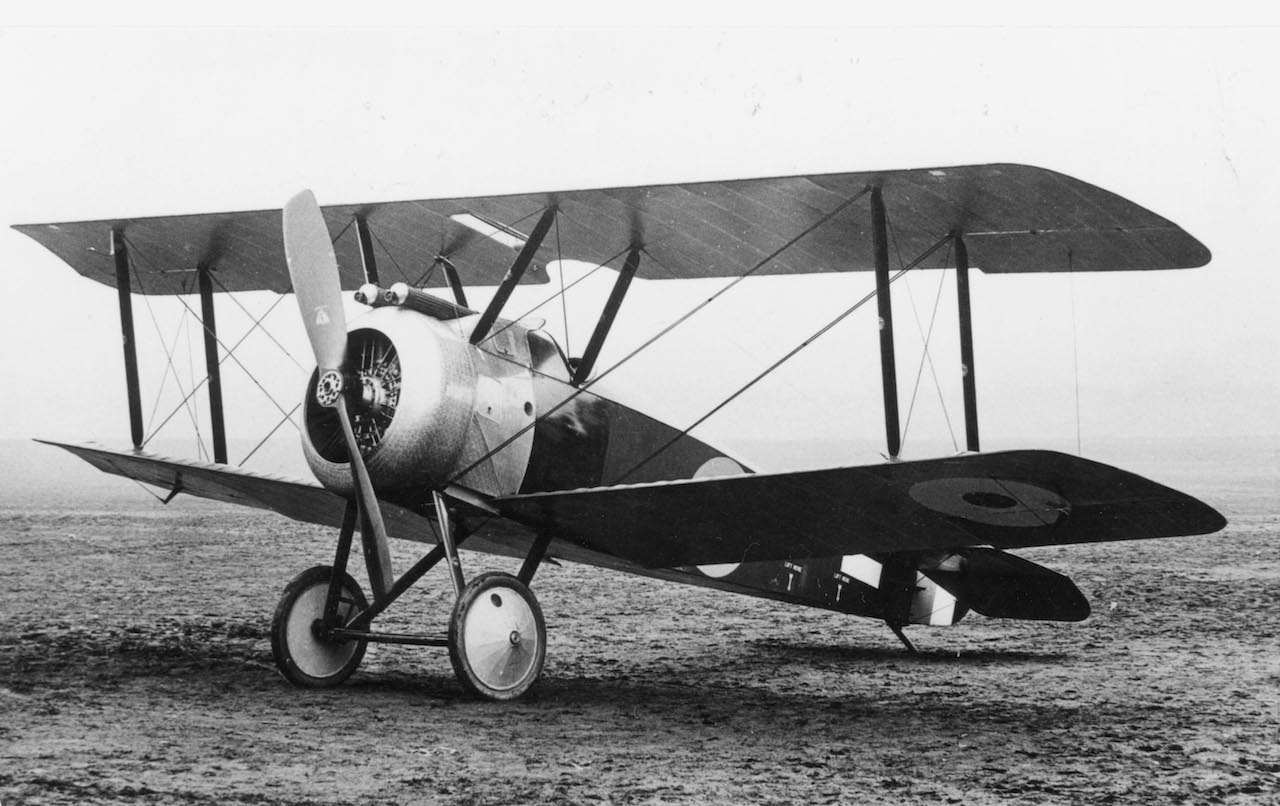 [/img]
And it has a couple of BMW disrupters fitted as standard...
epicyclo - Member
Fair go! The Sopwith Camel is more to my taste. The sort of plane a cyclist would build...
No, the sort of plane an STW cyclist would build if they liked steel singlespeeds and had a beard.
🙂
Didn't planes used to have short wings, they were extended to make the flight smoother, take less energy and go faster. Made the air come alive so I'm told.
One of the better (or more accurate) ways to describe it is by rotation of the flow around an aerofoil - map this onto a constant onset velocity and hey presto you start to see the speed / pressure differences needed to generate lift. Also explains why you see tip vortices and a starting vortex initially. Kutta-Joukowski theorem and lifting line theory cover it. Interestingly a delta winged aircraft (military, concorde etc.) can generate lift through another mechanism at high AoA - the acute leading edge or strake generates a roll vortex over the top of the wing.
What's better about that?
I can fly a plane and have passed relevant exams but I haven't a clue what you're talking about.
I'm not saying you're wrong but understanding the level of understanding of your audience is significant .
I'm an engineer who's studied a bit of fluid dynamics, and I like the explanation but I'm still going to have to go away and google most of it!
One of the better (or more accurate) ways to describe it is by rotation of the flow around an aerofoil - map this onto a constant onset velocity and hey presto you start to see the speed / pressure differences needed to generate lift. Also explains why you see tip vortices and a starting vortex initially. Kutta-Joukowski theorem and lifting line theory cover it.
Well, the argument is that it's not the pressure differences that generate lift (Bernoulli), it's the positive angle of attack - and a positive angle of attack can also be thought of as a rotation about the aerofoil. That also gives you the tip vortices etc.
An aerofoil is the most aerodynamic shape that changes the direction of the airflow. Angle the airflow downwards, and there's an equal and opposite reaction pushing the aircraft upwards.
My degree is in aeronautical engineering but it was 18 years and a few too many frazzled brain cells ago for me to remember too much detail, but it's an incredibly complicated thing to calculate and I've drunk too much gin to even attempt to get my brain in gear!
NASA have some pretty simplistic explanations on their website if anyone wants some bedtime reading.
https://www.grc.nasa.gov/WWW/K-12/airplane/shape.html
https://www.grc.nasa.gov/WWW/K-12/airplane/liftco.html
https://www.grc.nasa.gov/WWW/K-12/airplane/geom.html
and yes, they disagree with the pure Bernoulli theory
https://www.grc.nasa.gov/www/k-12/airplane/wrong1.html
I don't think anybody is suggesting it's all about AofA, but it's a far better simplification than Bernoulli. I mentioned Newton 3 in my explanation - fundamentally it's mainly about deflection of the air, and whilst that's a lot to do with the airfoil shape on a typical airliner the effect is the same.
Whilst deflection theory can help to explain in simple terms the ability of a wing to generate lift. It's not just about lift (especially for commercial aircraft) it's about lift:drag ratio. The rotation of the airflow and the pressure differences created on the upper and lower sections of the wing are critical for reducing drag during normal (cruise) operation thus allowing for a small (supercritical) wing. The flaps/slats, increased AOA and the available thrust from the engines allow for increased lift (but massively increased drag) at lower speeds during takeoff and landing.
Everyone is giving very wordy answers concentrating mostly on the coefficient of lift.
I'd like to introduce a formula:
Lift = 0.5×Cl×rho×A×V^2
Cl is coefficient of lift
Rho is air density
A is wing area
V^2 is velocity squared
So to answer the OP in a more simple manner, speed is much more influential than wing area, as lift is defined by speed squared. If aircraft were a little slower, the wings would have to be much bigger (assuming Cl stays the same - slats and flaps as discussed change Cl so you can land at slower speed)
Don't ask me how you apply this to horses on treadmills though
Edit: that ended up quite wordy too...
After looking at those Flettner models, it raises the question, if the wing surface was an enormous treadmill, would it take off? 🙂
I'm sure aerodynamics is in the same position as mathematics was before they discovered zero. I suggest it's time for the discovery of the vacuum molecule which will revolutionise the approach to flight in the same way a proper appreciation of black smoke changed our attitudes to power generation.
"I did some work with tanker conversions of VC10s many years ago"
Tangent: I cleared the last ever VC10 sortie to land. And the last Jaguar. Not on a treadmill though.
I remembered a plane with inflatable wings from when I was a lad, but couldn't find any reference to it.
But I did find this.
Edit: Ooh, found it.
Maybe not...
However that's probably a bit extreme.

