Up next in 10



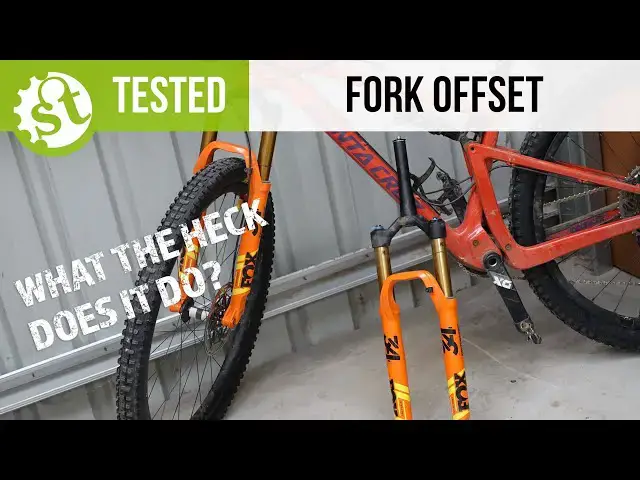
Fork Offset - What is it? And why does it matter?
Unless you've been living under a firm piece of mineral sediment for the past two years, you'll have noticed that fork offset has been a particularly hot topic in the world of mountain biking.
Of course for many frame designers, fork offset – and the role it plays in governing a bike's handling – has been a consideration for a lot longer than that. But ever since Whyte launched its S-150 in early 2017, and Transition announced its range-wide 'Speed Balanced Geometry' around the same time, the collective swarm of journalists, internet forum dwellers, racers, marketing managers and consumers, have been buzzing about it a whole lot more.
The main topic in this conversation has been around the handling advantages (and disadvantages) of using 'reduced-offset forks'.
In this video, Wil goes into detail about what fork offset is and how it affects handling on the trail. Finally, Wil talks about his experience of back-to-back testing different fork offsets on the Santa Cruz Blur to determine which is best.
Got any questions about fork offset? Drop them into the comments section below and we'll do our best to answer them for you!
Read the full feature online right here: https://singletrackworld.com/
Show More Show Less View Video Transcript
0:00
[Music]
0:09
[Music]
0:16
hey everybody welcome to single track my
0:18
name is will and today we're going to be
0:20
talking about a pretty hot topic in the
0:21
world of mountain biking and that my
0:24
friends is fog offset firstly I'm going
0:26
to be talking about what the heck fork
0:28
offset actually is and then we're gonna
0:30
go into some detail about what role it
0:32
plays in modern mountain bike geometry
0:35
finally I'll be talking about my
0:36
experience with back-to-back testing
0:38
different fork offsets and how they
0:40
affect handling on the trail now if you
0:42
haven't already consider hitting that
0:44
subscribe button to make sure you get
0:46
notified all the videos we have coming
0:47
your way in the near future right so
0:49
before I go into detail about the
0:51
results of the fork offset experiment
0:54
let's take a look at some of the key
0:55
terms that are gonna help explain things
0:57
through this video the first one is the
0:59
steering axis and when we're talking
1:01
about front end handling on a mountain
1:03
bike the steering axis is one of the
1:04
most important factors really though the
1:07
steering axis is just a fancy way of
1:09
saying head angle to picture this
1:11
imagine a straight line shooting out of
1:12
the head tube and going all the way down
1:14
to the ground that right there is your
1:16
steering axis otherwise known as head
1:18
angle in general will find longer travel
1:21
enduro bikes and downhill bikes will
1:23
have a slacker head tube angle somewhere
1:25
in the realm of 60 to 65 degrees in
1:28
comparison shorter travel trail bikes
1:30
and cross-country hardtails will use a
1:32
steeper head angle somewhere around 65
1:35
to 70 degrees there's of course a bit of
1:37
variance in there but to generalize the
1:39
slack of the head tube angle the more
1:41
descending oriented the bike is the
1:43
second term is fork offset and this is
1:46
basically how far forward the front hub
1:48
is offset from the rest of the fork now
1:51
remember that steering axis we were
1:52
talking about before that straight line
1:54
that goes all the way to the ground
1:56
now imagine a secondary parallel
1:59
straight line that runs just in front of
2:01
that but intersects the axle of the
2:03
front hub now the distance between those
2:05
two lines is the fork offset the third
2:08
and final term is trail they remember
2:10
the steering axis we were talking about
2:12
before your
2:13
that the steering access hits the ground
2:15
somewhere in front of the front wheel
2:17
now the distance between where it hits
2:19
the ground and the tire-contact patch is
2:22
called trail essentially what we're
2:24
measuring there is how far the front
2:26
wheel trails behind the steering axis to
2:29
generalise again the more trail you have
2:32
the more stable the steering will be and
2:34
this is because of a mysterious force
2:36
called the caster effect this is
2:37
essentially the front wheels ability to
2:39
self-correct after it's been knocked off
2:42
line and you'll notice this if you're
2:44
riding along on the road without your
2:45
hands on the handlebar that rather than
2:47
wiggling all over the place the front
2:49
wheel generally stays pointed straight
2:51
ahead this is the caster effect at play
2:53
so the more trail that we have the
2:55
stronger the caster effect is and in
2:57
general the more stable that front end
2:59
steering will be now the reason I wanted
3:01
to explain the steering axis and fork
3:03
offset is that both of them will
3:05
influence how much trail your bike has a
3:07
slacker head angle will increase the
3:09
amount of trail whereas a steeper head
3:11
angle will decrease the amount of trail
3:13
as for fork offset assuming that the
3:15
head angle stays the same a shorter fork
3:18
offset will actually increase the amount
3:20
of trail whereas a longer fork offset
3:22
will decrease the amount of trail this
3:25
is because offset will change where the
3:27
tire contact patches and therefore will
3:29
either bring it closer or further away
3:31
from the steering axis now for this
3:33
video we're going to be talking
3:34
exclusively about offsets for a 20-9 of
3:37
forks from Fox and rock shocks and
3:39
that's predominately because those the
3:40
Forks that I've been testing for the
3:42
past six months but also to try and keep
3:44
things relatively simple in recent years
3:46
most 29er Forks have used a 51
3:49
millimetre offset over the last 18
3:51
months though Fox and RockShox have
3:53
offered up a shorter offset option in
3:55
their 29er Forks for RockShox
3:57
that's a 42 millimeter offset and for
3:59
fox like we have here a 44 millimeter
4:02
offset right so now we know what those
4:03
terms are it's time to talk about this
4:05
santa cruz blur and some of the testing
4:07
i've been doing on it so this bike has
4:08
been built up on the burliest side of
4:10
things and that includes a 120
4:12
millimeter fox 34 step cast fork on the
4:15
front now this is the longest travel
4:17
fork you can fit on this frame and if
4:18
you've seen my review of the blur
4:20
already you'll note that I really really
4:21
like it this is a whole lot of fun to
4:23
ride to begin with I started riding with
4:25
this fork here this
4:26
the 44 millimeter offset then I swapped
4:29
it for this fork here this is an
4:30
identical four this is a Fox 34 step
4:33
cast in the factory series model so it
4:35
has the same chassis the same evil air
4:38
spring the same fit for damper
4:39
everything is exactly the same except
4:42
for the offset this is a 51 millimeter
4:44
offset fork now with these Forks I did
4:46
some repeated back-to-back testing I
4:48
dried exactly the same loop with exactly
4:50
the same settings to make sure that I
4:52
was able to isolate the performance
4:53
differences between the 51 millimeter
4:56
offset and the 44 millimeter offset now
4:58
in my experience the difference between
5:00
the two is fairly subtle it's certainly
5:02
not as dramatic as some brands make it
5:04
out to be but the differences are still
5:06
there with the 51 millimeter offset the
5:08
steering is a little lighter and easier
5:10
to thread around really tight twisty
5:12
corners I noticed this on some of my
5:14
local XC trails which have a lot of
5:16
uphill switchbacks and flat tight low
5:19
speed corners here I found the 51
5:21
millimeter fork to be more intuitive and
5:23
more natural to get around those tighter
5:24
bends and overall it feels like the
5:26
steering radius is just a little bit
5:28
tighter which gives it a really nice
5:29
nimble agile feel on the trail the line
5:32
of steering did mean the blur was a
5:33
little less stable on the rough at a
5:35
sense though and that's because of the
5:37
reduced caster effects so the front
5:39
wheel is less likely to self-correct
5:41
after it's been knocked off line I also
5:43
notice that the front wheel could wiggle
5:44
a little bit on long high speed berms
5:46
and if I was really pushing it it could
5:48
be pushed into oversteer as well when I
5:50
swap to the 44 millimeter offset the
5:52
blur just felt calmer and steadier
5:54
overall in those same high speed corners
5:57
it tracked better and it just had a more
5:58
sure-footed feel when I was loading up
6:01
the bike into a berm I found less need
6:03
to make micro corrections to the
6:04
steering and it just stuck better the
6:07
flipside of this stability though is
6:08
that the blur takes a bit more work on
6:10
the tight and twisty trails particularly
6:12
at lower speeds I found in order to get
6:14
the bike around those sharper turns you
6:16
really need to lean it over rather than
6:18
trying to steer with the handlebar in
6:20
that regard I was really glad to have
6:22
this dropper post as well as the wide
6:24
bars and short stem which really helped
6:26
to crank the bike over to make it all
6:28
the way through those sharp turns I'd
6:30
say in general you do need to ride more
6:32
aggressively with the shorter 44
6:34
millimeter offset this can be a little
6:36
bit fatiguing on longer cross-country
6:37
rides conversely though I did find the
6:40
44
6:40
offset easier to pile it down really
6:43
rough long faster sense where it would
6:45
hold its line more confidently and if I
6:47
was tired this was particularly
6:49
beneficial now I will reiterate that the
6:51
difference between the two fork offsets
6:53
isn't huge I was able to get used to
6:55
each one within a ride or two and I
6:57
certainly wouldn't say that one is right
6:59
and one is wrong really they just have
7:01
different characteristics that they're
7:02
gonna suit different riders better and
7:04
also different bikes and terrain better
7:06
- in my experience changing fork offset
7:09
is more about fine-tuning the front end
7:11
handling of your bike if you want a bit
7:12
more stability you could look at fitting
7:14
a shorter fork offset if you want to
7:16
speed up the handling though a longer
7:18
offset may be the way to go
7:19
also worth bearing in mind is your stem
7:22
length and your bar with two things that
7:24
will change the amount of leverage you
7:25
have over the front wheel of the bike
7:27
for example if you're looking at going
7:28
to a short a fork offset you may want to
7:31
consider going to a slightly shorter
7:32
stem possibly some wider handlebars to
7:35
increase your leverage over the front
7:36
wheel and speed that steering back up
7:38
again
7:38
however if your bike is already a bit
7:40
short you may not want to fit a shorter
7:42
stem there for a short fork off set may
7:45
not be an ideal fit for your bike as for
7:47
me after testing both fork offsets I
7:49
prefer the 44 millimeter offset on the
7:52
blur this is after all the bike that
7:53
wants to be ridden pretty hard and fast
7:55
and with the trail oriented cockpit the
7:57
burlier bill kit that short 44
8:00
millimeter offset and the extra
8:01
stability it brings is a welcome
8:03
addition to this bike although it's not
8:05
quite as easy to pile it through the
8:06
tight and twisty stuff particularly at
8:08
lower speeds that's a trade-off I'm
8:10
willing to make for the extra stability
8:11
and confidence you get when bombing down
8:13
hills particularly on rough terrain so
8:15
there you go that's my experience of
8:17
testing different fork offsets on the
8:19
front of this Santacruz blur and if you
8:21
want to read more about fork offset and
8:23
the effect that it has on the trail make
8:25
sure you jump on singletrack WorldCom
8:26
and check out my feature about fork
8:28
offset and testing this bike with the 44
8:31
and 50 1 millimeter offset if you've got
8:33
any experience yourself with testing
8:35
different fork offsets we'd love to hear
8:37
from you likewise if you got any
8:38
comments or questions for me make sure
8:40
you drop them into the comments section
8:42
below
8:42
otherwise I hope you've enjoyed this
8:43
video and if you have give us a thumbs
8:45
up for the video and stay tuned for
8:47
plenty more videos coming your way we'll
8:49
see you next time guys
8:50
Tarrou
8:55
[Music]
9:01
[Music]
#Sports