Up next in 10



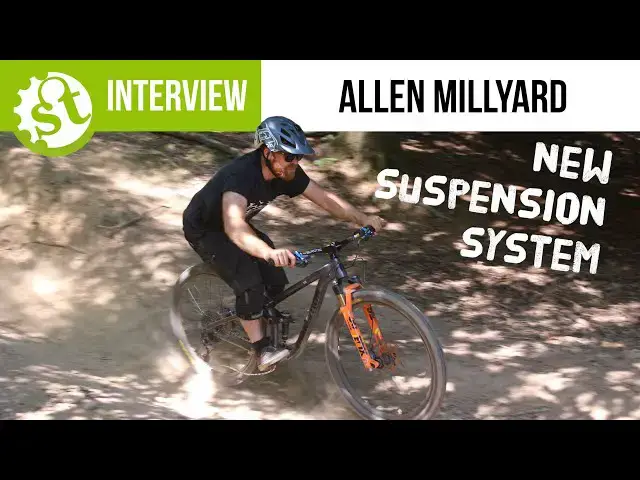
We took a road trip down to the Forest of Dean to meet up with Allen Millyard and his sons Stephen and Sam and check out their latest creation, the Hyper Ride Suspension system.
It was a baking hot day in the midst of a heatwave when we rolled up to Pedalabikeaway in the Forest of Dean to meet up with the Millyards. Hot as hell, humid like a jungle, but dusty dry on the trails, it hardly seemed the ideal conditions for riding mountain bikes or motor bikes. A float down the river Wye seemed much more inviting. But since they’d made the hour and a half trip – Allen on a motorbike, his sons in their pickup truck – we were committed. Some obligatory mechanical faffing later, and we sweated our way up the fire road in the Forest of Dean for a quick descent down before catching up with Allen for a chat.
It was a hairy ride down for our US rider Fahzure as he borrowed Stephen’s bike – brakes still in UK orientation – and followed Sam blind down trails that might have been called Sheepskull and Ski Run, but on the tail of Sam went by in such a blur that it’s hard to be sure. Drops, ruts, turns and enough roots to make us glad of the dry conditions, we emerged at the bottom to find Allen and sit down for a chat in the shade before he headed home to cool off. As well as making things in his shed (oh how we wish we had arranged to see in there) he’s busy shooting a series of ‘Find It Fix It Flog It’ so this was his second day out in the heatwave in a row. Maybe he really was tired, or maybe he had a plan for whipping up some super efficient new cooling system and he was eager to get home to the lathe?
Quietly spoken, with his reading glasses on his head, he looks more like a sound engineer at a Stones gig than he does a mad inventor. And while he might not set much store by technical drawings, elaborate plans and mathematics, he’s no madman. He turns the idea that he has in his head into a finished creation using his hands rather than any computer model, but there’s plenty of thought going on in that head. With his sons riding the suspension systems he’s created, he’s safety conscious and has built them to withstand all the pressure that their construction – and the riding they’re out through – can throw at them. Watch the video to learn all about how Allen made the system and what he’s planning to do next.
Singletrack Subscribers can view the full feature here in this Members Only feature: https://singletrackworld.com/2020/08/a-day-out-with-allen-millyard-and-his-hyper-ride-ii-suspension/
Check out our latest merch here..
https://singletrackworld.com/shop/category/merch/
Join us and become a Singletrack member for just 99p using code 'stm99' here.. https://singletrackworld.com/subscribe/
Show More Show Less View Video Transcript
0:01
[Music]
0:03
hi it's fajr free rad i'm here at
0:05
forza dean bike park and i'm speaking
0:07
with alan milliard
0:09
and we're going to talk to him about his
0:10
amazing suspension system
0:14
alan's been developing rear shocks
0:16
frames
0:18
and now a fork insert and uh
0:21
we're really excited to be out here
0:23
testing them out and
0:25
learning all about them alan take it
0:27
away
0:28
why would you want to know well i want
0:30
to know what got you into this
0:32
stephen was 15 he was trying to start
0:34
racing mountain bikes
0:36
we bought an orange 222 which is a great
0:37
bike he was always smashing derailleurs
0:40
and breaking shock springs and blowing
0:41
dampers and all sorts of issues because
0:43
he got quite good at it
0:44
and one then steven's i need a new bike
0:45
for next year of course it's 5 000
0:47
pounds i couldn't afford that so he said
0:48
we'll have to make a bike and steven's
0:50
face was sort of yeah okay
0:51
so i said go off and make me a list of
0:53
what you want so he made me a list of
0:54
everything he wanted on a bike
0:56
and we tried to fulfill that wish and so
0:59
that led you to
1:00
developing a new shock design yeah the
1:02
shot came along with the bike
1:04
but this one we're working on now is a
1:06
totally different
1:07
in totally different rendition of the
1:09
original shot we used
1:11
so how is it different from a
1:13
conventional
1:14
fox or rockshox suspension system
1:18
it uses a gas spring basically with gas
1:21
and oil
1:21
and an orifice it's like an oleo damper
1:23
from the 1930s
1:25
airplanes so you just push oil for a
1:27
hole that's all there is there's no
1:28
valves there's no shims no washers
1:30
no bypass valves no top out valves
1:33
nothing
1:33
just a hole in a piece of metal with all
1:36
on one side and gas on the other side
1:38
and so are you able to adjust the size
1:40
of that orifice for
1:41
different riders well you could do it in
1:44
in conception i guess but we found we
1:46
don't need to do that do we once we kind
1:47
of
1:48
worked out what size to have you don't
1:49
you don't need to change it it adjusts
1:51
depending on the impact you see
1:52
so if you hit it hard obviously it's got
1:54
to slow that oil down
1:56
so once you get it to the right point it
1:58
won't you won't need to change it
2:00
unless you change you can change the
2:01
thickness of the oil you see so i i play
2:03
around with sort of two and a half way
2:04
five-way mixtures of the two to get the
2:07
right oil setting
2:09
and then that's the same as adjusting
2:10
the damping size and so i should
2:12
introduce this
2:13
person this is steven millard and steven
2:15
you've been the test pilot for
2:16
all these different iterations of shocks
2:19
and
2:20
fork inserts um what have you learned
2:22
about
2:23
the suspension setup in uh testing all
2:26
these different things
2:27
a lot i know nothing about to start with
2:29
and now i mean
2:31
i've stripped it all down helped build
2:32
it and all that sort of stuff so
2:35
i've got a fairly good understanding
2:36
enough to be able to feedback
2:38
sort of the stuff that's going wrong or
2:39
is going right that we need to work on
2:41
it's pretty simple that's the thing
2:43
there isn't that much to get your head
2:44
around once you know how it works
2:46
so the fork insert does it work in the
2:48
same with the same mechanism with the
2:50
orifice
2:51
and the oil and uh gas charge as the
2:54
rear shock yeah it's exactly the same
2:56
the compression ratio is slightly
2:57
different
2:58
um because you haven't got a i think
3:00
they run about three to one
3:01
leverage ratio on a normal rear end
3:03
obviously the front's one to one so we
3:04
run a slightly different
3:06
compression ratio on the front but apart
3:07
from that it's exactly the same
3:10
and is the fork uh insert is it specific
3:13
to a
3:14
particular brand or model a fork are you
3:16
developing
3:17
ones for different forks so the forking
3:19
that i've got in there
3:20
came out of one brand we just had to
3:22
modify the thread on the top to be able
3:24
to screw it into the foxes
3:25
but it will work in any fork it's just
3:27
they run different threads at the top
3:29
and the bottom
3:30
slightly different lengths i suppose
3:33
ellen i've looked on the interwebs and i
3:35
see that you're quite active in
3:37
moto and moto gp development that type
3:39
of thing
3:40
um why are you playing around with bikes
3:44
it's just something fun to do isn't it
3:45
something different not i wouldn't say i
3:47
was really playing around with bikes i
3:48
think stephen is more than i am i just
3:50
i just make happen what he once made and
3:52
it's having a vision sometimes i just
3:54
see something everyone's not seen
3:56
and just saying why don't we do it like
3:57
this why do we just do it like that why
3:59
does everybody else do
4:00
it like this so that's what we've when
4:02
we made the system
4:04
what's the hardest thing you've built so
4:06
far probably
4:07
all my bikes are different like the
4:08
dodge viper engine like i made with a
4:10
dodge super
4:11
8 liter v10 the engine weighs 900 pounds
4:14
so making that into a road legal
4:15
motorcycle you can ride safely on the
4:17
road was
4:17
really hard but then making my velocity
4:19
twin
4:20
was really difficult to make it look
4:22
original 1930s
4:23
so you can't tell and these mountain
4:25
bikes making putting stephen on is 15
4:27
years old and throwing him down fort
4:28
william
4:29
on a bike i've made in the garage you
4:31
know so you
4:32
you said everything but i like doing
4:34
stuff that people perceive as not being
4:35
able to be done
4:36
i've done quite a few things in my life
4:38
where i've done something that people
4:39
say can't be done
4:41
and it gives me it gives me the sort of
4:42
impetus just to do
4:44
to make it work you know any desire to
4:48
learn
4:48
cnc stuff i've already done cnc stuff
4:51
that's what i did most of my life
4:53
and i find it so boring it's just
4:55
repetitive boringness
4:57
i like to be able to feel the handles on
5:00
a lathe and turn them and make things
5:01
from a vision of my mind
5:02
so i am the cnc basically there's pro i
5:06
don't no disrespect
5:07
respect to those people that do it it's
5:08
very clever and they are talented people
5:10
that program computers to move machines
5:12
but that's what it isn't in the day it's
5:14
just a computer
5:15
saying what you can do and what you
5:16
can't do and quite often it actually
5:18
limits what you can do in free thought
5:20
because you've got to go through a post
5:22
process and you've got to go for
5:22
software programs and they might stop
5:24
you from doing something
5:25
because i'll just do it i didn't even do
5:27
a drawing for this
5:28
i just got a big lump of metal cut it in
5:30
half with a hacksaw big block of
5:31
aluminium
5:32
put it in my lane started freehand
5:34
turning and i rang steve and i said it
5:35
looks really cool with dalek fins
5:37
he said carry on that's amazing it's not
5:39
a half finished picture
5:40
and um that's what we did and it fills
5:44
in the center not at the top
5:45
so the gas doesn't go in the top without
5:47
every other shock it feels this goes in
5:48
the middle
5:50
you know and i we needed a chrome shaft
5:51
so don't make a chrome shot i'll find an
5:53
old land river shop
5:54
saw that out and we used the piston out
5:57
of the old land over shot and just
5:58
machined it down put new grooves in it
6:00
and um tried it that way and it worked
6:02
literally as you've written today is how
6:04
it worked first time
6:06
out of the box first time wasn't it and
6:08
all we've had is a few problems with
6:09
leaks which is
6:10
not an issue of the the design of the
6:12
process the actual concept it's actually
6:14
just a sealed technology
6:15
i'm not an expert on sealed technology
6:18
so
6:19
to build the second one did you start
6:21
over or
6:23
exactly it's they're both very slightly
6:24
different in size so i didn't measure
6:26
them
6:27
all it's the same between them is the
6:28
bore diameter and the stroke because i
6:30
remember what that was
6:31
so the rest of it is freehand machine
6:33
all the three i don't measure threads
6:34
i'll make one thread fit the other
6:35
thread
6:36
and just machine it with a single point
6:38
cutting tool but you can do it quickly
6:39
it took me
6:40
three hours to make that shot finished
6:42
from scratch to finish
6:44
was the fork a harder project it wasn't
6:46
actually
6:47
you just you just see basically just
6:49
stretch everything
6:50
so you make everything smaller and
6:51
diamond to make it longer
6:53
we were struggling initially we thought
6:55
with um piston speed
6:57
but we had some telemetry put on the
6:59
bike for motion instruments in america
7:01
and then we know exactly what our speed
7:02
is now so because we know that now we
7:05
can get the seals to
7:06
that speed whereas in the past we didn't
7:07
know what the speed was we guessed and
7:09
we guessed wrong didn't we
7:11
yeah i mean our seals are half a meter a
7:12
second which we thought that's quite
7:14
fast
7:15
put the temperature on the shock and it
7:16
moves at four
7:18
so we're eight times faster than the
7:20
seals rated two
7:22
so what are your plans for the shock and
7:25
the
7:26
fork insert are you is this a hobby
7:28
project are you planning on
7:30
manufacturing these for other riders to
7:31
use well initially it's just for stephen
7:33
really
7:34
but i don't see any reason why it
7:35
couldn't be made because it's it's
7:37
very simple to do if someone wanted to
7:39
help us do it i'm sure it could be made
7:41
looking for a partner i wouldn't say i'm
7:43
looking for a partner i'm looking for
7:44
someone to sort of
7:45
work with stephen to just make it if
7:47
they want to
7:48
there's nothing passionate about it it's
7:50
just all existence
7:51
all on the internet all pre-1950 most of
7:54
it in fact parts of it are made from an
7:55
old land rover
7:57
so it's um if someone wants to they can
8:00
so what kind of psi are we talking about
8:03
in there it's bar
8:04
yeah barometric pressure so we run about
8:07
what are you running in the back
8:08
26 in the back eight in the front for me
8:11
for me depends on sort of i've noticed
8:13
with a few different riding styles you
8:15
might run slightly different
8:16
depending on how you weight the front on
8:17
the back and also obviously it's a
8:19
lighter ride or a heavier rider
8:20
but generally i mean we ran 26 on the
8:23
downhill bike
8:24
made a new shock slightly different
8:27
design different obviously compression
8:28
ratio on the bike and everything else
8:30
and we still run 26. so i would imagine
8:33
that the
8:34
wall thickness on the air chamber the
8:36
gas chamber has got to be heavier than
8:38
what you'd find on a conventional shock
8:40
if you're running the higher pressures
8:41
yeah yeah yeah because it goes ramps it
8:42
ramps right up
8:43
and also i've over engineered it as well
8:44
to make it stronger than it really needs
8:46
to be because i've got stephen's
8:48
life on it and no table but no drawings
8:50
no stress analysis
8:51
nothing like that it's just sort of
8:53
that'd be thick enough is it heavy
8:55
it's heavier than a conventional uh air
8:57
shock but it's about the same as a coil
8:58
string shock
9:00
but i'm not hung up with weight i don't
9:01
get hung up with weight because you're
9:03
heavier than me
9:04
steven's heavier than me people put on
9:06
one pound they're having a beef burger
9:08
then they
9:08
send 50 pounds on a titanium bowl to
9:10
save a bit of weight
9:11
you shouldn't get hung up too much on
9:13
weight i don't believe it's not an air
9:14
shock replacement it's a call shock
9:15
replacement that's what you've got to
9:16
think so
9:18
in terms of air shocks it's potentially
9:20
heavier but
9:21
in terms of core shocks i mean i think
9:23
that weighs about 740 grams
9:26
all in with the oil and gas and
9:28
everything so it's it's heavier than an
9:30
air shock but
9:31
you're not looking at trying to get
9:32
airshot performance you're trying to get
9:34
better than call shot performance so it
9:37
seems like its application is probably
9:39
more gravity oriented probably not going
9:41
to have a lockout on it
9:43
it's going to be a a wide open high
9:45
speed kind of shock for
9:47
chunder how does it how does it handle
9:50
on
9:51
jumps and stuff jumps is great i really
9:53
like jumps i mean the biggest thing i've
9:55
noticed is because it's
9:56
because it's so adaptive and the wheel
9:58
will move out the way fast
10:00
you can really case a jump and you don't
10:02
even notice which is great when you're
10:04
getting it wrong and also i mean i've
10:06
landed that
10:07
to flat quite a few times and the same
10:09
again it just eats it
10:11
and it doesn't kick you back so normally
10:13
you know if you come in hot
10:14
a lot of people they'll case fully
10:16
compress and then kick them off
10:18
that i've got slow-mo's of me coming in
10:19
on a lander i'll hit it the back-end
10:21
will move completely out of the way
10:23
and then just put itself back down on
10:24
the other side and you just roll out and
10:25
hit the next jump
10:26
so i noticed on the fork that even
10:29
though i got
10:30
almost all full travel on it um no
10:33
bottom out feel at all
10:34
why is that it's effectively infinitely
10:37
progressive
10:38
so it's designed in a way that you'll
10:39
get 75
10:41
of the travel most of the time which
10:43
means any root rock the wheel just moves
10:45
out of the way
10:46
there's effectively no damp in there so
10:47
it just flicks the wheel out of the way
10:49
puts it straight back down the other
10:50
side
10:50
tire doesn't leave the ground but that
10:52
top end you're looking at compressing
10:54
all of that gas
10:55
into effectively nothing which is
10:58
impossible so the
11:00
the spring rate just ramps right up at
11:01
the end and you'll it's
11:03
pretty much impossible to bottom out
11:05
sounds like it could probably be
11:06
produced fairly affordably if it's not a
11:09
patentable
11:10
thing and you're using pretty simple oil
11:14
orifice systems for the damping is is
11:16
that your impression
11:18
you can make very cheaply if you wanted
11:20
to do it
11:21
very cheap you got six parts
11:24
have you made them with different stroke
11:25
links just you can just put
11:28
um nylon spacer in them if necessary
11:29
change the straight lengths but
11:31
no we've just made these ones for
11:32
stephen's bikes and sam's bikes
11:34
and the downhill bikes that's what we've
11:35
made mainly for us to use really
11:38
we like to sort of just go out and show
11:39
people what you can do in shed
11:41
so everybody wants to know why not that
11:44
downhill bike
11:45
what's happened with that and why aren't
11:47
you y'all working on that one
11:49
of doing other things that's that's in
11:51
the past it's gone isn't its history in
11:53
fact it's 15 years ago we made that
11:55
when we made it was 10 years advance of
11:56
anything that was made at the time
11:58
apparently according to the dirt
11:59
magazine review
12:00
so it just sits in the shed but isn't it
12:02
and you all have plans to
12:04
add more features to the shock is there
12:08
a next generation in the works it's
12:11
there already isn't it it doesn't
12:12
what is that to change well i guess
12:14
steven was saying something about
12:15
wanting to
12:16
work on the finishes and the the shafts
12:19
and the seals and those types of
12:20
issues a little bit more problem is i'd
12:22
make this at home on an old 50 year old
12:24
lathe by hand
12:25
with no drawings or measuring equipment
12:26
just literally make it from a provision
12:28
to a finished item
12:29
we get it show finished anodized not not
12:31
hard anodized
12:32
and it's not ground on the bores and
12:34
diameters so and the seals are just what
12:36
you get off of ebay so
12:38
if you had the right seals in it and
12:39
ground surfaces it'd be absolutely
12:41
perfect
12:42
but i'm not prepared to take it to that
12:43
distance to get that done why cost a lot
12:45
of money but other things to do
12:47
i've made a prototype that works really
12:48
well for my two boys
12:50
and um we have to see how it goes is the
12:52
service interval
12:54
any different than a regular shock if it
12:56
was
12:57
if it was machine you know with the
12:59
right finishes and the correct seals and
13:00
everything
13:01
yeah once a year probably just to see if
13:03
everything was okay
13:05
at the moment i do a fair amount on it
13:07
but that's because we're
13:09
it's effectively a concept more than a
13:11
prototype it's you know it's rough down
13:13
the garage
13:14
with material that we've got with seals
13:16
that we can find
13:18
to see if it'll work which it does but
13:20
then you get you know
13:22
such high pressures with any
13:25
imperfections in the surface it's just
13:26
going to blow through a small amount of
13:27
time
13:28
so over a period of riding it will you
13:31
know
13:31
maybe drop a bit of pressure lose a bit
13:32
of oil but that's expected with a
13:35
handmade prototype so alan what's on the
13:38
lathe right now what are you working on
13:40
bike or moto wise well kawasaki's making
13:43
six cylinder kawasaki's from zeb ones
13:45
so it's um very interesting zeb one's
13:49
the most iconic classic motorcycle ever
13:50
made made in 1972.
13:52
it's a fourth cylinder you call them a
13:54
z1 thank you in america right
13:56
but um i've made one into a six seven
13:57
dodged up over a cam i'm just making a
13:59
second one
14:00
is that for your own use or you do that
14:02
for somebody else the first one's for me
14:03
but the other one
14:04
i've got several people wanting to buy
14:06
it so i will be selling that one
14:07
so finance is the next project all right
14:09
want to thank you all for tuning in and
14:12
this great chat with alan and steven and
14:14
if you want more information about what
14:15
allen's up to you can go to
14:17
my youtube channel alan milliard and
14:19
instagram great steven you got something
14:21
going on
14:22
uh yeah i choose my instagram which is
14:23
steven milliard
14:25
thanks and uh follow
14:27
singletrackworld.com for
14:28
more great information about mountain
14:30
biking in the uk
15:32
you
#Sports