Up next in 10



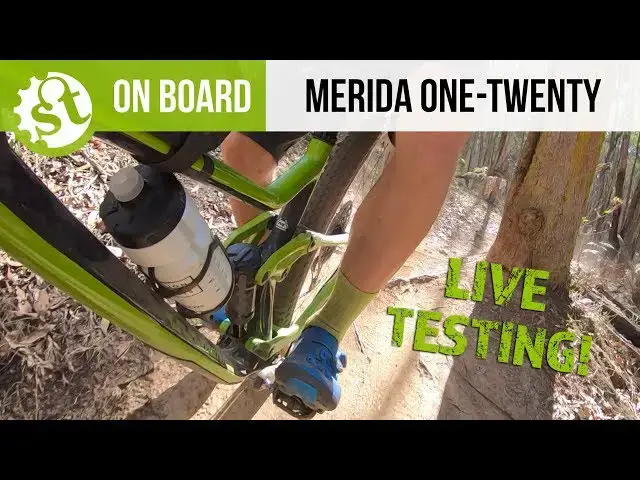
For 2019 Merida has unveiled the latest generation of its popular One-Twenty trail bike platform.
Equipped with a brand new frame, carefully massaged geometry, and an updated suspension design, the One-Twenty nestles into the Merida lineup between the 96 (the XC race bike) and the One-Forty (the 150/140mm travel 27.5in trail bike).
Aiming to provide all-day pedalling efficiency in a competent chassis that's ready for some pretty ugly terrain, the One-Twenty is equipped with 29in wheels, 120mm of rear travel, and a 120 or 130mm travel fork. It can also be had with 27.5in wheels, but only in Small and Medium frame sizes.
There are eight models in the One-Twenty lineup, kicking off with the One-Twenty 400 (£1,500 GBP / $1,999 AUD). The cheaper spec levels are built around a full alloy frame, while the top-end models feature a full carbon fibre frame.
The bike I've been testing over the past few weeks is the second-from-the-top model, creatively called the '8000'. It features a full carbon fibre frameset, carbon FSA wheels, a RockShox suspension package, and SRAM Code RSC disc brakes.
Got any questions for us about the Merida One-Twenty test bike? Submit them in the comments section, and we'll answer them for you as soon as possible!
For more information on the test bike, check out all the details right here: https://singletrackworld.com/2019/04/on-board-testing-the-merida-one-twenty-8000-trail-bike/
Show More Show Less View Video Transcript
0:00
Hey everyone, it's Will here from
0:01
Singletrack Magazine and
0:02
singletrackworld.com and I'm currently
0:05
in the Wombat State Forest and I'm about
0:06
to take you guys for a ride on this test
0:09
bike right here. Now, if this is your
0:11
first time joining us on YouTube,
0:13
consider hitting that subscribe button
0:14
just down there because we have plenty
0:16
more videos coming for you in the near
0:18
future. Right, so the bike that I am
0:20
riding today, it's a test bike and it's
0:22
from Merida. This is the 2019
0:25
Merida 120 8000. Now, it's a 29er trail
0:29
bike. It's not a cross-country race bike
0:31
or an enduro bike, sort of somewhere in
0:32
between. So, we have 130 mm travel
0:36
RockShox Pike on the front, 120 mm of
0:40
travel out back. This is a RockShox
0:41
Deluxe shock on the back of this bike.
0:44
It's a full carbon fiber frame, so
0:46
fairly lightweight. I believe it's sub 3
0:48
kilos with the rear shock. Carbon fiber
0:50
main frame, carbon fiber swing arm.
0:52
We've got a SRAM XO1 drivetrain here,
0:55
12-speed with a carbon fiber cranks,
0:57
too. We have a 150 mm dropper post from
1:00
KS, which is quite nice. Also up here,
1:02
we have SRAM Code RSC disc brakes, very
1:06
very powerful downhill-oriented brakes,
1:09
but Merida specking them on a trail
1:10
bike, which is interesting. The wheels
1:12
we've got on here are from FSA. These
1:13
are not a common wheel set. It's the
1:15
Gradient Wide R and these have a 29 mm
1:18
internal rim width carbon fiber rims,
1:20
very nice, very buzzy freehub mechanism.
1:23
The other thing I'm going to be testing
1:25
is a different set of tires. Normally,
1:27
this bike comes with a set of Maxxis
1:29
tires. Today, I'm running some
1:30
Specialized tires. These are a bit
1:31
lighter. We've got a Ground Control on
1:33
the front. It's 2.3 in wide with a Grid
1:35
casing. We've got a Fast Trak on the
1:37
back. That's 2.3 in wide as well, also
1:40
with the Grid casing. Dropped around 170
1:42
g from the Maxxis tire combo, but the
1:44
tread profile is a lot faster rolling.
1:47
So, I'm interested to see how this bike
1:48
goes on some faster, flowier trails with
1:50
some lighter and faster rolling tires.
1:52
So, without further ado, I'm going to
1:53
jump on the bike and hit the trail. to
1:54
take you guys on board with the 2019
1:57
Merida 120.
1:59
All right, here we go. So, we're on the
2:02
Wombat Loop
2:04
out at the Wombat State Forest. This is
2:07
just outside of a town called Woodend.
2:10
And Woodend is pretty much smack-bang in
2:12
the middle between Melbourne and
2:14
Bendigo. So, it's probably Whoop.
2:17
So, it's probably about an hour's drive
2:19
from each one to get here. So, while
2:21
we're meandering along this starting
2:23
section of trail,
2:25
talk a little bit about this bike.
2:27
This is Whoop, trees there.
2:30
Whoop. So, this is the
2:32
Merida 120
2:34
and it's all new for 2019.
2:37
Merida have had this model in their
2:38
lineup
2:40
for a good few years now.
2:42
It's progressively gotten more burly as
2:45
time has gone on.
2:47
So, this current version
2:49
Ooh, tight gap there.
2:52
Coming down here nice and
2:54
rocky and loose.
2:55
It's been very dry here, so it's quite
2:57
dusty.
3:02
Whoop.
3:03
There's some tight corners through here,
3:05
so
3:06
it's a great test
3:08
for
3:09
handling of the bike.
3:13
And although bikes are kind of getting
3:16
slacker and longer and lower and
3:19
really
3:20
great for flat-out descents, old-school
3:22
trails like this
3:24
tend to
3:25
highlight the shortcomings of that kind
3:27
of geometry style, so
3:28
it's also part of the reason I wanted to
3:31
bring this Merida here because
3:33
the geometry in general on this bike
3:36
kind of strikes
3:38
a bit of a balance, at least on paper
3:39
anyway.
3:41
Merida's kind of
3:42
modernized the geometry a little bit
3:44
over the previous 120,
3:47
but they haven't gone too far.
3:49
So, the head angle
3:51
on this model with the 130 mm travel
3:53
fork,
3:54
it's kicked back to
3:56
67.3°
3:59
and
4:01
the seat tube angle, or effective seat
4:03
tube angle,
4:04
is 75.5, which is quite steep. They've
4:07
lengthened the reach measurement a
4:08
little bit.
4:10
I'm on the medium here
4:12
and reach is 435, which I wouldn't say
4:15
is particularly long these days.
4:18
They certainly could have gone longer,
4:19
but
4:21
whether or not they needed to
4:23
is a different question.
4:26
Woo!
4:27
Oh, yeah.
4:28
Here we go. Some nice, tight, twisty
4:30
corners here and
4:33
getting surprisingly good hookup from
4:35
these Specialized tires, which
4:39
have struggled a bit on my local
4:41
trails, which are very rocky and very
4:43
loose and sandy.
4:46
The soil here is much loamier.
4:48
You can tell the
4:50
the immediate environment, although it
4:51
hasn't rained here for quite some time,
4:54
it's a lot greener.
4:56
We've got a little drop coming up here.
4:59
Here we go.
5:01
Woo!
5:01
Woo!
5:04
Drifting the back end through there just
5:06
to avoid hitting that tree.
5:08
And uh
5:10
this bike is uh picking up speed well
5:13
through here.
5:14
Certainly not having any issues with the
5:17
handling on those tight corners.
5:20
Bike feels
5:21
quite agile and poppy, which
5:24
up until this point in time, I've been
5:26
riding this for a few weeks now,
5:28
that would kind of be my
5:30
summation of its riding qualities. Quite
5:33
stiff through the back end, and I mean
5:34
that in terms of
5:36
lateral stiffness through the back end.
5:39
Merida have used,
5:41
as they do on all their full suspension
5:43
bikes,
5:44
a single pivot
5:46
suspension system.
5:47
So, you don't have a pivot
5:50
in between
5:51
the rear axle
5:53
and the main pivot. And it kind of has
5:55
that
5:56
single pivot characteristic, where it
5:58
really snaps and pops out of the
6:00
corners,
6:01
which I think is exacerbated
6:03
by that stiff back end.
6:05
So, it's very
6:07
responsive
6:09
handling.
6:10
Nice and sharp.
6:12
Speaking of,
6:14
Merida has shortened the chainstays on
6:16
this bike. It's now 435 mm,
6:19
which I think is a good balance.
6:21
That shorter length
6:23
does help the bike carve around tight
6:25
corners
6:27
more easily.
6:28
Comparing it to other test bikes I've
6:31
been riding lately,
6:33
I feel like it's got
6:35
better efficiency than the Giant Trance.
6:38
I would say on par with the Canyon
6:40
Neuron CF,
6:42
but
6:43
crucially,
6:44
there is better sensitivity with this
6:46
Merida.
6:48
And
6:49
you can feel that
6:51
with this big stroke air shock that
6:53
they've got on the back of this. The
6:55
RockShox Deluxe shock
6:57
has a 55-mm stroke, so you get 120 mil
7:01
of travel out of that 55-mm stroke. It's
7:04
nearly a two-to-one leverage ratio, so
7:06
it's very low. The other interesting
7:08
aspect about the suspension design on
7:10
this 120 is what Merida calls a float
7:13
link. This is a design we've seen on
7:16
their other full suspension bikes, like
7:18
the 160,
7:19
the 140, and also the E160 as well.
7:23
Float link basically refers to
7:25
the placement of the rear shock.
7:28
Now, from the side, it sort of looks
7:29
like a
7:30
normal kind of four-bar arrangement. The
7:32
rear shock doesn't actually mount to the
7:35
main frame.
7:37
Instead,
7:39
it floats inside the swingarm,
7:41
where it's compressed
7:43
by the rocker link at the top
7:46
and an extension of the chain stay tube.
7:49
Now, as you go through the travel
7:52
that lower pivot actually rotates away
7:55
from the shock ever so slightly.
7:57
The idea there
7:59
a little bit more of a bottomless
8:00
feeling to the end of the travel.
8:03
I can say in practice
8:05
it really works.
8:06
I've run this bike with
8:09
various sag settings on the rear shock.
8:11
I've been experimenting with that
8:12
lately.
8:14
But regardless of sag
8:17
finding it's
8:18
I'm using all the travel on this bike,
8:21
but even when I do use full travel
8:24
you don't really know about it.
8:26
There's no harsh bottom out slam as the
8:28
rear shock compresses all the way.
8:30
It's really smooth
8:33
really gradual.
8:34
This is a design we've seen from other
8:36
brands like Trek. They actually use a
8:38
similar design on their
8:40
Fuel EX and Top Fuel platforms.
8:43
And there are other brands out there as
8:44
well that are using floating shock
8:46
designs. So
8:47
Merida isn't unique in that regard.
8:50
But certainly
8:51
Whoop.
8:52
But certainly they've employed it to
8:54
good effect on this bike.
8:58
I mentioned sag before. It's something
8:59
I've been experimenting with lately
9:02
on the rear suspension and the fork as
9:04
well. Initially, under the guidance of
9:06
Merida, I set up the rear shock at 30%
9:09
sag.
9:10
Now before I mentioned about that big
9:12
air can on here in the 55 mm stroke. So
9:15
to get 30% sag
9:18
I only had 110 PSI inside the shock,
9:20
which is not very much at all. That's
9:22
very low pressure.
9:24
I was finding
9:25
definitely using travel fairly
9:27
regularly.
9:28
So I've decided to reduce the sag a
9:30
little bit, increase the air pressure.
9:32
Not by much.
9:34
I went up to 120 PSI
9:36
which is only
9:38
10 PSI more
9:40
but remember
9:42
because it's a low pressure system
9:44
that's actually quite a large
9:45
percentage.
9:47
So, bumped that up to 120 PSI
9:50
and that's brought the sag down
9:52
to 25%
9:54
and
9:56
the feeling I've got now
9:58
is
9:59
ooh, yeah.
10:00
Although it's slightly
10:03
firmer
10:04
Whoop.
10:05
Almost collected the trees there.
10:08
Although it's slightly firmer
10:11
finding it's giving it just a little bit
10:13
more
10:14
pop
10:15
a little bit more
10:16
sprightliness. Overall, I think I prefer
10:19
it at that lower sag amount at that 25%.
10:22
And conversely, I've been
10:25
messing around with the fork as well.
10:27
So, this RockShox Pike
10:30
it's the higher end RCT3 model. So, it's
10:32
got the Charger 2 damper in there,
10:34
adjustable low speed compression
10:37
three position lockout with the open
10:41
pedal and firm settings. Interestingly
10:43
though, I mean the Pike is a great fork.
10:44
It's something that I've
10:46
ridden many variations of this fork over
10:48
the years.
10:49
But for some reason in this shorter
10:51
travel application, 130 mil
10:53
it just doesn't feel
10:55
as plush as the back end.
10:58
Certainly compared to the Fox 34s that
11:01
I've been using on
11:03
the Whyte S-120
11:06
on the Canyon Neuron CF
11:08
and the Giant Trance 29
11:10
this Pike just doesn't feel as supple.
11:13
Just feels a little
11:15
like there's a little bit more stiction
11:16
there.
11:17
Not quite as smooth as I was expecting.
11:21
I ended up opening the fork and I found
11:23
three bottomless tokens inside from
11:25
stock. So, over the course of a few
11:27
rides
11:29
I pulled a token out
11:31
changed the air pressure, in the fork,
11:33
played around with settings, rebound
11:35
damping and so on. Then the next ride
11:37
I've taken out another token,
11:39
done the same thing, and I've gotten to
11:40
the point where I've got no tokens
11:42
inside this fork at all.
11:44
And what that's allowed me to do
11:47
is run slightly higher pressure,
11:49
which
11:50
reduces the sag,
11:52
keeps the fork Oh.
11:54
Keeps the fork riding
11:56
higher in its travel to begin with,
11:58
but once it gets moving,
12:01
gives it better activity throughout the
12:03
travel
12:04
all the way to the end.
12:06
So,
12:07
with zero tokens inside, it's definitely
12:09
more linear. For me, I found it to feel
12:12
a lot better
12:14
now I've taken all those bottomless
12:15
tokens out. As for setup on the rest of
12:17
the bike, I've been pretty happy with
12:19
how this bike comes out of the box. I
12:21
really like the brakes. These are SRAM
12:23
Code RSCs. Really snappy feel of the
12:25
lever, much more solid feeling than
12:27
comparable
12:29
SRAM Guide
12:31
or Level brakes.
12:32
They're pretty big brakes to put on a
12:34
trail bike, but hats off to Merida for
12:36
making that spec choice, because
12:38
they're a fantastic addition on this
12:40
bike.
12:42
The wheels so far have been solid.
12:45
Nice and buzzy freehub mechanism that
12:47
you can probably hear there on the
12:48
microphone.
12:49
The stock tires are good.
12:51
I love that Maxxis Minion DHR II,
12:55
but to be fair,
12:57
this combo at the moment, the Ground
12:58
Control on the front, the Fast Track on
13:00
the back,
13:01
really digging these on these
13:04
loamier, smoother trails here,
13:06
definitely adding a bit more speed to
13:08
this bike.
13:09
As for the cockpit,
13:11
KS dropper post, of course.
13:13
No problems there at all. Really like
13:15
this Southpaw lever here.
13:17
It just puts the
13:19
paddle right where your thumb is.
13:21
Very, very nice shape, smooth,
13:24
ergonomic, comfortable.
13:26
I'm into it. Also really like these
13:28
grips. These are Merida's own brand
13:30
grips and normally tend to find the
13:32
house brand grips pretty cheap and
13:34
nasty, but these are really really good.
13:36
The bar width
13:38
something I would normally complain
13:39
about.
13:40
These are 760 mm wide
13:43
on aggressive trail bikes.
13:46
Finding more and more riders are running
13:48
780s or even 800s.
13:51
But, I think on this bike
13:53
it works and to be fair
13:55
today
13:56
on this sort of old school tight cross
13:59
country single track
14:01
where the trees are getting very very
14:02
close,
14:03
I'm really appreciating
14:06
that 760 mm width.
14:08
Plenty of occasions where a wider bar
14:10
would have sent me off the bike, that's
14:12
for sure.
14:14
Okay, coming towards the end of this one
14:17
lap loop.
14:19
Going to meander through the trees here.
14:22
And
14:23
I'm going to climb up onto ridge line.
14:26
Drop down some
14:28
steeper, faster, rougher descent down
14:30
into the gully.
14:32
Then we'll have one final climb
14:35
back up to the car park. And so far, I
14:37
think this is
14:38
one of
14:40
the
14:41
best bikes that I've brought here. This
14:43
120 is making short work of all these
14:45
tight twisty corners, but it's got that
14:48
solid trail bike feel where you need it.
14:51
Big powerful brakes, wide carbon rims,
14:55
stiff back end
14:57
gives it a really
14:59
steady kind of feel when
15:01
the speed start to increase. And I got a
15:03
nice little
15:05
log drop here.
15:06
Woo!
15:07
Into another rock drop.
15:09
Woo! Sling the back end out there.
15:13
Just got to remember I've got a
15:15
very lightweight cross country tire on
15:17
the back of this bike.
15:18
And
15:22
some of this is a little bit loose and
15:23
chopped up. Better race here over the
15:25
weekend.
15:27
Woo!
15:29
So, some of the trails are
15:31
pretty dusty on these corners. Lots of
15:33
braking bumps.
15:36
And here we are, dropping down into the
15:38
gully.
15:40
Oh, yeah.
15:42
This bike just pops so well over that
15:44
stuff. It's got great character, great
15:47
pizzazz.
15:49
Really wants to
15:51
leap and bounce all over the place.
15:54
Woohoo!
15:58
Ooh, off the rock drop there.
16:01
And
16:03
got one
16:05
final
16:06
descent back down
16:08
down to the left.
16:10
Whoop, blown out there.
16:17
Woohoo!
16:20
Yes.
16:21
Oh, flowing beautifully along there.
16:24
Now, we're going to head up left and
16:25
back up out of the gully, which means
16:28
we're going to climb up this thing.
16:31
Ooh.
16:31
Oh.
16:33
Oh.
16:35
That is quite steep. Now, we've got the
16:36
final climb up the edge of this
16:40
hillside here.
16:44
There we go, ride finished. I really
16:45
enjoyed that, and I hope you guys
16:47
enjoyed watching. Uh if you've got any
16:49
questions for me about this test bike,
16:51
this is the Merida 120, uh drop them
16:53
into the comments section below. If you
16:55
enjoyed the video, give us a thumbs up,
16:56
and if you haven't already, consider
16:58
hitting that subscribe button, because
16:59
I've got plenty more videos coming for
17:01
you, including the full review on this
17:02
bike. Got a little bit more testing I
17:04
want to do with it. So far, pretty happy
17:06
with it. You can see here
17:08
full travel on the rear shock, which is
17:10
good, and on the fork, basically hit
17:12
full travel there as well. So, pretty
17:14
happy with those suspension settings.
17:16
There are a couple of drops there where
17:17
I would have expected to use full
17:18
travel. So so far, I'm really enjoying
17:21
this trail bike. All right, time for me
17:22
to finish up, pack up, go get some lunch
17:24
and a beer, I reckon. Hope you guys
17:26
enjoyed, and I'll see you guys next
17:27
time. Toodaloo.
#Sports